EXECUTIVE SUMMARY
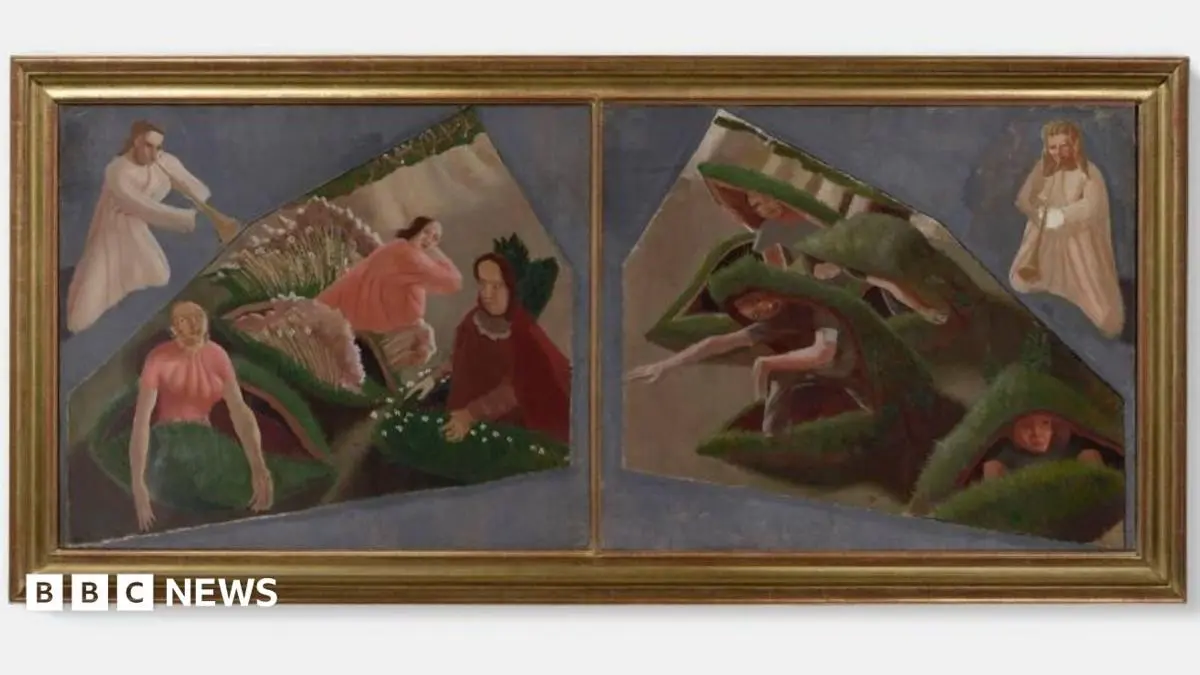
In a decisive move to safeguard the nation’s artistic heritage, the United Kingdom government has placed a temporary export ban on The Resurrection of the Good and the Bad, a historically pivotal early work by one of Britain’s most celebrated 20th-century painters, Sir Stanley Spencer. Valued at £450,000, the painting represents a critical milestone in the development of British modern art, marking the inception of Spencer’s lifelong obsession with themes of resurrection, mortality, and the spiritual transfiguration of the mundane.
The Department for Digital, Culture, Media and Sport (DCMS), acting on the rigorous advice of the Reviewing Committee on the Export of Works of Art and Objects of Cultural Interest (RCEWA), has halted the export process to allow domestic public institutions, museums, and galleries a window of opportunity to raise the necessary funds to purchase the piece. The export bar will remain in place until mid-December, creating an intense period of fundraising for the British cultural sector, which faces ongoing financial pressures against the backdrop of shifting institutional priorities.
This investigative report examines the art-historical significance of the 1915 painting, details the administrative chronology of the export embargo, explores the socio-economic context of the British art market, and provides an authoritative outlook on whether the nation’s galleries can successfully retain this foundational work of modern British painting.
1. Executive Overview
The announcement regarding The Resurrection of the Good and the Bad underscores the delicate balance between private property rights and the preservation of national heritage within the United Kingdom. Under the Waverley criteria—a strict set of guidelines governing the export of cultural objects—an item may be barred from leaving the country if it is deemed to be of outstanding aesthetic importance, of close historical or educational association, or of paramount significance for the study of a particular branch of art, history, or science.
Sir Stanley Spencer’s 1915 canvas satisfies all three criteria. Long before he achieved international renown for his monumental murals at the Sandham Memorial Chapel in Burghclere or his idiosyncratic, deeply localized visions of biblical events unfolding in his native Berkshire village of Cookham, a young Spencer was mapping out the contours of his artistic universe. The Resurrection of the Good and the Bad is not merely an early painting; it is the genesis of Spencer’s defining thematic exploration.
The imposition of the export bar is designed to give public collections a fighting chance to acquire the work at the recommended price of £450,000. However, in an economic climate defined by tightening municipal budgets, constrained philanthropic giving, and escalating operational costs for regional and national museums alike, the race to secure £450,000 by mid-December is fraught with uncertainty.
2. Detailed Chronology: From Creation to the Export Block
To understand the weight of the current regulatory intervention, it is necessary to trace the trajectory of the painting from its conception during the turbulence of the First World War to the administrative chambers of Whitehall.
1915: The Genesis of a Masterpiece
In 1915, Sir Stanley Spencer was a rising star at the Slade School of Fine Art, having already earned a reputation for prodigious talent coupled with a fiercely independent, idiosyncratic vision. World War I was raging across Europe, casting a long, dark shadow over the British creative consciousness. It was within this environment of existential anxiety and profound spiritual questioning that Spencer set to work on The Resurrection of the Good and the Bad.
At the age of 24, the artist began wrestling with the theological and visual concepts that would dominate his oeuvre for decades. Rather than treating the biblical concept of resurrection as a distant, abstract dogma, Spencer envisioned it as a deeply intimate, domestic event—one that would take place in familiar earthly settings, specifically his beloved Cookham. This 1915 canvas stands as the primordial cell from which his later, more famous monumental resurrection scenes would evolve.
Decades in Private Hands
Following its completion, the painting entered private circulation, remaining largely shielded from the public eye for generations. While Spencer’s later works—such as The Resurrection, Cookham (1924–26), housed permanently in the Tate Britain collection—achieved iconic status, The Resurrection of the Good and the Bad remained a shadowy, almost mythical piece among art historians, known primarily through archival photographs and academic citations rather than direct public viewing. Its prolonged absence from the public domain amplified its desirability among international collectors and scholars, culminating in its recent appearance on the open market, where a foreign buyer sought to acquire and export the canvas.
The RCEWA Intervention and DCMS Action
When an application was lodged to export the painting out of the United Kingdom, it triggered the statutory review process overseen by the RCEWA. The committee evaluated the painting against the national interest criteria and concluded that its departure would represent an irreparable loss to British art history.
Consequently, Arts Minister [or Department representative] acted on the RCEWA’s recommendation, formally placing a temporary export bar on the canvas. The initial embargo period grants a temporary reprieve, setting a strict deadline of mid-December for any public-facing British institution to match the asking price of £450,000 and secure the work for the nation.
3. Supporting Context & Metrics: The Art and the Artist
The Cookham Connection and Thematic Significance
Sir Stanley Spencer’s life and work are inextricably linked to Cookham, the Berkshire village on the banks of the Thames where he was born in 1891 and spent the majority of his life. Often dubbed the "Cookham Resurrectionist," Spencer possessed a unique artistic philosophy that collapsed the boundaries between the sacred and the profane. For Spencer, the villagers he walked past every day—bakers, boat-builders, washerwomen, and schoolchildren—were indistinguishable from biblical patriarchs, apostles, and angels.
The Resurrection of the Good and the Bad serves as the crucial starting point for this visionary worldview. The painting reveals Spencer’s early mastery of complex compositional structures, linear rhythm, and narrative tension. Figures are depicted rising from the earth with a raw, unsettling psychological intensity that captures both the terror and the liberation of the final judgment.
Art historians argue that studying this painting is essential for comprehending how Spencer transitioned from a student of traditional academic techniques to a visionary modernist who stood entirely apart from his contemporaries. Without this canvas in a public collection accessible to scholars and students, a critical link in the evolutionary chain of 20th-century British painting is broken.
Financial Metrics and Valuation Analysis
- Recommended Acquisition Price: £450,000 (excluding VAT/tax remissions, if applicable).
- Timeframe for Fundraising: Approximately two to three months (expiring mid-December).
- Comparable Market Values: While major mature works by Spencer have commanded seven-figure sums at elite auction houses like Christie’s and Sotheby’s, the £450,000 valuation for this early, foundational piece reflects its niche historical importance rather than massive scale.
- Institutional Landscape: The UK boasts several institutions with existing Spencer holdings—most notably Tate Britain, the Stanley Spencer Gallery in Cookham, and the Fitzwilliam Museum in Cambridge. Any of these entities, potentially acting in consortium or with grants from bodies such as the National Heritage Memorial Fund (NHMF) or the Art Fund, represent the most viable pathways for retention.
4. Official Statements and Expert Perspectives
The decision to bar the export of the painting has drawn widespread praise from art preservationists, historians, and government officials alike, all of whom emphasize the irreplaceable cultural loss that would occur if the canvas were to leave British shores.
A spokesperson for the Department for Digital, Culture, Media and Sport (DCMS) stated:
"Sir Stanley Spencer is one of the titanic figures of 20th-century British art, and his unique vision helped shape the nation’s modern artistic identity. The Resurrection of the Good and the Bad is not merely an early painting; it is the crucible in which his lifelong thematic preoccupations were forged. We have placed this export bar to give our world-class galleries, museums, and public institutions every possible opportunity to raise the funds required to keep this immensely valuable piece in the country where it was created, ensuring it remains accessible to scholars, students, and the public for generations to come."
Members of the Reviewing Committee on the Export of Works of Art and Objects of Cultural Interest (RCEWA) added their institutional weight to the narrative:
"The painting is of paramount importance for the study of Spencer’s development as a visionary artist. Its departure from the UK would deprive researchers and art lovers of the opportunity to witness the birth of his obsession with resurrection themes. We urge philanthropic organizations, trusts, and public galleries to rally behind this cause before the mid-December deadline."
Art market analysts observing the situation note that while £450,000 is a modest sum in the context of international contemporary art sales, it represents a formidable challenge for regional British museums operating under severe financial constraints. The success of the campaign will likely hinge on swift, coordinated intervention from major grant-giving bodies and private donors who recognize the irreplaceable heritage value of Spencer’s formative years.
5. Future Outlook: The Race to Save the Masterpiece
As the mid-December deadline approaches, the future of The Resurrection of the Good and the Bad hangs in the balance. The situation illuminates the broader systemic challenges facing the UK’s heritage sector: how to protect world-class cultural assets from being siphoned off into private, overseas collections when domestic institutions are starved of acquisition budgets.
Potential Scenarios Leading to Mid-December
-
Successful Public-Private Partnership:
A major national museum, potentially in collaboration with the Stanley Spencer Gallery in Cookham or a regional institution like the Tate, successfully secures grants from the Art Fund and the National Heritage Memorial Fund, supplemented by private philanthropic donations, to meet the £450,000 threshold. This is the outcome desired by the DCMS and cultural advocates. -
Consortium Acquisition:
Recognizing the financial burden on a single institution, multiple regional galleries agree to co-own and rotate the exhibition of the painting, distributing both the acquisition cost and the cultural benefit across different communities. -
Export License Granted:
If no domestic buyer steps forward with adequate funding by the expiration of the export bar, the temporary restriction is lifted, allowing the private owner to lawfully export the painting to an international buyer, resulting in a permanent loss to the British public sphere.
Conclusion
The government’s intervention serves as a vital firewall, but it is only the first step in a high-stakes race against time. The Resurrection of the Good and the Bad is more than an oil painting on canvas; it is a vital document of British cultural history, capturing the psychological and spiritual anxieties of a nation at war through the singular, visionary lens of Sir Stanley Spencer. Whether the British cultural establishment can mobilize the resources necessary to retain this foundational masterpiece will be a definitive test of the nation’s commitment to preserving its artistic legacy in an increasingly globalized art market.