Executive Overview
In a triumphant celebration of perseverance, inclusivity, and the unifying power of the arts, The Music Man Project—a pioneering UK-based musical organization for children and adults with learning disabilities—achieved an extraordinary milestone by performing on a Broadway stage in New York City. The acclaimed ensemble was met with a rapturous, tearful standing ovation, bringing to life a long-held vision that once belonged to the late Conservative Member of Parliament, Sir David Amess.
Sir David, a tireless champion for constituents with disabilities and a passionate supporter of the Southend-on-Sea charity, tragically lost his life in October 2021 during a constituency surgery. Before his untimely death, he had relentlessly advocated for the international expansion of the project, with a performance in the global capital of musical theatre—Broadway—serving as the crown jewel of his ambitions.
Driven by grief, determination, and an unwavering commitment to his memory, the charity’s founder, David Stanley, spearheaded the monumental effort to cross the Atlantic. The resulting production was not merely a concert, but a profound testament to the resilience of the human spirit, the therapeutic and social power of music, and the enduring legacy of a politician who believed that ability, not disability, should define an individual’s potential. This report explores the detailed chronology of the journey, the broader context of disability arts in the United Kingdom, official statements from key stakeholders, and the future outlook for a charity that continues to break down cultural and societal barriers on the world stage.
Detailed Chronology: From Southend-on-Sea to the Great White Way
The Genesis of a Vision
The roots of The Music Man Project extend deep into the coastal community of Southend-on-Sea, Essex. Founded by musical director and educator David Stanley, the organization was designed to fill a glaring void in educational and recreational opportunities for individuals with learning disabilities. Traditional music education often marginalizes those with cognitive or physical impairments, but Stanley’s methodology flipped the paradigm: using original compositions, accessible instruments, sign language, and joyful performance, he created an inclusive environment where every participant could shine.
Sir David Amess, who served as the MP for Southend West from 1997 until his death, was introduced to the project early in its development. Recognizing the transformative impact of Stanley’s work, Sir David became the charity’s enthusiastic patron and vocal champion. He recognized that the performers possessed a standard of showmanship that transcended local community halls. He frequently lobbied for them, championed their inclusion in national events, and planted the seed for an international tour.
The Tragedy and the Vow
The momentum of the project was abruptly shattered on October 15, 2021, when Sir David Amess was murdered while meeting constituents at Belfairs Methodist Church in Leigh-on-Sea. The senseless act sent shockwaves through the United Kingdom, plunging Southend into mourning and robbing the disability community of one of its most ardent political allies.
In the immediate aftermath of the tragedy, David Stanley faced a profound crossroads. The grief within the organization was palpable, particularly among the performers who viewed Sir David not just as a dignitary, but as a friend and cheerleader. It was during this period of national and organizational mourning that Stanley made a solemn, private vow: the dream of bringing The Music Man Project to Broadway would not die with Sir David. Instead, it would become a living monument to his legacy.
"Following his death, I just made it my mission to fulfil that promise, really, in his memory," Stanley recalled. "So that we remember Sir David for all of the work he did for championing people with learning disabilities in Southend, and then obviously across the country, through the Music Man Project’s expansion."
The Logistics of a Transatlantic Triumph
Translating grief into action required an astonishing feat of logistical planning, fundraising, and artistic preparation. Transporting a large troupe of performers with diverse learning disabilities across the Atlantic is a formidable undertaking under any circumstances; doing so in the wake of a pandemic, alongside complex international shipping, travel accommodations, and specialized care requirements, was a masterclass in project management.
Families, local businesses in Essex, national charities, and generous private donors rallied behind the cause. Rehearsals intensified in Southend, with performers pouring their emotions into every note, sign, and lyric. The setlist was carefully curated by Stanley to showcase the technical skill, comedic timing, and emotional depth of the ensemble.
Opening Night in New York
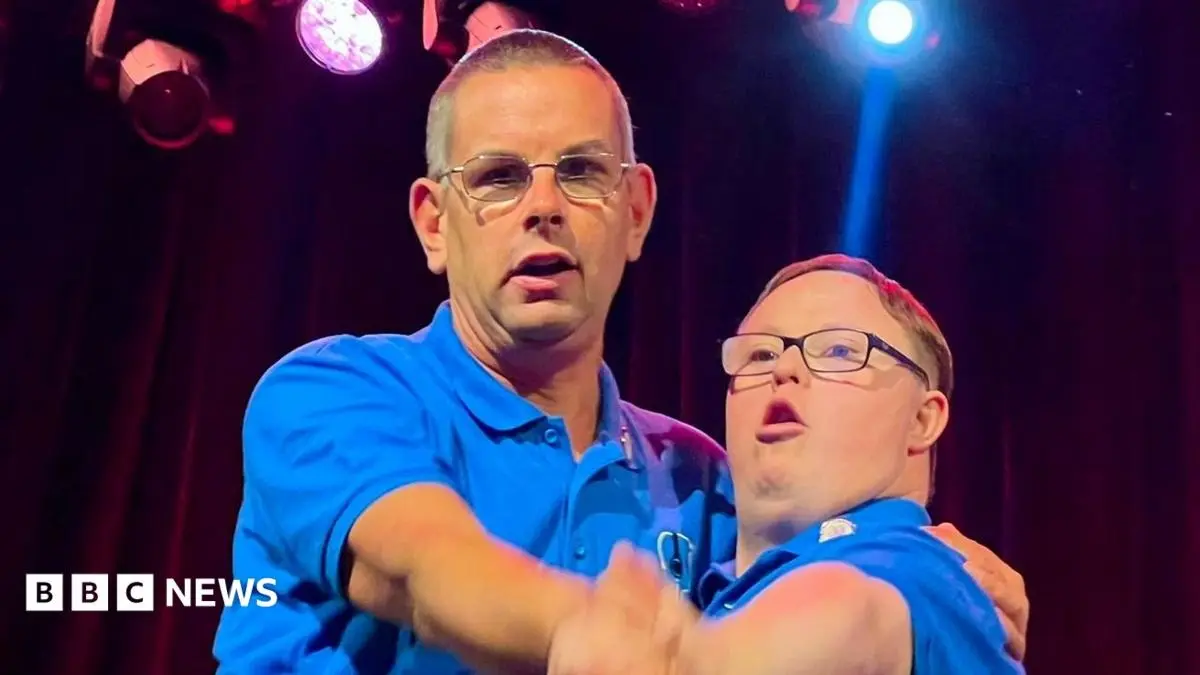
The culmination of years of planning arrived under the bright lights of New York City. The anticipation backstage was thick with emotion, as performers, support staff, and family members realized the magnitude of the moment. When the curtain rose, the ensemble delivered a performance characterized by crisp choreography, infectious enthusiasm, and striking musicality.
The emotional peak of the evening arrived when David Stanley addressed the audience. In a poignant tribute that left few dry eyes in the house, Stanley’s voice cracked with emotion. He reached for a megaphone—one of Sir David Amess’s most iconic and recognizable accessories from his energetic political campaigns—and delivered the line that encapsulated the entire journey:
"We promised we’d get them to the Broadway and we did it my friend, we did it."
The theatre erupted into a sustained, thunderous standing ovation. New York theatregoers, seasoned by decades of world-class productions, were visibly moved by the raw authenticity and professional polish of the ensemble. It was a transcendent moment where local politics, international artistry, and human triumph converged.
Supporting Context & Metrics: The Impact of The Music Man Project
To fully understand the weight of the Broadway achievement, one must examine the broader socio-cultural landscape of disability arts and the measurable footprint of The Music Man Project within the UK and beyond.
Breaking Barriers in the Arts
Historically, individuals with learning disabilities have been severely underrepresented in mainstream cultural life, frequently relegated to passive consumers of art rather than active creators. The Music Man Project actively dismantles this barrier. By teaching original music, utilizing synchronized signing, and demanding high standards of performance, the charity treats its members as serious artists.
Prior to their New York debut, the ensemble had already accumulated a series of unprecedented accolades:
- Royal Recognition: They have performed for His Majesty King Charles III, cementing their status as a nationally significant cultural organization.
- Iconic Venues: The group has taken the stage at world-renowned London institutions, including the Royal Albert Hall and the London Palladium.
- National Curriculum Integration: The educational philosophy pioneered by David Stanley has begun influencing how music is taught to students with special educational needs (SEN) across UK schools.
Demographic and Societal Metrics
The significance of the charity’s work is underscored by demographic realities within the United Kingdom:
- According to the UK Department for Education, over 1.5 million pupils have Special Educational Needs (SEN), with a significant percentage dealing with moderate to severe learning difficulties.
- Studies consistently show that adults with learning disabilities face disproportionately high rates of social isolation, unemployment, and mental health challenges.
- Arts-based interventions, such as those provided by The Music Man Project, have been proven by numerous psychological and sociological studies to dramatically improve self-esteem, communication skills, social connectedness, and physical coordination among participants.
By taking these individuals out of the shadows and placing them center stage on Broadway, the project challenges deep-seated societal prejudices regarding what people with learning disabilities can achieve when given access, training, and respect.
Official Statements and Reflections
The triumph in New York elicited powerful reactions from political figures, cultural leaders, and the families whose lives have been altered by the project.
David Stanley, Founder and Musical Director:
"Sir David believed in us when many others simply viewed us as a nice local charity. He saw an international stage for these performers long before we dared to dream it. Standing on that stage in New York and speaking through his campaign megaphone was the hardest thing I’ve ever had to do, but it was also the most important. We carried his spirit across the ocean, and the roar of the Broadway crowd was proof that his belief in our performers was entirely justified."
Family Member of a Performer:
"For years, society tells you what your child cannot do. You are handed a list of limitations by medical professionals and educators. The Music Man Project changes the narrative entirely. To watch my son perform on a Broadway stage, smiling under the lights while an American audience cheers him on with tears in their eyes—it is something I never thought possible. Sir David knew this was in them, and David Stanley unlocked it."
Local Community Leaders in Southend:
"Sir David Amess was a relentless advocate for Southend, and his passion for this town was matched only by his compassion for its most vulnerable residents. The success of The Music Man Project on Broadway is a fitting tribute to a man who lived to serve others. It demonstrates that the legacy of a great public servant lives on through the lives he touched and the dreams he helped set in motion."
Future Outlook: Sustaining the Momentum
As the dust settles on their historic New York debut, leadership at The Music Man Project is not resting on its laurels. The success of the Broadway venture has served as a catalyst for an ambitious strategic expansion plan designed to ensure that Sir David Amess’s vision continues to grow.
1. National and International Franchising
The methodology developed by David Stanley is currently being packaged for wider distribution. The charity aims to establish official Music Man Project branches across every region of the United Kingdom, providing standardized training for music teachers, support workers, and special educators. Furthermore, international inquiries from countries inspired by the Broadway tour have opened discussions about establishing sister organizations overseas.
2. Policy Advocacy and Awareness
Building on Sir David’s political legacy, the charity is increasing its engagement with lawmakers, cultural ministers, and educational policymakers. The goal is to secure ring-fenced funding for disability arts education in schools and to lobby for greater representation of neurodivergent and disabled artists in mainstream cultural funding bodies like Arts Council England.
3. Continued Performance Schedules
The ensemble has already returned to the UK to a hero’s welcome, but planning is already underway for future high-profile performances. Rather than a one-off stunt, the New York trip has established a new baseline for the charity’s ambitions: proving that no stage is too grand, and no dream is too big for performers with learning disabilities.
Conclusion
The journey of The Music Man Project from the coastal avenues of Southend-on-Sea to the glittering lights of Broadway is a masterclass in turning profound tragedy into transcendent triumph. Through the unyielding dedication of founder David Stanley, the fierce advocacy of the late Sir David Amess, and the boundless talent of the performers themselves, this milestone has permanently shifted the conversation around disability and the arts. As the final notes faded in New York and the standing ovation echoed through the theatre, it was abundantly clear: the music plays on, louder and prouder than ever before.