The intersection of acoustic artistry and digital engineering has officially found a new, high-profile institutional home. The prestigious Eastman School of Music, operating under the umbrella of the University of Rochester in New York, has announced the launch of a groundbreaking Bachelor of Music (BM) degree in Music Creation and Technology.
Tailored specifically for modern creators whose artistic visions are deeply rooted in electronic and digital tools, this new major bridges the historic divide between classical pedagogy and cutting-edge software and hardware development. As the modern music landscape shifts toward hybrid production environments, generative audio tools, and cross-platform media integration, institutions of higher education are forced to adapt. Eastman’s answer is not merely an elective track or a minor adjustment to an existing composition syllabus, but a dedicated, rigorous undergraduate curriculum that treats electronic music production, sound design, software development, and hardware engineering as primary academic disciplines.
The development of this degree is not happening in a vacuum. It represents a cornerstone initiative of the newly established Department of Sound Arts and Engineering—a pioneering interdisciplinary academic branch uniting the Eastman School of Music with the Hajim School of Engineering & Applied Sciences. Furthermore, this academic expansion directly builds upon the momentum of the Beal Institute for Film Music and Contemporary Media, bolstered by historic philanthropic support from Joan and Jeff Beal.
For prospective students looking to position themselves at the bleeding edge of the industry, applications for the inaugural cohort will open on September 1, 2026, running through December 1, 2026, with the first wave of classes officially commencing in the autumn of 2027.
Detailed Chronology: From Concept to Curriculum
The journey toward the establishment of the Music Creation and Technology degree reflects a calculated, multi-year institutional strategy aimed at modernizing music education without compromising its rigorous standards.
The Foundation of Modern Media Scoring (Recent Years)
Long before the inception of a dedicated technology degree, the groundwork was laid through the expansion of the Beal Institute for Film Music and Contemporary Media at Eastman. Named and supported by celebrated composer Jeff Beal and vocalist Joan Beal, the institute began forging vital pathways between traditional composition and contemporary, technology-driven media scoring. This initiative signaled to the academic community that Eastman was actively looking outward, preparing students for the realities of modern media markets where technological literacy is just as important as counterpoint.
Institutional Convergence: The Department of Sound Arts and Engineering
A major inflection point occurred with the formal establishment of the Department of Sound Arts and Engineering. Recognizing that acoustic innovation increasingly relies on a symbiosis between art and applied science, the University of Rochester bridged two of its most prestigious entities: the Eastman School of Music and the Hajim School of Engineering & Applied Sciences. This interdisciplinary partnership created a unique pipeline where musicians could learn coding, circuit bending, and acoustic engineering, while engineering students could immerse themselves in psychoacoustics and musical composition.
The Arrival of Dennis DeSantis
To steer a program of this magnitude, Eastman required a leader who understood both the rigorous demands of classical conservatory training and the agile, disruptive nature of the commercial music technology sector. Enter Associate Professor Dennis DeSantis. A 2005 Eastman alumnus (DMA) and former Head of Music Learning at Ableton, DeSantis brought a rare pedigree to the table. His appointment served as the catalyst for the final structuring of the Music Creation and Technology degree, fusing industry-insider knowledge with academic authority.
Roadmap to the 2027 Launch
September 1, 2026: Official opening of applications for the inaugural Bachelor of Music cohort.
September 24 & October 22, 2026: Virtual information sessions hosted by Professor Dennis DeSantis for prospective applicants and parents.
December 1, 2026: Application submission deadline for the incoming Fall 2027 class.
Autumn 2027: Official commencement of the Music Creation and Technology BM degree, welcoming the first students into Eastman’s state-of-the-art collaborative facilities.
Supporting Context & Metrics: Inside the Curriculum and Campus
To truly understand the weight of Eastman’s new degree, one must examine the curriculum’s architecture and the physical infrastructure built to support it. Modern music education frequently struggles with balancing vocational tool-training with critical, theoretical thinking. The Eastman model solves this by embedding hands-on technical proficiency within a robust cultural, historical, and social framework.
The Curriculum: Beyond the Software Manual
While students in the Music Creation and Technology program will spend countless hours mastering electronic music production, live performance systems, professional recording and editing, and DJing, the syllabus goes far beyond mere DAW navigation.
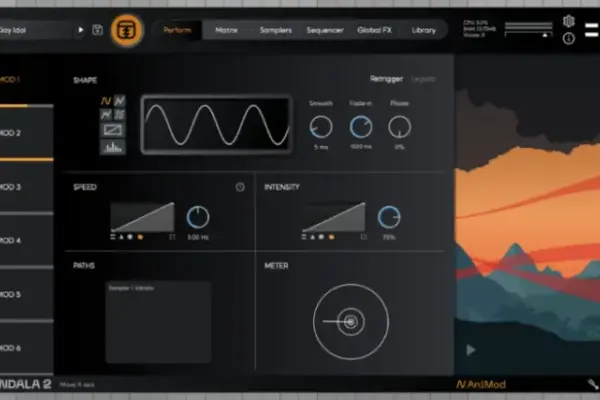
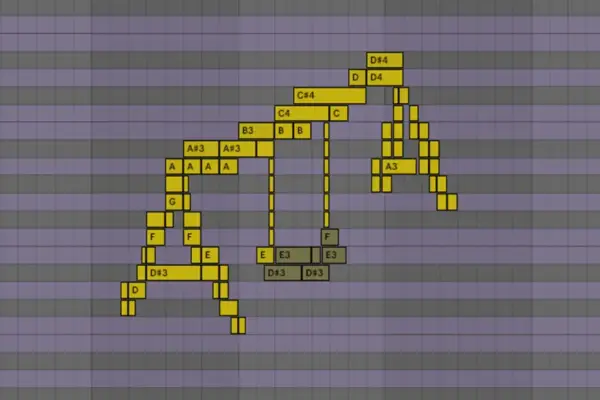
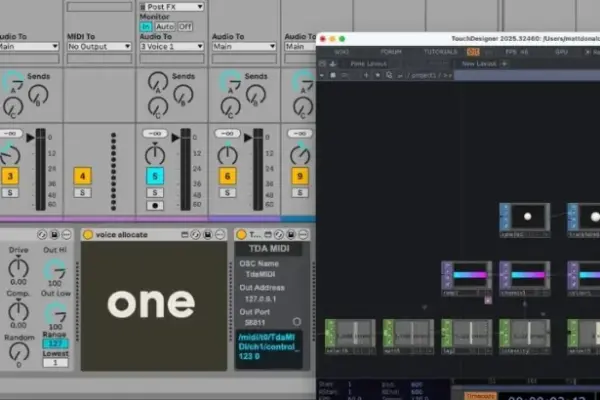
The coursework demands that students critically analyze and interpret electronic music from multiple historical and cultural vantage points. Collaboration is treated as a core competency; students are trained to work fluidly across creative and professional environments, preparing them to build and contribute to inclusive artistic communities. Furthermore, unlike traditional composition degrees where students simply write music for others to play, Eastman’s curriculum empowers students to design their own tools. By delving into software and hardware development, undergraduates will learn how to build new instruments and algorithmic systems that push the boundaries of current sonic capabilities.
Physical Infrastructure: A 6,000-Square-Foot Innovation Hub
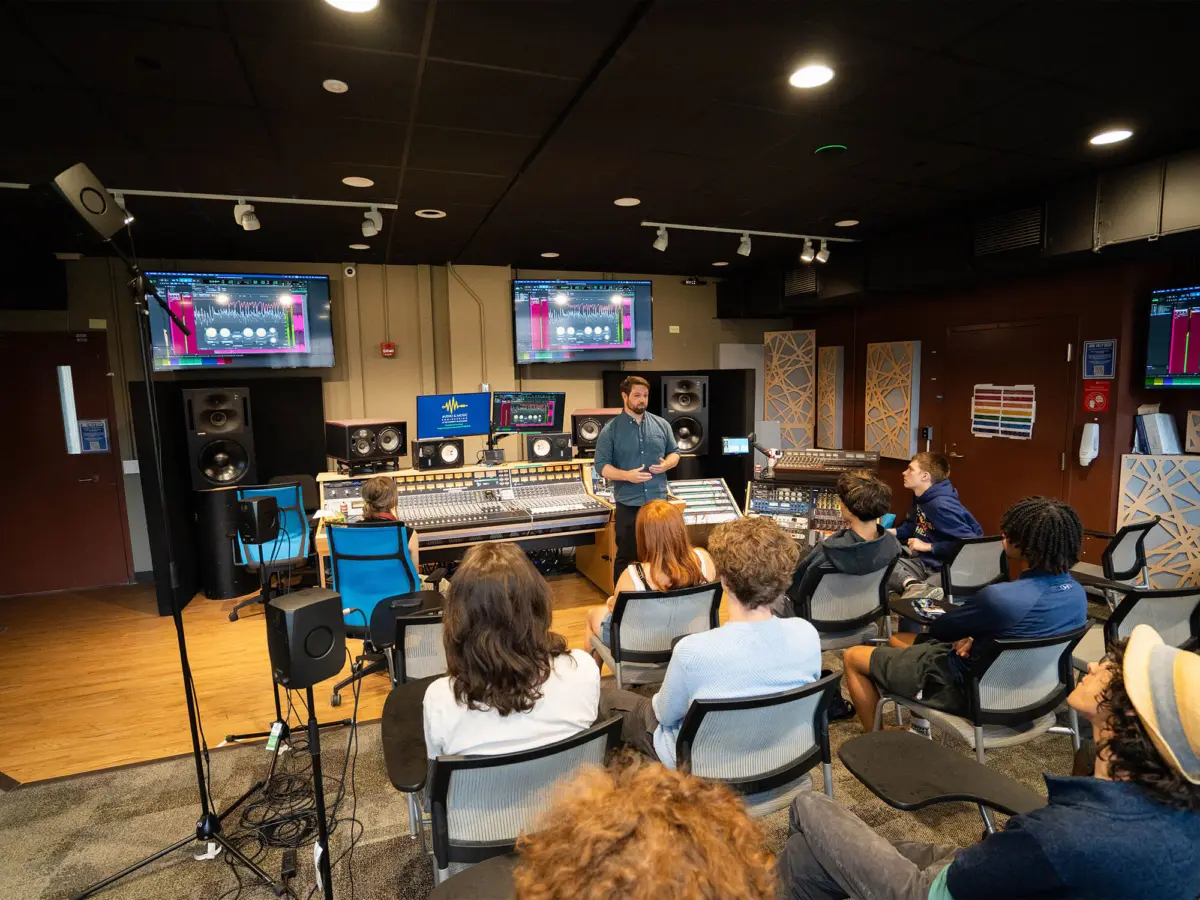
Theory requires space to manifest into reality. To accommodate the hands-on demands of the degree, the University of Rochester has constructed a state-of-the-art collaborative center on campus spanning an impressive 6,000 square feet.
This facility is meticulously designed to foster cross-disciplinary friction and collaboration. It houses:
A suite of modern computer and experimentation labs.
Dedicated creative spaces tailored for live electronic setups and generative installations.
Advanced classrooms and specialized teaching studios.
A professional-grade recording studio accessible to students across the program.
Proximity to the Gavett Audio Studio at the Hajim School of Engineering, seamlessly blending traditional music production spaces with advanced acoustic testing environments.
Official Statements: Industry Leaders on the Future of Innovation
The launch of the Music Creation and Technology degree has generated significant enthusiasm among faculty, university leadership, and the broader creative technology sector.
Kate Sheeran, the Joan and Martin Messinger Dean at the Eastman School of Music, emphasizes that the program represents a vital, progressive leap forward for the institution.
"Dennis’s broad experience across the music industry—alongside his work as a performer, composer, and educator—makes him especially well-suited to lead this programme," Dean Sheeran states. "With this major, Eastman is taking a progressive approach to the intersection of music and technology, positioning our students to engage thoughtfully in a rapidly evolving field and to lead the future of musical innovation."
At the helm of the program is Associate Professor Dennis DeSantis, whose career spans high-level composition, academic percussion, sound design, and corporate education leadership at Ableton—where he oversaw the creation of industry-standard educational platforms like Learning Music and Learning Synths, contributed to the design of Live and Push, and authored the widely read production text Making Music: 74 Creative Strategies for Electronic Music Producers.
"This programme invites students to explore new ways of creating and experiencing music with technology," DeSantis explains. "Students will make music using a range of modern tools, while also learning to think critically about those tools and to make new ones that push at the boundaries of what’s currently possible."
DeSantis’s vision highlights a core philosophy of the department: the creator of tomorrow cannot simply be a passive consumer of software plug-ins and hardware controllers. They must understand the underlying mathematics, physics, and cultural implications of digital audio, allowing them to dictate the future direction of the industry rather than simply reacting to it.
Future Outlook: Shaping the Next Generation of Sonic Architects
As higher education grapples with the rapid democratization of music production and the disruptive rise of generative audio and AI-driven workflows, institutions like the Eastman School of Music are setting a new benchmark. By fusing the historical prestige and rigorous foundational training of a world-renowned conservatory with the forward-thinking engineering prowess of the Hajim School, Eastman is creating a new archetype for the modern musician.
The career paths available to graduates of the Music Creation and Technology degree are as expansive as the digital landscape itself. Alumni will be uniquely positioned to thrive across a multifaceted ecosystem that includes:
Media and Entertainment: Composing and sound-designing for interactive gaming, spatial audio cinematic experiences, streaming platforms, and virtual reality environments.
Music Production and Performance: Operating as independent touring electronic artists, master mix and mastering engineers, immersive audio specialists, and contemporary ensemble directors.
Technology Sector: Working as UX/UI designers for audio software companies, hardware developers for synthesizer and controller manufacturers, and audio programmers building proprietary DSP (Digital Signal Processing) algorithms.
Cross-Disciplinary Collaboration: Partnering with software engineers, visual artists, and data scientists to create interactive installations and generative art pieces.
For aspiring artists who view the DAW not merely as a recording tool, but as an instrument of infinite possibility, Eastman’s new degree offers a rare opportunity. It promises an environment where high-level musicianship meets technological audacity—ensuring that the next generation of sound artists are not just prepared for the future of the industry, but actively writing its code.
Prospective students eager to learn more about the curriculum, application prerequisites, and campus facilities are encouraged to register for the upcoming virtual informational sessions hosted by Professor Dennis DeSantis on September 24 and October 22, 2026, or visit the official Eastman School of Music admissions portal.