Executive Overview
Cannibalism remains one of the most profound and visceral taboos in human history. Across cultures and epochs, the consumption of human flesh—anthropophagy—elicits a potent mixture of dread, fascination, and profound moral revulsion. Yet, historical and archaeological records demonstrate that consumption of the human species has occurred under extreme pressures, including total warfare, religious rituals, and, most frequently, acute scarcity.
While archaeological discoveries—such as the physical evidence of survival cannibalism recovered from 17th-century Jamestown, Virginia—confirm that human desperation can shatter even the most absolute cultural prohibitions, popular culture has historically gravitated toward the monstrous. Nowhere is this truer than in the folklore of Scotland, where tales of ravenous, flesh-eating outlaws have terrified generations.
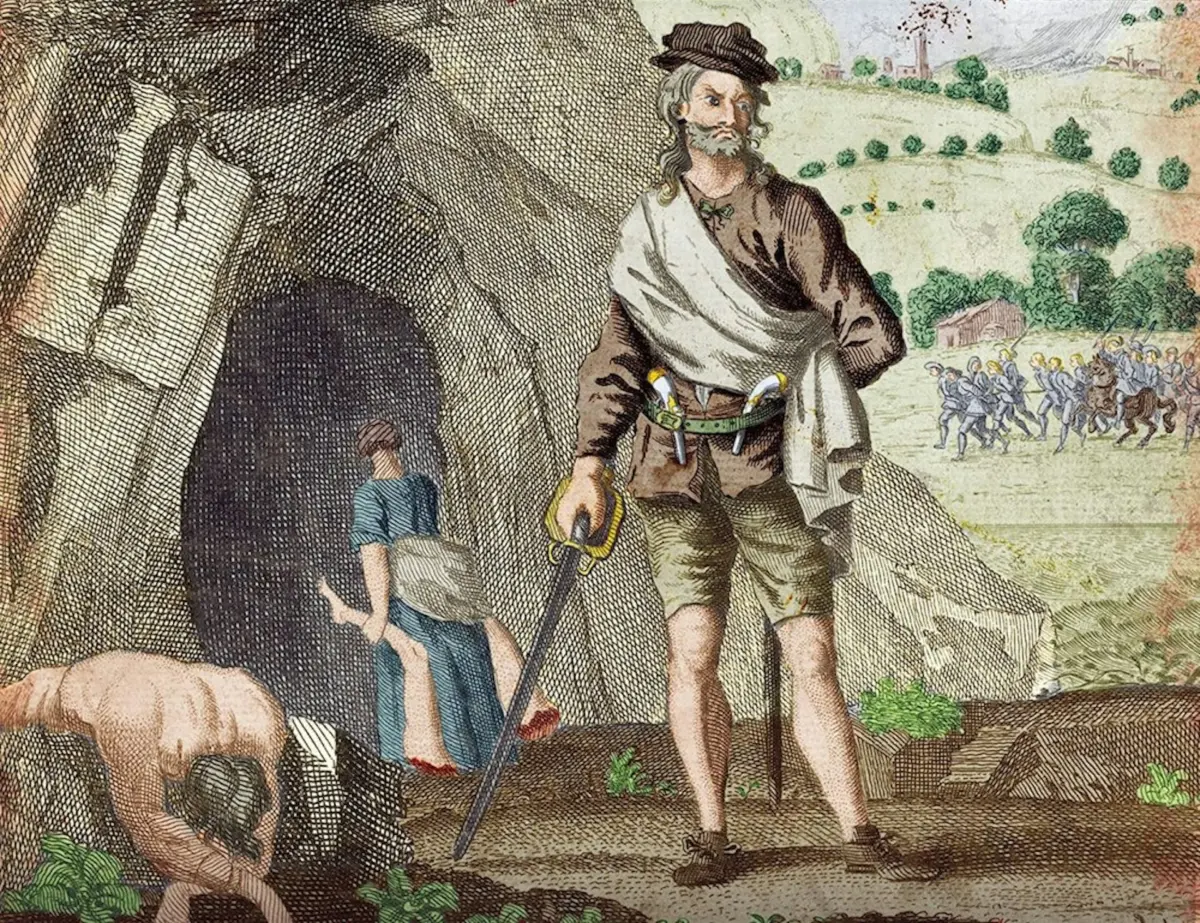
The most famous of these figures is Sawney Bean, an alleged 16th-century patriarch who supposedly lived in a cave with his family along the Ayrshire coast, ambushing travellers and feeding thousands to sustain their clandestine clan. However, modern historical analysis reveals Sawney Bean to be an 18th-century fabrication—likely an anti-Scottish literary caricature designed to demonize our northern neighbors.
Centuries before the legend of Sawney Bean captured the British imagination, Scottish chroniclers recorded an even more chilling archetype: Christie Cleek. Emerging from the brutal famine years of the 1330s, Cleek’s legend has spent nearly seven centuries evolving from a sparse, terrifying medieval chronicle entry into a multi-layered cautionary tale. By examining the trajectory of Christie Cleek and the socio-historical reality of medieval famine, this investigation explores how folklore documents not merely the acts of monsters, but the profound anxieties of societies stretched to their absolute breaking point by starvation.
Detailed Chronology: The Evolution of the Christie Cleek Legend
The biography of Christie Cleek—if such a man ever breathed—is lost to the mists of medieval fabrication and oral tradition. Yet, the paper trail left behind by medieval and modern chroniclers offers a fascinating window into how a single name transforms into a legendary monster.
1339: The Crucible of Famine
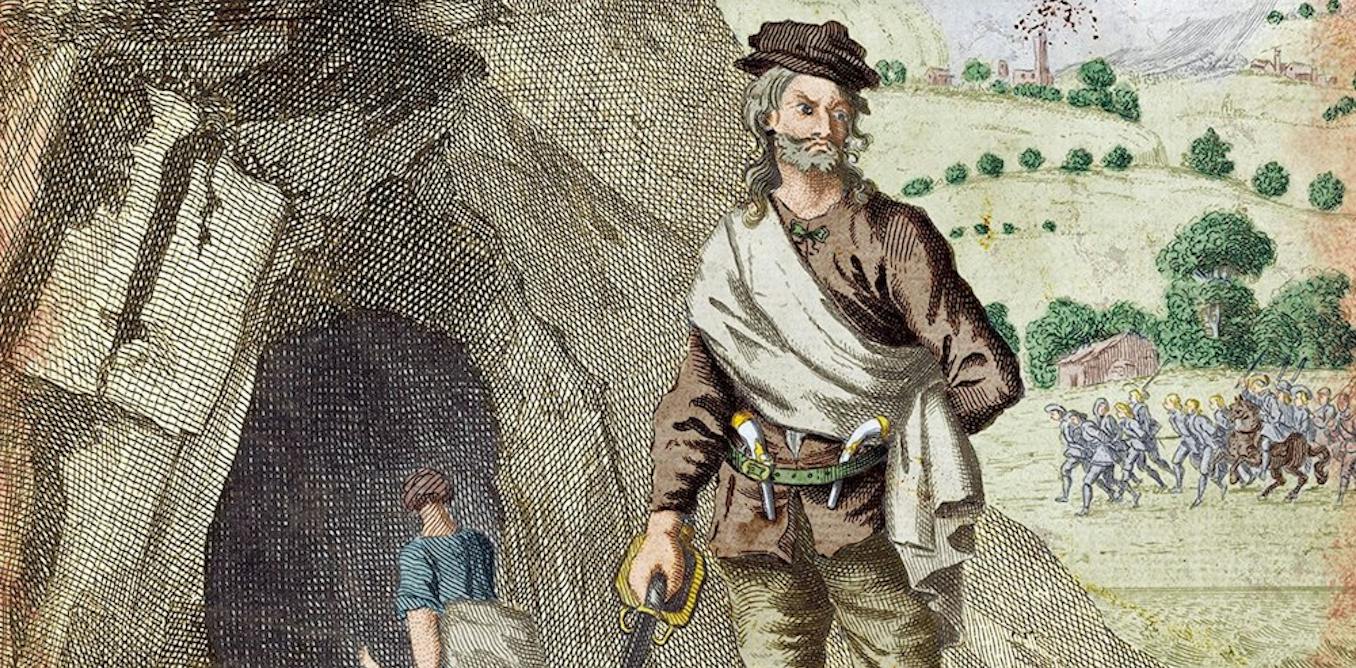
According to subsequent historical accounts, the legend originates in the late 1330s, a period marked by devastating agricultural failures, economic collapse, and brutal warfare across Scotland. Medieval chroniclers note that populations during this era were routinely driven to consume unnatural sustenance, including dogs, horses, and grass. It was within this apocalyptic landscape that Christie Cleek allegedly emerged in Perth, utilizing crude metal hooks (cleeks) to drag unsuspecting women and children from their horses before slaughtering and consuming them.
Early 15th Century: The First Written Record
No contemporary records from the 1330s mention Cleek. The earliest surviving written reference appears decades later, penned by the early 15th-century chronicler Andrew of Wyntoun. Wyntoun’s account is remarkably brief: he describes Cleek simply as a low-born rustic who captured women and children and devoured them. Crucially, Wyntoun’s mention hints at a lost, contemporary chronicle that may have originally recorded the deed, suggesting the story circulated in oral or written forms shortly after the events supposedly transpired.
Mid-15th Century: Escalation and Retribution
As the 15th century progressed, the myth expanded. Chronicler Walter Bower introduced new, dramatic narrative elements to the tale. Bower noted that Cleek was not acting entirely alone; he was joined by a "fierce woman" (though her exact relationship to him remains unspecified). Furthermore, Bower introduced a sense of cosmic or legal justice, recording that Cleek and his companion were eventually captured, handed over to local magistrates, and subjected to a humiliating and agonizing public execution.
The 19th Century: Sanitization, Bourgeois Transformation, and Folklore
By the Victorian era, the legend of Christie Cleek underwent a radical sociological transformation. Wilson’s Book of Border Tales reframed Cleek no longer as a feral, low-born rustic, but as the leader of a band of hunters driven to madness after depleting local game populations during a relentless famine.
In these later iterations, the band crossed the ultimate moral threshold by drawing lots to consume a starving woman, after which they allegedly abandoned hunting wild animals altogether in favor of preying upon human travellers. Other 19th-century accounts attempted to gentrify the monster entirely, reimagining him as a prosperous, married merchant from Dumfries whose name was deployed by exhausted parents to terrify and silence unruly children.
Supporting Context & Metrics: The Reality of Medieval Scarcity
To understand why tales of cannibalism resonated so deeply in medieval Scotland and broader Europe, one must examine the socio-economic and climatic stressors of the 14th century.
The Climate Shock of the 14th Century
The 1330s arrived on the heels of the Great Famine of 1315–1317, which had already decimated populations across Northern Europe through a catastrophic combination of unremitting rainfall, failed crops, rotting livestock, and institutional collapse. In Scotland, these agricultural crises were intensely exacerbated by the destructive campaigns of the Wars of Scottish Independence. Armies systematically burned crops, slaughtered farm animals, and disrupted supply chains, turning localized weather anomalies into systemic humanitarian catastrophes.
Societal Responses to Extreme Deprivation
Historical data compiled from medieval European chronicles reveals consistent behavioral patterns during periods of prolonged starvation:
- Dietary Collapse: Populations universally pivoted from grain-based diets to foraging roots, bark, boiled leather, domestic pets, and vermin.
- Social Dislocation: Migration en masse from rural farming communities to urban centers drastically increased mortality rates through disease.
- The Taboo Threshold: While thousands perished quietly of malnutrition, chroniclers across Europe frequently documented whispered or verified instances of corpse desecration and survival cannibalism.
| Historical Era / Event | Primary Catalyst | Nature of Cannibalism Reported | Verification Status |
|---|---|---|---|
| Great Scottish Famine (1330s) | Warfare, Crop Failure, Climate | Consumption of dogs, grass, and alleged human outlaws (Christie Cleek) | Plausible/Unverified Folklore |
| Jamestown Colony (1609–1610) | Severe Siege, Winter, Starvation | Survival cannibalism (Forensic evidence of butchery on human remains) | Archaeological Proof |
| Sawney Bean Clan (Purportedly 16th c.) | Isolation, Psychopathy, Predatory Ambush | Mass highway robbery and systematic human consumption | Debunked 18th-Century Myth |
Expert Perspectives and Academic Analysis
Modern historians, anthropologists, and folklorists approach tales of historical cannibalism with a critical eye, balancing anthropological reality against the psychological utility of monster myths.
Dr. Valerie Matthews, Historian of Medieval European Culture
"When we read medieval chronicles detailing figures like Christie Cleek or the desperate dietary adaptations of populations eating grass and domestic animals, we are looking at the absolute fringe of human experience. Times were unimaginably hard, and the physiological impulse to survive can override deep-seated cultural conditioning. However, chroniclers also had a theological and narrative imperative: they used tales of extreme moral depravity, such as cannibalism, as metaphors for divine punishment during periods of war and famine."
Professor Alistair MacInnes, Folklorist and Scottish Cultural Historian
"The evolution of characters like Christie Cleek and Sawney Bean tells us infinitely more about the eras in which the stories were written down than the eras in which they supposedly occurred. In the 15th century, Cleek was a warning about the lawless brutalities of rural rustics during wartime. By the 19th century, Victorian storytellers transformed him into a bourgeois cautionary tale or an epic survival tragedy. These stories endure because humanity has an enduring, morbid fascination with the monsters we might become when civilization peels away."
Future Outlook: The Enduring Legacy of the Cannibal Taboo
As historical research methods advance—incorporating osteological analysis, isotope testing, and comprehensive digital archives of medieval manuscripts—our ability to separate historical reality from myth continues to sharpen.
Archaeological and Forensic Frontiers
Future discoveries will likely mirror the breakthroughs made at historic Jamestown, where modern forensic anthropology successfully distinguished between animal butchery marks and those inflicted upon human bone during starvation events. As archaeological techniques grow more sophisticated, scientists can increasingly verify whether legendary famine accounts contained kernels of grim, physical truth or remained purely within the realm of psychological projection.
The Psychological Attraction of the Taboo
In the digital age, tales of survival cannibalism and legendary anthropophagy continue to captivate public interest through true-crime documentaries, historical podcasts, and academic re-examinations. The persistent allure of figures like Christie Cleek demonstrates that modern societies remain just as fascinated—and unnerved—by the fragility of civilization.
Ultimately, whether Christie Cleek ever hunted travellers on the roads of Perth with an iron hook remains an unanswerable historical mystery. Yet, the persistence of his legend serves as an enduring testament to a darker truth: humanity has always recognized that beneath the thin, fragile veneer of societal rules, the ultimate terror is not what lives in the dark woods, but what hunger can drive an ordinary human being to do.