Executive Overview
In the upper echelon of contemporary improvised music, few figures command the quiet, enduring reverence afforded to bassist, composer, and bandleader Dave Holland. Spanning nearly six decades, Holland’s career represents a masterclass in artistic evolution—from the revolutionary crucible of late-1960s Miles Davis ensembles to his own pioneering trios, quintets, sextets, and electric-leaning projects. Arriving to coincide with his landmark 80th birthday, the monumental archival box set Freedom Call (released via Edition Records) is far more than a commemorative exercise or a collection of dusty outtakes. Across six meticulously mastered LPs (or three CDs), the release captures three distinct, high-watermark working bands in thrilling, unreleased live performances.
Curated with profound attention to detail, Freedom Call features Holland’s Sextet (Unity), his peerless Quintet (Synergism), and the electrifying cross-genre quartet Prism (Freedom). For both lifelong devotees and newcomers discovering the Wolverhampton-born maestro, this box set is an essential document. It underscores a central truth of Holland’s legacy: that true jazz leadership is not forged through iron-fisted control, but through mutual trust, generational collaboration, and an unyielding commitment to spontaneous discovery.
Detailed Chronology: Six Decades of Invention
To fully understand the magnitude of Freedom Call, one must trace the arc of a career that fundamentally re-mapped the sonic parameters of the double bass.
The Genesis and the Miles Davis Epoch
Holland’s journey into jazz folklore began in the vibrant, forward-thinking London jazz scene of the mid-1960s. His watershed moment arrived in July 1968 at Ronnie Scott’s famous London jazz club, where a 21-year-old Holland was playing in the support rhythm section for the Bill Evans Trio. Seated in the audience was Miles Davis, who was in the midst of dismantling conventional acoustic jazz paradigms. Impressed by the young bassist’s rock-solid intonation, advanced harmonic awareness, and mature time-keeping, Davis immediately recruited Holland to fill the chair vacated by Ron Carter.

This appointment thrust Holland into the eye of a musical hurricane. His acoustic and electric bass lines became the structural bedrock for epochal, genre-shattering recordings such as In A Silent Way (1969), Bitches Brew (1970), A Tribute to Jack Johnson (1971), and Live-Evil (1971). Rather than coasting on the immense cultural capital of his tenure with Davis, Holland charted an autonomous path defined by fearless exploration.
Vanguard Experimentation and ECM Years
Throughout the 1970s, Holland pushed the avant-garde envelope. He co-founded the legendary, radically experimental collective Circle alongside pianist Chick Corea, saxophonist Anthony Braxton, and drummer Barry Altschul. This period established Holland not merely as a premier rhythmic anchor, but as an avant-garde composer of formidable intellect.
His subsequent long-term association with ECM Records yielded some of the label’s definitive statements. Whether leading intimate trios or expansive large ensembles, Holland’s compositions maintained an instantly identifiable signature: they were intellectually intricate yet deeply swinging, structurally rigorous yet emotionally transparent.
Supporting Context & Metrics: Unpacking the Freedom Call Box Set
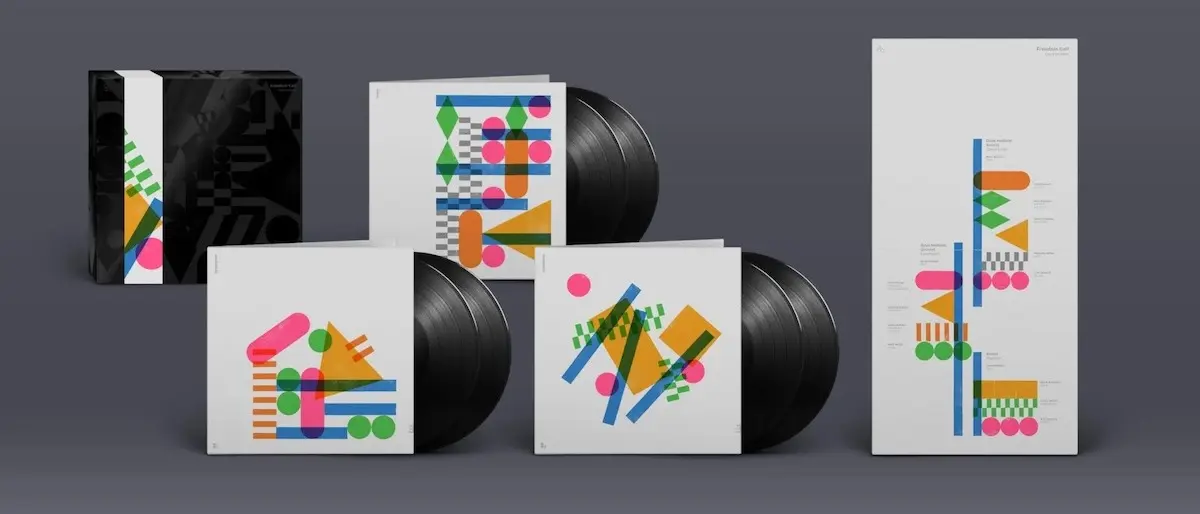
Freedom Call is structured as a trilogy of live performance portraits, each highlighting a distinct chapter of Holland’s 21st-century output. Edition Records has matched the sonic ambition of the music with a luxury physical package, featuring a numbered box, comprehensive liner notes penned by Holland himself, a musician’s guide poster, and pristine mastering executed by Steve Fallone at Sterling Sound.

Part I: The Sextet – Unity
Formed in 2006, Holland’s Sextet expanded upon the sonic architecture of his celebrated Quintet, providing the composer with a quasi-orchestral palette. Anchored by the late, great pianist Mulgrew Miller alongside a dynamic frontline of trombonist Robin Eubanks, trumpeter Alex Sipiagin, and alto saxophonist Antonio Hart—backed by powerhouse drummer Eric Harland—the ensemble achieved a rare harmonic richness.
Unity captures unreleased live performances of staples like "Fast Track," "Lazy Snake," "Modern Times," and "Ebb and Flow." Here, intricate written themes serve merely as launchpads for expansive, conversational improvisations. Miller’s sublime harmonic grounding, combined with Harland’s elastic sense of time, elevates these performances far beyond their original studio counterparts on Pass It On (2008).
Part II: The Quintet – Synergism
Without a piano to occupy the middle register, Holland’s classic Quintet carved out a uniquely transparent sonic landscape. Featuring Steve Nelson on shimmering vibraphone and marimba, Chris Potter on saxophone, Robin Eubanks on trombone, and Nate Smith on drums, this lineup stands as one of the most celebrated working bands in modern jazz history.
Synergism presents blistering live interpretations of material from albums like Prime Directive, Not For Nothin’, and Critical Mass (such as "Pathways," "Easy Did It," and "Full Circle"). Chris Potter’s tenor and soprano solos unfold with breathtaking narrative logic, while Nate Smith delivers an intoxicating hybrid of precision and deep-pocket funk. The absence of a keyboard leaves the music remarkably open, allowing Holland’s intricate bass lines and Nelson’s harmonic colorations to breathe.

Part III: Prism – Freedom
Refusing to rest on his acoustic laurels, Holland formed Prism in the early 2010s, uniting guitarist Kevin Eubanks, keyboard visionary Craig Taborn, and drummer Eric Harland. Reviving the spirit of electric jazz-rock fusion without falling into nostalgic pastiche, Prism blended progressive rock, electronic textures, and advanced modern jazz.
Captured live on Freedom, tracks like "A New Day," Eric Harland’s "Choir," and Kevin Eubanks’s "Evolution" showcase a quartet operating at the absolute bleeding edge of contemporary improvisation. Taborn’s fluid navigation between acoustic piano and electric keyboards blurs the lines between composition and real-time electronic soundscape design, proving that Holland’s creative curiosity remained entirely unflagging into his seventies.
Official Statements & Artistic Philosophy
Reflecting on his career, Holland has consistently emphasized that the secret to enduring musical longevity lies not in dictating terms, but in cultivating an environment where creative risk is rewarded.
In liner notes accompanying the box set, Holland notes:

"The music becomes a living organism. When you surround yourself with musicians who listen as deeply as they play, the composition stops being a fixed destination and starts becoming a shared journey."
Critics and industry peers alike have lauded Freedom Call as a masterclass in archive curation. Jazz historians point out that Holland’s egalitarian approach to bandleading places him in the rare historical company of Duke Ellington and Miles Davis—leaders who elevated their sidemen into co-conspirators, ensuring that the collective voice always superseded individual ego.
Future Outlook
As Dave Holland celebrates his 80th milestone, Freedom Call serves as a profound reminder that his musical philosophy remains as relevant today as it was during his formative years in London and New York. The release challenges contemporary artists to prioritize long-term artistic relationships over fleeting trends, and deep listening over superficial technical display.
For the jazz community, Freedom Call is not an epitaph, but a vibrant touchstone. It anchors a legacy that continues to inspire successive generations of bassists, composers, and improvisers across the globe. As listeners place these LPs onto their turntables, they are reminded that while time marches forward, truly visionary art does not merely survive the years—it gathers them, echoing with the memories of yesterday while pointing boldly toward the horizon.