Executive Overview
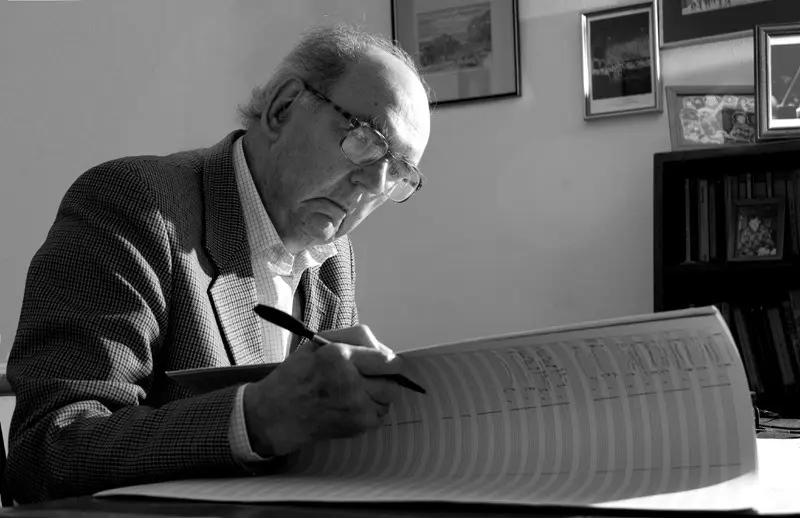
Next year marks a profound milestone in the cultural landscape of the United Kingdom and the broader international classical music community: the centenary of the birth of John Joubert (1927–2019), Birmingham’s pre-eminent composer. Though born in Cape Town, South Africa, Joubert anchored his creative life firmly in the West Midlands, residing in the Moseley district for over half a century. Over a prolific career spanning decades, Joubert penned more than 180 works, traversing a vast stylistic spectrum that encompasses grand operas, sweeping orchestral scores, intricate choral masterpieces, and intimate, widely beloved short carols.
As the classical world looks ahead to formal centenary festivities, anticipation is already building. Serving as a compelling preview to next year’s full-scale commemorations, conductor Jeffrey Skidmore—founder of the renowned early music and choral ensemble Ex Cathedra—will lead the Royal Birmingham Conservatoire (RBC) Chamber Choir in a special tribute concert. Scheduled for October 29, 2026, at The Bradshaw Hall within the Royal Birmingham Conservatoire, the programme promises an evocative juxtaposition of Joubert’s choral works with sacred and secular masterpieces by William Byrd, C.H.H. Parry, and Sergei Rachmaninoff.
This curated evening is far more than a routine retrospective; it is a meticulously designed autobiographical sonic journey. The programme traces Joubert’s artistic DNA, linking the foundational musical experiences of his South African youth to the mature, uncompromising voice that made him a cornerstone of British choral music. With the recent staging of his final opera, Jane Eyre, at the Grimeborn Festival continuing to draw critical acclaim, the upcoming RBC concert underscores a broader, urgent renaissance: ensuring that Joubert’s towering contribution to Western classical music is fully recognized, celebrated, and performed worldwide.
Detailed Chronology: From Cape Town Roots to Moseley Mastery
To understand the profound musical architecture of John Joubert’s work, one must trace a transatlantic journey that bridged the Southern and Northern Hemispheres, defining a unique compositional identity characterized by lyrical intensity, contrapuntal mastery, and deep spiritual and literary engagement.
Formative Years in South Africa (1927–1946)
Born in Cape Town on March 20, 1927, John Joubert showed early, exceptional aptitude for music. Growing up in a multicultural environment that was nonetheless heavily influenced by British colonial educational and cultural frameworks, Joubert received his initial musical grounding in South African schools. It was during these formative years that he encountered the bedrock of the choral canon—music that would quietly sub-soil his own creative subconscious. As Joubert would later reflect, his introduction to the polyphonic mastery of William Byrd, the stately Anglican traditions of C.H.H. Parry, and the lush, emotionally charged harmonies of Sergei Rachmaninoff laid the psychological and technical foundation for his future output.
Relocation and Academic Ascendancy in the UK (1946–1950s)
Seeking to hone his craft at the highest level, Joubert moved to England in 1946. He studied at the prestigious Royal Academy of Music in London, where his teachers included figures such as Theodore Holland. During his time in the capital, Joubert rubbed shoulders with a generation of British composers grappling with how to forge a modern voice in the shadow of Ralph Vaughan Williams, Benjamin Britten, and William Walton.
In 1950, Joubert accepted a position as a lecturer in the Department of Music at the University of Birmingham. This move proved to be the pivotal anchor of his life. Moving into a home in the leafy Birmingham suburb of Moseley, Joubert embedded himself into the local educational and artistic fabric. For over fifty years, Moseley remained his creative sanctuary—a quiet suburban enclave from which he projected music of national and international significance.
The Academic and Artistic Pillar of Birmingham (1950–1986)
For more than three decades, Joubert served as a beloved and formidable teacher, mentor, and conductor at the University of Birmingham. Generations of composition and performance students passed through his lecture halls and studios, beneficiaries of his rigorous intellect, high artistic standards, and gentle, self-effacing demeanor.
Simultaneously, his compositional output surged. Far from being isolated in academia, Joubert’s music resonated far beyond the campus. His choral miniatures—such as the perennial Christmas favorites There is no rose (composed in 1954) and Torches (1951)—rapidly crossed the threshold from contemporary novelties to modern-day choral classics, performed by cathedral choirs, parish churches, and secular singing groups across the globe. Alongside these sacred miniatures, he produced ambitious large-scale works, including operas like Silas Marner and Under Western Eyes, establishing a reputation as a master dramatist who could translate complex psychological literature into compelling musical theater.
The Late-Career Renaissance and Final Opus (1987–2019)
Even after formally retiring from his university post in 1986, Joubert’s creative fires burned undiminished. The late decades of his life were marked by a series of monumental commissions and deeply personal projects. Among these, none looms larger than his final opera, Jane Eyre, based on the classic Charlotte Brontë novel.
Composed over several years with a libretto by Kenneth Loveland, Jane Eyre represents the sum total of Joubert’s dramatic and musical wisdom. Though completion of the score presented physical challenges in his later years, the opera stands as a testament to his unwavering dedication to the craft. Following his passing in 2019 at the age of 92, the advocacy for his catalogue gained renewed urgency, culminating in the historic stage premiere of Jane Eyre at the Grimeborn Festival—a triumph that proved his music’s enduring theatricality and emotional resonance.
Supporting Context & Metrics: The Scale of Joubert’s Artistic Output
To fully grasp the magnitude of John Joubert’s upcoming centenary, one must examine the sheer volume and diversity of his catalog. Quantitative metrics alone cannot capture artistic worth, but in Joubert’s case, they underline an extraordinary, tireless work ethic spanning nearly eight decades of creative output.
Catalog Overview and Distribution
- Total Cataloged Works: Over 180 distinct opus numbers and compositions.
- Operatic Works: Major stage productions including Judith (1962), Under Western Eyes (1968), Silas Marner (1961), The Quarry (1964), and his crowning dramatic achievement, Jane Eyre (completed in the 21st century).
- Orchestral and Concertante Works: Three symphonies, concertos for violin, cello, and bassoon, and numerous orchestral suites that demonstrate his command of large instrumental forces.
- Choral and Church Music: Dozens of anthems, services, carols, and large-scale choral-orchestral pieces, including the St Mark Passion, The Raising of Lazarus, and the Magnificat for Cape Town Cathedral.
- Vocal and Chamber Music: Art song cycles, string quartets, and sonatas for various instrumental combinations.
The Choral Legacy in Numbers
While Joubert wrote across every classical genre, his footprint on the British choral tradition remains his most widely disseminated achievement. Works such as There is no rose are sung by thousands of choristers annually during the Advent and Christmas seasons. Recorded dozens of times by world-class ensembles—including King’s College Choir Cambridge, the BBC Singers, and Ex Cathedra—these short works have achieved a permanent place in the global choral repertoire.
Furthermore, his major secular choral works, such as South of the Line—a setting of five anti-Boer War poems by Thomas Hardy—demonstrate a rare intellectual engagement with historical trauma and political conscience. Scored for baritone solo, chorus, and orchestra (or chamber ensemble), South of the Line marries Hardy’s jagged, poignant verse with music of stark, unyielding power, showcasing a composer acutely sensitive to the moral dimensions of history.

Official Statements & Curatorial Vision
The upcoming centenary event at the Royal Birmingham Conservatoire on October 29, 2026, is not merely a scheduled entry in an events calendar; it is a carefully calibrated artistic statement. Conductor Jeffrey Skidmore, whose professional relationship with Joubert spans decades, has articulated a clear vision for the commemorative concert.
Reflecting on the genesis of the programme, Skidmore shared vital historical context:
"The idea for the programme came from a 50th anniversary concert that Ex Cathedra gave in Joubert’s honour in 1987. Joubert wrote in the programme about the inspiration of his school in South Africa where he was introduced to works by Byrd, Parry and Rachmaninoff. His own compositions, ‘There is no rose’, ‘O Lorde the maker of al thing’, and ‘Torches’, are now modern-day classics."
This autobiographical thread forms the structural backbone of the 2026 RBC Chamber Choir performance. By placing Joubert’s early influences—Byrd’s Renaissance polyphony, Parry’s late-Victorian/Edwardian harmonic gravity, and Rachmaninoff’s sweeping Russian romanticism—in direct dialogue with Joubert’s own mature output, Skidmore creates an acoustic portrait of an artistic mind being formed and refined.
Skidmore draws special attention to the structural and emotional arc of the concert, which culminates in what he regards as the composer’s absolute masterpiece:
"We’ll also include the ‘Magnificat’ he wrote for the cathedral in Cape Town, and that links to the concluding piece—’South of the Line’—which I consider to be his masterpiece—a setting of five of Thomas Hardy’s powerful anti-Boer War poems."
The inclusion of the Cape Town Magnificat acts as a geographical and spiritual bridge, connecting Joubert’s African birthplace with his British maturity, while South of the Line offers a profound meditation on conflict, displacement, and humanity—themes that remain urgently relevant in the modern era.
Future Outlook: The Centenary and Beyond
As the classical music world approaches 2027—the official centenary year of John Joubert’s birth—the October 2026 concert at the Royal Birmingham Conservatoire serves as the official starter’s pistol for a global wave of retrospectives, recordings, and performances.
Institutional and Academic Initiatives
Institutions inextricably linked to Joubert—most notably the University of Birmingham and the Royal Birmingham Conservatoire—are spearheading efforts to archive, promote, and re-examine his vast manuscript collection. Scholars are increasingly turning their attention to his unpublished or rarely performed instrumental scores, seeking to evaluate his symphonies and chamber music alongside his better-known choral and operatic pieces.
Broadening the Performance Horizon
For decades, Joubert’s music suffered from the paradox of being simultaneously ubiquitous (via his famous Christmas carols) and overlooked (in terms of his symphonic and operatic output). The successful Grimeborn Festival premiere of Jane Eyre proved that contemporary audiences are hungry for melodic, dramatically gripping, and tonally sophisticated music theater that does not shy away from emotional sincerity.
Moving toward the centenary, arts organizations, festival directors, and radio broadcasters are planning dedicated broadcasts, commercial recording projects, and live concert series. The goal is clear: to lift John Joubert out of the category of a "local West Midlands treasure" and secure his rightful status as a major international voice of twentieth and twenty-first-century British and Commonwealth music.
Conclusion: An Immortal Resonance
John Joubert spent over half a century writing music in a quiet Moseley study, far removed from the hyper-commercialized centers of metropolitan trend-chasing. Yet, the quiet integrity of his craftsmanship has outlived fashion. As the Royal Birmingham Conservatoire Chamber Choir under Jeffrey Skidmore takes the stage on October 29, 2026, and as the 2027 centenary celebrations unfold across the globe, they will not merely be looking backward at a historical figure. They will be actively participating in the ongoing life of a living, breathing musical legacy—one that continues to sing with timeless grace, intellectual rigor, and profound human empathy.
For full booking details, programme notes, and ticketing information for the Joubert Centenary Celebration concert on October 29, 2026, interested patrons are advised to visit the official Royal Birmingham Conservatoire Events Calendar.