Executive Overview
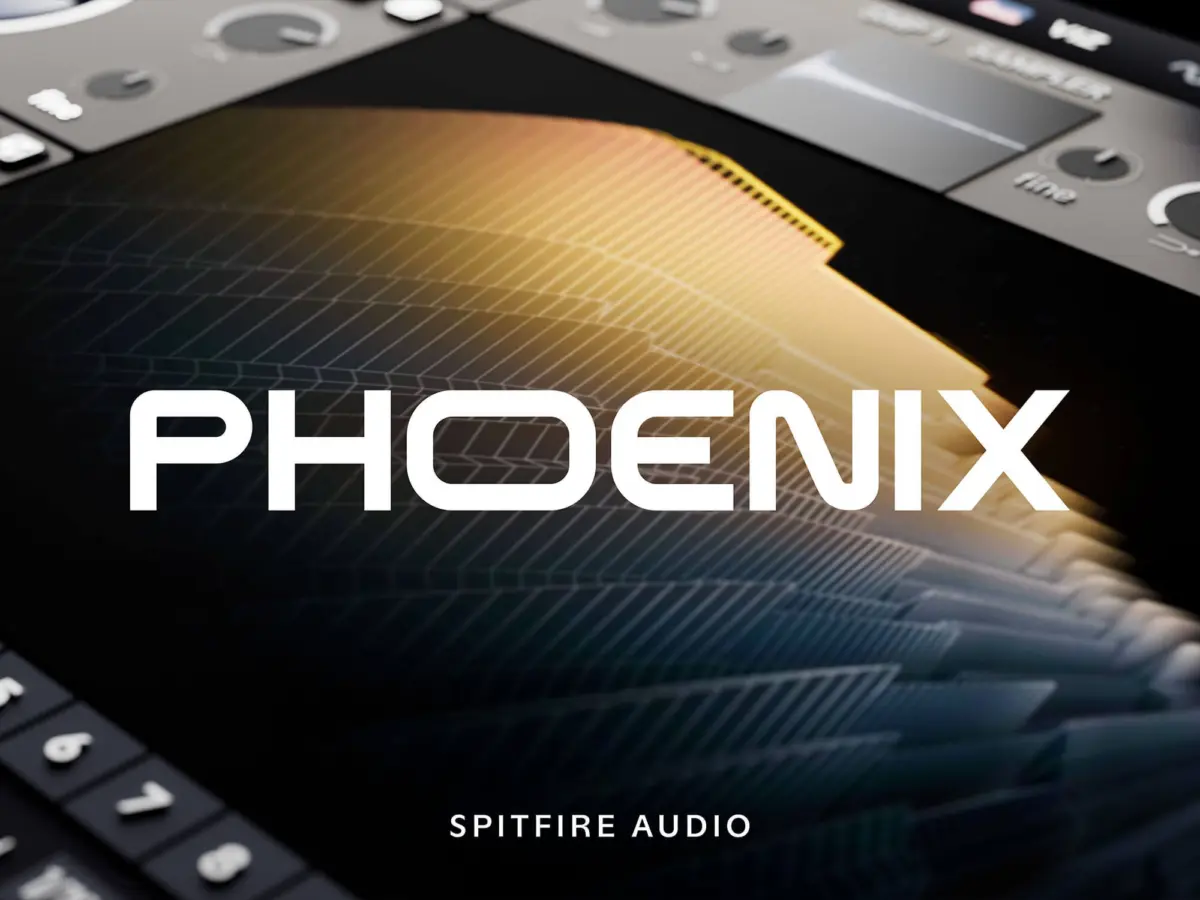
In the fast-evolving landscape of modern music production, cinematic scoring, and electronic sound design, few collaborations carry the pedigree of Spitfire Audio and electronic music pioneer Brian Transeau, universally known as BT. Following a trajectory that began with Phobos in 2017 and continued through Polaris in 2022, the Grammy-nominated composer, producer, and technological innovator has once again partnered with the esteemed British sample library developer. Their third and most ambitious venture to date is Phoenix, a hybrid software synthesizer designed from the ground up to challenge traditional paradigms of sound creation.
Phoenix bridges two seemingly disparate worlds: the pristine, emotive gravity of Spitfire Audio’s acoustic orchestral libraries and the deeply idiosyncratic, analog-heavy, and experimental vault of BT’s personal archive. The result is a dual-engine architecture per voice—routing distinct sound chains across individual stereo channels—that treats traditional orchestral instruments not as static recording playbacks, but as raw, malleable material meant to be shattered, resynthesized, and reborn.
Far beyond a traditional software plugin, Phoenix functions as an interconnected organism built for continuous movement. Boasting six distinct synthesis engines, advanced cross-modulation capabilities, a probability-driven arpeggiator inspired by BT’s legendary StutterEdit plugin, and a limitless modulation matrix, Phoenix aims to redefine how contemporary composers and electronic producers craft evolving pads, aggressive textures, and cinematic soundscapes. Available through a perpetual license model on the Spitfire Audio platform, Phoenix marks a significant technical and creative milestone for both collaborators, pushing the boundaries of what is possible within a DAW environment.
Detailed Chronology: The Genesis and Evolution of the Spitfire-BT Partnership
To fully understand the technological leaps made in Phoenix, one must trace the collaborative lineage established by Spitfire Audio and BT over the past decade. This partnership has consistently pushed the envelope of software instrument design, moving steadily away from static sample playback toward generative, organic sound-sculpting ecosystems.
2017: The Birth of Phobos
The collaborative journey began with the release of Phobos in 2017. Named after the Martian moon and the psychological concept of fear, Phobos was envisioned as a polyphonic artifact generator. It combined a robust source of polyphonic source material with a unique convolution engine. BT’s vision for Phobos was to create an instrument that could dynamically process incoming audio or internal samples through banks of rhythmic delays, creating complex, mutating rhythmic textures that felt alive. It challenged composers to think about polyphony not as fixed notes, but as evolving waves of frequency and time, setting a precedent for deep, hands-on sound manipulation.
2022: Navigating the Cosmos with Polaris
Five years later, the duo returned with Polaris, an instrument focused on cinematic space, interstellar moods, and spectral exploration. Polaris leaned heavily into hybrid workflows, merging cinematic orchestral textures with modular synthesis principles. It introduced users to deeply atmospheric pads, shimmering harmonic shifts, and sophisticated sequencing tools. Polaris proved that the initial experiment of Phobos was no fluke; rather, it established a blueprint for a sustained creative dialogue between a traditional orchestral developer and an electronic music visionary known for his mastery of granular synthesis and micro-editing.
2026: Rising from the Ashes with Phoenix
Building upon the conceptual successes of its predecessors, Phoenix represents the apex of this tripartite collaboration. The development cycle for Phoenix focused heavily on breaking down the boundaries between organic acoustics and synthetic architecture. Rather than simply adding more presets or larger sample pools, BT and Spitfire Audio re-engineered the fundamental pathways of sound generation.
By integrating material from BT’s rare vintage synthesizers, classic samplers, degraded cassettes, and warm vinyl loops with bespoke orchestral recordings from Spitfire’s vaults, the team spent years designing an instrument capable of internal, real-time resynthesis. The launch of Phoenix at the end of September 2026 solidifies this creative partnership as one of the most innovative ongoing alliances in modern music technology.
Under the Hood: Architecture, Engines, and Technical Specifications
Phoenix is an engineering marvel, boasting a dual-channel stereo architecture where every single voice runs two complete, independent synthesis chains. This design ensures that movement, detuning, spectral modulation, and phase warping occur inherently at the synthesis level rather than through superficial post-processing effects.
The Sound Source Library
At its core, Phoenix houses 50 meticulously captured sampled instruments. However, Spitfire Audio has deliberately avoided standard, clean orchestral articulations. Instead, the selection leans toward the avant-garde and unfamiliar. Users will find:
- Frozen strings caught in suspended animation.
- Quarter-tone clusters that evoke microtonal unease.
- Bowed textures pushed to the absolute edge of pitch stability.
Spitfire explicitly intends for these recordings to undergo radical transformation inside the instrument. They are raw elemental fuels, not museum pieces meant for literal replication.
The Six Synthesis Engines
Phoenix empowers sound designers with a powerhouse of six distinct engines, all fully capable of cross-modulation:
- Spectral Wavetables: For fluid, morphing harmonic structures.
- FM Engine: A massive frequency modulation system featuring six operators and 34 distinct algorithms. Its eight-voice unison can stack an astonishing 48 operator-oscillators into a single, cohesive note.
- Traditional Sampler: For direct manipulation of the core 50 instrument library.
- 2OP FM Transients: Specifically engineered to inject snap, punch, and cutting attack into patches.
- Sub Generation: For grounding cinematic sub-bass frequencies and adding seismic weight.
- Noise Oscillator: For introducing organic breath, vinyl grit, and atmospheric air.
Movement, Sequencing, and Modulation
An instrument built by BT could never be static, and Phoenix features an exhaustive suite of tools designed to inject motion into every patch:

- Eight Multi-Segment MetaSequencers: Allowing intricate control over parameter modulation over time.
- Four Random Generators: Pre-loaded with 636 handmade rhythm patterns to ensure organic variability.
- Probability Arpeggiator: Directly inspired by the rhythmic language of BT’s iconic StutterEdit plugin, introducing calculated chaos and unpredictable rhythmic phrasing.
- Limitless Modulation Matrix: Giving advanced users absolute routing freedom across every parameter in the synth.
- Bespoke Effects Suite: 37 distinct, custom-built effects—each featuring its own dedicated interface—ranging from spectral smearing and granular reverbs to lo-fi vinyl emulation.
- MPE Support: Full 16-voice MIDI Polyphonic Expression capabilities, allowing performers to shape notes via touch, pressure, and slide.
- Real-Time 3D Renderer: A visual feedback system displaying the exact waveform being synthesized at each stage of the signal path.
Supporting Context, Metrics, and Market Impact
The release of Phoenix arrives at a fascinating inflection point in the virtual instrument market. Composers working in film, television, video games, and commercial spaces are increasingly fatigued by traditional sample libraries that sound identical across different projects. There is a palpable industry-wide hunger for hybridization—tools that allow artists to forge a signature sonic fingerprint.
Market Positioning and Value Proposition
Priced at an introductory £199 (rising to £249 after October 25, 2026), Phoenix occupies the premium tier of software synthesisers. Sold exclusively as a perpetual license via the Spitfire Audio website, it targets professional media composers, elite electronic music producers, and sound designers who demand uncompromising audio fidelity and deep programmability.
The Hybridization Trend in Cinematic Scoring
For years, the workflow of a modern composer involved splitting tasks: writing orchestral cues in one software environment (such as Kontakt or specialized orchestral players) and designing electronic counterweights in a separate synthesizer. Phoenix collapses this workflow divide. By housing complex FM architecture, spectral wavetables, and advanced generative sequencers directly alongside avant-garde orchestral sources, it enables a unified creative process. A single MIDI note can trigger an organic string texture that instantly fractures into a micro-edited, stuttering electronic wavetable—all within one plugin instance.
Official Statements and Industry Reception
The collaborative philosophy behind Phoenix highlights the deep mutual respect between Spitfire Audio and BT.
Reflecting on the realization of the project, BT shared his enthusiasm:
"This is a dream inspiration engine fully realised."
His sentiment underscores the uncompromising scope of the project, which incorporates decades of his personal hardware archiving and signature algorithmic workflow design.
Paul Thomson, co-founder of Spitfire Audio, elaborated on the practical applications of the instrument for modern media creators:
"Phoenix gives composers brand new ways of combining and transforming source material. From subtle evolving textures to aggressive tones and cinematic soundscapes, it bridges the gap between acoustic emotion and electronic unpredictability."
Industry insiders anticipate that Phoenix will make a massive splash during its scheduled physical demonstrations at the upcoming Amsterdam Dance Event (ADE) from October 21–25, 2026, where BT himself will be conducting live walkthroughs and masterclasses showcasing the synth’s capabilities.
Future Outlook: The Next Wave of Hybrid Composition
As software synthesizers continue to absorb the nuances of acoustic physics and hardware emulation, instruments like Phoenix point the way toward the future of music production. The artificial boundary separating "organic" composition from "electronic" production is officially obsolete.
By inviting composers to dismantle orchestral recordings down to their raw spectral components and rebuild them through complex FM algorithms and probability arpeggiators, Spitfire Audio and BT have established a new gold standard for interactive sound design. Phoenix is not merely a tool for replicating reality; it is an instrument engineered to invent sonic realities that have never been heard before. For modern composers willing to dive into its deep, interconnected architecture, Phoenix promises an inexhaustible well of inspiration for years to come.