Executive Overview
The music technology landscape is rarely static, but few industry giants have experienced a year quite as turbulent, transformative, and paradoxically resilient as Native Instruments (NI). As the Berlin-headquartered software and hardware pioneer marks its monumental 30th anniversary, the milestone arrives not in an atmosphere of unalloyed corporate triumph, but against the backdrop of significant financial distress, insolvency proceedings, a high-profile corporate acquisition, massive internal layoffs, and the consolidation of its global infrastructure.
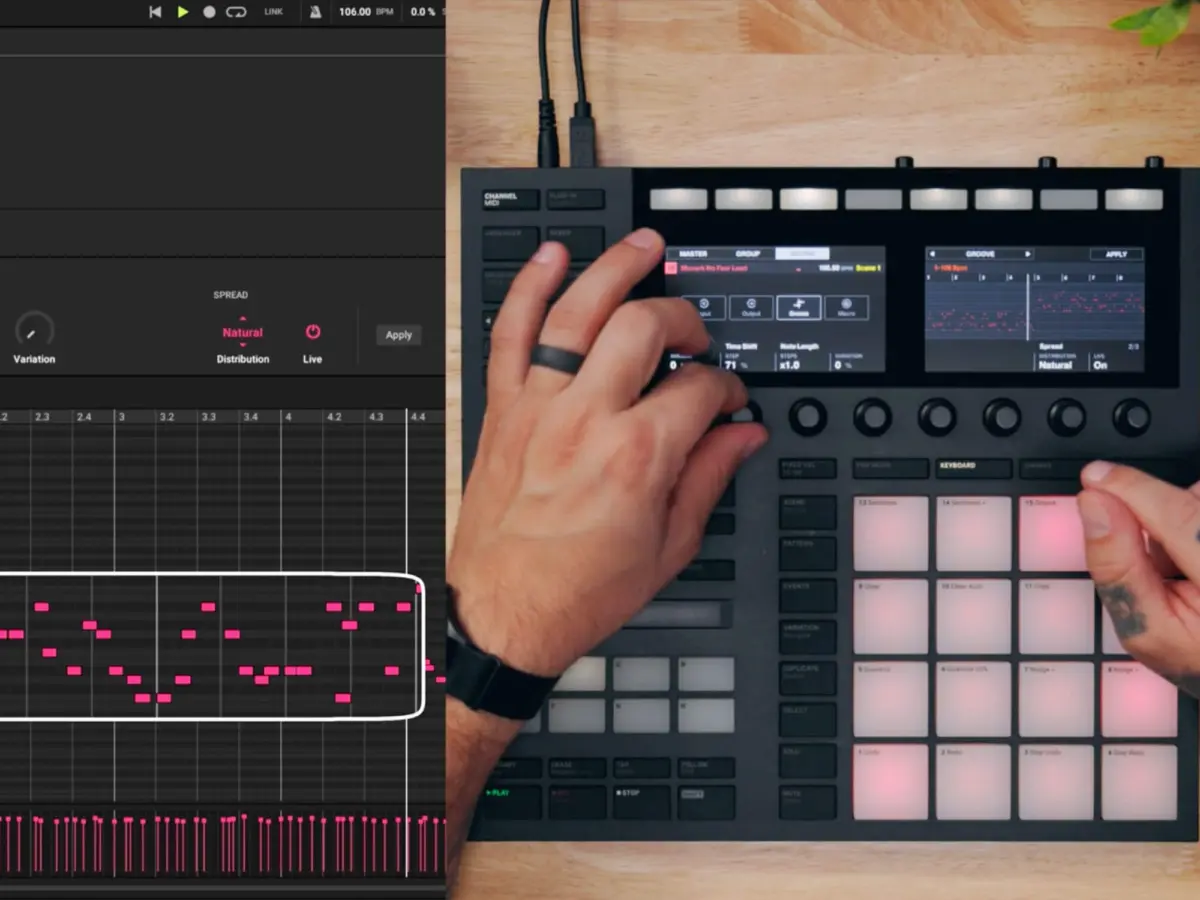
Yet, within the volatile intersection of corporate restructuring and creative production, software development marches on. Proving that its engineering teams remain dedicated to the millions of producers relying on its ecosystem—which includes iconic platforms like Massive, Kontakt, Traktor, and the hardware-software hybrid Maschine—Native Instruments has officially launched Maschine 3.7.
Released as a completely free update for existing Maschine 3 users, version 3.7 introduces powerful, generative sequencing tools designed to break creative blocks and inject perpetual motion into beatmaking workflows. Simultaneously, the company has rolled out a trio of expansive sound packs: Thirty, a retrospective anniversary collection celebrating three decades of audio engineering; Paris Heat, a sophisticated, forward-thinking French house pack; and Rage Circuit, a visceral hypertrap and rage collection crafted in collaboration with Grammy-winning producer Snipe Young.
This comprehensive report examines the complex convergence of corporate upheaval and product evolution at Native Instruments. We will dissect the timeline of its financial struggles and acquisition by inMusic, evaluate the technical merits and workflow enhancements of the Maschine 3.7 update, analyze the accompanying sound expansion libraries, and contextualize what this pivotal chapter means for the future of one of electronic music’s most influential brands.
Detailed Chronology: A Year of Upheaval and Adaptation
To fully appreciate the significance of the Maschine 3.7 release, one must trace the winding, often harrowing journey Native Instruments has navigated over the past twelve months. The timeline reveals a masterclass in corporate crisis management, juxtaposing sweeping structural reforms against an unyielding commitment to product longevity.
January: The Shock of Preliminary Insolvency
The year 2024 began with seismic tremors across the digital audio workstation (DAW) and virtual studio technology (VST) landscape. In January, Native Instruments shocked the global production community by announcing that it had entered preliminary insolvency proceedings. For an entire generation of bedroom producers, film scorers, and touring electronic musicians who built their sonic identities around NI flagships like Massive, Reaktor, and Komplete, the news triggered widespread anxiety regarding the viability of their software licenses, cloud accounts, and hardware ecosystems.
However, leadership moved swiftly to calm the waters. Then-CEO Nick Williams issued immediate, reassuring statements to the user base, asserting that it was "business as usual" across the broader corporate umbrella, which includes sister brands iZotope, Plugin Alliance, and Brainworx. Williams emphasized that daily operations, customer support, and product development pipelines would remain operational while financial stakeholders sought a viable path forward.
May: The inMusic Acquisition and Restructuring Realities
Relief arrived in May when audio technology conglomerate inMusic—the parent company behind heavyweight brands such as Akai Professional, Alesis, Denon DJ, and M-Audio—stepped in to acquire Native Instruments. On paper, the pairing of Native Instruments with inMusic created an unmatched powerhouse of hardware and software development capabilities.
However, corporate mergers of this magnitude rarely occur without collateral friction. Shortly after the ink dried on the acquisition agreement, inMusic initiated a sweeping restructuring program aimed at eliminating redundancies and streamlining operations. Reports surfaced detailing a harsh round of layoffs affecting approximately 100 employees across various departments within Native Instruments.
The turbulence continued with the alleged closure of Native Instruments UK. Corporate leadership defended these moves as necessary steps to simplify the company’s convoluted "organisational and legal structure," cutting through decades of accumulated bureaucratic bloat. While these strategic shifts were designed to ensure long-term corporate health, they left a human toll and cast a temporary shadow over the brand’s community-centric ethos.
Autumn: Finding Solace in Milestones and Code
As the dust settled on the inMusic integration, users naturally harbored lingering concerns over whether development cycles for classic hardware lines like Maschine and Traktor would stall. Historically, corporate acquisitions often result in sunsetting legacy product categories in favor of homogenized, high-margin alternatives.
Instead, Native Instruments chose to lean into its legacy. Rather than retreating into corporate silence, the company channeled its energies into software innovation, culminating in the late-year drop of Maschine 3.7. Timed deliberately to coincide with the company’s 30th anniversary, this release served as a powerful statement of intent: Native Instruments was weathering the storm and doubling down on the tools that made it a household name.
Supporting Context & Metrics: The Scale of the Native Instruments Ecosystem
To understand why the restructuring of Native Instruments generated such global panic among producers, one must examine the sheer footprint the company holds in modern music production. For three decades, NI has shaped the sonic architecture of chart-topping pop, underground techno, cinematic blockbusters, and hip-hop beats.
+-----------------------------------------------------------------+
|                  NATIVE INSTRUMENTS ECOSYSTEM                   |
+-------------------------+---------------------------------------+
| Core Software Platforms | Kontakt, Massive, Reaktor, Traktor    |
+-------------------------+---------------------------------------+
| Hardware Workstations   | Maschine (Studio, MK3, Mikro, +)      |
+-------------------------+---------------------------------------+
| Corporate Umbrella      | inMusic, iZotope, Plugin Alliance,    |
|                         | Brainworx                             |
+-------------------------+---------------------------------------+
Software Standards and Hardware Pioneers
- Kontakt: Widely recognized as the undisputed industry-standard sampler. From Hollywood film scoring stages to bedroom trap producers, virtually every major sample library developer builds their instruments on the Kontakt engine.
- Massive & Massive X: The wavetable synthesizers that single-handedly defined the mid-2010s EDM and dubstep booms, shaping the bass music revolution.
- Traktor: A foundational pillar of digital DJing that revolutionized how electronic music is performed live.
- Maschine: A groovebox workstation bridging the gap between computer-based software power and tactile, hardware-driven beatmaking.
The Business Case for inMusic’s Intervention
Industry analysts point out that while Native Instruments possessed world-class intellectual property and a fiercely loyal user base, its financial model had grown heavy under the weight of fragmented corporate entities, overlapping research and development expenses, and aggressive expansion into subscription models that alienated traditional buyers.
inMusic’s acquisition was ultimately a rescue mission fueled by ruthless operational pragmatism. By integrating NI’s high-end software capabilities with inMusic’s hyper-efficient global hardware manufacturing, distribution, and supply chain networks, the parent company positioned the brand to survive the post-pandemic market contraction. The layoffs and office closures, while painful, were calculated measures to purge structural inefficiencies and ensure that R&D funding could continue flowing into core products like Maschine.
Deep Dive: Maschine 3.7 Technical Breakdown and Workflow Enhancements
For beatmakers and electronic music producers, the heart of this news cycle lies in the code. Maschine 3.7 is not merely a bug-fix patch; it introduces creative tools explicitly engineered to disrupt stagnant workflows and inspire spontaneous composition.

+-------------------------------------------------------------+
|                  MASCHINE 3.7 NEW FEATURES                  |
+-----------------------+-------------------------------------+
| Random Note Generator | Instantly populates patterns with   |
|                       | unpredictable, musical variations.  |
+-----------------------+-------------------------------------+
| Euclidean Sequencer   | Generates mathematically driven,    |
|                       | polyrhythmic, hypnotic grooves.     |
+-----------------------+-------------------------------------+
| Note Event (Chance)   | Re-rolls probability values per     |
|                       | loop, ensuring evolving patterns.   |
+-----------------------+-------------------------------------+
1. The Random Note Generator
In modern beatmaking, perfection can often feel sterile. Producers frequently spend hours manually humanizing quantized MIDI data or randomly clicking notes into a piano roll hoping for a happy accident. The new Random Note Generator short-circuit this tedious process. By defining parameters such as scale, velocity ranges, and density, producers can instantly generate intricate melodic phrases and drum embellishments that challenge traditional muscle memory.
2. The Euclidean Sequencer
A massive win for lovers of generative music, ambient electronica, and driving techno, the integration of a Euclidean Sequencer brings ancient mathematical algorithms straight to the Maschine pads. By distributing pulses evenly across a time span, the Euclidean sequencer creates complex, hypnotic, and evolving polyrhythms that would take immense manual labor to program by hand. It breathes organic life into static step-sequencing.
3. Note Event (Chance) Function
Perhaps the most innovative addition in version 3.7 is the dynamic Note Event Chance function. In older sequencing environments, probability settings often felt static: a hi-hat might have a 70% chance of triggering every time the loop cycles. Maschine 3.7 elevates this concept by actively re-rolling a note’s chance value on every single loop iteration.
The result is a pattern that is in a state of perpetual, organic evolution—never sounding identical twice, yet remaining anchored within the producer’s structural boundaries. When the software hits a variation that strikes an emotional chord, producers can instantly "lock in" that specific take, bridging the gap between generative chaos and intentional arrangement.
Sound Expansions: Celebrating 30 Years of Sonic Heritage
To complement the software update, Native Instruments has dropped three distinct, professionally curated sound expansion packs. Each pack targets a different genre and production mindset, capitalizing on the expansive sonic palette Native Instruments has cultivated over three decades.
+------------------+------------------+-----------------+-----------------+
| EXPANSION PACK   | TARGET GENRE     | CONTENT HIGHLIGHTS              |
+------------------+------------------+-----------------+-----------------+
| Thirty           | Retrospective NI | 30 Kits, 89 Loops, 291 Drums,   |
|                  | Soundscape       | 85 One-Shots    | ($30 / €30)     |
+------------------+------------------+-----------------+-----------------+
| Paris Heat       | French House     | 40 Kits, 108 Loops, 314 Drums,  |
|                  | & Club Music     | 127 One-Shots   | ($49 / €49)     |
+------------------+------------------+-----------------+-----------------+
| Rage Circuit     | Hypertrap & Rage | 41 Kits, 291 Loops, 375 Drums,  |
|                  | (Snipe Young)    | 127 One-Shots   | ($49 / €49)     |
+------------------+------------------+-----------------+-----------------+
1. Thirty – The 30th Anniversary Retrospective
Priced at $30 / €30, Thirty is an affectionate nod to the company’s storied history. Sound designers combed through the archives of Native Instruments’ past catalogues, resampling, processing, and reimagining classic textures, wavetables, and acoustic hits from bygone eras. Loaded with 30 bespoke Maschine kits, 89 loops, 291 drum samples, and 85 one-shots, it acts as a sonic time capsule that bridges vintage digital warmth with modern processing power.
2. Paris Heat – Modern French House
Priced at $49 / €49, Paris Heat is engineered explicitly for forward-thinking dancefloors. Capturing the timeless elegance and driving momentum of French house music—characterized by swinging basslines, filtered disco chords, and crisp, punchy percussion—this pack supplies 40 Maschine kits, 108 loops, 314 drum samples, and 127 one-shots tailored for contemporary club relevance.
3. Rage Circuit – Hyper-Digital Hypertrap
Also priced at $49 / €49, Rage Circuit represents the cutting edge of modern urban music production. Built in direct partnership with Grammy-winning producer Snipe Young, this collection leans hard into the distorted, high-energy aesthetics of rage, hypertrap, and aggressive cloud rap. It boasts a staggering 41 Maschine kits, 291 loops, 375 drum samples, and 37 one-shots, defined by chest-caving 808 sub-basses and searing hyper-digital leads.
Official Statements and Industry Perspective
The rollout of Maschine 3.7 and its accompanying sound libraries has provided an opportunity for leadership to reflect on the enduring bond between the company and its user base.
Tim Adnitt, Senior Director of Product Management at Native Instruments, offered an insightful perspective on the milestone:
"30 years is a moment worth celebrating. This milestone couldn’t be reached without the producers and musicians who took NI’s instruments and made history with them. Maschine 3.7 gives those producers and musicians new ways to write, sequence, and perform, and with Thirty, Paris Heat, and Rage Circuit arriving together, this is one of the biggest weeks for Maschine sound content we’ve ever had."
Adnitt’s comments strike a deliberate chord of gratitude and continuity. In an industry where corporate acquisitions frequently alienate long-term communities, highlighting the collaborative history between developers and artists serves as a vital bridge-building exercise.
Future Outlook: What Lies Ahead for Native Instruments?
As Native Instruments steps across the threshold of its fourth decade, the company occupies a fascinating and complex position. The scars of the preliminary insolvency proceedings and the subsequent inMusic restructuring are still fresh; the loss of colleagues and the closure of regional offices like NI UK are stark reminders of the brutal economic realities governing modern music technology.
Yet, the survival and aggressive development of ecosystems like Maschine prove that the core engine of Native Instruments remains robust. By pairing corporate efficiency under the inMusic banner with continued, high-value software updates and creative sound design content, NI has demonstrated that it is not merely surviving its reorganization—it is actively reinventing its workflow paradigms.
Key Takeaways for Producers:
- Ecosystem Stability: Fears of immediate abandonment following the inMusic acquisition have been actively dispelled by consistent software rollouts.
- Generative Workflow Innovation: Features like the Random Note Generator and Euclidean Sequencer show that NI is keeping pace with modern, experimental production trends.
- Valued Legacy: The release of Thirty proves the company remains deeply aware and proud of its profound historical impact on electronic music culture.
For the bedroom beatmaker tapping out rhythms on a Maschine pad, or the professional film composer layering Kontakt libraries, the message is clear: Native Instruments has weathered the storm. As long as the company continues to balance corporate restructuring with brilliant, inspiring creative tools, its next thirty years promise to be just as revolutionary as its first.