Executive Overview
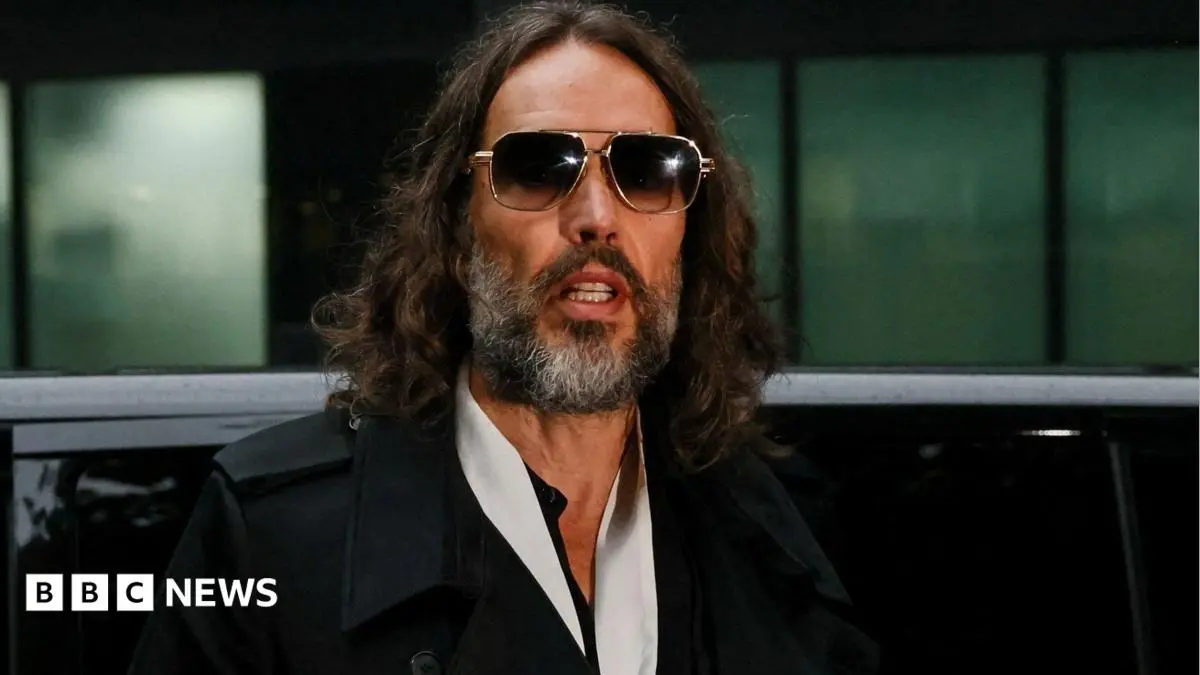
The high-profile criminal trial of British comedian and media personality Russell Brand has entered a critical and emotionally charged phase at a London crown court. Brand, 51, currently faces a total of seven serious criminal charges spanning a decade-long period between 1999 and 2009. The allegations against the entertainer comprise three counts of rape, three charges of sexual assault, and one count of indecent assault, brought forward by six distinct female complainants. Brand has consistently maintained his innocence, pleading not guilty to all charges and asserting that any sexual contact that took place was entirely consensual.
As courtroom proceedings press forward, the jury has begun hearing direct testimony from the complainants, offering harrowing accounts of encounters that took place during the height of Brand’s mainstream television and radio career. The narrative presented by the prosecution details a pattern of alleged exploitation, aggressive physical advances, and an abuse of professional power across various media hubs in central London and beyond.
The trial, which has drawn intense domestic and international media attention, highlights systemic conversations regarding accountability within the entertainment industry. Courtroom scenes have captured the stark contrast between the gravity of the legal accusations and the steady presence of the defense, alongside Brand’s family members in attendance. With legal teams probing the psychological, cultural, and professional barriers that prevented victims from coming forward years ago, this trial serves as a watershed moment for the examination of past workplace cultures in British broadcasting.
Detailed Chronology of Courtroom Testimonies
The Choice FM Incident: Mid-2000s
On Tuesday, court proceedings centered on the testimony of the fourth complainant in the trial. Testifying from behind a protective blue screen to shield her identity, the woman—now in her fifties—recounted an alleged sexual assault that occurred at the Choice FM radio studios in central London during the mid-2000s.
According to the witness, she had never met Brand prior to the incident. She believed he was present in the building due to his commitments filming the Channel 4 television spin-off program Big Brother’s Big Mouth. The woman described stepping out of a small room within the studio complex and suddenly finding herself face-to-face with the defendant.
"He said ‘aye aye’," she told the jury, describing the initial encounter. "He grabbed me by my face, started to kiss me, and when he was kissing me he started pushing me—his body against me."
Characterizing the assault as entirely unexpected and aggressive, the witness explained that the interaction escalated rapidly without her consent. "He was kissing me, it was very frenzied. There was no time for me to even understand what was going on. He was running his hands over my body and I had my back against the wall at that point."
When prompted by the prosecution barrister to elaborate on the nature of the kiss, she described it as "sloppy" and "very, very rough." She added, "His hands at the same time were all over me. He touched my bum, my breasts, his body was pressed up against me."
The woman testified that she managed to push Brand off and swore at him in an effort to halt the intrusion. Crucially, she noted that several members of Brand’s entourage were present in the immediate vicinity during the alleged attack, yet none intervened or spoke out about the incident afterward. Left feeling "dirty," "shocked," and "shaken," the woman admitted that she kept the experience a secret for decades. "I felt shocked and stunned, shaken… I never told anybody."
Cross-Examination and Workplace Culture
Under cross-examination by Brand’s defense barrister, the witness was pressed regarding why she did not report the incident to authorities at the time, or why bystanders who allegedly witnessed the encounter failed to raise concerns.
The woman offered deep contextual insight into the prevailing corporate and social atmosphere of the mid-2000s entertainment industry:
- "It was not the present-day environment."
- "On the day it happened—and I ask myself this question—why I didn’t share it. It wasn’t the culture where something happened to you and you tell people."
Addressing her failure to go to the police, she highlighted the immense personal and professional risks involved for women challenging prominent media figures during that era:
"I would have thought about a few things. Who would have believed me? I could lose my job and I had a mortgage to pay."
She explained that she ultimately "buried it for so long," only deciding to come forward years later after viewing an investigative television documentary detailing allegations concerning the media star’s historical behavior.
The 2009 Channel 4 Project Testimony
Later in the proceedings, a fifth complainant took the stand, also testifying from behind a blue screen positioned to the right of the courtroom. This witness recounted an alleged incident that took place in 2009 while she was working alongside Brand on a Channel 4 production.
According to her testimony, members of Brand’s personal entourage approached her in a shared workspace and asked her to provide a massage on the defendant’s behalf. Upon refusing the request, the situation escalated dramatically.
The witness stated that Brand personally entered the room and abruptly "came into the room and lay his head into my lap, into my groin area." When questioned explicitly by prosecution counsel regarding the physical positioning of Brand’s face during the incident, the woman confirmed that his mouth and nose were positioned directly "in my vaginal area."
Visibly impacted while recalling the event, the former Channel 4 worker stated she felt "so repulsed at the situation," describing the physical contact as violating and noting that the defendant felt "bony."
Unlike the earlier complainant, this witness immediately reported the alleged workplace misconduct to her direct line manager, who subsequently escalated the complaint up the corporate reporting chain.
Supporting Context & Metrics
Anatomy of a High-Profile Trial
The legal battle facing Russell Brand represents a complex intersection of criminal law, media history, and cultural reckoning. The trial involves extensive evidentiary documentation, covering a 10-year window from 1999 to 2009—a period during which Brand experienced a meteoric rise through the ranks of British radio, television, and international stand-up comedy.
- Total Charges: 7 criminal counts.
- Specific Offenses: 3 counts of rape, 3 counts of sexual assault, and 1 count of indecent assault.
- Complainants: 6 distinct female complainants detailing separate historical encounters.
- Temporal Scope: Alleged offenses span a decade (1999–2009).
- Defense Stance: Complete denial of all charges, maintaining that any sexual interactions were consensual.
The Physical and Emotional Environment in Court
The courtroom atmosphere has remained tense throughout the testimonies. Observers noted that Russell Brand has maintained a rigid posture throughout the hearings, staring straight ahead with his hands resting quietly in his lap while graphic and distressing accounts are read into the official record.
Meanwhile, Brand’s wife, Laura Brand, has maintained a consistent physical presence in the courtroom, sitting attentively to his right side just outside the secure dock. Her visible support underscores the high stakes of the trial for the defendant both personally and publicly.
Official Statements & Legal Positions
The Prosecution’s Case
The Crown’s legal team is attempting to establish a consistent pattern of behavior by presenting testimonies from multiple women who operated within Brand’s professional orbit. By highlighting the similarities in how the alleged assaults were executed—often leveraging his celebrity status, surrounding entourage, and workspaces—the prosecution aims to dismantle the defense’s claims of consensual interactions and establish the credibility of the victims.
Furthermore, the prosecution’s strategy actively addresses the historical context of reporting, utilizing sociological and psychological testimony to explain why victims of powerful public figures historically chose silence over reporting.
The Defense’s Position
Russell Brand and his legal representation have formally rejected all allegations leveled against the entertainer. Maintaining a plea of not guilty across all seven counts, the defense has focused heavily during cross-examinations on inconsistencies in timelines, the lack of contemporaneous reporting to police or employers (in specific cases), and the retrospective nature of the complaints.
The core of the defense’s legal strategy rests on the assertion that any historical intimate or sexual contact involving the complainants was entirely consensual, framing the accusations as misinterpretations of past social interactions viewed through the lens of modern cultural standards.
Future Outlook & Broader Implications
What Lies Ahead in the Courtroom
As the trial progresses, the jury is expected to hear additional testimony from remaining complainants, as well as potential defense witnesses and character references. Legal analysts project that the proceedings will continue for several weeks, given the volume of charges, the extensive timeline under examination, and the rigorous cross-examinations conducted by the defense.
Once all evidence has been submitted and closing arguments are delivered, the case will be handed over to the jury for deliberation. The resulting verdict will mark a historic legal milestone for all parties involved.
Industry-Wide Reflection
Beyond the courtroom walls, the Russell Brand trial continues to reverberate across the British media landscape. It has reignited discussions regarding Duty of Care protocols within television and radio production companies during the 2000s, prompting broadcasters to re-evaluate how historical workplace grievances are handled and prevented.
As the trial moves toward its eventual conclusion, the outcomes of these legal proceedings will undoubtedly leave a lasting imprint on both the accountability of public figures and the evolving landscape of justice for survivors of historical sexual misconduct.