Executive Overview
The Eurovision Song Contest, historically celebrated as a beacon of pan-European unity, musical diversity, and cultural diplomacy, stands at a profound historical crossroads. In a momentous development that threatens to fracture the continent’s most-watched entertainment phenomenon, Dutch public broadcaster AVROTROS has officially announced its withdrawal from next year’s competition. The network grounded its decision on a stinging indictment of the European Broadcasting Union (EBU), arguing that the contest can no longer maintain its foundational ethos of political neutrality while nations embroiled in large-scale military conflicts remain active participants.
The declaration by AVROTROS is not an isolated flashpoint; rather, it is the latest and most dramatic escalation in a multi-year crisis over geopolitics, freedom of the press, and humanitarian crises that has deeply polarized the European music community. Citing the staggering humanitarian catastrophe in Gaza, severe and ongoing restrictions on press freedom, and a systemic lack of transparency from the EBU regarding participant vetting, AVROTROS has chosen to walk away from the table.
This dramatic rupture follows a series of tense boycotts, rule revisions, and intense backroom negotiations that have plagued the contest in recent years. While the EBU recently scrambled to institute preventative measures—such as barring countries involved in armed conflicts from hosting should they win—the Dutch broadcaster dismissed these reforms as "too little, too late." According to AVROTROS, these administrative adjustments fall drastically short of restoring the contest’s independence and neutral character.
Nevertheless, the unfolding narrative in the Netherlands is complex. While AVROTROS will sit out the upcoming contest in Burgas, Bulgaria, the door remains slightly ajar for Dutch participation through a structural loophole. Because the Dutch public broadcasting system (NPO) operates as a decentralized federation of multiple broadcasters rather than a single unified entity like the UK’s BBC, another Dutch network could theoretically step in to secure the national slot.
As the EBU scrambles to manage the fallout, engage in damage control, and preserve the broad geographic coalition that defines Eurovision, the broader question remains: Can a song contest built on the premise of escaping politics survive in an era defined by deeply polarizing global conflicts? This in-depth report explores the chronology, policy shifts, institutional friction, and future outlook of a contest struggling to balance entertainment with geopolitical reality.
Detailed Chronology: From Diplomatic Tensions to Institutional Fracture
To fully understand the gravity of the AVROTROS withdrawal, one must trace the timeline of escalating friction that has steadily eroded the diplomatic foundations of the Eurovision Song Contest. The modern era of crisis began in earnest following the outbreak of the Russia-Ukraine war in 2022, a watershed moment that forced the EBU to confront geopolitics head-on by indefinitely banning Russia from the competition. While that swift action was widely praised across Western Europe as a defense of international law and democratic norms, it inadvertently established a precedent: the EBU could and would make moral judgments on participating nations.
This precedent opened a Pandora’s box of expectations from participating broadcasters, who soon began scrutinizing other conflicts with comparable scrutiny.
The Escalation of 2024–2026
By the time the contest rolled around in Vienna, Austria, the geopolitical fault lines had fractured the delegation rooms. Following intense lobbying by activist groups, artists, and several public service broadcasters to have Israel suspended over its military campaign in Gaza, deep divisions emerged. When the EBU elected to allow Israel to compete, a wave of resistance materialized.
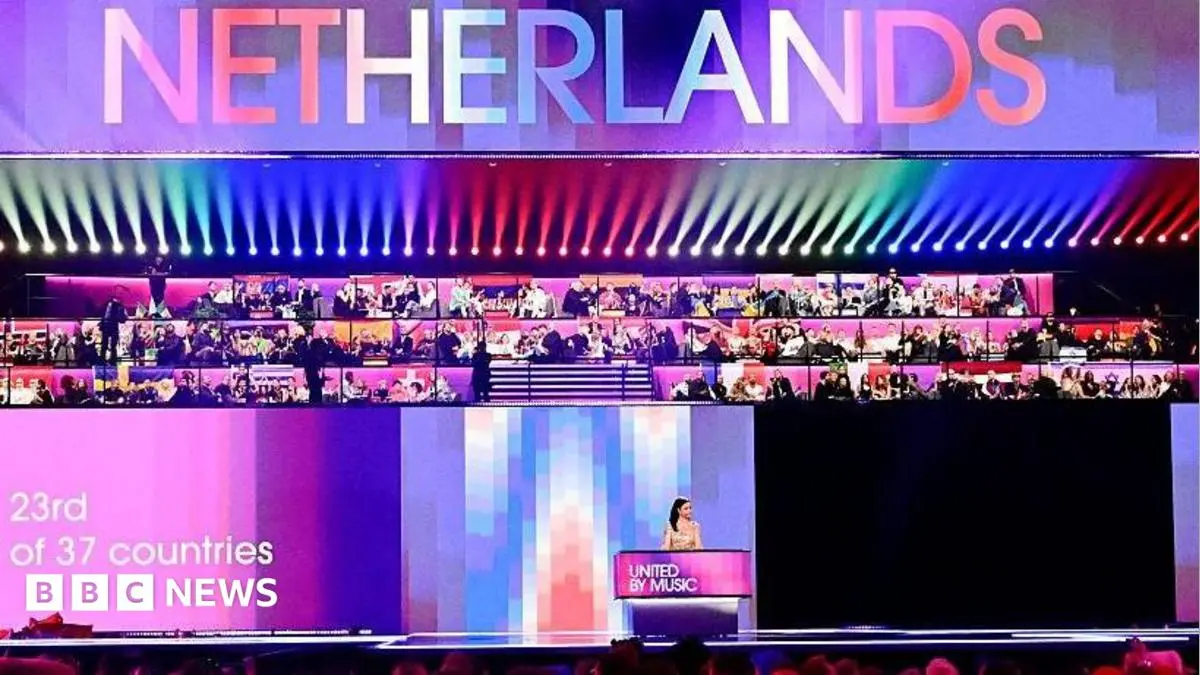
The Netherlands, long considered a powerhouse in the competition, joined a high-profile boycott alongside major broadcasting heavyweights including Spain and Ireland. Despite the absence of several delegations and palpable backstage tension, the contest proceeded. Israel’s representative, Noam Bettan, performed the track "Michelle" and secured a remarkable second-place finish, echoing the runner-up position the nation achieved the prior year.
However, the silver medal did not bring celebration; it intensified anxiety. Privately, several delegations expressed acute safety and logistical concerns regarding the prospect of staging the massive live production in Jerusalem or Tel Aviv if Israel were to secure an outright victory in future cycles. The juxtaposition of a joyful pop music festival against the grim backdrop of active urban warfare and international legal scrutiny created an untenable friction for public broadcasters answerable to domestic tax-payers and politically sensitive populations.
The EBU’s Rulebook Reform and the Final Straw
Recognizing the existential threat posed by these escalating boycotts, the EBU’s governing body moved to overhaul its regulatory framework. Earlier this month, the organization approved a vital amendment to the contest’s rulebook. The newly minted policy dictates that if a country currently engaged in an armed military conflict wins the competition, it will be strictly barred from hosting the event the following year. Furthermore, the amendment expanded to disqualify winning nations from hosting if any "sensitive geopolitical situation" threatens the "security, safety, or stability of their state or immediate region."
While framed by the EBU as a pragmatic compromise designed to decouple the competitive victory from the immense logistical and security burdens of hosting, the amendment failed to appease its harshest critics. AVROTROS reviewed the new guidelines and issued a scathing critique, stating unequivocally that the changes "do not provide sufficient confidence that the independent and neutral character of the Eurovision Song Contest has been restored."
This assessment prompted the formal announcement on Monday that AVROTROS would pull out of the upcoming contest in Burgas, Bulgaria.
Supporting Context & Official Statements
The battle lines drawn between the EBU and AVROTROS highlight fundamentally competing philosophies regarding the purpose of public service media in times of international crisis.
The AVROTROS Perspective
In their comprehensive public statement, AVROTROS did not mince words. The broadcaster framed its decision as an ethical imperative tied to fundamental journalistic and human rights standards:
"The severe humanitarian suffering in Gaza and the ongoing restrictions on press freedom have contributed to increasing divisions surrounding the Eurovision Song Contest in recent years. The lack of clarity from organizers regarding the vetting and assessment of participating nations has left us with no choice. Recent rule adjustments do not provide sufficient confidence that the independent and neutral character of the Eurovision Song Contest has been restored."
For AVROTROS, the calculus extends far beyond musical competition. Public broadcasters across Northern and Western Europe face intense scrutiny from civil society organizations, cultural unions, and younger demographics who view institutional participation in major international events as an implicit endorsement of a nation’s geopolitical actions. By stepping back, AVROTROS seeks to insulate its brand from accusations of complicity or moral hypocrisy.
The EBU Response
Conversely, the EBU, led by Contest Director Martin Green, finds itself caught between the demands of politically motivated national broadcasters and its core charter of fostering international cultural exchange through media. In an official response released shortly after the Dutch announcement, Green expressed professional regret coupled with diplomatic openness:
"The EBU deeply regrets the decision made by AVROTROS to withdraw from the upcoming contest, but we fully respect their institutional views and the complex domestic pressures they navigate. We will now continue our active dialogue with NPO, the umbrella organization for Dutch public service media, regarding the operational opportunities for another broadcaster to participate. We very much hope that audiences and artists in the Netherlands can continue to be represented in the Eurovision Song Contest."
Green’s statement underscores the EBU’s acute awareness of the cascading effect a permanent Dutch exit could trigger. If other major contributors follow AVROTROS’s lead—particularly those nations that historically anchor the contest’s viewership and financial support—the operational and financial model of Eurovision could face unprecedented strain.
Institutional Dynamics: The Dutch Loophole and Systemic Vulnerabilities
One of the most fascinating institutional nuances of the current standoff is the structural architecture of the Dutch public broadcasting system. Unlike the United Kingdom, where the BBC serves as the sole, monolithic state-funded broadcaster, the Netherlands operates under a pluralistic, concession-based public broadcasting system governed by the NPO (Nederlandse Publieke Omroep).
Under this framework, multiple independent broadcasting associations share transmission time and public resources. While AVROTROS has historically held the Eurovision franchise for extended periods, other prominent members of the NPO system—such as BNNVARA, KRO-NCRV, or MAX—technically possess the legal capacity to acquire broadcast rights and submit a Dutch entry.
This structural reality provides the EBU with a viable diplomatic off-ramp. By maintaining open channels with the NPO umbrella organization, the EBU hopes to bypass the hardline stance taken by AVROTROS management and find a surrogate broadcaster willing to shoulder the responsibilities of the 2027 contest.
However, industry analysts warn that such a move could backfire. If the NPO overrides AVROTROS to install a surrogate broadcaster, it risks triggering internal civil unrest within the Dutch media landscape and alienating the artists and music industry professionals who align with AVROTROS’s moral stance.
Broader Geopolitical Ripple Effects
While the immediate focus remains on the Netherlands, the structural implications of the EBU’s new rule changes extend far beyond Amsterdam and Hilversum.
The Impact on Ukraine
While public discourse frequently centers on the participation of Israel, the EBU’s new policy regarding armed conflicts and hosting rights applies universally. Most notably, it directly impacts Ukraine. Ever since the full-scale Russian invasion in 2022, Ukraine’s participation has been a powerful symbol of European solidarity. The Kalush Orchestra famously secured a landslide victory that same year, leading to a massive outpouring of public support.
Under the prior rules, a Ukrainian victory would have placed immense logistical and financial burdens on Kyiv to host the following year’s event—a feat that proved impossible in 2023, resulting in the contest being hosted by the UK on Ukraine’s behalf in Liverpool. The new EBU rules institutionalize this reality, removing the hosting burden from nations engaged in active military conflicts or facing severe regional instability.
While this protects war-torn nations from the impossible task of staging a multi-million-dollar arena spectacular while under bombardment, it also fundamentally alters the stakes of winning the competition. For countries fighting for survival, Eurovision was once a rare global stage to project cultural resilience and national sovereignty through hosting; under the new rules, that diplomatic triumph is deliberately decoupled from the physical celebration.
Future Outlook: Can Eurovision Reclaim Its Neutrality?
As the dust settles on the AVROTROS announcement, the Eurovision Song Contest faces an existential reckoning. For decades, the contest successfully maintained a strict firewall against real-world politics, famously enshrined in its rulebook clause prohibiting political lyrics, flags, and messaging.
Yet, as the boundaries between culture, statecraft, and human rights continue to dissolve in the 21st century, that firewall has proven porous. When music competitions are hosted by or feature nations locked in high-intensity modern warfare, the fiction of complete political neutrality becomes increasingly difficult for participating broadcasters to maintain.
The coming months will test the diplomatic agility of the EBU. Will the NPO find an alternative broadcaster to keep the Netherlands in the 2027 contest, or will the Dutch exit embolden other disgruntled broadcasters to re-evaluate their own participation? Furthermore, will the EBU’s newly minted hosting restrictions satisfy critics, or will they be viewed as a half-measure that fails to address the core dilemma of who is permitted to step onto the Eurovision stage?
What is certain is that the golden era of uncritical, frictionless pan-European pop escapism has drawn to a close. As Eurovision prepares for Burgas 2027, it does so under the heavy shadow of geopolitics—proving that even on a stage designed for harmony, the dissonant chords of the real world can no longer be ignored.