Executive Overview
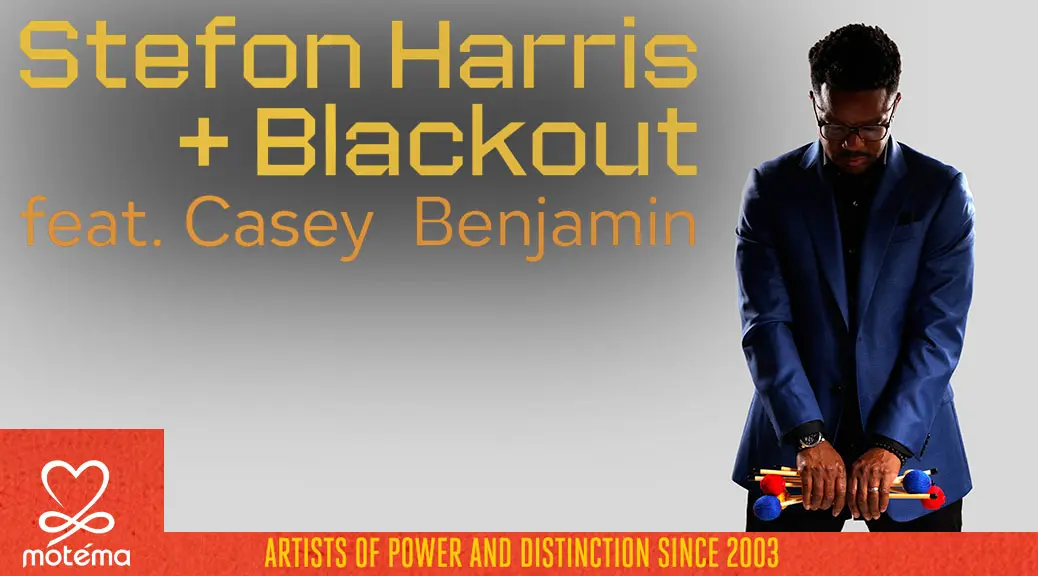
In the contemporary landscape of modern jazz, few artists possess the institutional weight and geographical rootedness that vibraphonist and composer Stefon Harris has cultivated over the past decade. Long recognized as a master craftsman of mallet percussion, Harris has steadily anchored his professional, academic, and creative life in the city of Newark, New Jersey. Holding a tenured professorship at Rutgers University—Newark, co-directing the multidisciplinary arts incubator Express Newark, and maintaining a historical finger on the pulse of the city’s cultural infrastructure, Harris’s physical and intellectual address has profoundly informed his artistic output.
Yet, it is only with his latest release, Legacy Dances, that this deep civic immersion manifests as the structural heartbeat of the recording.
Legacy Dances marks the fifth studio outing for Blackout, Harris’s boundary-pushing ensemble, which has been turning post-bop conventions upside down since 2004. However, the release of this record is shadowed by profound sorrow. It serves as the final recorded document of the late, visionary multi-instrumentalist Casey Benjamin, a co-founder of Blackout who played an indispensable role across all five of the band’s albums. Benjamin tragically passed away on March 30, 2024, at the age of forty-five, just as these sessions reached completion.
The coincidence of Benjamin’s death brought the band’s twentieth-anniversary plans to a sudden, shattering halt. Harris wisely shelved the record for two years, allowing grief to settle into the marrow of the music rather than serving as an external marketing tag. The resulting album is a complex, buoyant, and occasionally stubborn work of art. It honors two towering figures of Newark’s cultural lineage—stride piano giant Willie “The Lion” Smith and revolutionary poet and Pan-Africanist organizer Amiri Baraka—while wrestling with the sonic legacy of Benjamin’s idiosyncratic use of the vocoder and electronic wind instrument (aerophone).
Clocking in as both a local love letter and a global avant-garde statement, Legacy Dances positions Harris and his shifting ensemble at a fascinating crossroad of historical reverence and technological experimentation.
Detailed Chronology
Rooted in Newark: Honoring Willie “The Lion” Smith and Amiri Baraka
To understand Legacy Dances, one must trace its geographic and historical coordinates. Harris’s deep residency in Newark manifests explicitly in the album’s structural homages. Two pivotal historical figures loom large over the proceedings: Willie “The Lion” Smith and Amiri Baraka.
Smith, raised in Newark before ascending to the pantheon of Harlem stride piano alongside James P. Johnson and Fats Waller, represents a foundational architecture of jazz harmony. Baraka, born in the city in 1934, remained a resident and fierce political-cultural organizer there until his death in 2014. Baraka’s Pan-Africanist philosophy and militant artistic ethos bleed directly into the album’s tracklist, most notably in its longest and most politically charged piece.
The album’s genesis stems from decades of artistic evolution within the Blackout framework. Following Benjamin’s sudden passing in the spring of 2024, Harris faced the monumental task of curating a masterwork that balanced a forward-thinking jazz aesthetic with a poignant posthumous tribute. After shelving the tapes for two years, Harris returned to the mixes with a renewed perspective, ensuring that Benjamin’s pioneering electronic aerophone work remained prominent, holding pride of place even when it challenged conventional jazz orthodoxies.
Track-by-Track Chronological Arc
The album opens with explosive post-bop energy on its title track, “Legacy Dances.” Instantly swinging with unrelenting momentum, the track immediately establishes the album’s dynamic range, driven largely by Benjamin’s soaring aerophone lines. This introductory fire gives way to “Wonderful World (Intro),” a shimmering, brief interlude utilizing vibraphone, piano, and vocoder that sets the stage for a radical deconstruction of the Bob Thiele and George David Weiss standard, “What a Wonderful World,” famously popularized by Louis Armstrong in 1967. Here, the vocal line is put through a heavy vocoder filter, sitting at a deliberate, haunting distance in the mix to recontextualize a ubiquitous cultural artifact.
The album’s intellectual pinnacle arrives with “Echoes of the Lion.” Drawing directly from Willie “The Lion” Smith’s 1935 stride masterpiece “Echoes of Spring”—which received its definitive reading on his 1939 Commodore solo sessions—Harris deconstructs Smith’s rolling left-hand piano figures. He transplants them into a contemporary, rhythmically complex bass groove. Melodies and harmonies emerge through the microscopic gaps of the rhythm section, underscored by a pulsating Afro-Cuban djembe rhythm and pristine soprano saxophone and mallet interplay. Harris works fluidly across vibraphone and marimba, creating a dazzling cross-metric dialogue that proves how true jazz lineage travels across generations.
The sequencing then shifts toward more polarizing sonic experiments. “West End Blues,” originating from King Oliver’s composition and immortalized by Armstrong’s iconic 1928 Hot Five opening cadenza, brings Benjamin’s aerophone back to the forefront. While ambitious, the heavy reliance on electronic wind synthesis yields mixed results that test listener preferences. This is echoed in “I Know Love,” a melancholic love song written in memory of Illene Katz Lowenthal (whose initials give the piece its title). Driven by an early-eighties vocoder aesthetic reminiscent of Herbie Hancock’s late-seventies explorations, the track invites comparison to Harris’s stripped-back 2024 digital release, Sonic Creed II: Life Signs, which featured only vibes, piano, and drums. For many purists, the sparser earlier rendition feels significantly more grounded.
Fortunately, the album quickly finds its stylistic footing with “Ell’s Boogie,” a brilliant fusion cut channeling the sophisticated funk-jazz sensibilities of Gary Bartz. Here, the electronic elements mesh seamlessly with a deeply rooted, head-nodding groove. This momentum carries into “A Radical’s Love,” which initially masquerades as a synthesizer-driven track before revealing Benjamin’s aerophone at the helm once more.

Following the brief, grounding djembe-solo interlude “Libations,” the album approaches its thematic zenith with “We Are an African People.” Taking its title directly from Amiri Baraka’s foundational Pan-Africanist organizing, this expansive track marries interlocking djembe polyrhythms and vibraphone textures with powerful, resonant spoken-word delivery by Dwayne Clark.
The album concludes with an extended version of “I Know Love.” While its inclusion raises questions about redundancy given the track’s earlier appearance, it ultimately underscores Harris’s uncompromising artistic vision for the project: an unyielding refusal to compromise on the eclectic, genre-defying palette that defines his partnership with Benjamin.
Supporting Context & Metrics
Personnel Shifts and Extended Palette
While Stefon Harris and the late Casey Benjamin anchored the core identity of Blackout, Legacy Dances introduces crucial personnel changes and a sprawling guest roster that dramatically expands the group’s sonic vocabulary.
- The Core Rhythm Section: Christian Sands steps into the demanding piano chair for his inaugural Blackout recording, bringing a dazzling harmonic sophistication. He locks in alongside bassist Dezron Douglas and long-serving powerhouse drummer Terreon Gully, whose rhythmic elasticity drives the album’s most daring excursions.
- Specialized Guests & Orchestration: To achieve the rich texture of Legacy Dances, Harris recruited an elite tier of auxiliary musicians. Weedie Braimah anchors the percussion with his commanding djembe work; Anne Drummond contributes ethereal flute lines; Oran Etkin adds warmth on clarinet and bass clarinet; Eric Eaton provides grounding cello textures; and Dwayne Clark delivers stirring spoken-word poetry. Furthermore, Scott Arcangel manages the intricate orchestration, ensuring that the acoustic and electronic elements achieve structural equilibrium.
Comparative Analysis: Acoustic Purity vs. Electronic Fusion
A defining tension throughout Legacy Dances is the aesthetic friction between acoustic jazz mastery and mid-era electronic fusion.
| Track | Primary Instrumentation | Dominant Aesthetic | Critical Reception / Verdict |
|---|---|---|---|
| "Legacy Dances" | Mallets, Aerophone, Rhythm Section | Post-Bop Modernism | High-energy opener; showcases Benjamin’s aerophone virtuosity. |
| "Echoes of the Lion" | Vibes, Marimba, Djembe, Stride Piano motifs | Trans-generational Stride Fusion | Intellectual peak; brilliant cross-pollination of 1930s stride and contemporary polyrhythms. |
| "I Know Love" | Vocoder, Keys, Drums | Early-80s Synth-Soul / R&B | Polarizing; compared unfavourably to the stripped-back 2024 Sonic Creed II version. |
| "Ell’s Boogie" | Full Ensemble, Fusion Groove | 1970s Jazz-Funk (Gartz-esque) | Universally engaging; where electronic elements and acoustic swing find absolute synergy. |
| "We Are an African People" | Spoken Word, Djembe, Vibes | Pan-Africanist Avant-Garde | Politically resonant; anchors Amiri Baraka’s cultural legacy within the tracklist. |
Official Statements
Reflecting on the emotional weight of bringing Legacy Dances to the public, the artistic community has rallied around the project as both a celebration of resilience and a solemn memorial. While formal corporate press releases from Motéma Music and allied labels emphasize the historical significance of Harris’s Rutgers tenure and Newark community leadership, the interpersonal statements from collaborators speak volumes.
In interviews surrounding the shelving and subsequent resurrection of the album tapes, Harris noted the unique burden of completing a masterwork stripped of one of its founding architects. Friends and bandmates have frequently highlighted Casey Benjamin’s irreplaceable role as a sonic architect who perpetually challenged the boundaries of what a vocoder and aerophone could achieve within an acoustic jazz setting.
Industry critics and reviewers, including Steve Williams of UK Vibe, have summarized the bittersweet nature of the release:
"Those instruments give this record a distinct sound, and that makes it Harris’s sound. Though it is worth saying plainly that the aerophone and vocoder… are Benjamin’s, on his final recordings with the band he helped to found. That does not soften my reservations, but it goes some way to explaining why Harris has left them so far forward. Nobody else is doing this at the moment, and there is credit due for going somewhere different."
Future Outlook
As Legacy Dances establishes itself as one of the most intellectually rigorous and emotionally charged jazz releases of the decade, Stefon Harris and the Blackout ensemble are wasting no time bringing this complex repertoire to live audiences.
The touring itinerary for the fall promises to translate the studio’s intricate sonic experiments into visceral, high-wire live performances. Fans and critics eager to witness how the ensemble navigates the interplay between Christian Sands’ luminous piano work, the late Casey Benjamin’s recorded electronic legacy, and Harris’s virtuosic mallet wizardry can catch the band at premier jazz venues:
- Blue Note (New York City): October 5 – October 6
- Jazz Alley (Seattle, Washington): October 13 – October 14
Looking further ahead, Legacy Dances serves as a profound transitional monument. It closes a twenty-year chapter defined by the pioneering Blackout lineup while carving out a definitive roadmap for how jazz artists can honor their local civic roots—paying homage to historical titans like Willie “The Lion” Smith and Amiri Baraka—without ever falling into museum-piece nostalgia. Whether audiences embrace every turn of Benjamin’s electronic wind instrument or prefer the deep-pocket funk of tracks like “Ell’s Boogie,” the album succeeds in its primary mission: it dances fiercely with legacy, mortality, and the relentless, forward march of Black music.