Executive Overview
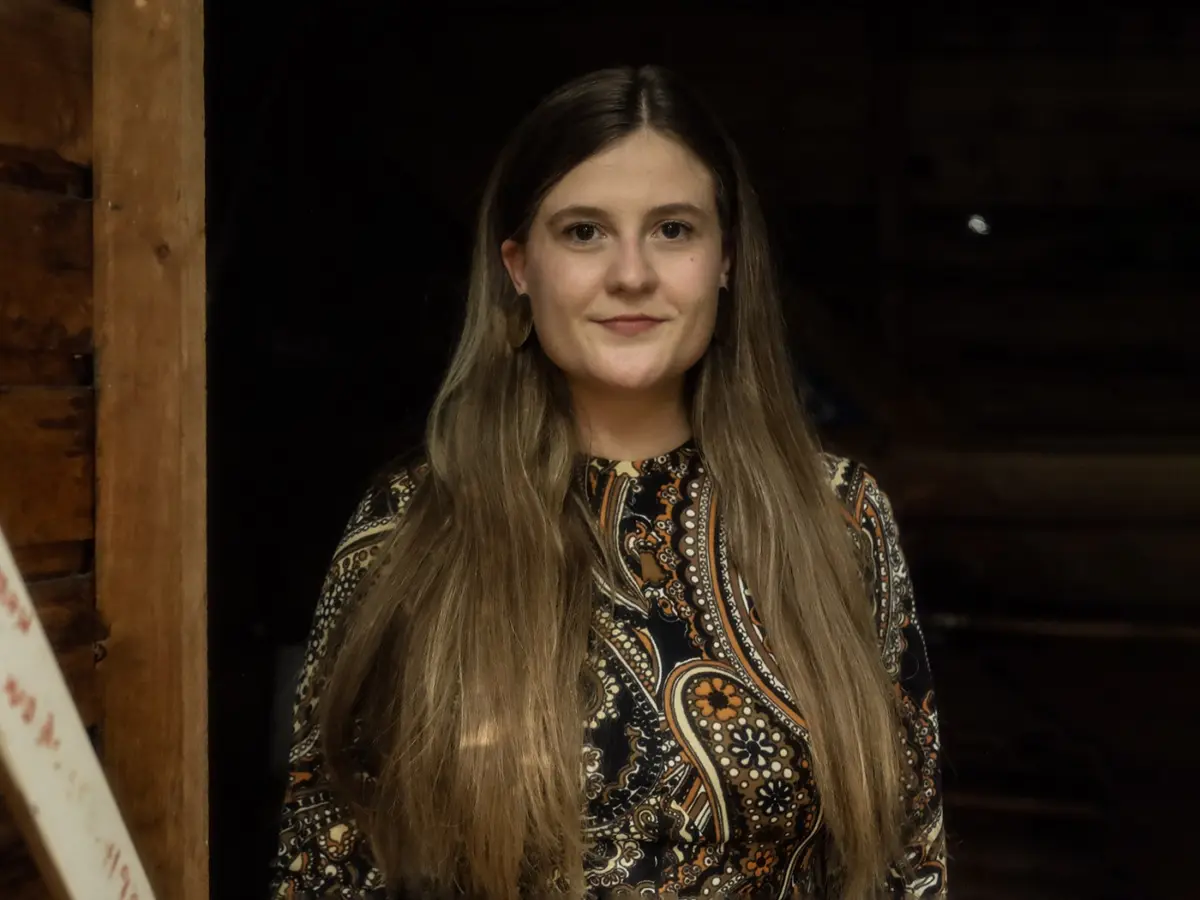
For the better part of a decade and a half, Canadian singer-songwriter Kacy Lee Anderson occupied a revered place in the landscape of traditional roots music as one-half of the acclaimed Saskatchewan duo Kacy & Clayton. Alongside her cousin Clayton Anderson, she spent fifteen years meticulously crafting albums that bridged rural folk traditions with psych-pop flourishes—earning critical adoration and the staunch patronage of Wilco frontman Jeff Tweedy, who produced two of their landmark records.
Yet, creative partnerships are living entities, subject to the shifting tides of personal ambition and artistic timing. When Clayton expressed a desire to decelerate the relentless touring and recording cycle, Anderson found herself sitting on a mountain of completed, unexpressed material. Rather than letting the songs languish, she made the decisive leap into the unknown: stepping away from her comfort zone to record her fierce, uncompromising debut solo album, Hello, I’m Irrelevant.
Far from the reverent, sepia-toned preservationism of her past work, Hello, I’m Irrelevant serves as a bracing exercise in artistic liberation. Recorded during the teeth of a brutal Canadian winter inside a converted Anglican church in Quyon, Quebec, the album finds Anderson sharpening her claws, settling old scores, and gleefully tearing down industry conventions. Melding the unbowed grit of vocal powerhouses like Iris DeMent, Neko Case, and Tammy Wynette with a spontaneous, almost feral studio energy, Anderson has delivered a masterclass in modern roots-rock rebellion. This feature explores the genesis of her solo career, the distinct circumstances of its recording, the lyrical targets of her newfound bite, and what this bold artistic pivot means for her future.
Detailed Chronology: From Saskatchewan Roots to Quebec Sanctuary
The Impasse of Kacy & Clayton
To understand the explosive release of creative energy on Hello, I’m Irrelevant, one must first examine the closing chapter of Kacy & Clayton. Over fifteen years, the cousins built a reputation as torchbearers of vintage folk and country, earning praise for their intricate songcraft and stylistic purity. However, creative divergence is an inevitable hurdle for long-term collaborators.
"Clayton was in a phase of wanting to slow down with the band for a while, and I wasn’t," Anderson reflects, pulling back the curtain on the band’s hiatus. "I had a lot of songs piling up and wanted to get them out into the world."
Unwilling to let her creative momentum stall, Anderson embraced the terrifying yet thrilling prospect of autonomy. This wasn’t merely a side project; it was a necessary existential pivot. She needed an outlet that answered to no one else’s timeline, aesthetic compromises, or cautious editorializing.
The Deep-Freeze Sessions in Quyon
With a batch of barbed, fiercely independent songs ready for tracking, Anderson sought an environment that matched the stark, unvarnished nature of her new material. She decamped to a converted Anglican church in the small village of Quyon, Quebec, during a punishing winter freeze.
Working alongside her partner, musician Micah Erenberg, and producer-composer Michael John Dubue—a veteran of the atmospheric indie outfit Timber Timbre and owner of the sacred-space studio—Anderson engineered a high-stakes recording process. The sub-zero temperatures inside the historical structure imposed a natural time limit on the sessions, forcing the small trio to work with immediacy and instinct.
Rather than laboring over clinical overdubs or digital perfectionism, the musicians tracked mostly live over the course of just a few frantic, freezing days. The resulting sonic architecture bears the undeniable fingerprints of its birth: guitars slip in and out of the mix like mischievous gatecrashers, organs hum and rattle against the back walls, and organic rhythms are punctuated by the ambient hum of the physical room. It is a record that sounds fiercely alive, constructed in the spirit of an improvised roots-trio testing the boundaries of their instruments in real-time.
Supporting Context & Metrics: The Evolution of Anderson’s Sound
Tracing the Lineage: From Polka Protest to Solo Acclaim
Anderson’s solo emergence does not happen in a vacuum. It shares a spiritual lineage with her recent work fronting The Waverley Pickers, a cosmic-country sisterhood that styles itself the "Pioneers of the Polka Protest Movement." In 2024, the Pickers released Early Hits, a lively, acerbic takedown of casual misogyny and male conceit that simultaneously championed female autonomy and resilience.
That same unapologetic attitude heavily informs the sonic and lyrical DNA of Hello, I’m Irrelevant. Musically, Anderson pulls from a pantheon of fierce female architects—artists who refused to play by Nashville’s sterile rules. Traces of Iris DeMent’s trembling conviction, Neko Case’s gothic grandeur, and Tammy Wynette’s heartbroken grit echo through Anderson’s supple vocal performances, which dip, soar, and pivot with breathtaking agility.
Genre-Bending and Stylistic Metrics
While roots music purists might categorize Anderson strictly within the Americana or alt-country framework, Hello, I’m Irrelevant deliberately defies rigid genre classifications. Across its tracklist, the album moves fluidly between distinct eras and textures:
- Acoustic Folk: Intimate, stripped-back arrangements that highlight narrative lyricism.
- Classic Country Warble: Pedal-steel sentiments filtered through a modern, cynical lens.
- Bony Rock ’n’ Roll: Sparsely arranged, driving tracks powered by skeletal rhythms and electric transients.
- Soulful ’60s Pop: Lush, melodic undertones that soften the blow of her acidic lyricism.
This stylistic fluidity ensures that the listener is constantly off-balance, never quite sure whether the next track will manifest as a tear-jerking honky-tonk lament or a blistering garage-folk indictment.
Official Statements & Lyrical Analysis
Settling Scores and Dismantling Mentors
The lyrical content of Hello, I’m Irrelevant is where Anderson truly breaks from her past. The opening track, bearing the album’s title, establishes an immediate tone of defiance. Backed by a muted piano and a waltzing shuffle, Anderson sounds like an artist eager to settle old accounts. “If you wanna burn me, I’ll light the flame,” she sings smoothly, syllables sliding with cool indifference. “It don’t concern me, if you go out and slander my name.”
The acidity deepens on "Outdated Songs," a brutal, unsparing dismantling of an unnamed industry figure who once acted as a mentor to Anderson in her youth. By the song’s climax, she applies the boots directly to the subject’s legacy:
“You’re a living and breathing karaoke machine / I saw your CD at the Salvation Army / And honey, all of your songs sound the same.”
When asked about the confrontational nature of these tracks, Anderson maintains that the record is less about petty feuds and more about systemic purging—shedding the expectations, bad advice, and residual trauma accumulated over a decade and a half in the music industry.
Exacting Retribution and Satirizing Clickbait Culture
The combative stance morphs into psychological warfare on "Keep Quiet," a brooding track driven by a murky groove and the relentless hiss of analog percussion. Aiming for total retribution, Anderson warns: “Don’t wait for me to come alive / I’ll look for you in the dead of night.”
Yet, Anderson’s pen is equally sharp when turned outward toward the modern entertainment complex. On the title track and the scathing "Giving In," she takes direct aim at celebrity culture, streaming algorithms, and the desperate hustle for algorithmic validation:
“Won’t you listen to my song,” pleads the narrator of the latter track with theatrical desperation, “I’ve included the captions / Won’t you please read along.”
Despite these dark themes, the album is punctuated by a wry, self-deprecating humor. "Giving In" features a bizarre, humorous vignette about an illusory superstar (“Just like Tom Jones in Wales / They think he’s the king”), while "Burning Garbage Alone" finds its protagonist paralyzed by loneliness during the most mundane domestic chores—specifically mourning her absent lover’s unique talent for lighting a toilet roll.
Similarly, the swinging, swaggering "How To Deal" recounts a disastrous run of personal bad luck:
“Two nights in Reno, all I got was a one-night stand / Now I’m left sipping brandy, talking shop to the wall in Spokane.”
Future Outlook: A New Chapter Unfurling
The ultimate triumph of Hello, I’m Irrelevant lies in the sheer, unbridled joy of its creation. By stepping outside the institutional expectations of Kacy & Clayton, Anderson has built a sanctuary where her music is answerable to no one. She weaves effortlessly through acoustic folk, dusty honky-tonk, and soulful pop with the relaxed confidence of an artist who has nothing left to prove and everything left to say.
As she takes these freezing, church-born recordings out into the wider world, the question on critics’ and fans’ lips is whether this solo excursion is a temporary diversion or a permanent new career trajectory. While the future of Kacy & Clayton remains open-ended, the artistic validation Anderson has found in autonomy suggests there is no turning back.
Armed with a razor-sharp pen, an astonishingly supple voice, and a newfound immunity to industry noise, Kacy Lee Anderson has firmly established herself not merely as a custodian of historical folk traditions, but as a vital, unpredictable, and fiercely independent voice in contemporary roots music. Hello, I’m Irrelevant may bear a tongue-in-cheek title, but make no mistake: in the landscape of modern songwriting, Kacy Lee Anderson has never been more essential.