Executive Overview
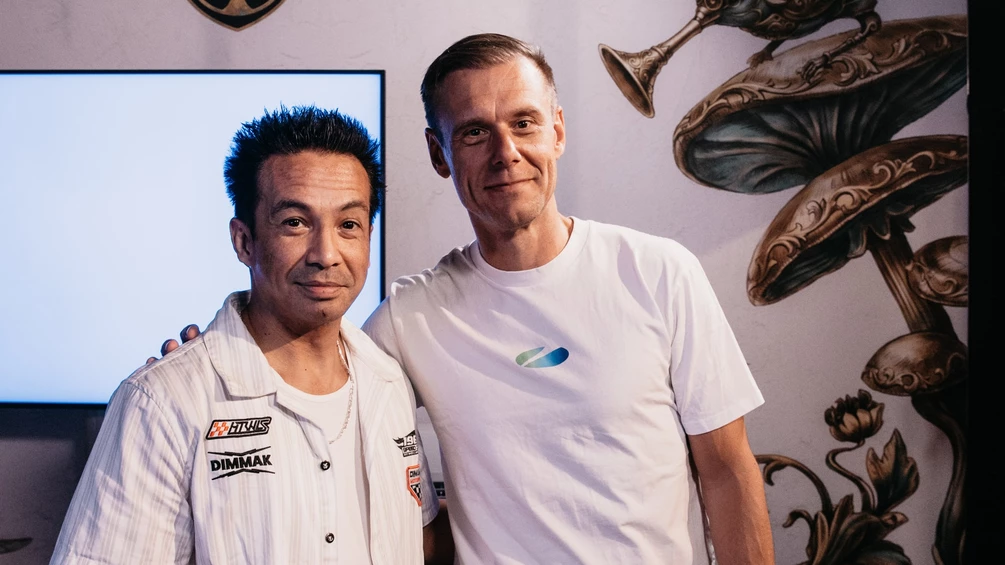
As the global music industry grapples with an existential crisis sparked by rapid technological disruption, electronic music icons Armin van Buuren and Laidback Luke have stepped into the fray. The legendary Dutch trance architect and the internationally renowned house pioneer have partnered with Moises, an AI-powered audio platform positioning itself as a strictly ethical, human-centric alternative to controversial generative models like Suno.
As the inaugural members of Moises’ newly minted Artist Partnerships programme, van Buuren and Luke are not merely lending their famous names to a tech startup; they are actively embedding themselves into the developmental pipeline of next-generation music production software. Their involvement comes at a critical historical juncture for the arts. The music ecosystem is currently fractured between rampant, unregulated generative platforms scraping copyrighted material without consent and a defensive industry drawing rigid lines in the sand.
Platforms like Beatport, Traxsource, Bandcamp, and Deezer have recently enacted strict bans on fully AI-generated tracks, while copyright watchdogs and legal entities lock horns over unauthorized data harvesting. Yet, amidst the backlash against "deep fake" tracks and automated slop, Moises is carving out a diametrically opposed philosophy. Rather than using AI to replace the songwriter or producer, the platform’s existing suite—featuring cutting-edge stem separation, chord identification, and intelligent mastering tools—aims to augment human creativity.
With a sprawling global user base numbering approximately 80 million across 190 countries, Moises is attempting to prove that artificial intelligence and human artistry can coexist in a symbiotic relationship. By aligning with heavyweights like van Buuren, Luke, and GRAMMY-nominated pop auteur Charlie Puth—who serves as the company’s Chief Music Officer—Moises is attempting to establish a new gold standard for ethical, transparent technological evolution within the modern music industry.
Detailed Chronology: The Collision of AI and the Global Music Ecosystem
To fully understand the weight of Armin van Buuren and Laidback Luke’s partnership with Moises, one must examine the turbulent timeline of artificial intelligence within the music industry over the past twelve months. The relationship between musicians and machine learning has rapidly evolved from academic curiosity into a full-scale cultural and legal war zone.
Spring to Summer 2024: The Rise of Generative Proliferation and Industry Pushback
The fault lines began to fracture deeply in early 2024. In March, streaming giant Sony Music reportedly removed an astonishing 135,000 "deep fake" artificial intelligence songs that were unlawfully masquerading as commercial releases. This massive purge served as a warning shot to digital service providers and independent distributors alike.
By the summer of 2024, the scope of automated intervention in commercial music became shockingly clear. Data published by SubmitHub revealed that an astonishing 40% of all music releases in July were created with some form of artificial intelligence assistance. Even more telling of the industry’s deep-seated anxieties and social stigma, one-third of the artists whose tracks were flagged as relying on automation vehemently denied utilizing the technology, fearing consumer backlash and professional alienation.
The Great Platform Blacklist
As generative models flooded digital storefronts with synthetic tracks, independent and major platforms began slamming doors.
- Traxsource and Bandcamp instituted absolute bans on AI-generated music, preserving their ecosystems for human-crafted audio.
- Deezer rolled out advanced AI music detection technology across more than 20 streaming platforms to police uploads and protect royalty pools.
- Beatport followed suit last month, formally banning fully AI-generated tracks to preserve the integrity of its electronic music charts and catalog.
The Legal Reckoning and Artist Backlash
The backlash was not merely systemic; it was deeply personal. Over the summer, electronic music icon Skrillex joined the chorus of high-profile voices sounding the alarm against generative models. In a direct message to his fan base, Skrillex cut to the emotional core of the debate:
"AI songs can go viral, but you can’t have that feeling of being seen if there isn’t a human on the other side."
Simultaneously, investigative reporting exposed the staggering scale of intellectual property theft powering these systems. US magazine The Atlantic published a bombshell report revealing that over 21 million copyrighted songs were actively circulating among AI developers for training purposes without authorization or compensation.
The legal chickens soon came home to roost. Suno AI—a prominent generative platform that previously sparked public outrage when its CEO claimed that "people don’t enjoy making music"—suffered a landmark copyright defeat in Germany. A German court ruled decisively against the company’s unauthorized data-scraping and music model training practices.
It is against this backdrop of legal battles, platform bans, and ideological warfare that Moises has emerged, attempting to chart a radically different, collaborative course for the future of audio technology.
Supporting Context & Metrics: Inside the Moises Ecosystem
While platforms like Suno and Udio generate entire tracks from a single text prompt—effectively bypassing the creative journey entirely—Moises was built with an entirely different architecture and philosophy.
What Sets Moises Apart?
Moises positions itself as a practice and production toolkit rather than a push-button hit factory. Its underlying technology is trained exclusively on licensed and authorized tracks and files, sidestepping the predatory copyright harvesting that has landed competing generative companies in court.
The platform’s technological capabilities are robust, tailored specifically to the workflow of modern musicians, DJs, and producers:
- Stem Separation and Isolation: Utilizing advanced source separation algorithms, Moises allows users to isolate vocals, drums, bass, and instrumentation from mixed audio files with pristine clarity.
- Chord Identification: Real-time analysis that automatically detects song keys and chord progressions, aiding transcription and remixing.
- Intelligent Mastering: Automated tools designed to polish rough mixes to professional industry standards.
A Powerful Institutional Network
Moises is not operating in a vacuum. The company has systematically cultivated a powerhouse coalition of high-profile industry stakeholders, educational institutions, and estate holdings. Its ecosystem is already deeply integrated with:
- Ableton (Industry-standard digital audio workstation software)
- Fender (Iconic guitar and instrument manufacturer)
- The Whitney Houston Estate (Safeguarding legendary vocal legacies)
- Cory Henry (Virtuoso jazz/fusion keyboardist and former Snarky Puppy member)
- Jordan Rudess (Legendary progressive metal keyboardist of Dream Theater)
- Berklee Online (The premier online extension of the world’s leading contemporary music college)
Furthermore, earlier this year, GRAMMY-nominated pop songwriter, producer, and artist Charlie Puth joined the company as its Chief Music Officer, lending his commercial ear and pop-sensibility to the platform’s ongoing product development.
Global Footprint
Originally launched with a hyper-focus on the dance music community, Moises has scaled rapidly. The platform currently boasts a staggering user base of approximately 80 million people spread across 190 countries. Its dominant international markets reflect the truly globalized nature of modern music production, with the United States, Brazil, India, France, and Japan serving as its primary epicenters of growth.
Official Statements: Perspectives from the Visionaries
The announcement of Armin van Buuren and Laidback Luke as the inaugural members of the Artist Partnerships programme marks a significant escalation in Moises’ strategy to bridge the gap between software engineers and elite creators. Below are the core perspectives driving this collaboration.
Geraldo Ramos: Building With, Not Around, Musicians
Geraldo Ramos, founder and CEO of Moises, emphasized that the future of music technology must respect the sacred bond between the artist and their craft.
"Electronic music has always moved forward because artists were willing to experiment with new technology," Ramos stated. "The next generation of creative tools has to be built with musicians, not around them. Armin and Luke understand the craft, the community, and the responsibility that comes with building tools musicians will actually use."
Laidback Luke: Fostering Better Creative Decisions
For Dutch-Filipino house music stalwart Laidback Luke—known as much for his decades-spanning production pedigree as his dedication to teaching and mentoring the next generation—the partnership is about empowerment rather than automation.
"Every generation of producers gets new tools, but the best tools do not do the work for you," Luke reflected. "They help you hear more, learn faster, and make stronger creative decisions. That is the kind of AI I want young producers to grow up with."
Armin van Buuren: Preserving Artist Control
Trance titan Armin van Buuren echoed these sentiments, stressing that technological adoption must never compromise the artist’s agency or emotional connection to their music.
"Technology has always been part of how electronic music evolves," van Buuren added. "What matters is whether the artist stays in control. Moises approaches AI with respect for the musician’s own sound and decision-making, and I’m excited to help build tools that make producers faster and more expressive without taking the creativity out of their hands."
Future Outlook: The Road Ahead for Ethical Audio Technology
The partnership between Moises, Armin van Buuren, and Laidback Luke signals a pivotal evolutionary phase for artificial intelligence in music. As the platform prepares to expand its Artist Partnerships programme to encompass a diverse array of global genres beyond dance music, it carries the weight of a crucial industry experiment: Can technology prove that AI can be ethical, legal, and artist-friendly?
The contrast between Moises’ collaborative model and the extractive models practiced by unregulated generative companies highlights a growing bifurcation in the digital arts:
- The Generative Threat: Platforms that scrape uncompensated catalogs to churn out synthetic soundalikes threaten to devalue human labor, flood streaming services with algorithmic noise, and rob listeners of genuine human emotional resonance.
- The Augmentation Model: Tools like Moises, backed by industry icons and built on licensed data, seek to accelerate workflow, unlock educational opportunities, and expand technical boundaries without supplanting the human soul at the center of the song.
As regulatory bodies close in on copyright violators, and as streaming platforms implement strict technical countermeasures against deep fakes, the future belongs to models that honor intellectual property and prioritize creative partnership.
By inviting icons like Armin van Buuren and Laidback Luke into the boardroom and the R&D lab, Moises is betting that the path forward relies not on replacing the artist, but on giving them better hammers and chisels. In doing so, they offer a beacon of hope for a creative community navigating uncharted digital waters.