Executive Overview
This summer, global social media feeds were inundated with a unified decree: almost anything could be declared “kinda chic.” Repeating an outfit from three days prior? Kinda chic. Arriving wildly overdressed to an informal neighborhood barbecue? Unquestionably kinda chic. Committing a mortal fashion sin like mixing black and navy or wearing sensible orthopedic sneakers with a slip dress? Remarkably, inherently, kinda chic.
Yet, if you try to recall the specific content of those individual viral posts today, you will likely draw a blank. What remains etched in your memory is not the garment itself, but the format—the structural cadence, the ironic phrasing, and the precise linguistic mechanism by which an ordinary object, a mundane behavioral quirk, or an accidental fashion faux pas was instantly reframed as empirical evidence of supreme personal taste.
This distinct discrepancy exposes a vital truth about modern digital fashion. For years, cultural critics have worried that social media platforms are homogenizing human wardrobes, forcing a global populace into the same fast-fashion silhouettes. However, a closer inspection reveals a deeper, more sophisticated phenomenon: the true homogenization is not occurring in what we wear, but in how we communicate that we are fashionable.
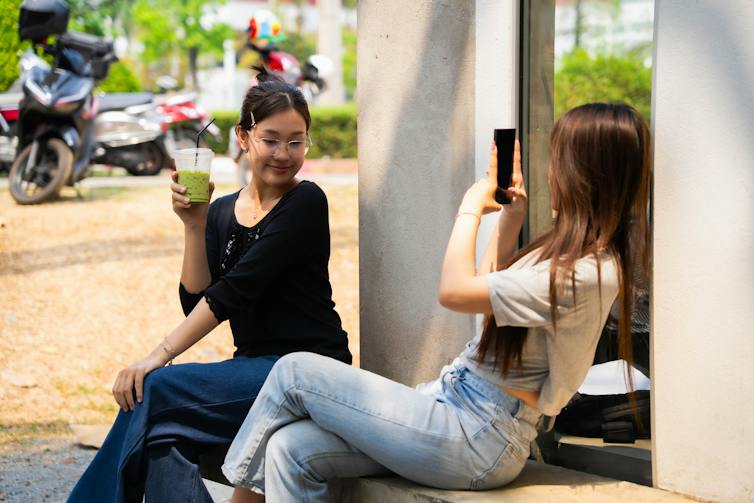
Platforms like Instagram, TikTok, and Pinterest do not merely circulate physical garments and transient micro-trends; they circulate recognizable, highly formulaic semiotic grammars. Whether it is a carefully staged city street walking shot, a close-up of an accessory resting beside an artisanal matcha latte, or a deliberately nonchalant caption attached to a heavily produced studio-grade image, the content changes while the mode of communication remains stubbornly, fascinatingly identical.
This deep dive investigates the mechanics of digital style, drawing on recent academic research, consumer psychology, and cultural analysis to understand how algorithms are teaching us to express our individuality through a standardized script.
Detailed Chronology: The Evolution of the Digital Style Script
To understand how we arrived at an era where every aesthetic feels simultaneously unique and mass-produced, we must trace how fashion communication shifted from the pages of print glossies to the infinite scroll of the smartphone.
The Print Era and Visual Conventions (Pre-2010s)
Historically, fashion operated on a top-down model of cultural transmission. Fashion magazines (such as Vogue, Harper’s Bazaar, and Elle) and bi-annual runway shows in Paris, Milan, London, and New York established visual conventions that dictated taste, status, and desirability. These gatekeepers used high-contrast studio lighting, professional editorial framing, and explicit branding to tell audiences what constituted high culture. Clothes signified status because they belonged to a shared, heavily guarded cultural lexicon—think of the unmistakable cultural capital attached to a Chanel tweed jacket, a Hermès Kelly bag, or authentic vintage Levi’s.
The Democratization Myth and Early Blogosphere (2010–2016)
The advent of platforms like early Instagram and outfit-of-the-day (OOTD) blogs promised a democratic revolution. Anyone with a digital camera and a Wi-Fi connection could bypass the traditional gatekeepers of fashion magazines. Street style photography exploded, capturing real people in real urban environments wearing idiosyncratic clothing combinations.
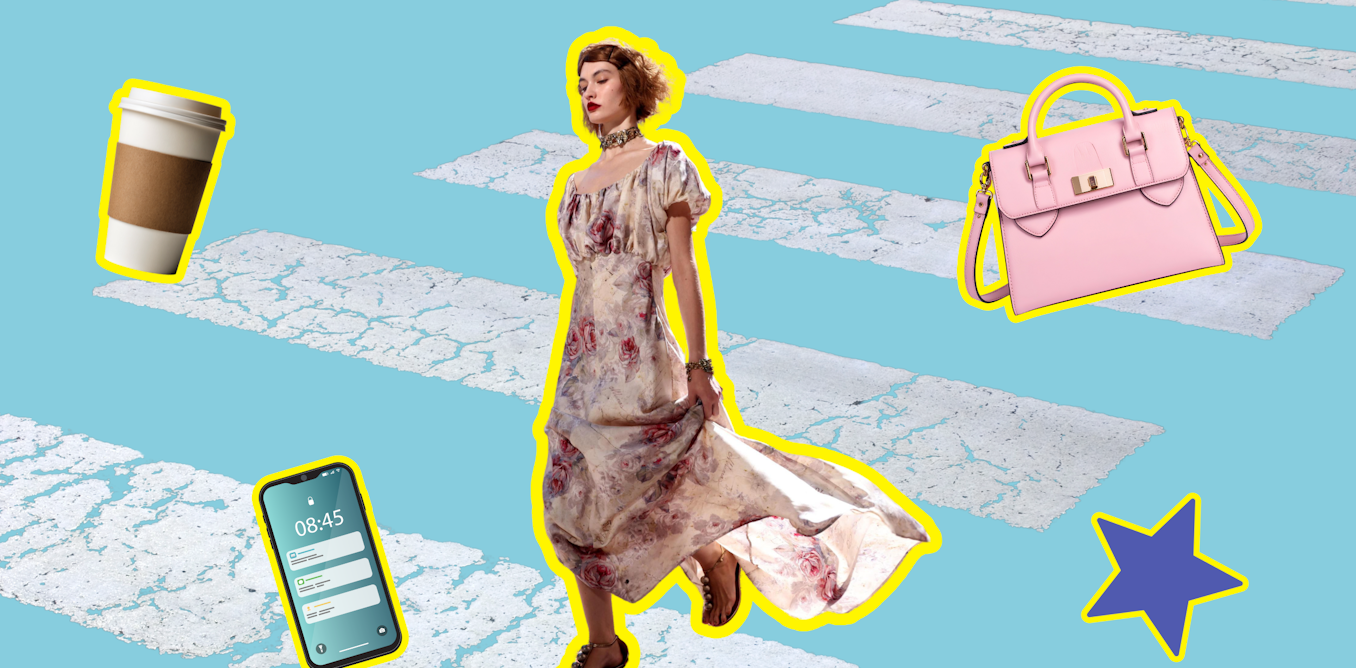
However, as algorithms matured, this chaotic democratization quickly formalized. The independent street-style photographer was replaced by the micro-influencer, and the spontaneity of the street corner gave way to optimized backdrops. Zebra crossings in major metropolitan areas, exposed brick cafes, and minimalist hotel lobbies became the universal staging grounds for digital self-expression.
The Rise of the Named Aesthetic and Algorithmic Sorting (2018–Present)
By the late 2010s, digital fashion had evolved beyond simple outfit sharing into the reign of the "named aesthetic." The internet began rapidly generating, categorizing, and commercializing hyperspecific subcultural identities.
We moved from broad categories like "hipster" or "bohemian" to hyper-niche portfolios:
- The Clean Girl: Characterized by sleek buns, neutral palettes, gold hoops, and dewy skin.
- Old Money: Featuring cable-knit sweaters, pleated tennis skirts, and understated luxury.
- Coastal Grandma: Emphasizing linen trousers, oversized cardigans, and serene coastal living.
- The "-Core" Explosion: Cottagecore, balletcore, normcore, gorpcore, and mob wife aesthetics.
These named aesthetics did much more than describe clothing; they assembled complete, turnkey visual ecosystems. They connected specific garments with precise locations, interior design choices, beauty routines, and lifestyle behaviors. Once an aesthetic was named, it became instantly searchable. Once searchable, it became infinitely reproducible, commercially viable, and algorithmically favored.
Supporting Context & Metrics: When Difference Uses the Same Language
To quantify this shift, empirical research offers illuminating insights. A comprehensive 2024 academic study analyzing 390 Instagram posts from three established luxury fashion influencers between 2022 and 2024 investigated how digital fashion meaning is constructed.
The methodology examined the intricate combinations of:
- Physical poses and body language
- Geographical locations and background settings
- Styling choices and layering techniques
- Caption structures and linguistic tones
- Image editing, filters, and cultural references
Key Findings of the Study
The research revealed that the influencers were not merely recycling specific brands or garments. Instead, they relied on recurring, highly predictable frameworks for making fashion legible and understandable to an audience scrolling at high speed.
- Aspiration Meets Relatability: Some posts projected aspiration through polished styling and exclusive access to fashion weeks. Others achieved relatability through casual everyday routines, self-deprecating humor, and accessible neighborhood backdrops.
- The Hybrid Formula: Crucially, these practices frequently overlapped. An avant-garde, highly expensive designer outfit would be casually photographed leaning against a graffiti-stained urban dumpster. An exclusive, high-ticket gala event would be paired with an aggressively casual, lowercase caption.
- The Communicative Uniform: While the garments themselves differed wildly—ranging from minimalist monochromatic tailoring to whimsical cottagecore dresses—the underlying communicative grammar remained uniform. Two individuals with entirely opposing physical wardrobes would photograph, position, and narrate their outfits using the exact same visual cues: the walking-away shot, the close-up shoe angle on a cobblestone street, or the coffee-cup accessory placement.
The Paradox of Abundance
This dynamic creates a profound cultural paradox. Contemporary consumers have access to more visual fashion imagery, historical archives, and global style inspiration than any previous generation in human history. Yet, this unprecedented abundance has not translated into visually diverse street style.
Instead, identical references, color palettes, and styling tropes are circulated at scale. Algorithms reward visual clarity, high contrast, and instant recognition. As a result, users are subtly trained to package their uniqueness inside universally legible containers.
Future Outlook: Reclaiming Personal Style in the Algorithmic Age
Is personal style truly dead, or has it simply gone underground?
Cultural sociologists and fashion theorists argue that personal style has not vanished; rather, the infrastructure of self-expression has been industrialized. Fashion has always relied on imitation, borrowing, and reinterpretation. Throughout history, subcultures have borrowed from the mainstream, and the mainstream has cannibalized subcultures.
What has fundamentally changed is the velocity and efficiency with which platforms package and distribute not just styles, but the psychological conventions through which those styles acquire meaning. Social media has taught us how to signal our identity, values, and taste using a standardized digital lexicon.
Consequently, the most pressing question facing digital consumers is not whether social media is forcing everyone to wear the exact same clothes, but whether it is conditioning us to perform our differences in the exact same way.
Practical Steps for the Modern Consumer
If you want to break free from the algorithmic loop and reclaim an authentic sense of personal style, consider the following philosophy for your next digital share:
- Audit the Package, Not the Product: When scrolling through your feeds, look past the way outfits have been staged. Ignore the matcha lattes, the golden hour lighting, and the ironic lowercase captions. Look directly at the garments and ask yourself if you genuinely like the clothing, or if you are simply seduced by the curation.
- Embrace Friction: Algorithms thrive on frictionless visual consumption. To disrupt this, lean into the unexpected, the slightly jarring, and the uncurated. Share outfits that resist easy categorization or searchability.
- Prioritize Lived Experience Over Documentation: Remember that true personal style is tactile, lived-in, and primarily meant for physical spaces rather than digital grids.
By paying closer attention to how our clothes are packaged—and daring to wear and share them without the safety net of viral formatting—personal style can prove to be very much alive and well.