Executive Overview
In the fast-paced, high-stakes ecosystem of early-2000s British pop music, a single track could mean the difference between global arena tours and being swiftly dropped by a major label. For Girls Aloud—forged in the television crucible of 2002’s Popstars: The Rivals—their career trajectory hung precariously in the balance just months after their explosive debut. Despite conquering the UK Singles Chart with their seminal anthem "Sound of the Underground," executives at Polydor Records remained hesitant to greenlight a sophomore album.
The turning point arrived in the autumn of 2003 with an electrifying cover of the Pointer Sisters’ 1984 classic, "Jump," recorded for the blockbuster romantic comedy Love Actually. The single rocketed up the charts, silenced label skepticism, and secured Girls Aloud’s place in pop history.
However, pop music history is a delicate tapestry of near-misses and sliding-door moments. Newly unearthed interview footage has revealed that "Jump" was originally pitched not to Cheryl, Kimberley, Nicola, Nadine, and Sarah, but to their chart rivals, Liberty X. In a twist of fate that defined an era, Liberty X turned down the opportunity to avoid becoming "a covers band," inadvertently handing Girls Aloud the golden ticket they desperately needed to survive. This investigative feature explores the intricate chronology, industry politics, and personal reflections surrounding one of the most consequential rejected tracks in British chart history.
Detailed Chronology: The Making of a Crisis and a Chart Miracle
2002–2003: The Fragile Triumph of Girls Aloud
When Girls Aloud was formed live on television in late 2002, they were immediately subjected to the intense scrutiny typical of reality TV pop groups. Their debut single, "Sound of the Underground," was a critical and commercial masterstroke, blending aggressive, underground-leaning drum-and-bass production with pristine pop melodies. It claimed the coveted Christmas Number One spot in 2002 and spent four consecutive weeks at the summit.
Yet, in the boardrooms of Polydor Records, initial success did not guarantee long-term investment. Follow-up singles "No Good Advice" and "Life Got Cold"—while respectable commercial performances, peaking at Number 2 and Number 3 respectively—failed to replicate the unstoppable cultural dominance of their predecessor. Behind closed doors, label executives debated whether the group had the staying power to warrant the significant financial investment of a full second studio album.
As Kimberley Walsh later reflected in the liner notes for the 20th-anniversary reissue of their debut album, the group was acutely aware of their precarious standing. "It was a make-or-break song for us as a band," Walsh confessed, underscoring the existential pressure the members faced as they entered the recording studio in mid-2003.
The Love Actually Lifeline
The salvation of Girls Aloud arrived via Hollywood. Working with Xenomania masterminds Brian Higgins and Miranda Cooper, the group was approached to record a high-profile cover for the soundtrack of Richard Curtis’s star-studded romantic comedy, Love Actually.
The track chosen was the Pointer Sisters’ 1984 synth-pop workout, "Jump." Infused with Xenomania’s signature hyper-kinetic production style, the resulting recording was both a nostalgic nod to 1980s dancefloors and a thoroughly modern club banger. Nicola Roberts recalled the strategic brilliance of the track: "It was four-on-the-floor so it could be played in the clubs, but it was also familiar enough to be played on the radio. And at this point, it was probably our most digestible single."
Released in November 2003, "Jump" became an instant smash. It peaked at Number 2 on the UK Singles Chart, sold hundreds of thousands of copies, and single-handedly forced Polydor Records to commit to the release of Girls Aloud’s second studio album, What Will the Neighbours Say?. The rest, as they say, is pop aristocracy.
The Road Not Taken: Liberty X and the Anatomy of a Rejection
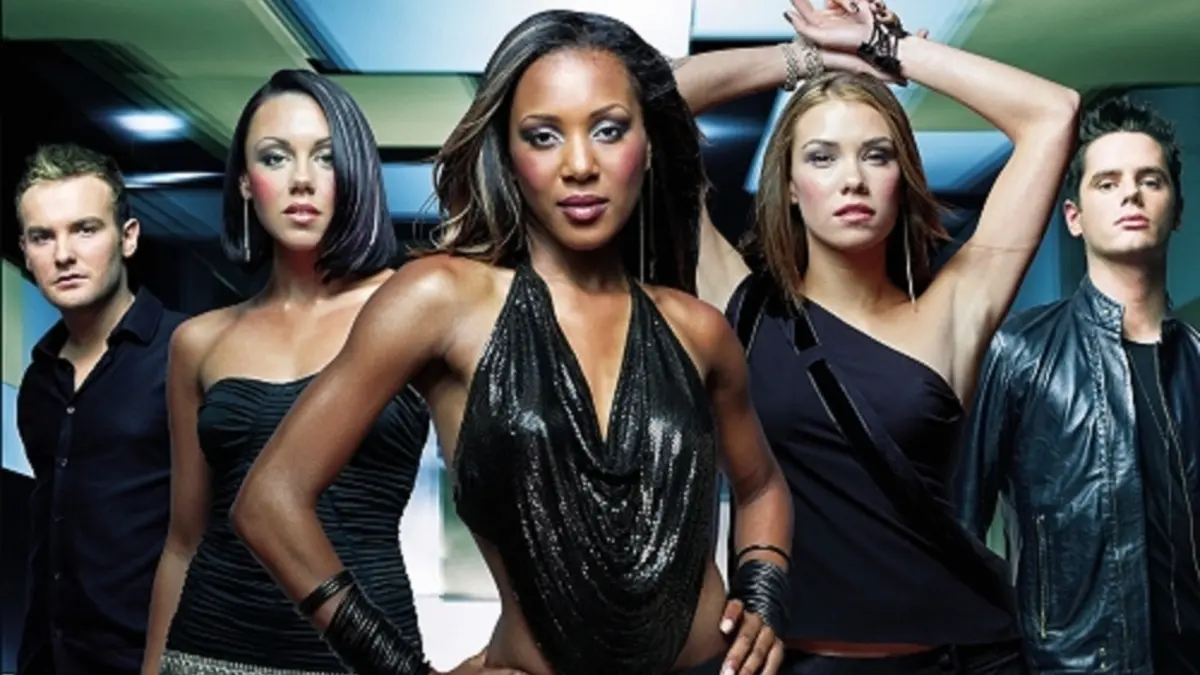
While Girls Aloud embraced the cinematic tie-in, their contemporaries were actively plotting a different path. Liberty X—formed in 2001 as the runners-up to Hear’Say on the original UK series of Popstars—had carved out a fiercely respected niche in the R&B and pop market with hits like "Just a Little" and "Being Nobody."
In a viral interview clip posted by TikTok creator Pop Princess, Liberty X member Kelli Young shed light on how the film producers initially approached her group with the exact same offer.
"They had already confirmed that it was going to be in the Love Actually movie," Young explained. "You know, the producers of the film came to us and were like, ‘Would you like to do this song? It’s going to be a big, you know, really big film.’"
Guarding Artistic Integrity
For Liberty X, the decision to pass on the track was rooted in a strategic desire to protect their burgeoning artistic identity. Having broken away from the manufactured constraints of their television origins, the five-piece—comprising Young, Michelle Heaton, Tony Lundon, Kevin Simm, and Jessica Taylor—were hyper-conscious of how the industry categorized them.
"At the time, we just felt that we’d done enough covers," Young noted, referencing previous releases and live performances. "And we didn’t want to, you know, become a covers band, even though it did seem like a really good opportunity."
Regret and Reconciliation
The passage of time often brings clarity, alongside a tinge of regret. While Young stands by the band’s collective decision, noting that "everything happens for a reason," her bandmate Jessica Taylor experienced a moment of public reflection.
Recalling a concert last summer where the two attended a Girls Aloud tour stop, Young shared:
"Jessica and I went and watched Girls Aloud on their tour last summer and they actually performed ‘Jump,’ and Jessica turned to me and said, ‘Should we have done this one?’ And I was like, ‘No, babe, no, everything happens for a reason.’"
This candid admission highlights the fine margins that govern the pop industry. A stylistic boundary drawn to protect artistic credibility inadvertently handed a rival group the definitive track required to cement their legacy.
Supporting Context & Industry Metrics
To fully appreciate the magnitude of the "Jump" sliding-door moment, one must analyze the commercial and cultural landscape of the British pop industry in 2003.
The Economics of the Early-2000s Pop Machine
During this era, major record labels operated on aggressive attrition rates. Reality TV pop acts were frequently treated as disposable commodities designed to maximize short-term merchandising and single sales before fading into obscurity.
| Metric / Milestone | Girls Aloud ("Jump") | Liberty X (Contextual Era) |
|---|---|---|
| Year of Release / Decision | 2003 | 2003 |
| Chart Peak (UK) | No. 2 | Sustained multiple Top 5 hits ("Just a Little" hit No. 1 in 2002) |
| Strategic Focus | Commercial expansion & radio-friendly accessibility | R&B/Pop hybrid identity & original material |
| Career Impact | Secured sophomore album (What Will the Neighbours Say?) | Maintained artistic autonomy while dodging a potential branding pivot |
The inclusion of "Jump" on the Love Actually soundtrack placed Girls Aloud into an elite international marketing apparatus. The film grossed over $245 million worldwide, exposing the group’s vocals to millions of cinema-goers globally long before streaming algorithms dictated music discovery. Polydor’s initial hesitation evaporated as the single proved that Girls Aloud could bridge the gap between niche club pop and mainstream cinematic appeal.
Official Statements and Reflections
The legacy of "Jump" continues to resonate through retrospectives, reissues, and candid artist commentary. The track represents a rare moment where pop stars openly acknowledge the structural fragility of their early careers.
- Kimberley Walsh (on the stakes): "It was a make-or-break song for us as a band. Without the commercial validation that ‘Jump’ provided, the future of the group after our debut album cycle was genuinely uncertain."
- Nicola Roberts (on production and accessibility): "It was four-on-the-floor so it could be played in the clubs, but it was also familiar enough to be played on the radio. And at this point, it was probably our most digestible single."
- Kelli Young (on the Liberty X decision): "We didn’t want to… become a covers band, even though it did seem like a really good opportunity. Everything happens for a reason."
These reflections paint a vivid picture of artists navigating immense corporate pressures while trying to steer their own cultural narratives through an unforgiving media landscape.
Future Outlook: The Nostalgia Renaissance
As the music industry continues to embrace the golden era of Y2K pop, the interconnected histories of these seminal groups are experiencing a profound renaissance.
Next year marks a monumental milestone: 25 years since Liberty X finished as runners-up to Hear’Say on the inaugural series of Popstars. To celebrate this quarter-century legacy, Liberty X and Hear’Say are reuniting for a landmark arena tour across the UK and Ireland, bringing back the high-energy choreography, soaring harmonies, and undeniable nostalgia of early-2000s British chart music.
Concurrently, the enduring legacy of Girls Aloud—bolstered by their triumphant 2024 reunion tour honoring the late Sarah Harding—serves as a testament to the lasting power of catalogs built on immaculate pop craftsmanship.
The revelation that "Jump" almost belonged to Liberty X does not diminish what either group achieved; rather, it enriches our understanding of pop history. It demonstrates that behind every timeless dancefloor anthem lies a complex web of split-second decisions, boardroom negotiations, and artistic gambles that continue to captivate fans more than two decades later.