EXECUTIVE OVERVIEW
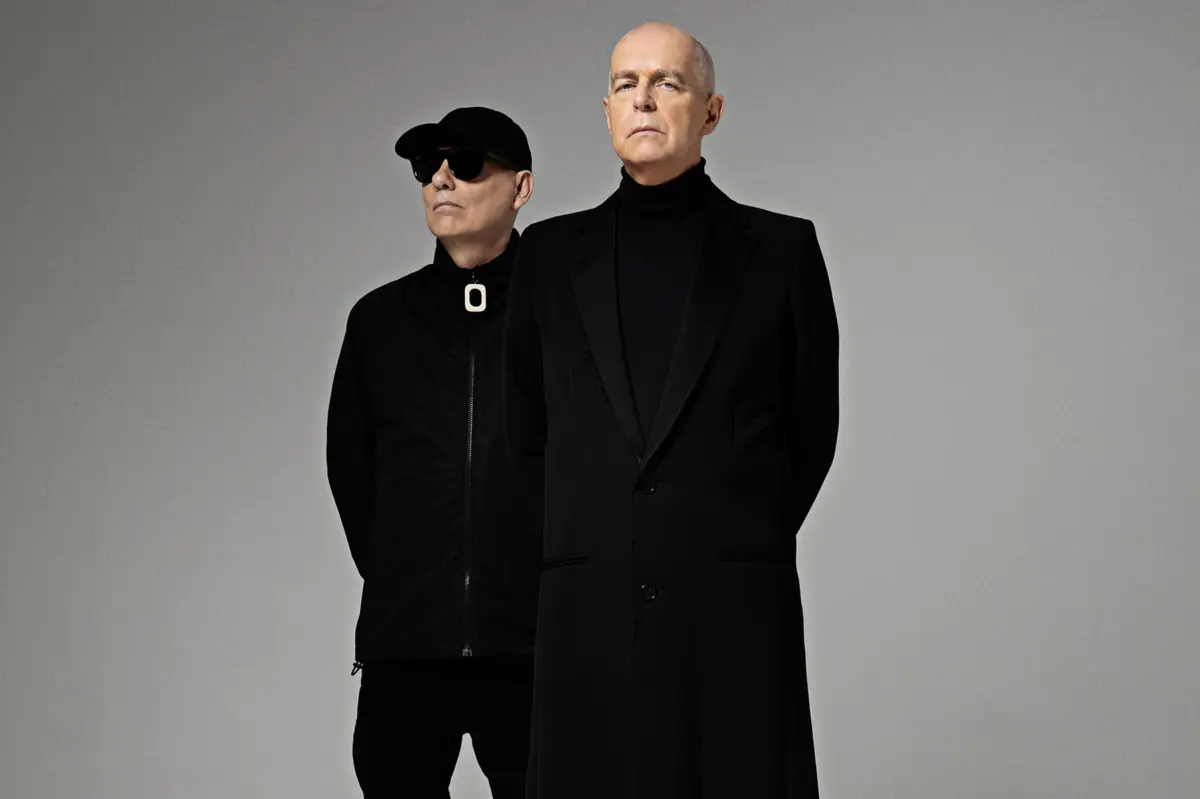
In a career defined by high-concept pop artistry, intellectual rigor, and an unerring instinct for theatricality, the British electronic duo Pet Shop Boys have returned with one of their most ambitious projects to date. Released via Parlophone Records, A Man from the Future is a sweeping, multi-layered concept album that chronicles the extraordinary life, towering scientific achievements, and tragic persecution of Alan Turing—the English mathematician, logician, and cryptanalyst widely acknowledged as the intellectual father of modern computing and artificial intelligence.
Produced jointly by Neil Tennant, Chris Lowe, and composer Sven Helbig, the album is a striking synthesis of synthesized textures and organic classicism. It features lush string arrangements by Helbig performed by the Manchester Camerata Octet, alongside evocative spoken-word contributions from acclaimed actress Juliet Stevenson, who recites text adapted from Andrew Hodges’ definitive biography, Alan Turing: The Enigma.
The release marks a triumphant evolutionary step for the project, which was initially conceived over a decade ago. Having undergone extensive sonic overhauls, the newly updated suite incorporates fresh electronic soundscapes, reimagined orchestrations, and refined narrative texts. Coming on the heels of their 2024 acclaimed studio album Nonetheless—which peaked at No. 2 on the Official U.K. Albums Chart—A Man from the Future reinforces Pet Shop Boys’ enduring cultural relevance. More than just a collection of electro-pop tracks, the album functions as a solemn, majestic musical monument to a man who fundamentally altered the trajectory of human history, only to be destroyed by the institutional prejudices of the society he helped save.
THE GENESIS AND EVOLUTION OF A MASTERWORK
The journey of A Man from the Future spans more than a decade, evolving from a localized live performance into a meticulously polished studio masterpiece. The creative partnership between Neil Tennant, Chris Lowe, and biographer Andrew Hodges began to take shape during the 2012–2013 period. At the time, public interest in Turing’s legacy was surging in anticipation of the theatrical release of The Imitation Game, the Academy Award-winning film starring Benedict Cumberbatch as the brilliant cryptologist.
Rather than cashing in on a Hollywood trend, Tennant and Lowe approached the material with scholarly reverence and avant-garde sensibilities. In July 2014, the duo offered the world its first taste of the project during a prestigious BBC Proms performance at London’s iconic Royal Albert Hall. Backed by orchestra and electronics, those early excerpts showcased the duo’s capacity to merge club-culture aesthetics with high-art composition.
However, rather than rushing a studio recording to capitalize on the initial buzz, Pet Shop Boys shelved the work, allowing it to mature. Over the ensuing years, Tennant and Lowe—alongside co-producer Sven Helbig—continuously updated, reworked, and rearranged the score. This lengthy incubation period allowed the artists to integrate new electronic elements, refine the narrative pacing, and develop fresh orchestrations that capture the rapid advancements in computing technology that Turing himself had prophesied.
The result is a fully realized sonic odyssey that avoids the pitfalls of dated electronic production, emerging instead as a timeless, futuristic meditation on innovation, isolation, and persecution.
A CHRONOLOGICAL ODYSSEY: LIFE, GENIUS, AND TRAGEDY
A Man from the Future unfolds in a strict, chronological narrative arc, guiding the listener through eight pivotal chapters in Turing’s brief yet monumental existence. Each movement captures a distinct facet of his intellectual awakening, professional triumphs, personal realizations, and ultimate victimization.
1. The Formative Years and Academic Awakening
The opening movements of the album transport the listener to Turing’s early school days and his formative years at Cambridge University. Here, Pet Shop Boys utilize bubbling, inquisitive electronic motifs to mirror a young mind grappling with the infinite possibilities of mathematics and the physical sciences. These movements also touch upon the quiet, complex realization of his homosexuality during an era when such identity was viewed as both a social taboo and a criminal offense.
2. Bletchley Park and the Enigma Machine
The narrative reaches its high-stakes dramatic peak as Turing enters the clandestine world of Bletchley Park during the Second World War. Tasked with breaking the supposedly unbreakable German Enigma machine code, Turing and his team of mathematicians operated under extreme pressure to turn the tide of the global conflict. The music in this section shifts into tense, rhythmic, highly syncopated electronic soundscapes—pulsing with the mechanical urgency of early computing logic and the relentless ticking of the clock against the backdrop of war.

3. The Birth of Digital Computing and Artificial Intelligence
Following the Allied victory—an achievement accelerated immeasurably by Turing’s cryptographic breakthroughs—the album explores his post-war visionary work. Turing is recognized not merely as a codebreaker, but as the conceptual architect of the modern digital computer. The compositions here look forward, anticipating a world shaped by algorithms, data processing, and machine learning. Furthermore, the album highlights Turing’s early, brilliant predictions regarding Artificial Intelligence, pondering whether machines might one day think and feel.
4. Persecution, Trial, and Tragedy
The triumphant tone of the record shifts into harrowing, elegiac territory as the narrative confronts the grim realities of mid-century British law. In 1952, Turing’s homosexuality was exposed following a police investigation into a burglary at his home. Rather than being celebrated as a national hero who had saved millions of lives, he was criminally prosecuted for "gross indecency."
Faced with a cruel judicial ultimatum—imprisonment or debilitating chemical castration via estrogen injections—Turing chose the latter. The final movements of the album capture the devastating physical and psychological toll of this state-mandated persecution, culminating in his tragic suicide by cyanide poisoning in 1954 at the age of 41. Juliet Stevenson’s spoken-word passages, drawn directly from Andrew Hodges’ text, deliver these chapters with an unflinching emotional gravity, anchoring the electronic grandeur in stark human reality.
OFFICIAL STATEMENTS: A MUSICAL MEMORIAL
In conjunction with the release of A Man from the Future, Pet Shop Boys released an official statement that elucidates the profound moral and historical imperatives driving the project:
"Our motive in creating this work was to make a musical memorial to Alan Turing, who gave so much to his country and the world and was rewarded for it by being prosecuted for his sexuality," the duo shared.
"Alan made a massive contribution to the defeat of Germany in World War II and was a pioneer of computing, imagining a world with intelligent computers. He also looked forward to a time when being gay would be accepted as normal. In both his professional and private lives, he was ahead of his time."
This statement underscores the dual purpose of the album: to celebrate an incandescent intellect while condemning the institutional bigotry that extinguished it prematurely. By framing Turing’s life through electronic music—a medium itself dependent on the binary logic and computational advances he conceptualized—Pet Shop Boys establish a deeply personal, artistic dialogue with their subject.
SUPPORTING CONTEXT & COMMERCIAL METRICS
A Man from the Future arrives at a time of remarkable creative vitality for Pet Shop Boys. The duo remains a towering commercial and cultural institution, particularly in their native United Kingdom, where their chart pedigree is virtually unmatched among electronic acts.
- Chart History (U.K.): Pet Shop Boys have amassed 22 top 10 hit singles in the United Kingdom, including four chart-topping anthems. On the albums front, they have secured ten top 10 records, highlighted by their 1993 chart-topper Very. Their previous studio album, 2024’s Nonetheless, proved that their artistic potency remains undiminished, peaking at No. 2 on the Official U.K. Albums Chart.
- Global Impact (U.S.): Stateside, the duo has enjoyed enduring popularity, registering 12 appearances on the Billboard Hot 100, five top 10 hits, and capturing the No. 1 spot in 1986 with their generation-defining masterpiece, "West End Girls."
- Collaborative Synergy: The integration of the Manchester Camerata Octet and composer Sven Helbig bridges the gap between synthetic pop and contemporary classical composition. Helbig’s string arrangements provide an organic warmth that prevents the electronic elements from feeling cold or clinical, creating a dynamic tension that mirrors Turing’s own struggle between rigid logic and human emotion.
FUTURE OUTLOOK
As A Man from the Future finds its way to listeners worldwide via streaming platforms and physical formats, its release resonates far beyond the confines of the pop charts. In an era where technological advancement, artificial intelligence, and digital privacy dominate public discourse, Turing’s prophetic warnings and visionary insights feel more urgent than ever.
For Pet Shop Boys, this album represents a bold expansion of their artistic boundaries. By transforming historical biography into an immersive, electronic-orchestral experience, Neil Tennant and Chris Lowe have ensured that Alan Turing’s legacy is not merely remembered in history books, but felt in the pulse of modern sound. A Man from the Future stands as a brilliant reminder that true pop innovators can look backward with profound empathy, even as they project their vision far ahead into the days to come.