Executive Overview
In a stunning announcement that has sent shockwaves through the global electronic music community, Stockholm-based design and technology firm Teenage Engineering has confirmed it is halting the production of all synthesizers. The news, dropped by founder and CEO Jesper Kouthoofd during a wide-ranging interview with Highsnobiety, marks a definitive turning point for a company that built its formidable reputation on avant-garde audio hardware.
For over two decades, Teenage Engineering has been synonymous with boutique electronic music gear. From the cult-classic, highly coveted OP-1 synthesizer—which dominated secondary markets and best-seller lists for years—to the pocket-sized Pocket Operator series and the immersive OP-Z groovebox, the company carved out a distinct niche at the intersection of high-end industrial design and musical functionality. Yet, despite commercial success and a fiercely loyal consumer base, Kouthoofd believes that continuing down the path of synthesizer manufacturing is a creative dead end.
This radical strategic pivot raises profound questions about the future of boutique electronic instrument design, the economics of hardware manufacturing, and the limits of commercial success. As Teenage Engineering approaches its 20th anniversary in 2005-founded retrospective, the company is shedding the very products that put it on the map. In doing so, it is embracing an unpredictable future defined by unconventional, experimental, and boundary-pushing projects that may take years to materialize.
While brand loyalists and industry analysts grapple with the news, the broader design and tech worlds are watching closely. Is this the ultimate luxury of an established design house exercising creative freedom, or a high-stakes gamble that risks alienating the core audience that built the brand? This in-depth report explores the chronology, motivations, community reactions, and future outlook surrounding Teenage Engineering’s seismic departure from the synthesizer market.
Detailed Chronology: From Stockholm Garage to Global Audio Icon
To understand the weight of Teenage Engineering’s decision to abandon synthesizers, one must examine the meteoric trajectory that established the brand as a trailblazer in modern industrial design.
The Foundation and Early Years (2005–2010)
Founded in Stockholm, Sweden, in 2005 by Jesper Kouthoofd, Jens Rudberg, David Eriksson, and Mikael Ericsson, Teenage Engineering began not as a traditional musical instrument manufacturer, but as a collective of restless designers and engineers. Kouthoofd, whose background blended the artistic sensibilities of his Dutch architect father with the business acumen of his Swedish banker mother, instilled a philosophy of uncompromising aesthetic purity and playful experimentation into the nascent firm.
In its early years, the company operated largely behind the scenes, consulting on various design projects and building technological prototypes. However, the team harbored a deep passion for electronic music and hardware interfaces. They recognized a glaring gap in the market: synthesizers had largely become utilitarian, plastic-heavy, or rigidly retro-styled black boxes. Teenage Engineering envisioned instruments that felt less like studio equipment and more like high-end consumer electronics—objects of desire that users would want to display proudly on a desk.
The OP-1 Revolution (2011)
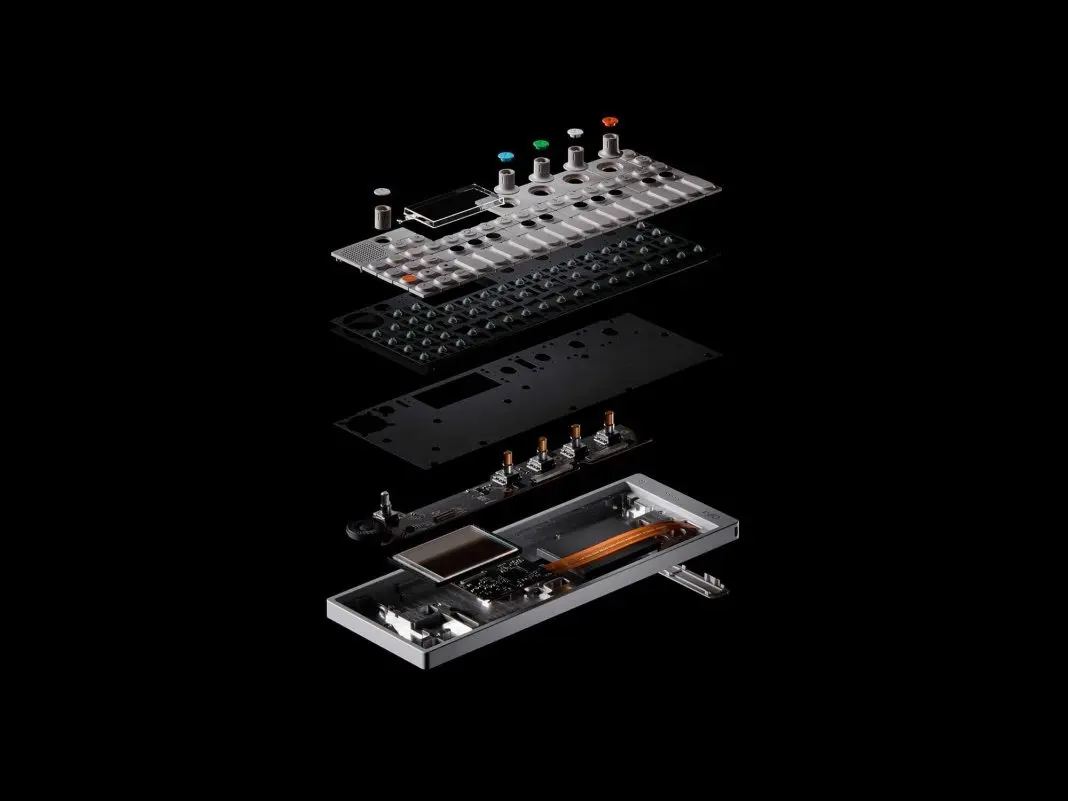
The watershed moment arrived in 2011 with the commercial release of the OP-1 portable synthesizer. The device was an immediate sensation, defying conventional categorization. Featuring a creamy white aluminum chassis, a vibrant high-definition OLED display styled with retro-futuristic graphics, a tape-recorder workflow, and a rechargeable battery, the OP-1 redefined what portable music production could look and feel like.
Musicians, producers, and casual tech enthusiasts alike flocked to the device. Artists ranging from pop icons like Swedish House Mafia and Bon Iver to bedroom producers made the OP-1 a staple of modern workflows. Despite supply chain hurdles and polarizing price points, the OP-1 became one of the best-selling pieces of gear in modern music history, cementing Teenage Engineering’s status as the Apple of the boutique synth world.
Diversification and Expansion (2015–2020)
Capitalizing on the success of the OP-1, Teenage Engineering refused to rest on its laurels. The company expanded its portfolio with products that leaned heavily into its eccentric corporate personality:
- The Pocket Operator Series (2016): A line of credit-card-sized, ultra-affordable micro-synths and samplers that looked like calculators stripped of their cases. They introduced retro gaming animations and an addictive, pick-up-and-play ethos to a younger generation of creators.
- The OP-Z (2018): A multimedia, highly advanced step-sequencer and synthesizer engineered for on-the-go audiovisual performance, pairing tight MIDI control with 3D graphics generation via iOS devices.
- Collaborations and Curiosities: The brand partnered with global giants like IKEA (to create the Frekvens modular party lighting and sound system) and Nothing (designing the audio hardware aesthetic for Carl Pei’s disruptive tech startup), while launching esoteric products like MIDI-compatible wooden choir dolls.
The Turning Point (2024–Present)
By the mid-2020s, the company had achieved cult status. Yet, internal restlessness was brewing. As Kouthoofd revealed in his interview with Highsnobiety, the very success of their synthesizers began to feel like a cage. The market expected iterative updates, predictable form factors, and continuous hardware revisions within the audio vertical. For a designer driven by chaotic curiosity, the synthesizer market had transitioned from a frontier of exploration into an ecosystem of exploitation—a domain where ideas were refined to maximum commercial efficiency rather than wild innovation.
Consequently, Kouthoofd made the executive decision to pull the plug on synthesizer development entirely, shifting the company’s focus toward uncharted territory.
Supporting Context & Metrics: The Anatomy of a Pivot
The decision to shutter synthesizer production is not merely an emotional or artistic whim; it reflects a distinct corporate philosophy shaped by upbringing, design ethics, and economic realities.
The Dual Heritage of Design and Business
Kouthoofd has often described himself as a literal embodiment of his parents’ contrasting professions. Growing up watching his Dutch architect father draft structural marvels while his Swedish banker mother navigated high-stakes finance forged a unique duality in his leadership style.
This hybrid mindset—where uninhibited creative vision must somehow coexist with commercial survival—explains why Teenage Engineering has survived ventures that traditional corporate boards would immediately veto. Items like wooden a cappella choir dolls or ultra-expensive, minimalist speaker systems (such as the OD-11) are not designed for mass-market profitability; they are brand-building exercises that test the boundaries of human-computer interaction and emotional resonance.
Redefining the Business Model
In his interview, Kouthoofd dropped a telling quote:
"Everyone was like, ‘What are you talking about?’ But I’ve come to the conclusion that, for us, the products aren’t the business. We can be so much more than that."
For a hardware company, this statement is borderline heresy. Traditional hardware manufacturers rely on continuous product cycles, recurring sales, and accessory ecosystems to maintain cash flow. By stating that "products aren’t the business," Kouthoofd is positioning Teenage Engineering as a design philosophy and cultural point of view rather than a traditional manufacturing firm.
As alt-pop star and loyal customer Lykke Li observed in Highsnobiety’s feature: "Teenage Engineering is a point of view more than anything, and that’s what I resonate with the most."
Official Statements and Industry Reactions
The announcement has elicited a tidal wave of reactions, ranging from philosophical acceptance to outright skepticism across digital communities like Reddit and industry trade circles.
Inside the Design Studio
The internal sentiment at Teenage Engineering suggests that the team operates as an extension of Kouthoofd’s creative impulses, yet maintains a healthy, collaborative cohesion. Yi-ying Hsieh, a member of the company’s design team, offered valuable insight into the corporate dynamic:
"Teenage Engineering is Jesper doing what he wants to do. But we’re all okay with that because we want to contribute to what he wants to do."
This absolute trust within the studio allows the brand to execute radical pivots without suffering the bureaucratic paralysis that plagues larger consumer electronics conglomerates.
The Community Divide on Reddit
Over on the r/teenageengineering subreddit, user reactions have been complex and multifaceted. The community is currently processing the news through several distinct lenses:
- The Fear of the Unknown (and AI): With Kouthoofd hinting that some of the company’s upcoming, "life-changing" projects may not see the light of day for another five to ten years, users have expressed anxiety regarding modern tech trends. One user wrote pointedly: "So help me god if this is some AI bullshit…", reflecting a widespread fatigue toward algorithmic hype replacing tangible hardware innovation.
- Calls for Open-Source Firmware: Pragmatic synth enthusiasts have raised concerns regarding the longevity of existing Teenage Engineering gear. One prominent Reddit user argued that if synthesizers are truly off the table moving forward, the company has an ethical obligation to open-source the firmware of devices like the OP-1 Field and OP-Z.
"That would allow the community to continue improving, maintaining, and expanding the capabilities of these devices long after the company moves on to other projects," the user wrote. "It would also show appreciation for the loyal users who have supported their products over the years."
- The Design Maximalist View: Conversely, some community members defended the decision, arguing that Teenage Engineering had simply pushed synthesizer design as far as humanly possible. One astute commenter noted that the company had successfully perfected its human-interface language within the groovebox and synth market:
"When I look at the products and hardware, they are ‘done’ design-wise… There is nothing to add or subtract anymore, if you ask me. Goes for innovation too. I think creatively they have come to what reasonably can be seen as the endpoint of exploration and goes into exploitation. And I get it that they don’t want to be stuck there."
Future Outlook: What Lies Beyond Synths?
As Teenage Engineering closes the chapter on synthesizer manufacturing, the central question remains: What comes next?
Kouthoofd has indicated that the company is shifting its gaze toward projects that "may not be reasonable or probably won’t be profitable," leaning back into the pure, unadulterated experimentalism that characterized its foundational years. However, this philosophy carries inherent commercial risks.
The Long-Term Gamble
By delaying their next major product reveals by five to ten years, Kouthoofd is asking his audience to embark on a long, uncertain journey of faith. In an industry defined by fast-paced gadget cycles and annual iterative upgrades, a decade-long horizon for "life-changing" projects is practically unprecedented.
Will the market wait for Teenage Engineering to reinvent itself? Or will the brand alienate the musicians and producers who funded its growth, transforming instead into an exclusive, hyper-niche art collective that produces obscure lifestyle objects few can access or understand?
A Lasting Legacy in Sound
Regardless of where the Stockholm firm directs its creative energy next, its impact on electronic music production is indelible. Teenage Engineering proved that synthesizers do not have to look like relics from a 1980s laboratory; they can be tactile, joyful, beautiful pieces of modern art that invite playfulness and human connection.
For current owners of the OP-1, Pocket Operators, and OP-Z, the gear will continue to make music, even if the factory floors in Sweden fall silent to the hum of new, unannounced experiments. As the company steps bravely into its next decade, one thing is certain: Teenage Engineering will never do what is expected of them. And in a world of homogenized tech design, that unpredictable spirit may be their most valuable export of all.