History is frequently shaped by the echoes of its most famous triumphs. In the collective British consciousness, the medieval military conflicts between England and Scotland are inextricably bound to the mythos of Stirling Bridge (1297), Falkirk (1298), and the resounding Scottish victory at Bannockburn (1314)—all immortalized by the exploits of William Wallace and Robert the Bruce. Similarly, the triumphs of the Hundred Years’ War, masterminded by English monarchs like Edward III and Henry V at Crécy (1346), Poitiers (1356), and Agincourt (1415), loom large in popular culture and academic literature alike.
Yet, buried quietly in the annals of medieval warfare is an engagement that fundamentally altered the geopolitical landscape of the British Isles, yet remains virtually unknown to the modern public: The Battle of Neville’s Cross.
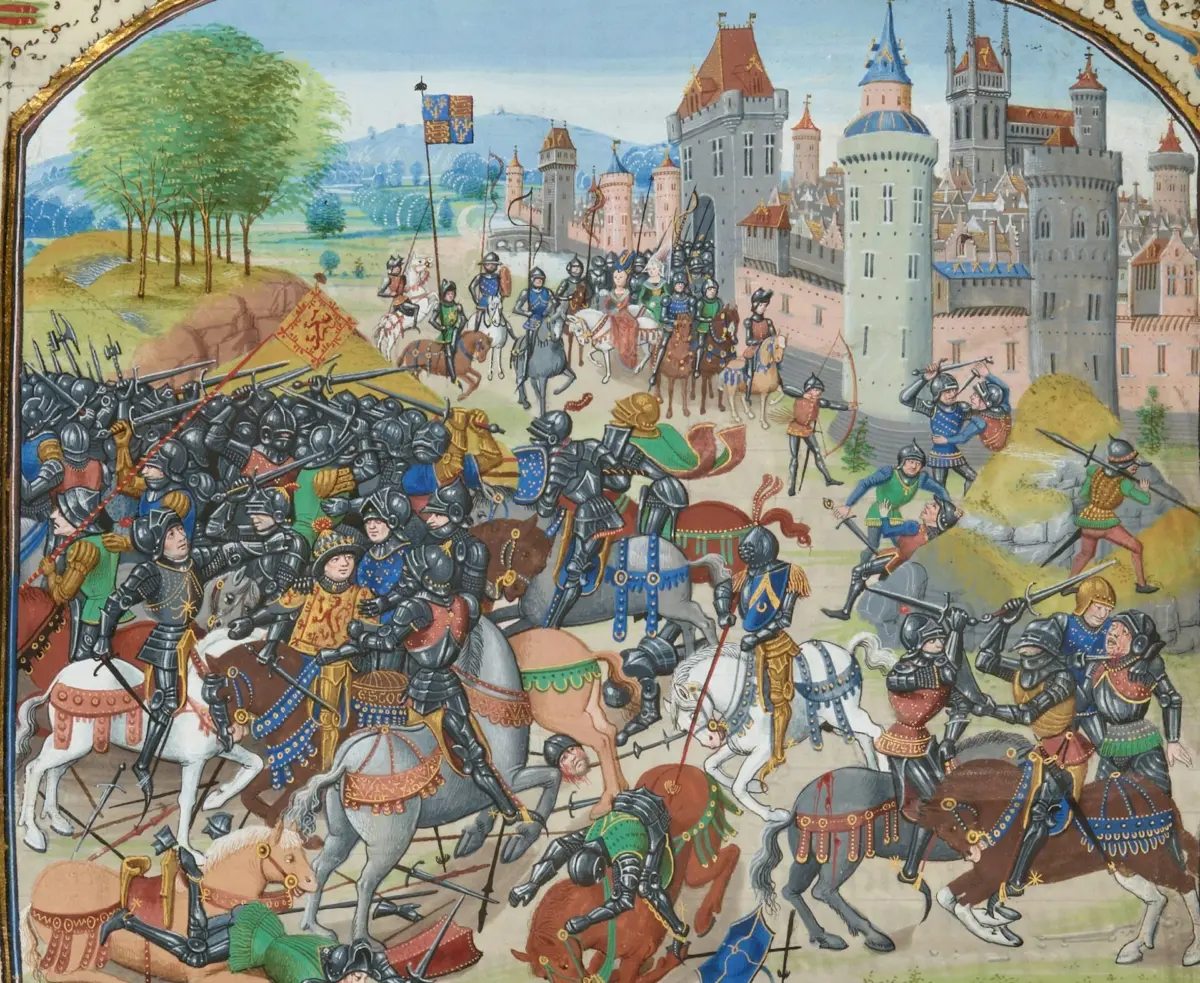
Fought on October 17, 1346, just outside the city of Durham in the north-east of England, this brutal encounter occurred less than two months after the celebrated English victory at Crécy. Far from being a mere regional skirmish, Neville’s Cross was a strategic masterstroke and a devastating defeat for the Kingdom of Scotland. It resulted in the capture of the Scottish monarch, King David II, decimated the upper echelons of the Scottish nobility, and effectively pacified England’s northern frontier for the remainder of Edward III’s reign.
Despite its profound historical weight—which directly enabled Edward III to sustain his monumental siege of Calais—Neville’s Cross has faded from public awareness. Lacking the dramatic flair of Shakespearean verse or the cinematic treatment afforded to its sister battles, it remains the forgotten crucible of Anglo-Scottish history. This retrospective examines the intricate political maneuvering, the harrowing day of combat, and the sweeping long-term repercussions of an engagement that defined an era.
Detailed Chronology: From French Plea to Royal Captivity
To fully understand how a northern English moor became the site of one of the most consequential royal captures of the Middle Ages, one must trace the chain of continental diplomacy and domestic miscalculation that preceded it.
The French Entreaty and the "Defenceless Void"
In the summer of 1346, King Edward III of England enacted a massive military mobilization, gathering an invasion force of roughly 15,000 men to strike at the heart of France. Alarmed by this existential threat, King Philip VI of France looked desperately for allies to relieve the pressure on his realm. He turned his gaze northward to Scotland, bound by the Auld Alliance.
In June and July of 1346, King Philip dispatched urgent missives to King David II of Scotland. He implored him to honor their historical friendship and mutual treaties:
“I implore you to remember our friendship and our treaties and to strike as hard at England as you can.”
With Edward III and the vast majority of his experienced military nobility operating across the English Channel, Philip painted a picture of northern England as a “defenceless void,” assuring the Scottish king that the borderlands lay bare and ripe for plunder. For David II, the opportunity to exploit perceived English vulnerability—and perhaps to fulfill personal and national ambitions of territorial reclamation—proved irresistible.
The Scottish Incursion
On October 7, 1346, King David II crossed the Anglo-Scottish border at the head of a formidable army numbering approximately 12,000 men. The invasion was swift and destructive. The Scottish forces stormed the Peel of Liddell, exacted a heavy ransom from the citizens of Carlisle, and thoroughly sacked the historic Hexham Abbey.
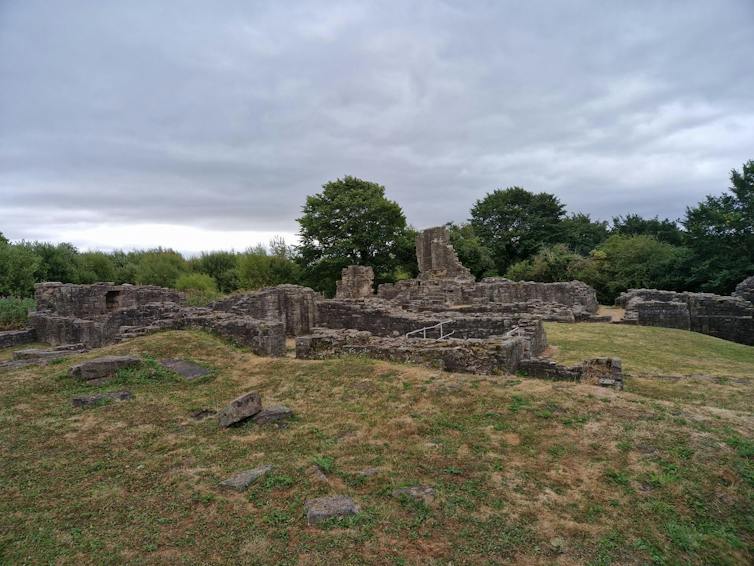
By October 16, the army had advanced deep into County Durham, establishing a staging camp at Bearpark, just outside the city walls. Confident in French assurances, the Scottish leadership believed they operated in an uncontested theater. They were disastrously mistaken.
The Intelligence Failure and Royal Arrogance
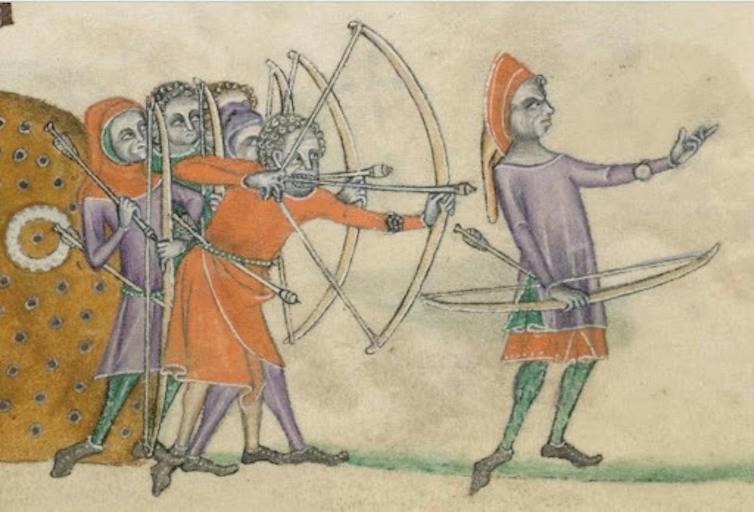
Contrary to Philip VI’s confident assertions, Edward III had not left his northern borders entirely exposed. Recognizing the persistent threat of Scottish opportunistic aggression, northern English magnates—specifically Henry Percy, Ralph Neville, and the Archbishop of York—had successfully raised and organized a defensive levy of some 6,000 seasoned men-at-arms and longbowmen.
Seeking to seize the initiative through surprise, the English force marched toward the Scottish camp at Bearpark in the early morning mists of October 17. As they advanced, the vanguard stumbled directly upon a Scottish raiding and foraging party led by the formidable William Douglas. Realizing the immense danger, Douglas hastily broke contact and galloped back to the royal camp to warn the king that a fully prepared English battle array was closing in.
According to The Anonimalle Chronicle, an insightful 14th-century account penned within the scriptorium of St Mary’s Abbey, King David II reacted to the news with visible irritation and arrogant disbelief. Arising from his bed, the Scottish monarch reportedly scoffed:
“O man, that cannot be, because in England there are no men left but monks and canons, brothers and priests, swineherds and shepherds, cobblers and skinners; but all the knights are with their king overseas.”
David’s dismissal of the English domestic defense force would prove to be a fatal miscalculation.
Supporting Context & Metrics: Anatomy of a Brutal Engagement
The Battlefield and the Standoff
According to contemporary accounts left by the Prior of Durham and chronicler Thomas Sampson, the English army arrived at the battlefield outside Durham by 9:00 AM on October 17. Rather than instantly engaging, the two armies locked into a tense, five-hour tactical stalemate, staring each other down across the undulating terrain of the moor.
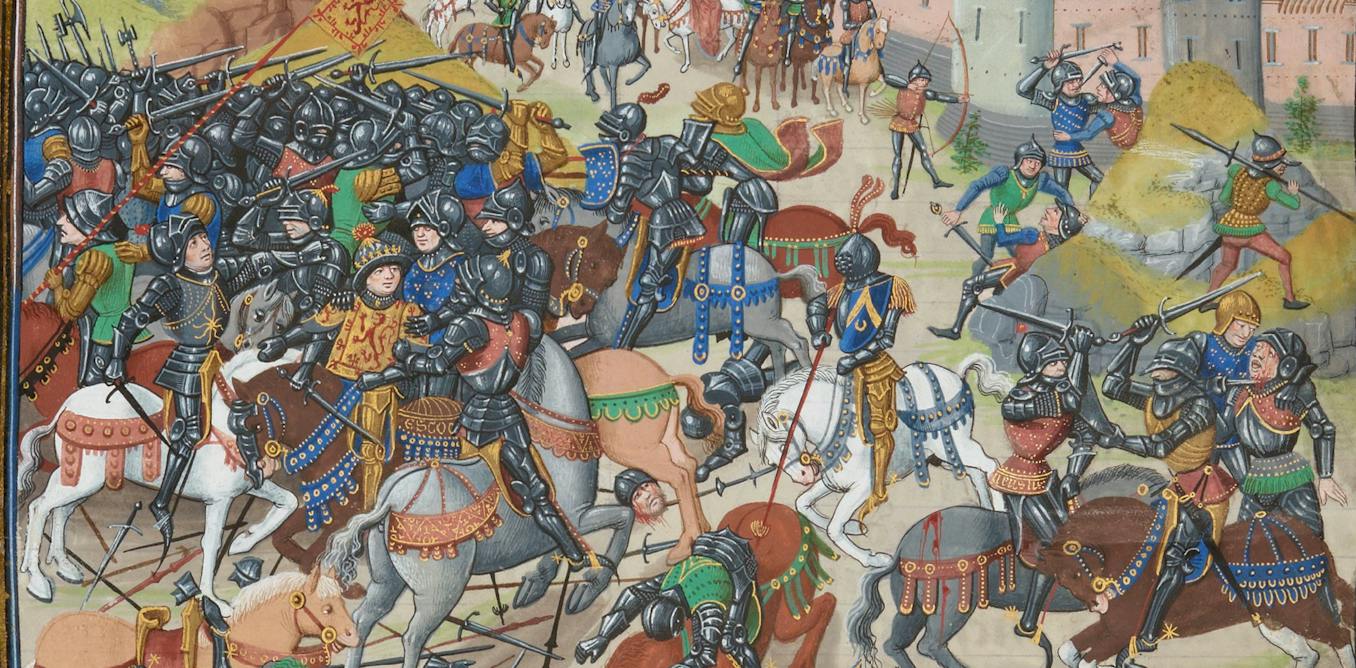
The deadlock finally broke at 2:00 PM when English longbowmen opened a devastating barrage upon the Scottish formations. While the longbow had proven utterly decisive at Crécy, modern historians analyzing Neville’s Cross note that archery alone did not win the day. Instead, the battle quickly devolved into an exceptionally grueling, chaotic hand-to-hand melee.
The Cut and Thrust of Close Combat
The physical toll of the combat is vividly preserved in contemporary monastic chronicles. The Chronicle of Meaux Abbey, written around the turn of the 15th century, records that due to extreme exhaustion and the prolonged ferocity of the fighting, the combatants periodically stepped back by mutual exhaustion:
“Because of their exhaustion and the length of the fight, they rested from the fight for a time, leaning on their spears and weapons.”
This unusual dynamic—where armies paused by tacit agreement to catch their breath before resuming slaughter—underscores the desperate, attritional nature of the engagement. By 5:00 PM, the Scottish lines finally fractured under relentless pressure, resulting in a full-scale rout.
The Capture of a King
As the Scottish army disintegrated, King David II fought courageously to rally his men, though local folklore soon embroidered the event with romantic mythology. A popular local legend claims that the king attempted to hide beneath Aldin Grange bridge, only to be betrayed by his own reflection gleaming in the waters of the River Browney.
However, historical reality was far more visceral. Chronicles such as the Scotichronicon document that David fought ferociously despite sustaining wounds from two separate longbow arrows. Before he was finally overpowered, the bruised and bleeding Scottish king managed to physically knock out two teeth of his primary captor.
That captor was not a high-ranking nobleman, but rather a relatively humble Northumberland squire named John de Coupland. Recognizing the immense value of his prisoner, Coupland’s fortunes changed overnight. For capturing a sovereign king, he was elevated to the prestigious rank of knight banneret—the highest military tier directly beneath the titled aristocracy—and granted a lavish annuity of £500 per year (equivalent to roughly £290,000 in modern currency).
Official Statements & Contemporary Records
The magnitude of the catastrophe for Scotland and the corresponding jubilation in England are best captured through the prism of surviving medieval documentation.
The Scale of Casualties: Contemporary letters from the Prior of Durham emphasize the asymmetrical nature of the carnage. While Scottish forces suffered up to 2,000 fatalities, the English sustained remarkably light casualties. The Prior noted with relief that “few of us in the said battle were killed.”
The Decapitation of the Scottish Peerage: Beyond the king, the institutional leadership of Scotland was shattered. Four Scottish earls and over a dozen major barons were taken prisoner. The list of the dead read like a roll call of the Scottish elite, including the Earls of Moray and Strathearn, alongside the state marshal, constable, chancellor, and chamberlain.
The Penalty for Treason: The political fallout was ruthlessly enforced. The Earl of Menteith, who had previously sworn personal homage and fealty to Edward III prior to the rebellion, was condemned as a traitor. He suffered a gruesome execution, being hanged, drawn, and quartered.
The Royal Ransom: King David II’s captivity was neither brief nor comfortable. He spent eleven long years imprisoned in England before a diplomatic settlement was reached. He was eventually released only after agreeing to an astronomical ransom of 100,000 marks—a sum equivalent to more than £39 million today—crippling the Scottish royal treasury for generations.
Future Outlook & Historical Legacy
Strategic Repercussions on the Hundred Years’ War
The immediate geopolitical consequence of Neville’s Cross was the total neutralization of Scotland as an active threat to England’s northern border. In the immediate aftermath of the battle, English forces launched a counter-offensive, occupying virtually all of Scottish territory south of the Forth and Clyde rivers. It would take decades for Scotland to recover the lands, titles, and political stability lost on that single October afternoon.
On a continental scale, Neville’s Cross was arguably even more important. Had King David II succeeded in ravaging northern England, Edward III would have been forced to abandon his strategic siege of Calais and rush his armies back across the Channel. Instead, the resounding victory at Neville’s Cross completely secured Edward’s northern flank for the remainder of his reign. This security allowed him to funnel reinforcements to France, ultimately assembling an army of 30,000 men for the siege of Calais—the largest English military force deployed during the entire course of the Hundred Years’ War (1337–1453).
Why Has Neville’s Cross Been Forgotten?
Given its monumental strategic impact, the historical amnesia surrounding Neville’s Cross remains an intriguing cultural phenomenon. The reasons for its obscurity are manifold:
Lack of Literary Immortalization: Unlike Agincourt, which was permanently etched into global memory by William Shakespeare’s Henry V, Neville’s Cross found no such master dramatist to champion its narrative.
Absence of National Myth-Making: While Bannockburn and Stirling Bridge became foundational pillars of Scottish national identity, and Crécy and Poitiers became symbols of English military exceptionalism, Neville’s Cross occupies an awkward middle ground—a defensive victory fought by regional lords rather than a reigning monarch.
Media Erasure: The battle has never received a major cinematic adaptation or widespread public curriculum focus, gradually drifting out of the public consciousness beneath the weight of more romanticized medieval engagements.
Conclusion
Though overshadowed by the larger marquee battles of the 14th century, the Battle of Neville’s Cross was a pivotal hinge of European history. In the span of a few brutal hours on a windswept Durham moor, the ambitions of the Auld Alliance were shattered, a Scottish king was brought low, and the trajectory of Anglo-Scottish relations was violently redirected for generations. As historians continue to unearth the complexities of the medieval border wars, Neville’s Cross deserves its rightful place not as a forgotten footnote, but as one of the defining military engagements of the Middle Ages.