Executive Overview
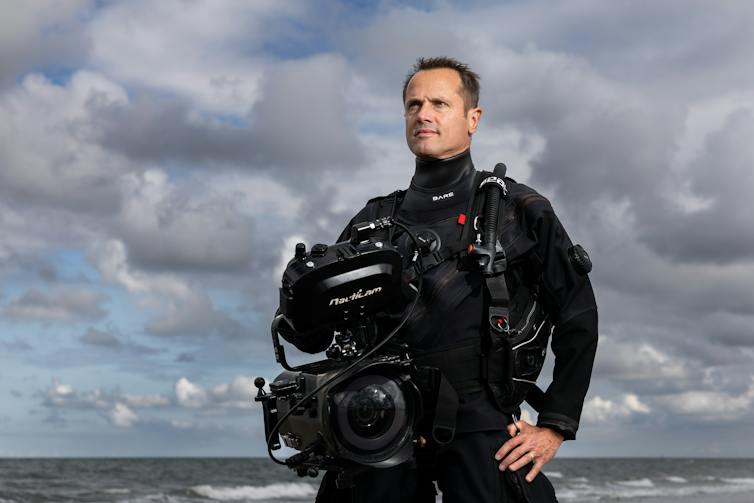
The release of North Sea, Nature Untamed marks a watershed moment in contemporary marine documentary filmmaking. Serving as the directorial, production, and narrative debut for veteran underwater cinematographer Peter van Rodijnen, the film is a masterclass in visual capture, distilling two decades of painstaking fieldwork into an uncompromising cinematic portrait of the North Sea’s vibrant ecosystem.
Rather than following the traditional, institutional blueprints established by public broadcasting giants over the last half-century, van Rodijnen has crafted a deeply personal project. The documentary opens with elegiac, magnified sequences of delicate plankton before quickly establishing itself as a conscious homage to mid-century underwater pioneers like Jacques-Yves Cousteau and Hans Hass. By rejecting the classic "mission-based" narrative structure of exploration ships like the Calypso, van Rodijnen instead opts for a loosely connected mosaic of charismatic marine life—from elusive basking sharks to nesting puffins—woven together through his own subjective reflections.
In doing so, North Sea, Nature Untamed challenges the prevailing orthodoxies of wildlife cinema. For nearly fifty years, the dominant paradigm of nature documentaries has been anchored in objective scientific education, global distribution strategies, and the authoritative, disembodied voice-of-God narration pioneered by figures such as Sir David Attenborough and executed with industrial precision by the BBC Natural History Unit.
Van Rodijnen’s work bypasses this detached educational framework. Instead, it resurrects early 20th-century traditions of spectacle and emotional engagement, a phenomenon film scholar Tom Gunning famously termed "the cinema of attractions." Yet, far from being merely a nostalgic throwback, this article argues that North Sea, Nature Untamed is an insightful harbinger of a broader media transition. In an era shaped by participatory platforms like YouTube, where vlog formats and first-person authenticity have displaced traditional television viewership, van Rodijnen’s subjective, highly emotional approach points the way toward a new, post-television landscape for environmental storytelling.
Detailed Chronology: The Evolution of Underwater and Wildlife Cinema
To fully grasp the significance of North Sea, Nature Untamed, one must trace the historical trajectory of wildlife filmmaking, charting its journey from early amusement park novelties to institutional scientific education, and finally to today’s personalized digital narratives.
The Era of the Nature Safari (Early 20th Century)
In the nascent days of motion pictures, wildlife and exploration films were marketed less as scientific treatises and more as thrilling spectacles. Pioneers like Cherry Kearton and Armand Denis transformed expeditions into high-stakes safaris. These films were structured explicitly as quests, keeping audiences on edge with the promise of encountering dangerous or rare fauna—a lion crossing the savannah or a charging rhinoceros. The viewing experience was defined by a shared sense of wonder and discovery between the filmmaker facing the elements and the audience seated safely in the theater.
The Age of Discovery and Cousteau’s Legacy (1950s–1970s)
Following the invention of the Aqua-Lung by Jacques-Yves Cousteau and Émile Gagnan, the underwater world was suddenly opened up to cinematic exploration. Cousteau’s landmark television series, The Undersea World of Jacques Cousteau, and his flagship vessel, the Calypso, defined the golden age of oceanographic television. These productions relied on a "mission" structure: an exploratory crew voyaging to remote corners of the globe, confronting environmental challenges, and reporting back on the mysteries of the deep. Cousteau’s commentary was unapologetically romantic, driven by personal passions, conservationist zeal, and emotional encounters with marine life. This is the precise aesthetic lineage Peter van Rodijnen taps into as he walks along a North Sea beach, recalling how the television screens of his youth shaped his life’s calling.
The BBC Natural History Unit and the Triumph of Objectivity (1970s–2020s)
By the late 1970s, the paradigm shifted toward institutional authority and public education. Triggered by landmark series such as Life on Earth (1979) and anchored globally by the enduring presence of David Attenborough, the BBC Natural History Unit established the gold standard for wildlife documentaries. Driven by active commercialization policies and international syndication, these films prioritized factual rigor, high scientific accuracy, and objective narration. The subjective feelings of the camera crew were carefully edited out; the focus shifted entirely from the filmmaker’s personal journey to the objective behavior of the animals. For decades, this became the undisputed global template for prestige nature programming.
The Post-Television Paradigm Shift (2020s and Beyond)
Today, the media ecosystem is undergoing its most radical transformation since the advent of television after the Second World War. The rise of video-sharing platforms, led by YouTube and social media ecosystems, has fundamentally rewired audience expectations. Participatory culture, direct-address storytelling, and raw emotional authenticity have eclipsed the rigid, institutional tone of traditional broadcast networks. North Sea, Nature Untamed arrives precisely at this historical crossroads, utilizing a first-person, confessional voiceover that aligns seamlessly with modern digital consumption habits, even as it draws upon cinematic traditions nearly a century old.
Supporting Context & Metrics: Navigating the North Sea and Media Transformation
The North Sea is traditionally viewed through an industrial lens: a heavily fished, commercially vital, and heavily industrialized body of water bordered by some of Europe’s densest populations. Filming within it presents extreme technical hurdles. Visibility is often severely limited by suspended sediments, turbulent weather, and strong tidal currents, making the capture of crystal-clear, intimate wildlife behavior an extraordinary test of endurance and technological mastery.
Technical and Ecological Metrics of the North Sea
- Duration of Craft: Peter van Rodijnen’s footage represents two decades of specialized, high-pressure diving and underwater cinematography.
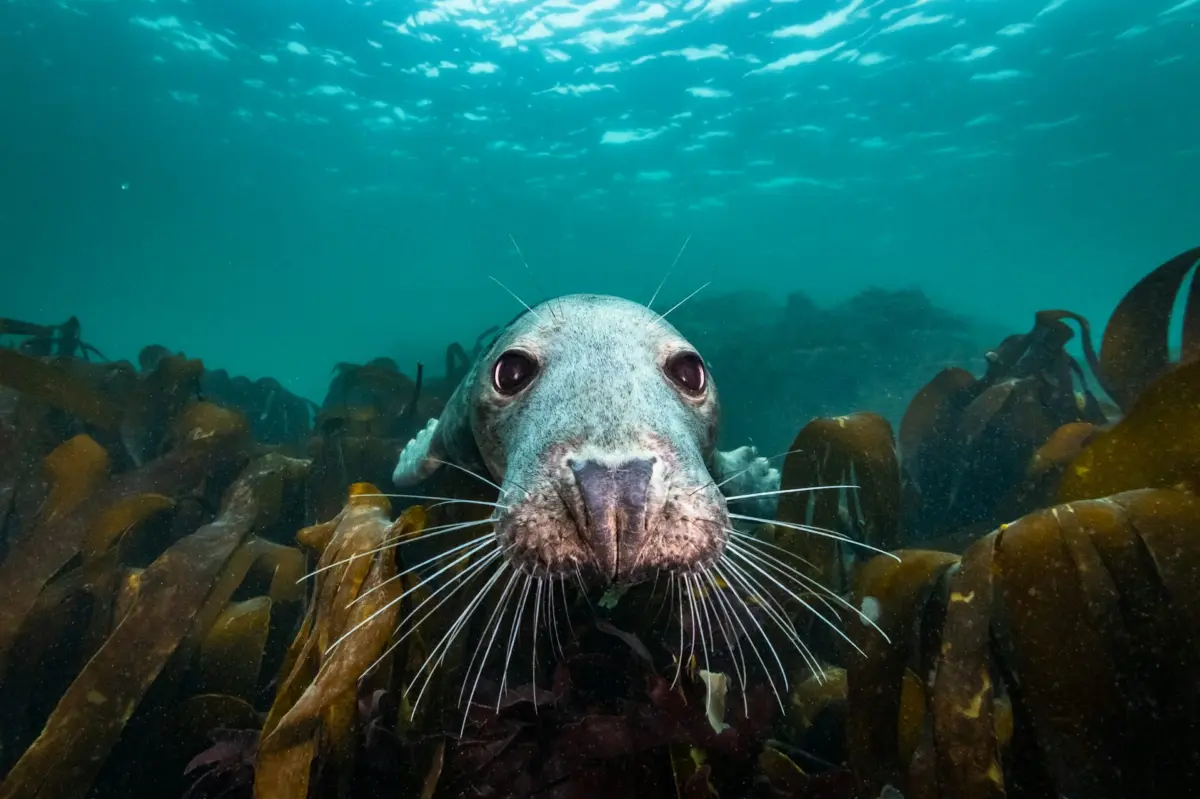
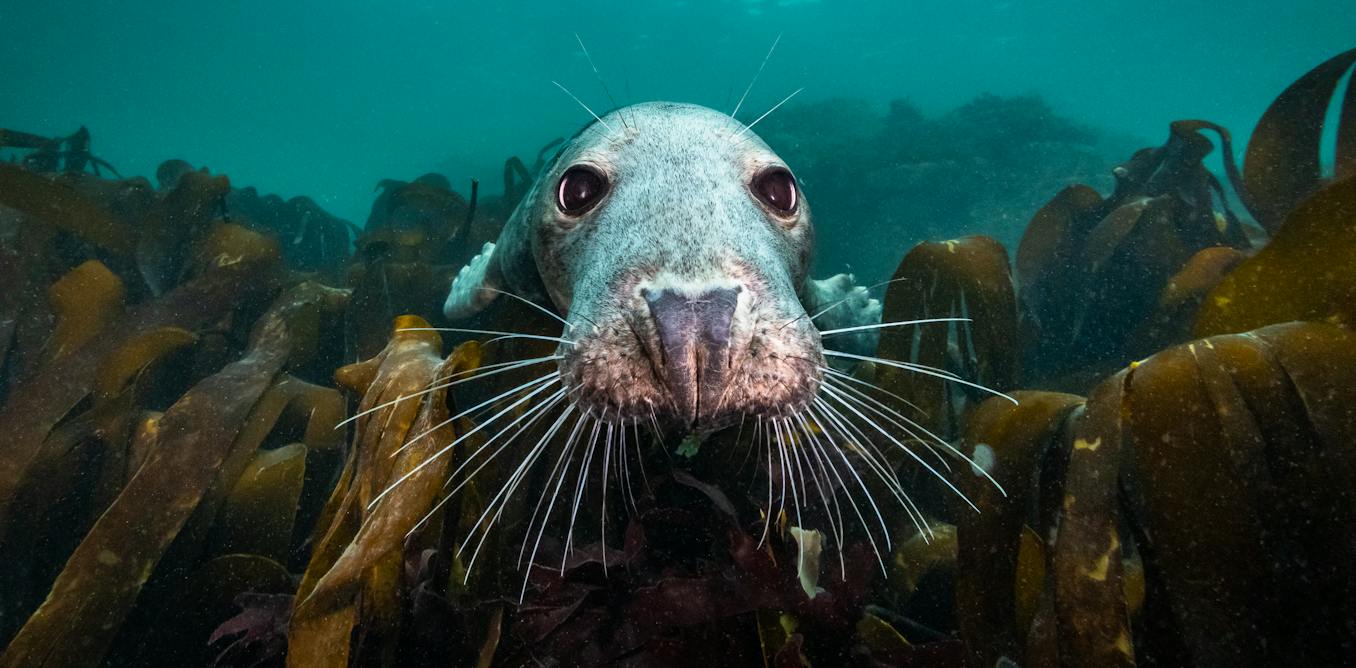
- Target Species Diversity: The film spans micro-level organisms, such as magnified plankton, up to apex marine life, including basking sharks (Cetorhinus maximus) and Atlantic puffins (Fratercula arctica).
- Environmental Visibility: Average visibility in the southern and central North Sea frequently ranges between 2 to 10 meters, rendering long-lens equivalent underwater cinematography exceptionally demanding compared to tropical reef filmmaking.
Media Consumption Shifts
The stylistic pivot observed in van Rodijnen’s work reflects broader media consumption shifts away from linear television:
- The Decline of the Broadcaster Monopoly: For decades, organizations like the BBC dominated global wildlife licensing. The fragmentation of audiences across streaming services and user-generated platforms has decentralized authority.
- The Rise of the Creator Economy: Modern audiences increasingly demand transparency, vulnerability, and a visible human agency behind the lens. The "vlog" aesthetic—characterized by direct-to-camera emotional engagement—has trained viewers to distrust overly clinical, disembodied narration.
Official Statements and Critical Reception
The critical reception of North Sea, Nature Untamed highlights a growing tension among film critics, media scholars, and environmental communicators regarding how nature should be presented on screen.
Reviewers and Scholars
Film critics have been quick to praise the sheer visual caliber of the project. Reviewers note that the underwater sequences possess an ethereal, painterly quality that rivals any tropical reef documentary produced by major streaming networks. However, media scholars have focused heavily on its structural divergence from contemporary norms.
Film historians point out that van Rodijnen’s embrace of subjective emotional processing effectively resurrects Tom Gunning’s concept of the "cinema of attractions." In scholarly analyses, the film is viewed not as a regression, but as a deliberate subversion of the Attenborough model. By framing the North Sea through the lens of personal redemption and vocational rediscovery, van Rodijnen bridges the gap between scientific documentation and confessional art.
Production Team Perspectives
Speaking on the motivations behind the film’s unique structure, production notes from Dutch Maritime Productions emphasize that North Sea, Nature Untamed was never intended to be an encyclopedic catalog of marine biology. Instead, it is framed as a visual diary—a testament to a lifetime spent beneath the surface.
"We did not set out to lecture the viewer on conservation policy or systematic zoology," production insiders note. "We set out to share what it feels like to be immersed in an environment that is simultaneously forbidding and breathtakingly alive. The camera is not an objective scientific instrument here; it is an extension of the filmmaker’s heartbeat."
Future Outlook: Climate Storytelling in a Post-Objective World
As humanity navigates an escalating climate and ecological crisis, the mediums through which we communicate environmental realities are undergoing profound reassessment. Traditional environmental messaging has long relied on objective, fear-inducing data or clinical educational broadcasting to motivate action. Yet, media theorists and climate communications experts increasingly argue that purely factual approaches suffer from a severe "communications problem": they inform the intellect, but frequently fail to move the human spirit.
North Sea, Nature Untamed offers a valuable blueprint for the future of climate and nature storytelling. By trading detached authority for personal vulnerability, the film demonstrates how emotional resonance can forge a deeper bond between audiences and fragile ecosystems. When a filmmaker shares their personal triumphs, anxieties, and sense of wonder—such as the elation of finally tracking down a rare basking shark—they invite the viewer into an empathetic partnership rather than a passive classroom lecture.
Looking ahead, the intersection of arts and environmental science will likely lean further into this subjective territory. As television’s monopoly on visual culture gives way to immersive, creator-driven digital ecosystems, future wildlife documentarians will need to abandon the god-like, omniscient voice of the past.
By embracing the imperfections, passions, and personal stakes of the humans behind the lens, future storytellers can spark not just intellectual understanding, but the active hope and imagination required to build a better ecological future. Peter van Rodijnen’s dive into the North Sea is thus more than a personal journey—it is an early wave of a broader tide transforming how we look at, and care for, our natural world.