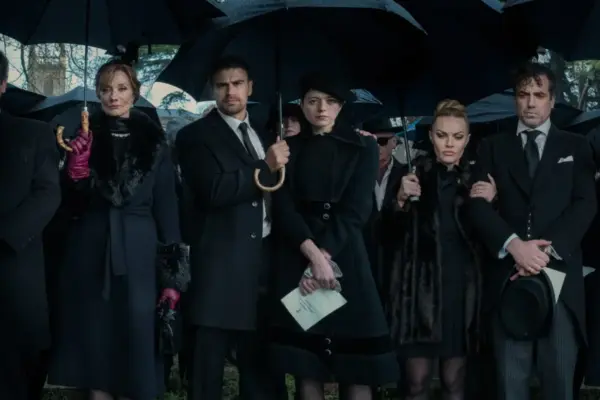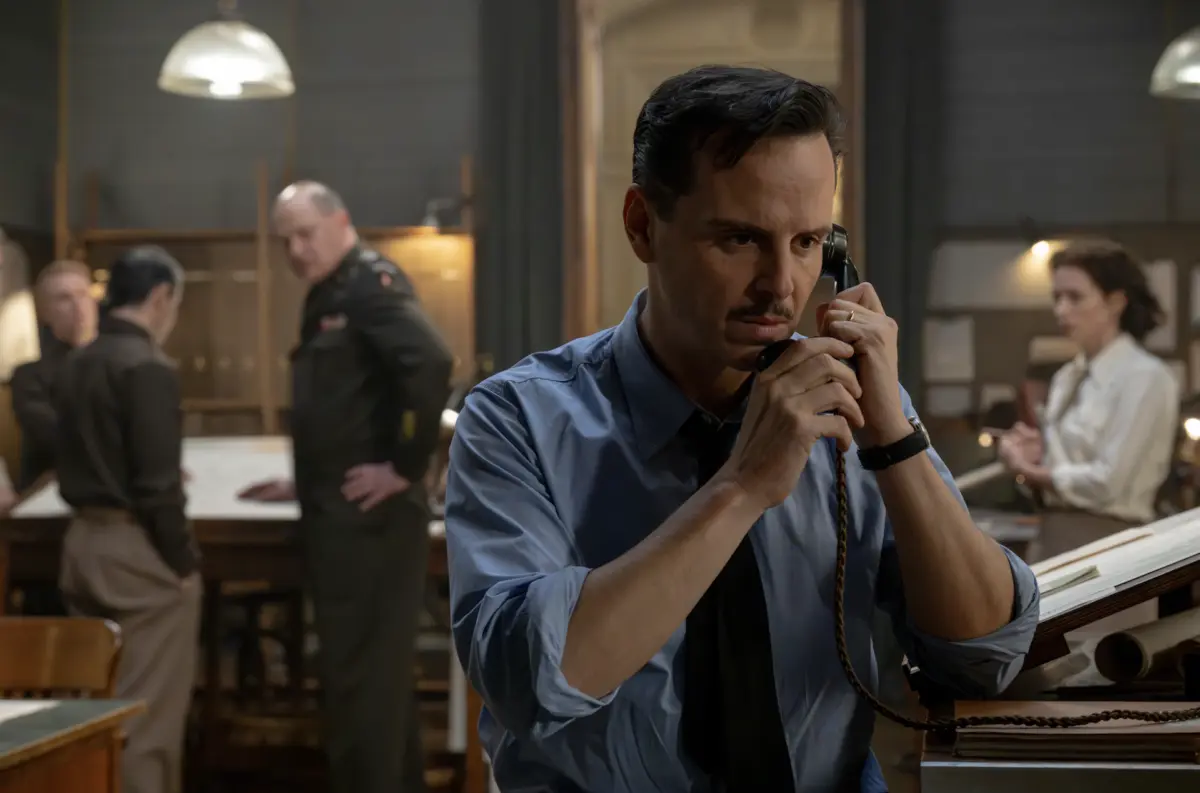
Executive Overview
Eighty years after the Allied forces stormed the beaches of Normandy, the nomenclature of June 6, 1944, continues to echo through the corridors of modern geopolitical power. Recently, US Treasury Secretary Scott Bessent invoked the memory of the amphibious invasion when describing a comprehensive, multi-layered sanctions package targeting Iran, which he termed an “economic D-day.” While such hyperbole risks trivializing the genuine sacrifices made by the Allied soldiers on the Normandy coast, it underscores a persistent cultural truth: the pivotal events of the summer of 1944 remain deeply embedded in contemporary consciousness.
It is into this enduring cultural landscape that director Anthony Maras steps with Pressure, a cinematic adaptation of David Haig’s acclaimed 2014 stage play. Rather than merely recycling the well-trodden cinematic tropes of beachhead combat popularized by films like Saving Private Ryan, Maras trains his lens on a vastly different theater of war: the subterranean war rooms and draughty country estates where Allied meteorologists bore the terrifying responsibility of determining when the invasion could safely proceed.
Anchored by a compelling performance from Andrew Scott as Royal Air Force Group Captain James Stagg and Brendan Fraser as Supreme Allied Commander General Dwight D. Eisenhower, Pressure explores the intersection of high-stakes science, alliance politics, and psychological endurance. However, while the film succeeds brilliantly in dramatizing the clashing personalities and intellectual friction of Allied command, it occasionally stumbles in its historical framing, leaning toward Hollywood convention in its final acts. This review provides an exhaustive analysis of the film’s narrative triumphs, historical fidelity, and structural flaws, examining how Pressure redefines our understanding of the D-day calculus.
Detailed Chronology: The Making of a Decision
The historical reality underpinning Pressure is a masterclass in operational anxiety. By late spring 1944, the Supreme Headquarters Allied Expeditionary Force (SHAEF), stationed at Southwick House near Portsmouth, faced a paralyzing bottleneck. Operation Overlord—the largest amphibious invasion in human history—was primed, but its success hinged on an extraordinarily narrow set of meteorological parameters.
The Meteorological Imperative
General Eisenhower’s strategic planners required a precise combination of environmental factors to give the invasion fleet even a fighting chance of survival:
- Lunar Phase: A full moon was deemed essential to provide illumination for airborne troops dropping behind enemy lines and to aid naval navigation during the night crossing.
- Tidal State: The landing had to occur at low to medium tide, rising. This crucial window allowed combat engineers to spot and clear German anti-invasion obstacles (such as "Belgian Coconuts" and "Czecho-hedgehog" steel barriers) before the water level rose enough to swamp landing craft.
- Sea Conditions: Calm seas were mandatory to prevent widespread seasickness among the 150,000-strong invasion force and to ensure the stable deployment of amphibious tanks and support vessels.
These conditions only converged for a few days every month. In June 1944, the viable windows fell on June 5, 6, and 7. If Eisenhower missed this window, the operation would have to be postponed by at least two weeks, severely compromising operational security (OPSEC) as hundreds of thousands of troops languished in sealed embarkation camps along the southern coast of England.
The Clash at Southwick House
At the heart of Pressure—much like Haig’s original play—is the intense intellectual and cultural clash between two distinct forecasting philosophies represented by Group Captain James Stagg (Andrew Scott) and his American counterpart, Colonel Irving Krick (Chris Messina).
Stagg, drawing on real-time data gathered from weather stations across the North Atlantic, Greenland, and Iceland, identified an approaching severe Atlantic depression that would bring gale-force winds and high seas, making a landing on June 5 or 6 suicidal. Krick, an ambitious and confident American meteorologist, favored a climatological approach, arguing that historical weather cycles suggested high pressure would build over the channel, creating favorable conditions.
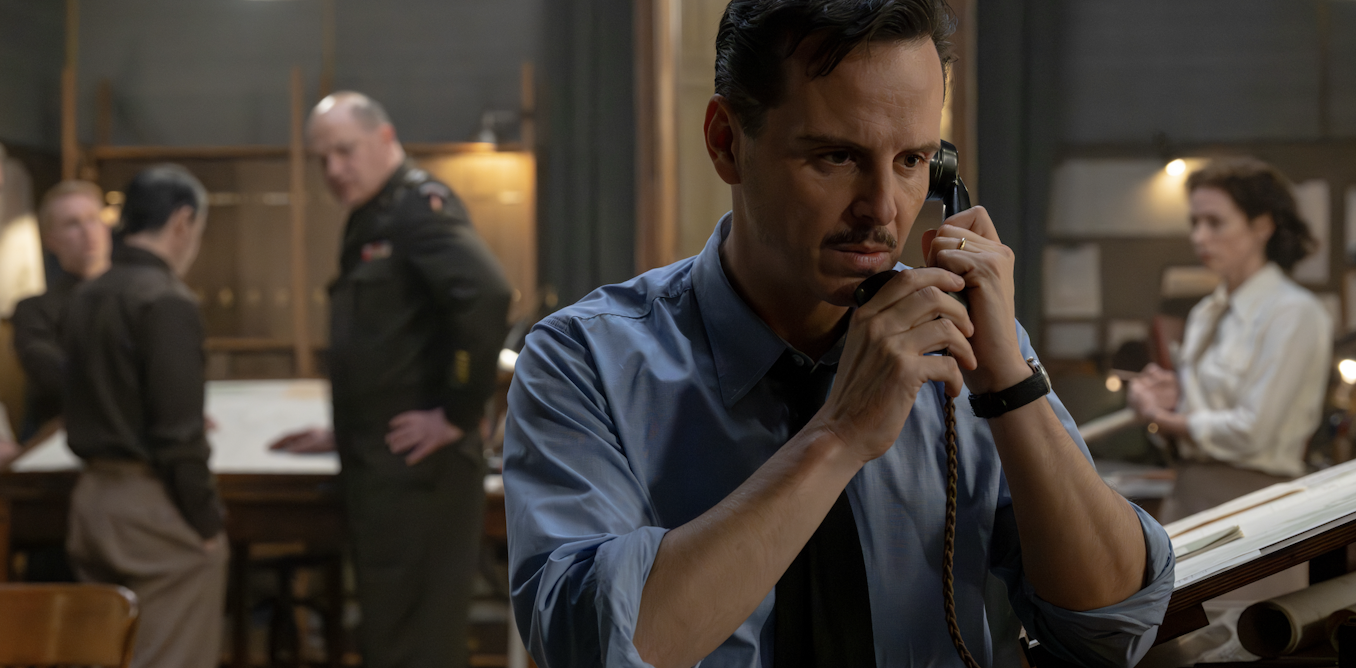
As depicted with gripping claustrophobia in the film, this scientific disagreement was not merely academic; it was a life-or-death gamble. Eisenhower, exhausted and wracked by the terrifying weight of his command, stood between two incompatible forecasts. Stagg’s insistence on holding his ground against the formidable, high-pressure American command structure provides the narrative engine for the film’s most compelling sequences.
Supporting Context & Metrics: The Science and the Myth of the "Untold Story"
To fully appreciate Pressure, one must look beyond the cinematic frame to evaluate both its historical accuracy and its marketing positioning.
Recreating the Challenge
Modern meteorological analysis has largely vindicated Stagg’s wartime assessments. When contemporary weather-reconstruction models run modern reanalysis algorithms against the 1944 atmospheric data, they reveal that Stagg’s reliance on real-time synoptic charts was remarkably accurate. The North Atlantic weather machine was indeed churning out an unseasonable storm system that would have shattered the Mulberry harbors and devastated the invasion fleets had Eisenhower launched on June 5.
The "Untold Story" Fallacy
Despite its merits, Pressure occasionally falls into a common trap of historical filmmaking: overstating its own novelty. The film’s marketing materials and promotional interviews often frame the meteorologists’ role as an entirely "untold" chapter of World War II history.
This claim does a disservice to the historical record. While the average moviegoer may not instantly recognize the name James Stagg, his critical contribution to D-Day has been documented across various media for decades:
- Cinematic Precedents: Stagg’s role was prominently featured in Darryl F. Zanuck’s sweeping 1962 epic The Longest Day, as well as in the 2004 television film Ike: Countdown to D-Day.
- Primary Source Material: Group Captain Stagg himself published a comprehensive, highly readable firsthand account of his experiences in his 1971 book, Forecast for Overlord.
The story of D-day’s meteorologists is certainly lesser-known relative to the infantry landings, but labeling it "untold" misrepresents the historiography of the Second World War.
Official Statements and Critical Reception
The transition from a single-set theatrical stage play to a feature-length cinematic production has generated widespread discussion among film critics, historians, and industry insiders alike.
The Performances: Triumphs and Pitfalls
Andrew Scott delivers a masterclass in restrained anxiety as James Stagg. Stagg was a man caught between the mathematical realities of nature and the crushing political demands of a multinational military alliance. Furthermore, the film layers his professional stress with a harrowing personal subplot: Stagg’s agonizing silence regarding the fate of his pregnant wife, with whom he lost contact following a Luftwaffe bombing raid on her hospital.
Conversely, Brendan Fraser’s portrayal of General Dwight D. Eisenhower has sparked vigorous debate. Fraser successfully captures Eisenhower’s explosive temper, chain-smoking habits, and the physical toll of a commander driven to the brink of a nervous breakdown. The film also provides a nuanced, albeit brief, exploration of Ike’s complex relationship with Kaye Summersby (brilliantly realized by Kerry Condon), his indispensable driver and confidante.
However, critics have noted a significant omission in Fraser’s characterization:
"While Fraser embodies Ike’s stress and volatility, he largely misses the consummate diplomatic genius that made Eisenhower the ideal choice for Supreme Commander. Ike was not merely a general who could glare and shout; he was a master politician capable of harmonizing towering egos and fragile national rivalries among the Allied brass."
Supporting performances help bridge this gap, most notably Damian Lewis, whose portrayal of the self-absorbed and fiercely competitive General Bernard Montgomery adds vital friction to the depiction of alliance politics.
Future Outlook: The Cinematic Legacy of World War II Dramas
As the generation of veterans who fought in the Second World War passes into history, the cultural mechanisms by which we remember the conflict are shifting from oral history and memoir to cinematic myth-making. Pressure occupies a fascinating space in this evolution.
By shifting the focus from the kinetic violence of the front lines to the intellectual and psychological labor of the rear guard, Maras’s film points toward a more mature sub-genre of war drama—one that examines logistics, data analysis, and decision-making under uncertainty.
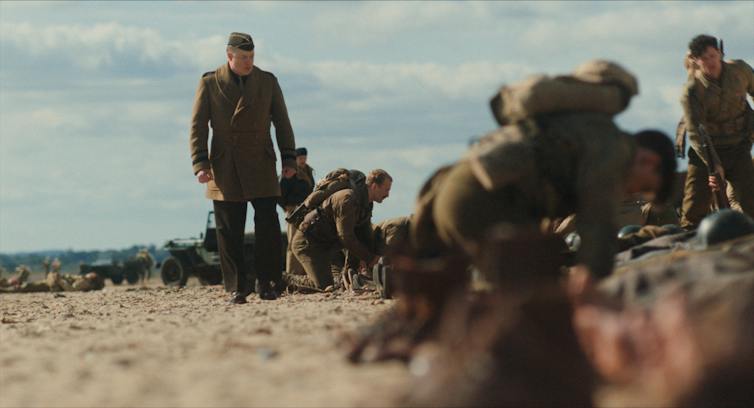
Yet, Pressure’s final act serves as a cautionary tale for future filmmakers. In its closing scenes, the movie visually and tonally drifts away from its intellectual core, introducing battle sequences and visual motifs that consciously evoke Steven Spielberg’s 1998 masterpiece Saving Private Ryan. This stylistic pivot feels unearned; it pulls the camera away from the war room where the true battle of wits occurred and drags it down onto the crimson sands of Normandy, diluting the film’s unique thematic contribution.
Conclusion
Pressure remains an engaging, handsomely shot, and intellectually stimulating war drama. It successfully highlights the fragile human machinery behind the grand strategy of Operation Overlord and reminds contemporary audiences of the value of speaking truth to power, even when the listener wears four stars. If director Anthony Maras had possessed the structural courage to keep his camera firmly fixed on the meteorological maps and smoke-filled rooms of Southwick House until the very end, Pressure might have stood alongside the finest war films of the century. As it stands, it is a valuable, if occasionally compromised, monument to the quiet heroes who read the skies so that others could cross the sea.