Executive Overview
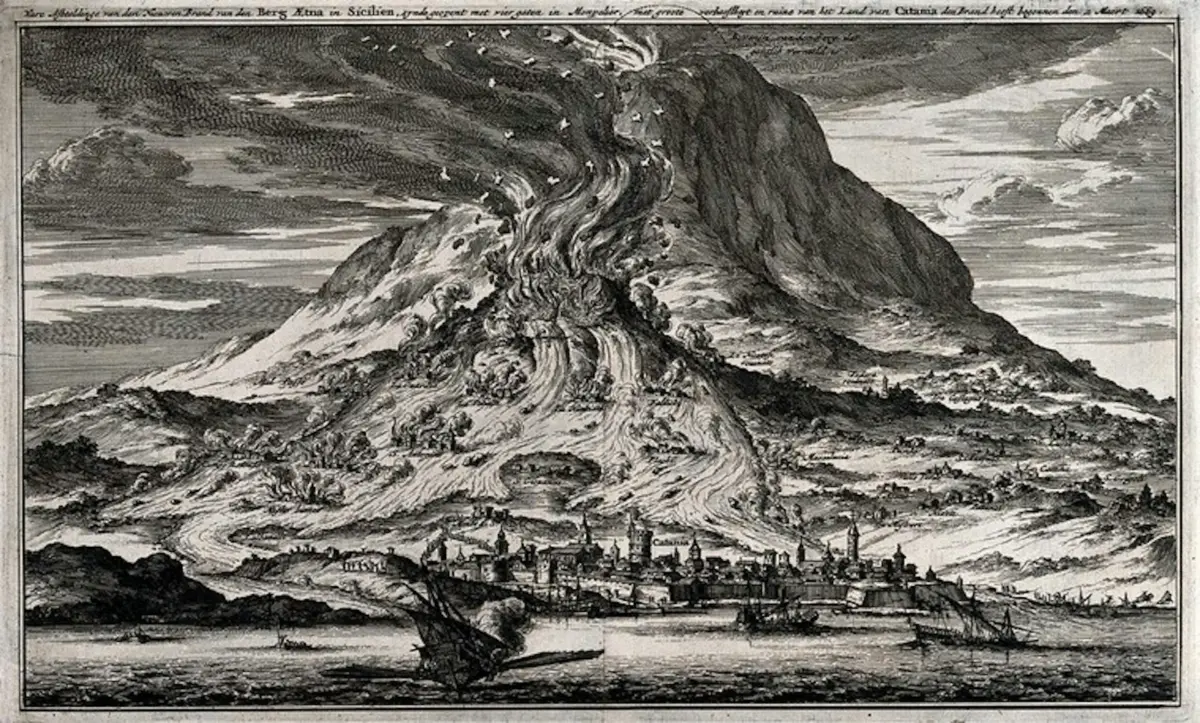
When modern society contemplates the destructive capacity of a volcanic eruption, the collective imagination typically conjures images of localized devastation: rivers of incandescent lava consuming quiet countryside, or the suffocating, Pompeii-scale shroud of dense ash burying civilization in real-time. Yet, the geological record reveals that the most catastrophic threat posed by Earth’s subterranean forces extends far beyond the immediate blast radius.
When immense volcanic systems erupt, they inject monumental volumes of sulfur dioxide gas, pulverized rock, and aerosol precursors high into the stratosphere. While heavy ash particles largely settle out of the air within weeks, microscopic sulfate aerosols remain suspended for years, circulating the globe on stratospheric winds. Acting as a global planetary parasol, this atmospheric veil reflects incoming solar radiation back into space, driving down global temperatures, devastating agricultural networks, and fundamentally altering weather patterns thousands of miles from the source.
By analyzing paleoclimatic archives—specifically ice cores extracted from polar glaciers that preserve atmospheric chemistry spanning hundreds of thousands of years—scientists can cross-reference physical strata with contemporary historical chronicles. This multidisciplinary approach confirms that cataclysmic eruptions have historically served as catalysts for profound societal destabilization. Far from being isolated geological spectacles, these events have triggered prolonged climatic shifts, mass crop failures, extreme economic contraction, and the rapid, devastating spread of pandemics. Among these, the climate anomalies and socio-economic collapses of AD 536 and AD 1258 stand as stark reminders of how distant subterranean convulsions can bring entire civilizations to their knees.
Detailed Chronology
AD 536: The Dawn of the "Worst Year to Be Alive"
The middle of the sixth century marks one of the darkest chapters in human history—literally and figuratively. In AD 536, a massive volcanic eruption occurred somewhere in the Northern Hemisphere, with modern geochemical and glaciological evidence pointing strongly toward high latitudes, potentially Iceland or North America. The event initiated a multi-year period of severe environmental trauma that has led modern historians to designate AD 536 as "the worst year to be alive."
For 18 consecutive months, Europe, the Middle East, and large swaths of Asia were plunged into an unnatural, dim twilight. Summer temperatures plummeted by 1.5°C to 2.5°C across the Northern Hemisphere, triggering one of the coldest decades recorded in the past two millennia. The disruption of agricultural cycles was immediate and absolute.
Contemporary chroniclers across the fractured Roman world struggled to articulate the unnatural state of the sky. Procopius, a prominent Byzantine historian stationed in Rome, recorded the atmospheric strangeness with haunting precision:
"The Sun gave forth its light without brightness, like the Moon, during this whole year, and it seemed exceedingly like the Sun in eclipse, for the beams it shed were not clear."
Echoing these observations from Constantinople, the Byzantine administrator and writer John Lydus noted that "the Sun became dim… for nearly a whole year." Another contemporary writer, believed to be John of Ephesus, provided an even more harrowing description of the persistent gloom:
"The Sun was dark and its darkness lasted for eighteen months; each day it shone for about four hours, and still this light was only a feeble shadow."
As sunlight failed, so did the global food supply. In the British Isles, contemporary records such as the Annals of Ulster and the Annals of Inisfallen laconically reported a total "failure of bread" in AD 536.
Compounding this initial trauma, the eruption of AD 536 was not an isolated event. It was swiftly followed by two additional massive eruptions in AD 540 and AD 547. This triad of cataclysms plunged the Earth into the Late Antique Little Ice Age—a prolonged period of sustained cooling that weakened populations already battered by years of consecutive harvest failures.
Historians and epidemiologists now widely agree that this sustained ecological collapse directly fueled the emergence and rapid spread of the Justinianic Plague (AD 541–549). As agricultural productivity collapsed, widespread human migration, acute malnutrition, and desperation forced populations into close quarters. Simultaneously, grain shipments inadvertently ferried infected black rats and fleas across trade networks, igniting one of the most lethal outbreaks of bubonic plague in human history and permanently altering the trajectory of the late Roman Empire.
AD 1258: "There Was No Summer During Summer"
Nearly seven centuries later, the Earth experienced an event of even greater magnitude. In the middle of 1257, the Samalas volcano on the island of Lombok, Indonesia, underwent a cataclysmic eruption. Ranked as one of the most powerful volcanic events of the past two millennia, the eruption dwarfed historical benchmarks like the 1815 explosion of Mount Tambora—which famously induced the "Year Without a Summer" in 1816. Ice core data indicates that the Samalas eruption deposited roughly twice the volume of sulfur into the global stratosphere as Tambora.
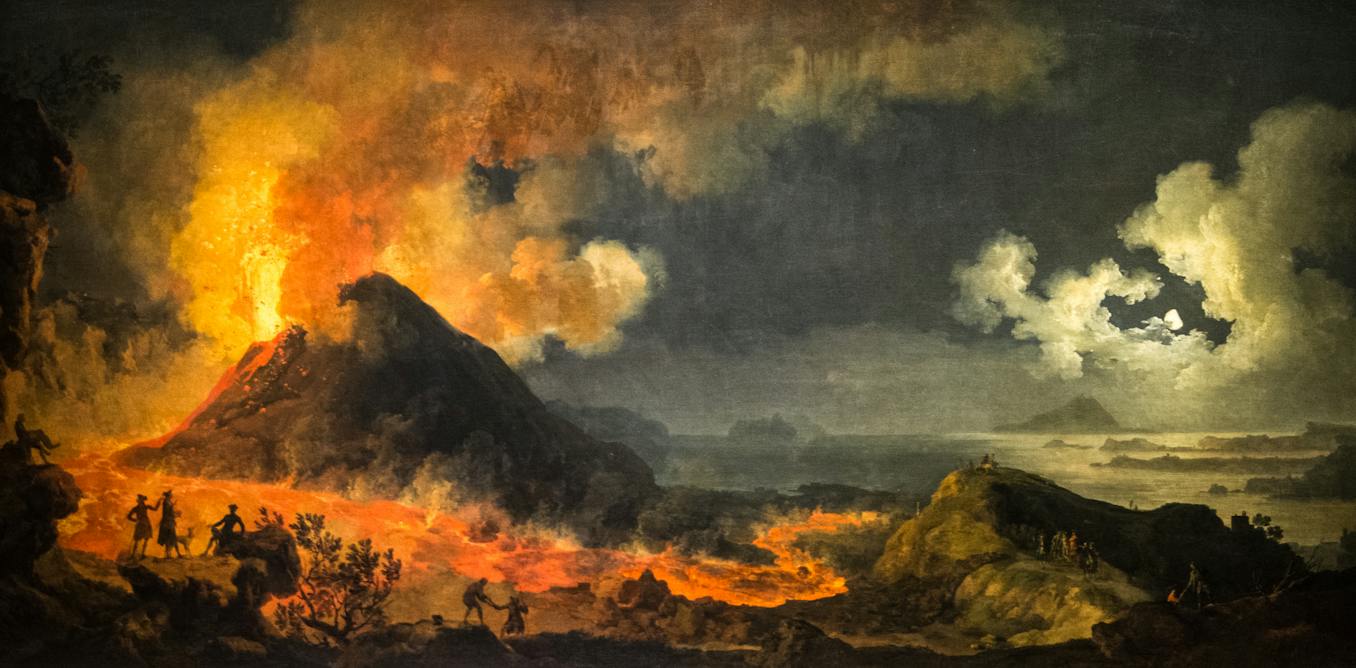
By AD 1258, the atmospheric repercussions reached Europe, which was already suffering from heavy winter rains and saturated soils. The addition of a stratospheric aerosol veil pushed an already fragile environment past the breaking point, triggering widespread crop failures, hyper-inflation of food prices, and a catastrophic famine across northern Europe.
Across the continent, chroniclers recorded the profound climatic aberration with despair. Jean d’Essey, the Bishop of Coutances in Normandy, documented the failure of the seasons:
"There was no summer during summer. The weather was very rainy and cold at harvest time, neither the crop harvest nor the grape harvest were good."
In France, the monk and chronicler Richer of Senones noted that the warmth of the sun was effectively barred from reaching the surface of the earth:
"So great a thickness of clouds covered the sky throughout that whole summer that hardly anyone could tell whether it was summer or autumn."
The Human Toll in Medieval England
The domestic impact of the AD 1258 disaster is exceptionally well-documented in England, where chroniclers chronicled a cascading societal breakdown. Matthew Paris, a renowned English Benedictine monk and historian at St Albans, summarized the year as a "barren and wretched year" characterized by mass starvation and "chronic illnesses" that offered no respite to the afflicted.
Paris detailed how unseasonably cold weather throughout April, May, and June arrested crop development. With wheat supplies exhausted, mortality skyrocketed among the lower classes:
"Owing to the scarcity of wheat, a very large number of poor people died; and dead bodies were found in all directions, swollen and livid… in pigsties, on dunghills and in the muddy streets."
The mortality rate quickly overwhelmed the administrative infrastructure of medieval England. Local coroners, legally mandated to conduct formal inquests into every unattended death to rule out foul play, found themselves entirely paralyzed by the sheer volume of casualties. In April 1258, King Henry III was forced to issue royal directives suspending coroner inquests in cases where no obvious foul play was suspected, simply because local officials could no longer cope with the logistical burden of processing the dead.
The Annals of Burton corroborated this administrative and humanitarian crisis, noting a massive influx of rural vagrants and paupers streaming toward towns and cities in a desperate search for charitable alms. This migration concentrated misery in urban centers, most notably London.
The Chronicles of the Mayors and Sheriffs of London recorded the municipal collapse:
"In this year, there was a failure of the crops; upon which failure, a famine ensued, to such a degree that the people from the villages resorted to the City for food; and there, upon the famine waxing still greater, many thousand persons perished; many thousands more too would have died of hunger, had not corn just then arrived from Germany."
Similarly, the Tewkesbury Annals, compiled by monks at Tewkesbury Abbey, estimated the localized death toll from the famine at a staggering 20,000 individuals—an immense loss of life for medieval demographic baselines.
Supporting Context & Metrics
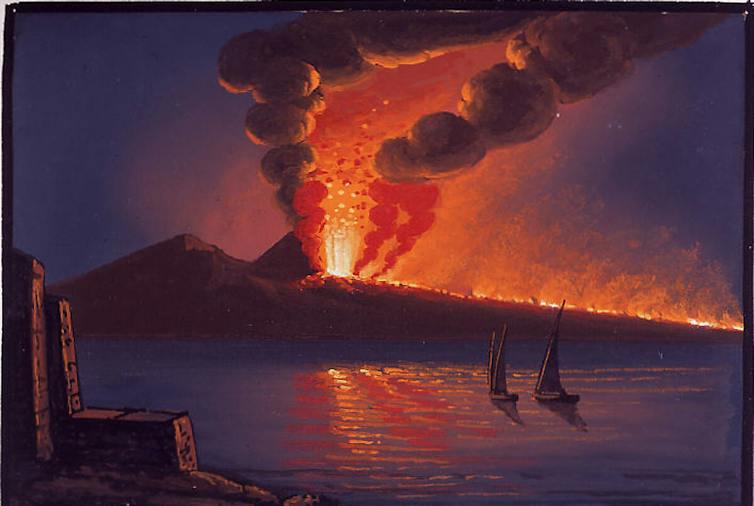
To fully comprehend the mechanics of these historical catastrophes, modern earth scientists rely on precise geochemical markers and interdisciplinary metrics. Volcanic severity is fundamentally measured by the Volcanic Explosivity Index (VEI), alongside the total volume of sulfur dioxide ($textSO_2$) injected into the atmosphere, which directly dictates the density and longevity of stratospheric sulfate aerosols.
| Eruption Event | Estimated Date | Probable Location | VEI / Magnitude | Climatic Impact | Societal Consequence |
|---|---|---|---|---|---|
| Unknown High-Latitude Event | AD 536 | Iceland / North America | High (Multiple pulses) | 1.5°C to 2.5°C summer cooling; 18 months of darkness | "Worst year to be alive," widespread famine, Late Antique Little Ice Age, Justinianic Plague |
| Samalas Eruption | AD 1257–1258 | Lombok, Indonesia | VEI 7 (Ultra-Plinian) | Massive stratospheric aerosol veil; continuous cloud cover; localized unseasonal cold | Severe European famine, 20,000+ dead in localized accounts, mass urban migration, civic collapse |
| Tambora (Baseline Comparison) | AD 1815 | Sumbawa, Indonesia | VEI 7 | Global temperature drop of 0.4°C to 0.7°C | "Year Without a Summer" (1816), transatlantic crop failures |
The physical evidence of these disasters is permanently etched into glacial ice. Ice cores retrieved from Greenland and Antarctica act as frozen historical libraries. As snow accumulates year after year, it traps atmospheric gases, dust, and volcanic ash. When scientists drill cylindrical ice samples from these polar sheets, distinct acidic layers of volcanic sulfate show up as clear chemical spikes.
Analysis of the Spitalfields cemetery site in London provides tangible archaeological proof of these historical crises. Excavations at the former hospital of St Mary Spital uncovered approximately 2,300 skeletons dating from the mid-thirteenth century. Osteological and isotopic analysis linked these remains directly to the environmental shocks of the 1252 drought and the catastrophic Samalas famine of AD 1257–1258.
The physical remains bear the unmistakable signs of nutritional stress, systemic illness, and the hasty mass burials recorded by Matthew Paris, who noted that:
"When several corpses were found, large and spacious holes were dug in cemeteries, and a great many bodies were laid in them together."
Official Statements
The intersection of volcanology, paleoclimatology, and medieval history has increasingly drawn the attention of international scientific bodies and academic institutions, emphasizing that past climate shocks carry profound warnings for contemporary society.
In a recent synthesis on paleoclimatic hazards and historical pandemics, lead researchers studying the Late Antique Little Ice Age emphasized the systemic nature of volcanic vulnerability:
"Volcanic eruptions do not merely alter local weather systems; they stress interconnected agricultural and economic networks to their breaking points. When a massive stratospheric injection occurs, the resulting crop failures cascade rapidly into geopolitical instability, mass migrations, and the ideal biological conditions for epidemic disease emergence."
Furthermore, climatologists examining polar ice core records underscore the global reach of these events:
"The chemical signatures preserved in glacial ice demonstrate unequivocally that our planet functions as a singular, tightly coupled system. A cataclysmic explosion in the tropics, such as Samalas, or a high-latitude pulse in the Northern Hemisphere, exerts an immediate, inescapable dominion over weather systems across continents, proving that no human population is ever truly isolated from geological forces."
Future Outlook
As humanity navigates an era of unprecedented technological advancement and globalization, the lessons of AD 536 and AD 1258 offer both a sobering historical reality check and an urgent call for modern preparedness. While contemporary agricultural systems are vastly more resilient—bolstered by global trade networks, advanced fertilizers, and climate-controlled storage—our hyper-connected global infrastructure remains acutely vulnerable to systemic shocks.
A modern cataclysmic volcanic eruption—equivalent in magnitude to the Samalas event of 1257 or the Tambora explosion of 1815—would unleash severe disruptions on the global stage. Modern society relies heavily on fragile, just-in-time supply chains, satellite-based navigation, and complex international trade routes for food distribution. A multi-year stratospheric aerosol veil would severely depress global agricultural yields, threatening food security for billions of people simultaneously. Furthermore, the optical density of such an aerosol layer could interfere with solar power generation and aviation optics, testing the limits of global crisis management.
By studying historical archives, analyzing ice cores, and mapping archaeological excavations like those at Spitalfields, modern researchers are not merely cataloging ancient tragedies. They are decoding the complex feedback loops between Earth’s geology and human civilization. Understanding how medieval societies fractured under the weight of unannounced volcanic winters provides critical insights into systemic risk mitigation, reminding policymakers that the volatile interior of our planet remains an active, powerful architect of human destiny.