Arthur Miller’s 1952 play The Crucible stands as an unassailable monument of American literature. Conceived and written at the searing height of the Cold War and the anti-communist paranoia of the McCarthyite "Red Scare," the drama is celebrated universally as a masterclass in theatrical allegory. It offers a timeless, terrifying lens through which to view mass hysteria, social panic, and the machinery of persecution. For decades, it has served as a cornerstone of the global high-school curriculum, been adapted into major cinematic features—most notably the 1996 Oscar-nominated film starring Daniel Day-Lewis and Winona Ryder—and received countless high-profile revivals on Broadway and at London’s National Theatre.
Yet, beneath its brilliant theatrical scaffolding and its moral urgency lies a troubling historical paradox. While Miller claimed to have captured the "essential nature" of the 1692–93 Salem witch trials and insisted that his characters mirrored their real-life historical counterparts, modern scholarship reveals a starkly different reality. As a work of history, The Crucible is deeply flawed; as a cultural morality tale, it harbors significant structural biases that have quietly reinforced dangerous tropes.
By centralizing the plot on a fabricated, illicit romance between an idealized, middle-aged John Proctor and a predatory, hyper-sexualized teenage servant named Abigail Williams, Miller fundamentally misconstrued the mechanics of the Salem crisis. In doing so, he placed the blame for a deadly mass panic squarely on the shoulders of a supposedly manipulative young woman, channeling his own mid-century marital guilt and psychological anxieties into seventeenth-century history.
This investigative review examines the widening chasm between Arthur Miller’s celebrated theatrical fiction and the documented historical record. By analyzing the structural distortions of the play, the psychological motivations of its author, and the complex, traumatized realities of the actual historical actors in Salem—particularly the young female accusers shaped by frontier warfare—we unpack how The Crucible transformed a complex historical tragedy into a deeply personal vehicle for male redemption, leaving a legacy of romanticized myth that modern historians are still working to dismantle.
Detailed Chronology: From 17th-Century Salem to Mid-Century Broadway
To understand the anatomy of The Crucible, one must trace the parallel timelines of the historical events in Massachusetts and the mid-twentieth-century political landscape that compelled Arthur Miller to put pen to paper.
The Real Salem: 1692–1693
January–February 1692: In the parsonage of Salem Village, Massachusetts, young girls—including Betty Parris and Abigail Williams—begin exhibiting erratic, unexplainable behaviors, falling into violent fits and crying out in pain. Local physicians, unable to find a medical diagnosis, suggest a supernatural cause: witchcraft.
March 1692: Arrest warrants are issued for the first accused individuals, including Tituba, an enslaved woman in the Parris household, Sarah Good, and Sarah Osborne. The panic rapidly escalates beyond social outcasts to destabilize the entire colony.
May–September 1692: Governor William Phips establishes the special Court of Oyer and Terminer to try the accused. The court heavily relies on "spectral evidence"—testimony regarding invisible spirits and diabolical visions. During this period, 19 individuals are hanged, and an elderly man, Giles Corey, is pressed to death under heavy stones for refusing to enter a plea.
August 1692: John Proctor, a prosperous farmer and tavern keeper in his sixties, is tried, condemned, and executed on August 19, maintaining his innocence to the end. His pregnant wife, Elizabeth, receives a temporary stay of execution due to her condition and ultimately survives the panic.
October 1692: Facing widespread chaos and growing skepticism from prominent ministers regarding spectral evidence, Governor Phips dissolves the Court of Oyer and Terminer, effectively bringing the lethal phase of the trials to a close.
The Creation of an Allegory: 1952–1996
Early 1950s: The House Un-American Activities Committee (HUAC), led by Senator Joseph McCarthy, intensifies its aggressive investigations into suspected communists within American government, entertainment, and cultural institutions. Arthur Miller watches friends and colleagues blacklisted and coerced into naming names.
Summer 1952: Miller travels to Salem, Massachusetts, visiting the Essex Institute and local historical archives. Reviewing original testimonies, he becomes convinced that the underlying motivation of the trials is rooted in sexual repression and personal vendettas.
January 1953:The Crucible opens on Broadway at the Martin Beck Theatre. While initially met with mixed critical reviews and moderate box-office success due to its clear parallels with McCarthyism, the play quickly rebounds to become one of the most frequently produced works in global theatrical history.
1987: Miller publishes his autobiography, Timebends, in which he candidly discusses the personal state of his marriage during the composition of The Crucible, admitting that his own feelings of guilt and blame heavily influenced his conception of John Proctor.
1996: A major Hollywood film adaptation written by Miller himself premieres, starring Daniel Day-Lewis as Proctor and Winona Ryder as Abigail. The film garners Academy Award nominations, further cementing Miller’s romanticized version of the events in the global cultural imagination.
Supporting Context & Metrics: The Anatomy of a Distortion
The staying power of The Crucible is undeniable. A simple search on YouTube yields thousands of documented high-school stage productions across the globe, making it perhaps the single most influential text shaping modern perceptions of early modern witchcraft. Yet, the price of this cultural dominance has been the widespread acceptance of historical falsehoods.
The Age Disparity and Manufactured Romance
In Miller’s drama, the engine of the entire tragedy is an illicit affair between John Proctor—portrayed as a robust man in his mid-thirties—and his seventeen-year-old former domestic servant, Abigail Williams. Driven by jealousy and a desire to eliminate Proctor’s virtuous wife, Elizabeth, Abigail orchestrates the mass hysteria, feigning demonic possession and manipulating the court.
Historical records, however, tell an entirely different story:
Abigail Williams’ Age: Contemporary legal and genealogical sources indicate that Abigail Williams was approximately 11 or 12 years old during the events of 1692—not a conniving 17-year-old vixen.
John Proctor’s Age: The real John Proctor was in his sixties—making an affair with a pre-teen servant not only undocumented but drastically divorced from the middle-aged romantic dynamic constructed by the playwright.
The Employment Record: Archival records show no evidence that Abigail Williams was ever employed as a servant in the Proctor household.
The Projection of Mid-Century Guilt
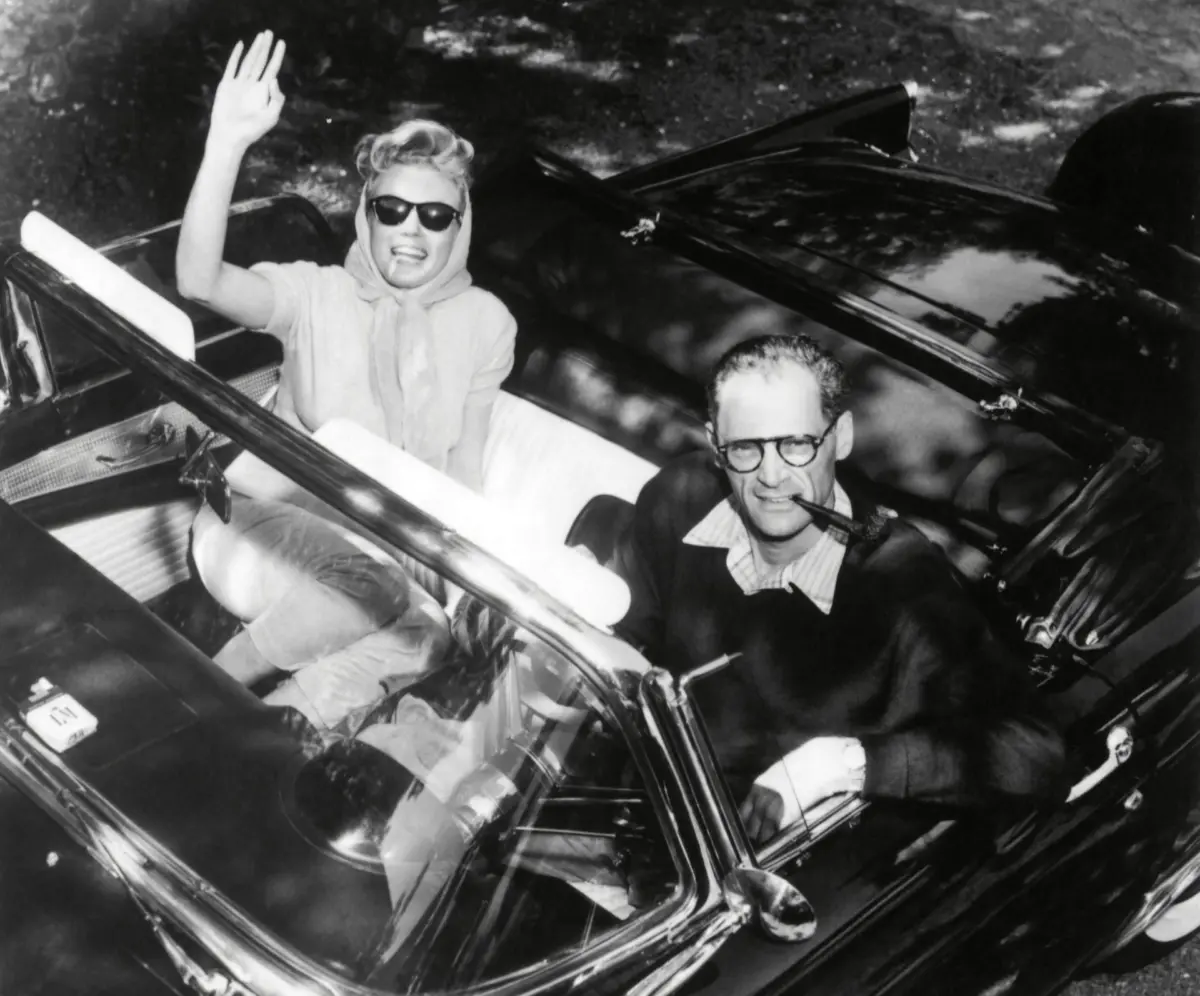
Miller himself inadvertently laid bare the psychological origins of these historical distortions. In Timebends and a subsequent 1996 essay for The New Yorker, the playwright reflected on the state of his personal life while writing the play. His 12-year marriage was crumbling, and he was grappling with intense feelings of personal culpability.
"My own marriage of 12 years was teetering and I knew more than I wished to know about where the blame lay," Miller confessed. "That John Proctor the sinner might overturn his paralysing personal guilt and become the most forthright voice against the madness around him was a reassurance to me, and, I suppose, an inspiration."
By engineering a fictionalized Proctor who redeems his moral failings through heroic martyrdom—crying out, "How may I live without my name? I have given you my soul; leave me my name!"—Miller effectively used seventeenth-century Salem as a canvas for his own absolution. In doing so, he engaged in a profound double distortion: transforming accused historical victims into romantic saints while recasting a traumatized, orphaned child into a malicious femme fatale.
Official Statements and Historiographical Re-evaluation
In the decades following the premiere of The Crucible, professional historians, literary critics, and trauma specialists have increasingly spoken out against the play’s historical distortions, highlighting the danger of reducing complex socio-political crises to individual malice.
Modern historical research paints a far more nuanced picture of the Salem accusers. Rather than acting out of personal spite or sexual jealousy, recent scholarship emphasizes that many of the young accusers in Salem Village were deeply traumatized survivors of the brutal frontier conflicts known as the King William’s War (First Indian War, 1688–1697). Many of these children had witnessed the violent slaughter of their parents and neighbors by native raiding parties, leaving them in a state of severe, untreated psychological shock and post-traumatic stress.
Historians of early modern witchcraft note that reducing the tragedy of Salem to a personal vendetta executed by a manipulative teenage girl weaponizes age-old misogynistic tropes. It shifts accountability away from institutional failures, corrupt judicial systems, and mass societal paranoia, pinning the blame instead on female malice and sexuality.
Furthermore, legal and political commentators have noted how the play’s central metaphor has trickled down into contemporary political discourse. Over the decades, the term "witch-hunt" has been stripped of its historical gravity, devolving into a virtually meaningless political catchphrase deployed by figures across the ideological spectrum to deflect scrutiny. This semantic erosion is, in part, a byproduct of treating historical tragedy through the simplified lens of theatrical melodrama rather than rigorous empirical analysis.
Future Outlook: Reclaiming History from Myth
As The Crucible enters its eighth decade as a cultural touchstone, the academic and theatrical communities face a compelling challenge: how to honor Arthur Miller’s towering dramatic achievement without continuing to propagate historical falsehoods.
Pedagogical Shifts in Education
Educators are increasingly utilizing The Crucible not as an accurate historical text, but as a case study in the dangers of artistic license and political allegory. By pairing the play with primary source documents from the Salem archives—such as the actual trial transcripts, petitions, and demographic studies—teachers can encourage students to critically examine how creative writing can shape, and occasionally distort, our understanding of the past.
Reassessing the Accusers
Future theatrical revivals and literary analyses are beginning to view the characters of Salem through a modern trauma-informed lens. By stripping away the mid-century patriarchal anxieties that infected Miller’s original script, directors and scholars are opening doors to interpretations that honor the real victims—both those executed and the young accusers whose profound psychological wounds were exploited by a rigid, fearful Puritan society.
Conclusion
Arthur Miller’s The Crucible remains an unmatched achievement of mid-century dramatic art, a chilling mirror held up to the dark impulses of political persecution and social hysteria. Yet, as historical investigation has repeatedly demonstrated, the play tells us vastly more about the psychological landscape, anxieties, and biases of its 1950s author than it does about the realities of 1692 Salem. By separating the brilliant theatrical parable from historical fact, we can appreciate Miller’s artistry while finally granting the real women, men, and children of Salem the historical accuracy and dignity they were denied.