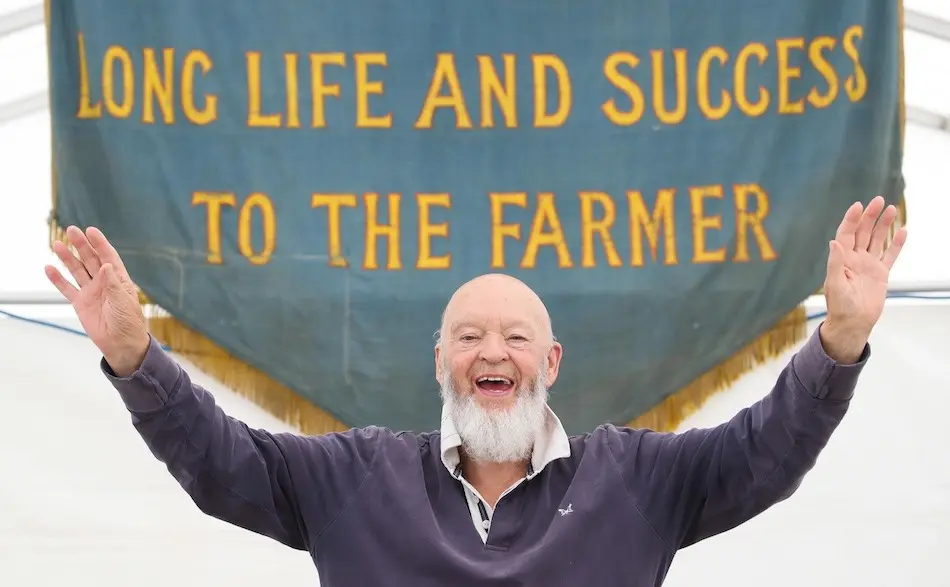
PILTON, SOMERSET — In the gentle, undulating countryside of Worthy Farm, where the soil is rich and the history is written in decades of music, mud, and magic, Sir Michael Eavis sits comfortably at home. It is October 2025, and the dairy farmer who accidentally birthed the greatest greenfield festival in the world is marking a monumental milestone: his 90th birthday.
Captured in an exclusive interview at his Somerset farmhouse by photographer Rik Mav, Eavis cuts a figure of serene contentment. To look at him is to look at living folklore. He is a man whose life has spanned the transformation of rural Britain, the birth of the counterculture, and the creation of an institution that has come to define modern music culture globally. Yet, speaking on the cusp of his ninth decade, his energy remains undiminished, fueled by a lifelong appetite for excitement, community, and the simple pleasures of the land.
Executive Overview
As Glastonbury Festival enters a scheduled fallow year, its founder is taking stock of a journey that began more than half a century ago. What started in 1970 as an idealistic gathering of 1,500 people—then known as the Pilton Pop, Folk & Blues Festival—has evolved into a cultural behemoth. Today, Glastonbury commands the attention of the global media, sells out in minutes regardless of the lineup, and donates millions of pounds to charitable causes.
Yet, beneath the glittering headline-grabbing performances and the sprawling corporate-free utopia lies the heart of a Somerset dairy farmer. In this comprehensive retrospective, we examine Sir Michael Eavis’s extraordinary life, tracing his path from a contentious relationship with local magistrates to international acclaim, exploring the social impact of his rural socialist-Methodist ethos, and looking ahead at what the future holds for Worthy Farm and its indomitable creator.
Detailed Chronology: From Pilton Pop to Global Phenomenon
To understand the scale of Sir Michael Eavis’s achievement, one must retrace the improbable timeline of Worthy Farm. Born into a changing rural Britain, Eavis inherited the family dairy farm, but his ambitions—or perhaps his destiny—extended far beyond agricultural management.
The Genesis: 1970
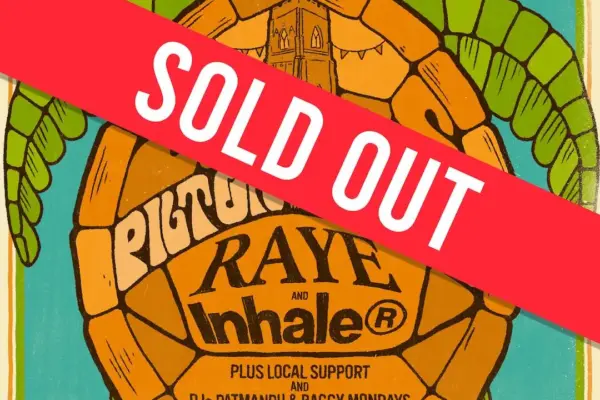
In September 1970, inspired by a massive open-air concert featuring Led Zeppelin at the Bath Festival of Blues and Progressive Music, a 35-year-old Eavis paid £1 for admission, went home, and decided to host his own event. Charging just £1 a ticket—which included free milk from the farm—he welcomed 1,500 people to Worthy Farm to watch T. Rex headline.
Those early years were far from the polished corporate-sponsored festivals of the modern era. They were characterized by ideological friction, financial precarity, and fierce local opposition. Eavis was routinely locked in bureaucratic and legal battles with local authorities, the police, and magistrates who viewed the influx of hippies and alternative culture with deep suspicion.
"In those days, I was always at war with the council and the village and the local magistrates and the police," Eavis recalls, reflecting on the turbulent foundational years. "And it came good. Which is extraordinary, really. But the fight was really what made it work, there’s no doubt about that. It was certainly worth it!"
Surviving the Threats
The survival of the Festival was threatened on numerous occasions. Eavis recounts a chilling warning from a chairman of the local magistrates who once bluntly told him: "If you do this again, you’ve had it."
Despite such existential threats, the Festival adapted, grew, and eventually integrated into the fabric of British society. Through the decades, Worthy Farm hosted defining moments in music history—from David Bowie’s legendary 2000 performance to Stormzy’s historic headline set in 2019, and Neil Young’s spellbinding Saturday night performance in recent years, which Eavis cites as a personal favorite.
When asked if he has a single favorite festival since 1970, Eavis offers a characteristically philosophical response: "I always think that the most recent one is the best one. I really do."
Supporting Context & Metrics: The Dual Empire of Milk and Music
While the world knows Michael Eavis as the patriarch of Glastonbury, his roots in agriculture have never been severed. The symbiotic relationship between Worthy Farm as an operational dairy farm and Worthy Farm as a festival site is central to his identity.
The Dairy Operations
The farm is "doing bloody well," according to Eavis. The agricultural heartbeat of the estate remains robust, with the farm’s milk supply routed entirely to Wyke Farms. There, it is transformed into the iconic Worthy Farm Cheddar—a product that has transitioned from a local novelty to a nationwide supermarket staple.
Eavis marvels at the surreal nature of this commercial expansion: "A couple of years ago, we went to Scotland on the train. When we got off in Glasgow, there was a Co-op shop just over the road. So I decided to pop across just to see if they had the cheese… It was all over the shelves! Isn’t that wonderful?"
The Creative Engine
Even during the Festival’s scheduled fallow years—designed to allow the farmland to recover and the local community to breathe—Eavis refuses to slow down. Recent weeks have seen him collaborating with creative masterminds like Joe Rush and the team behind Arcadia, proving that his appetite for visionary art and engineering remains as voracious at 90 as it was at 35.
Official Statements & Community Impact: More Than Just Music
Glastonbury has always worn its politics on its sleeve. From its long-standing support for Greenpeace, WaterAid, and Oxfam to its platforming of political speeches and grassroots activists, the Festival functions as the moral conscience of the British festival circuit.
The Role of Methodism
When asked if his Methodist upbringing is the key to this enduring social conscience, Eavis does not hesitate: "I’m sure it is." This moral framework has translated into tangible, life-changing philanthropy. Beyond the millions distributed to charitable organizations globally, Eavis has channeled his success directly into his immediate community.
Social Housing in Pilton
One of his proudest achievements is the construction of 52 social houses in Pilton, designed specifically to ensure that local families and young people are not priced out of their home village by the housing crisis.
Former England footballer and broadcaster Gary Lineker recently visited the housing development, producing a widely shared interview that brought national attention to the project.
"Gary Lineker came to open the houses, and he really saw the value of them," Eavis says with visible warmth. "I think my mother would be proud of me for the houses too. They look lovely on a sunny day. I drive that way out of the village, you know, and I see the sun shining out on them and think, ‘How did all this happen?’"
Future Outlook: A Legacy Set in Stone
As Glastonbury enters its fallow year, the cultural landscape continues to speculate on the future of the Festival and its leadership under Michael’s daughter, Emily Eavis. Yet, the immediate focus in Pilton is entirely personal.
To celebrate his 90th birthday, Eavis is keeping things local and intimate. Eschewing grand international galas, he is hosting a party in the village for family, friends, and local residents. True to form, the octogenarian showman has a musical surprise up his sleeve.
"The plan is to sing three songs with my band," he reveals with a mischievous glint in his eye.
When pressed on whether Frank Sinatra’s anthemic "My Way" will make the setlist, Eavis smiles: "That’s a good guess!"
Reminded that he has undoubtedly done it his way, the pioneer of Worthy Farm can only agree: "Ha! Yeah, I think it would be fair to say that."
As Sir Michael Eavis steps into his tenth decade, the legacy is secure. From a muddy Somerset field in 1970 to a global cultural phenomenon, his journey is a testament to resilience, vision, and an unshakeable belief in the power of community, music, and the land.