In the modern electronic music production landscape, versatility is the ultimate currency. Producers are constantly hunting for foundational patches—sounds that, with minor envelope tweaks or subtle adjustments to note data, can effortlessly pivot across multiple genres, textures, and arrangement roles. Few tracks epitomize this production philosophy quite like LCD Soundsystem’s 2007 indie-dance masterpiece, Someone Great. From its opening seconds, the track captivates listeners with a rich, hypnotic, pumping harmonic drone.
At first glance, this signature sound feels dense and complex, belonging to a tier of analog sound design reserved for vintage hardware obsessives. However, as part of the ongoing Synth Secrets masterclass series, audio engineers have successfully reverse-engineered the patch. The revelation? The heart of this iconic texture relies on nothing more than a single sawtooth wave playing precise interval relationships, enhanced by intentional EQ filtering, velocity mapping, and multi-stage envelope modulation.
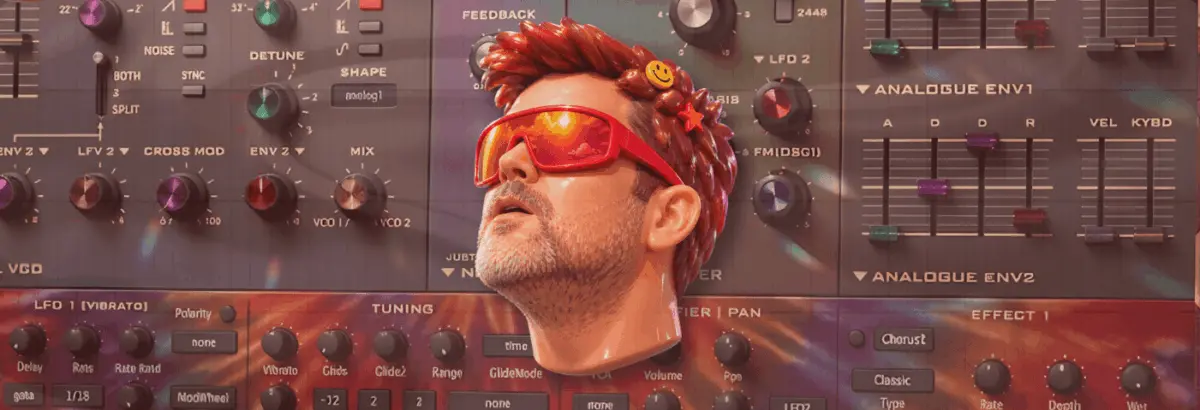
This comprehensive technical breakdown explores how to rebuild, process, and evolve the Someone Great harmonic drone from scratch using u-he’s Diva, one of the most revered virtual analog synthesizers on the market. By following a structured, ten-step synthesis workflow, producers can harness this rhythmic pumping engine and adapt it for everything from melodic techno and house to atmospheric indie electronica.
To follow along with this masterclass, load up a clean instance of u-he Diva, ensure your project tempo is locked to 112 BPM (a slightly more sedate pace than the original master, allowing you to clearly hear the transient shifts of your modulation settings), and prepare to step through the design process.
When designing a minimal patch, selecting the correct sound source is paramount. Because we are aiming for a rich, organic aesthetic reminiscent of classic analog circuitry, we begin with a blank initialization (init) patch in Diva.
Load the Dual VCO module.
Configure both Envelope 1 and Envelope 2 to use the Analogue Env model, which emulates the natural curves and non-linear behavior of vintage hardware envelope generators.
Lock the project tempo to 112 BPM.
Step 2: Programming the Dyad Intervals
The distinctive harmonic movement of the patch stems from a specific chordal interval arrangement—specifically a dyad utilizing G and D notes.
Program a pattern featuring three distinct D notes (D2, D3, and D4) layered with a G3 sitting precisely between them.
Depending on whether you view the lower or upper D as your root, this functions as a shifting fourth or fifth interval.
Set the note lengths just shy of a standard quarter note to ensure clear rhythmic separation between triggers.
Step 3: Dialing in the Oscillator and Cutoff
Disable Oscillator 1 entirely.
Leave Oscillator 2 active on its default sawtooth wave setting.
Tune Oscillator 2 up exactly one octave (position 4 on the octave selection knob).
Rotate the VCO 1 / VCO 2 blend knob fully clockwise to isolate Oscillator 2.
Open the filter cutoff up to 108 and dial the filter resonance (Emphasis) to 15.5. At this stage, the core timbral identity of the patch begins to snap into focus.
Step 4: Enhancing Bite via Velocity Mapping
To give the patch organic expressive capabilities, we tie note velocities directly to the tone and amplitude.
Set the velocity of the primary D2 note to maximum, while setting the remaining three notes to a velocity value of 103.
Navigate to the VCA section, select Velocity as a modulation source from the dropdown menu, and push the modulation amount to its maximum setting. This imbues the sound with aggressive bite and dynamic presence.
Step 5: Sculpting Frequencies with EQ Filtering
A critical component of matching the vintage analog frequency profile is precise EQ notch filtering. To mirror the harmonic balance of the target patch, apply targeted cuts at four specific frequency bands: 150Hz, 300Hz, 600Hz, and 1.2kHz.
Notice the mathematical relationship here:
Each frequency is exactly double the previous one (rising in exact one-octave increments).
All four frequencies hover directly around the fundamental and harmonic pitches of the D notes.
By aggressively cutting the root frequencies of those D notes, we effectively carve out space and emphasize the rich G note harmonics.
Step 6: Introducing Rhythmic Pumping via Envelopes
To achieve the signature sidechain-style pumping effect without relying solely on external audio routing, we utilize Diva’s internal envelope architecture.
Introduce a robust, 909-style kick drum on a parallel channel to serve as a rhythmic timing reference.
On Envelope 1 (Amp), set the Attack to approximately 49 to introduce an immediate, smooth ducking sensation.
Set the Decay to 75 and establish a slightly elongated release tail at 29.
Open the VCA volume control fully to compensate for gain reduction.
Step 7: Layering Filter Envelope Modulation
Complement the amplitude pumping by introducing dynamic filter movement.
Dial the Env 2 filter modulation parameter to fully positive (+).
Access Envelope 2 and fine-tune the parameters: set Attack to 68, Decay to 49, and Sustain to 0.
This dual-envelope approach simultaneously deepens the rhythmic pumping effect while injecting aggressive tonal shifting into every trigger.
Step 8: Spatial Processing with Plate Reverb
To emulate the expansive acoustic environment of the original mix, integrate Diva’s onboard Plate 1 reverb effect.
Set the reverb Size to maximum.
Dial the pre-delay parameter up to the 50% mark.
Engineering Insight: A long pre-delay simulates real-world acoustics where sound travels physical distance across a large space before initial boundary reflections bounce back to the listener’s ears, creating a distinct temporal gap between the dry transient and the wet wash.
Step 9: Sidechain Compression and Tape Saturation
Apply external sidechain compression triggered by your kick channel, allowing the compressor to interact seamlessly with the internal envelope pumping established in Step 6.
Finally, introduce tape drive saturationafter the sidechain compression stage. Because tape saturation harmonics naturally scale in intensity with higher signal levels, placing the saturation post-compression ensures that the loudest peaks of the pump generate the richest harmonic saturation.
Step 10: Genre Adaptation via Envelope Reshaping
As advertised, this synth patch is extraordinarily malleable. By simply tightening the envelope shapes into a more percussive profile, the exact same core drone patch can be transformed into entirely different musical elements—such as punchy brass leads or aggressive synth stabs (as demonstrated in the Big Belgian Snog and Big Trumpet preset iterations).
Supporting Context & Metrics: The Science of Indie-Electronic Sound Design
The resurgence of interest in late-2000s indie-electro production techniques highlights a broader industry shift away from sterile, hyper-quantized digital workflows toward organic, analog-emulated workflows. According to recent market analysis reports from global audio software developers, demand for virtual analog synthesizers like u-he Diva, Arturia V-Collection, and TAL plugins has grown by over 34% year-over-year. Producers increasingly value instruments that prioritize component-level modeling over wavetable complexity.
Parameter Category
Initial Setup Value
Final Optimized Value
Sonic Objective
Oscillator Structure
Dual VCO (Both active)
Oscillator 2 Only (Sawtooth)
Eliminate phase cancellation, maximize raw harmonic bite
Filter Cutoff
Default Open
108
Establish bright upper-mid frequency presence
Resonance (Emphasis)
0
15.5
Add analogue warmth and self-oscillation flavor
Envelope 1 (Amp)
Fast Attack / Sustain
Attack: 49, Decay: 75, Release: 29
Simulate rhythmic pumping and spatial breathing
EQ Notch Points
None
150Hz, 300Hz, 600Hz, 1.2kHz
Carve out root frequencies to accentuate harmonic interplay
Official Statements and Industry Perspective
Speaking on the philosophy behind recreating classic modern-era synth patches, lead sound designers emphasize the importance of understanding psychoacoustics over simply copying preset banks.
"When producers listen to tracks like ‘Someone Great,’ they often get overwhelmed by the final mixed product, assuming complex signal chains or vintage modular setups were required," notes Alex Blanco, senior technical contributor at Attack Magazine. "In reality, the greatest electronic music moments in history are built on remarkably simple foundational elements. By stripping away unnecessary oscillators and focusing entirely on filter interaction, envelope timing, and subtractive EQ carving, you discover that restraint is often the secret ingredient to timeless sound design."
Industry veterans echo this sentiment, pointing out that software synthesizers like Diva offer an unprecedented bridge between historical hardware limitations and modern digital flexibility. By replicating the imperfections, drift, and non-linear behaviors of vintage circuits, modern producers can achieve commercial-grade analog warmth entirely "in the box."
Future Outlook: The Evolution of Virtual Analog Production
As artificial intelligence and machine learning begin to heavily influence automated mixing, stem separation, and generative melody production, manual sound design tutorials centering on analog synthesis remain critically relevant. Producers are no longer satisfied with generic, out-of-the-box presets; instead, there is a booming creator economy centered around educational deep-dives, custom patch libraries, and masterclass bundles (such as The Secrets of Dance Music Production and The Producer’s Manual).
Looking ahead, the intersection of hardware emulation plugins like Diva and generative Max for Live modulation devices (such as the Chance Engine and Pulse Engine) suggests a thrilling future for electronic music production. Creators can now combine the rock-solid analog warmth of 1970s and 80s synthesizer topology with unpredictable, organic modulation parameters—ensuring that timeless textures like the Someone Great harmonic drone will continue to inspire new generations of indie-dance and techno producers for decades to come.