Executive Overview
To modern observers, the European rabbit (Oryctolagus cuniculus) is a ubiquitous feature of the British countryside, a permanent fixture of pastoral landscapes, and—ironically—one of the nation’s most economically damaging invasive species. Yet, the deep history of these animals reveals a trajectory far more complex than simple ecological colonization. Far from being native inhabitants of the British Isles, rabbits arrived as high-status novelties, serving as exclusive culinary luxuries gifted by monarchs and jealously guarded by the Norman aristocracy.
The transformation of the rabbit from a guarded royal treasure into a ubiquitous pest tells a captivating story of sweeping socioeconomic upheaval in medieval England. Specifically, the catastrophic demographic shock of the Black Death (1346–1353) shattered the rigid feudal structures of the era, empowering the surviving peasantry and laboring classes. As living standards rose and the strict class barriers of the high Middle Ages began to fracture, rabbits trickled down from royal warrens into the pots and wardrobes of ordinary citizens.
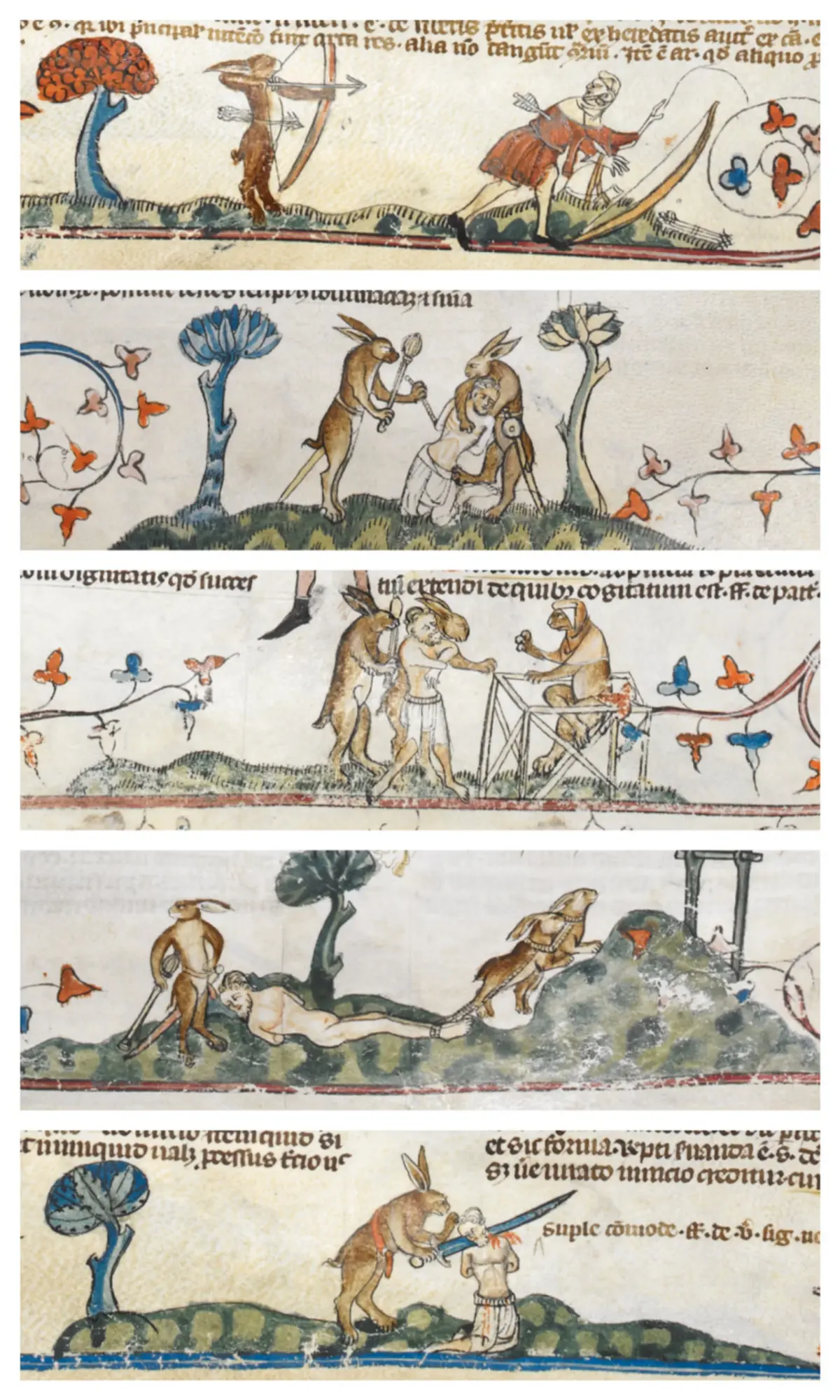
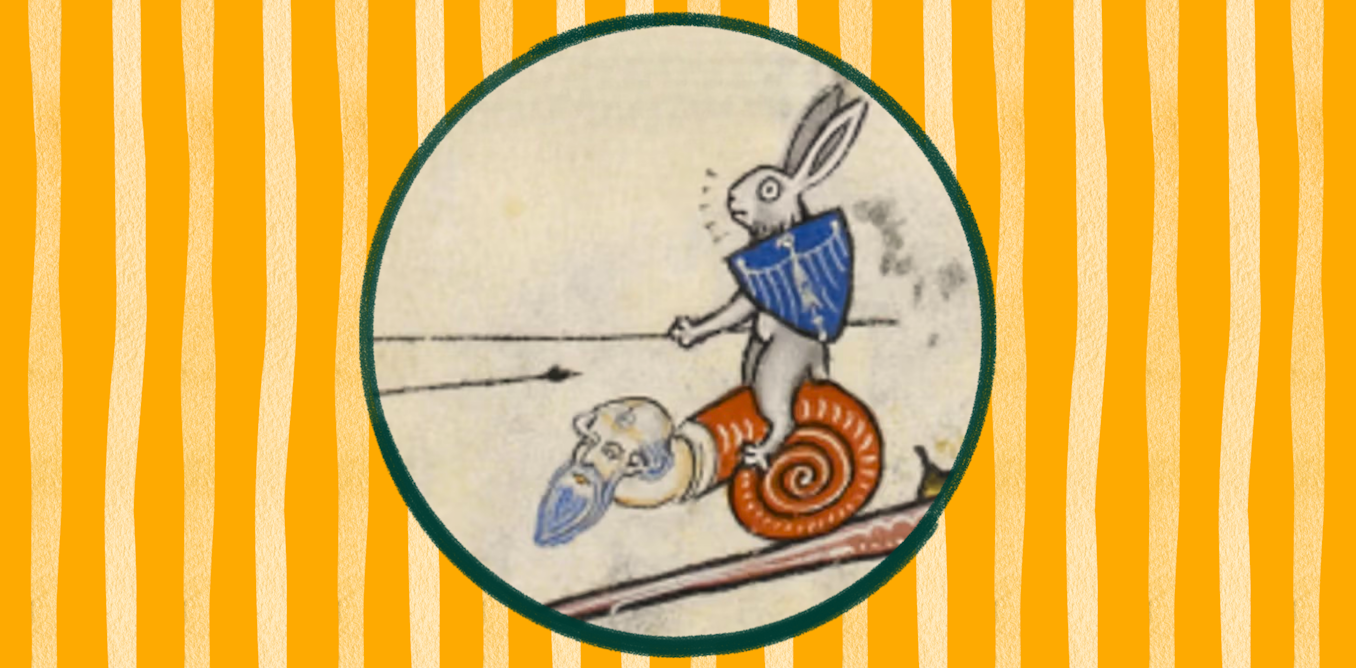
At the same time, this sudden ubiquity—and the persistent threat of agrarian poaching—sparked a wave of legislative crackdowns from an anxious ruling class fearful of social subversion. Yet, the cultural footprint of the rabbit extended far beyond the political and economic spheres. In the margins of illuminated medieval manuscripts, the rabbit found an immortal artistic life as an agent of chaos. Long before Monty Python introduced the world to the "Killer Rabbit of Caerbannog," medieval illustrators were depicting armed bunnies jousting on the backs of snails, holding mock trials, and executing their human and canine tormentors. These whimsical and violent tableaus tapped into a rich medieval tradition of social inversion—the world turned upside down—providing comic relief in an era of profound transformation.
Detailed Chronology: From Roman Curiosities to Tudor Plenties
The historical arc of the rabbit in Britain spans centuries of shifting political power, agricultural adaptation, and legal restructuring.
The Roman Footnote and the Norman Influx
While once universally believed to have been introduced to Britain wholesale by the invading Normans in the 11th century, modern archaeological investigations have complicated this neat historical narrative. Excavations at sites such as Fishbourne Roman Palace have uncovered isolated rabbit bones dating back to the Roman occupation of Britain. However, these early arrivals appear to have failed to establish permanent, widespread wild populations, leaving the Norman period as the true crucible for the establishment of the species in the British Isles.
By the 12th century, documentary evidence of rabbits—often referred to historically as "coneys"—begins to proliferate. One of the earliest recorded references emerges from the Scilly Isles in 1176, concerning a dispute over ecclesiastical tithes. The landowner Richard de Wyka attempted to withhold the traditional tenth-part church offering on his rabbit population, arguing that "tithes were not payable on things of this kind." Wyka’s confusion underscores the sheer novelty of rabbits at the time; they did not fit neatly into traditional agricultural or pastoral tax categories.
The Thirteenth Century: Royal Gifts and Protected Warrens
Throughout the 1300s, rabbits remained sufficiently scarce and valuable to warrant the direct personal attention of the English crown. They were luxury assets, kept primarily for their tender meat and dense, insulating fur.
In 1235, King Henry III demonstrated the high-value nature of the animal by gifting ten live rabbits from his royal park at Guildford to Geoffrey Despenser, a prominent English landowner and Lord of Martley in Worcestershire. A few years later, royal administrative rolls record the king sending men to harvest 30 or 40 rabbits from the same Guildford park, accompanied by strict instructions that the animals should only be taken if the warren was exceptionally well-stocked. The crown was acutely protective of its breeding stock.
Despite Henry III’s frequent provisioning of diverse game for royal feasts—including venison, boars, fish, swans, peacocks, hens, eggs, and hares—rabbits were so exclusive that they did not appear on his Christmas feast requisition list until 1240. Acquiring rabbit meat was a significant financial undertaking; coneys routinely cost four to five times as much as common chickens. So intense was the concern over theft and predation that owners constructed elaborate defense systems around their warrens, including dedicated watchtowers and reinforced stone lodges.
The Fourteenth Century: The Black Death and Social Upheaval
The mid-14th century marked an inflection point in British history. The arrival of the Black Death between 1346 and 1353 decimated the European population, wiping out an estimated one-third to two-thirds of the populace. In the wake of this unimaginable demographic catastrophe, the fundamental dynamics of labor and wealth shifted dramatically.
With labor suddenly scarce, surviving laborers and peasants found themselves in a powerful bargaining position. They could command higher wages, and as land became more widely and cheaply available, general living standards improved. Many working-class individuals began adopting lifestyles, clothing styles, and consumption patterns previously reserved for the nobility.
The aristocracy reacted with swift legislative anxiety. In 1363, Parliament introduced strict sumptuary laws designed to legally police consumption and dress according to rigid social hierarchies. The legislation was explicitly justified as a response to "the excess of dress of people beyond their estate, to the very great destruction and impoverishment of the land."
Rabbits became a prime material marker of this socioeconomic blur. During the 14th and 15th centuries, rabbit meat began appearing on the tables of wealthier peasants, while aspiring craftsmen incorporated rabbit fur into their garments. Even royalty maintained an appreciation for the pelts: Henry VII famously ordered night attire tailored using luxurious black rabbit fur.
The Fifteenth and Sixteenth Centuries: Proliferation and Regulation
As rabbits successfully bred and expanded their range across the English landscape, the economic benefits of their fur and meat were increasingly counterbalanced by the ecological damage they caused. Manorial administrative accounts from the period are filled with persistent complaints from estate managers regarding the destruction of crops, the undermining of turf, and general agricultural damage caused by the lords’ own expanding rabbit populations.
Simultaneously, the act of hunting rabbits transformed from a controlled aristocratic sport into a perceived political threat. Following the Peasants’ Revolt of 1381, the English Parliament grew deeply suspicious of rural laborers and artisans roaming the countryside with hunting equipment. In 1390, sweeping anti-poaching legislation was enacted, driven by fears that gatherings for hunting served as cover for peasants to "make plots and conspiracies of rebellion" against the king. King Richard II consented to legislation extending bans to the use of "hounds and ferrets, hays, nets, hair-pipes, cords and all other devices to take or destroy beasts of the forest, hares or rabbits, or other sport of gentlefolk."
By the mid-16th century, the ecological transition was complete. Writing in 1555, the eminent Swiss naturalist Conrad Gesner observed that while "there are few countries wherein coneys do not breed, the most plenty of all is in England."
Supporting Context & Metrics: The Economics and Ecology of Medieval Coneys
To fully understand the historical weight of the medieval rabbit, historians analyze a combination of financial records, archaeological data, and ecological metrics.
| Metric / Indicator | Historical Context / Value |
|---|---|
| Comparative Meat Cost | Rabbits cost 4 to 5 times the price of common chickens during the 13th century. |
| Demographic Shock | The Black Death (1346–1353) killed 33% to 66% of the European population, driving up wages and improving peasant living standards. |
| Royal Gifting (1235) | King Henry III gifted 10 live rabbits from Guildford Park to Geoffrey Despenser, illustrating their value as diplomatic and social currency. |
| Ecological Impact (Modern) | Today, invasive European rabbits cost the UK economy billions of pounds annually in agricultural and infrastructural damage. |
| Manuscript Satire Era | Illuminated manuscripts like The Smithfield Decretals (1340s) popularized ironic, violent rabbit iconography. |
The Architecture of Exclusivity
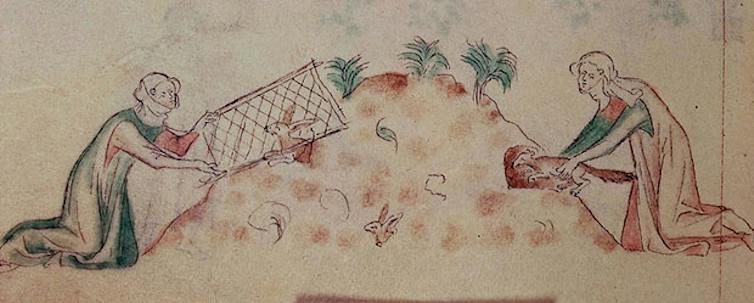
Because medieval rabbits were not yet established as wild, self-sustaining feral pests, they required intensive human management. Landowners constructed artificial warrens known as "pillow mounds"—long, raised earthen banks designed to facilitate burrowing and simplify harvesting. These warrens were surrounded by ditches, walls, and guarded by watchmen stationed in stone lodges. Poaching a rabbit from a lord’s warren was not treated as a minor misdemeanor; it was a serious property crime that threatened the carefully curated luxury economy of the elite.
Official Statements & Scholarly Perspectives
Historians, archaeologists, and literary scholars studying the transition of the European rabbit in medieval Britain emphasize that the animal acts as a mirror for human social anxiety.
"The early history of rabbits in the British Isles tells the captivating story of social change in medieval England. From a rare luxury gifted by kings and the Norman aristocracy, rabbits became more commonplace after the living standards of the poor improved in the years after the Black Death."
— Historical & Archaeological Consensus
Scholars focusing on medieval art history note that the proliferation of satirical rabbit imagery was a vital pressure valve for a deeply stratified society. When peasants and laborers were legally barred from rising above their station via sumptuary laws, and when hunting game was criminalized out of fear of insurrection, cultural expression provided a subversive outlet.
The satirical depictions found in margins—such as those in The Smithfield Decretals from the 1340s, where rabbits capture, try, and execute human hunters and greyhounds—were not mere whimsical doodles. They were sophisticated cultural artifacts of "social inversion." By turning the natural order upside down—making the prey the executioner and the hunter the condemned—these illustrations allowed medieval society to temporarily mock the rigid chivalric and feudal hierarchies that governed their daily lives. This tradition of the "world turned upside down" manifested elsewhere in cultural practices such as the election of a boy bishop or the appointment of a "lord of misrule" during festive seasons like May Day.
Future Outlook: Environmental Legacy and Cultural Resonance
Today, the descendant populations of those medieval royal delicacies have firmly established themselves as one of the United Kingdom’s most entrenched and destructive invasive species. Modern ecological assessments place the economic burden of invasive species in the UK at over £5 billion annually, with rabbits playing a significant role in agricultural depletion, soil erosion, and the disruption of native flora.
Yet, the cultural legacy established during the Middle Ages endures. The archetype of the deceptively lethal, chaotic rabbit—born in the ink of 14th-century monastic scribes drawing jousting bunnies and vengeful rodents—continues to echo through popular culture. From the Killer Rabbit of Caerbannog in Monty Python and the Holy Grail (1975) to modern iterations in fantasy literature and digital media, the cultural archetype of the rebellious rabbit remains as potent as ever.
Ultimately, the humble rabbit serves as a unique historical prism. It refracts our understanding of medieval economics, the brutal demographic realities of the Black Death, the anxious legislation of a threatened aristocracy, and the enduring human impulse to use satire and art to turn an unjust world upside down.