Executive Overview
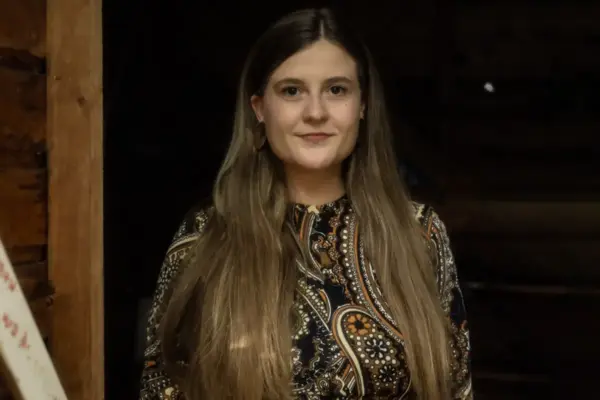
Thousands of miles away from the sun-drenched coastlines of Gran Canaria, beneath the sweeping expanse of the northern lights or the relentless glow of the midnight sun, lies Kluane Lake. Flanked by jagged, ancient mountains and fed by glacial runoff, this remote corner of the Yukon Territory has sustained the Kluane First Nation for more than ten thousand years. It is here, born in a tent amidst a community of just ninety people, that Diyet van Lieshout found the raw, elemental inspiration for her art.
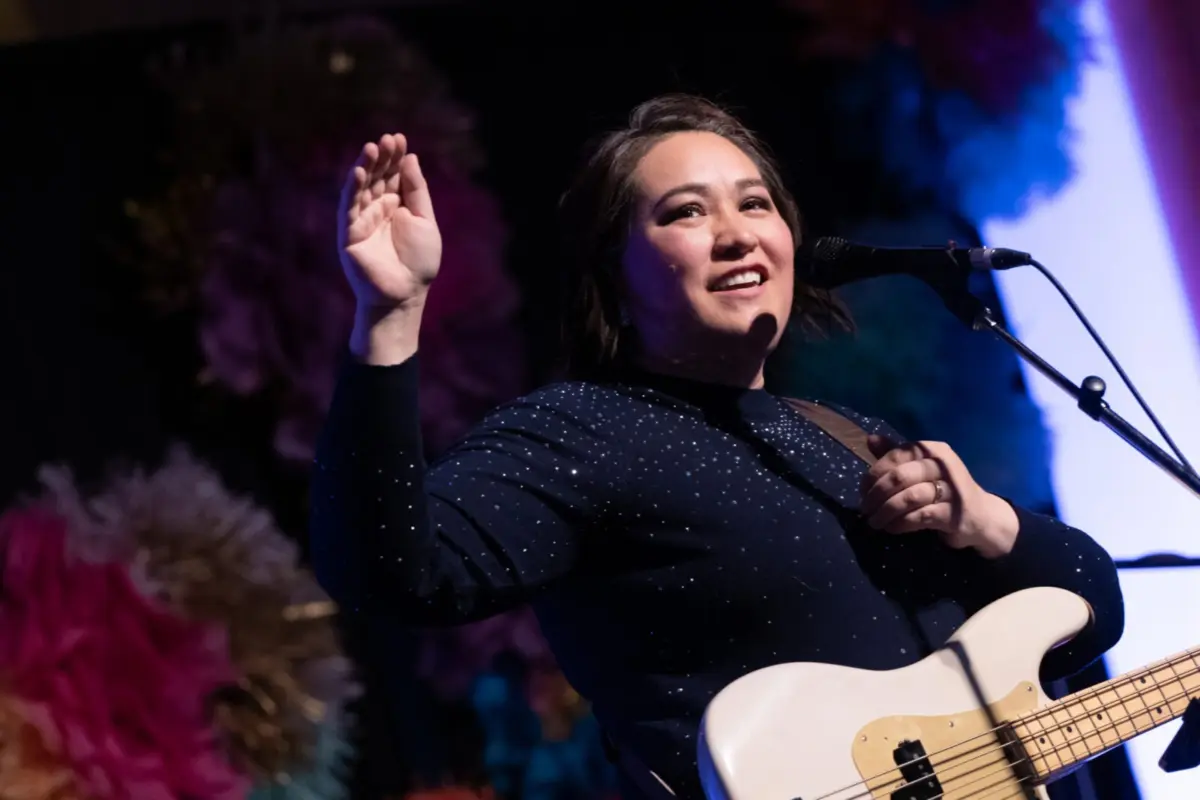
As the frontwoman of the critically acclaimed roots ensemble Diyet & The Love Soldiers, she represents a rare intersection of deep ancestral heritage and contemporary artistic innovation. Alongside her husband, multi-instrumentalist Robert van Lieshout, and Juno Award-winning producer Bob Hamilton, Diyet crafts a sonic world that weaves alt-country, folk, and traditional Indigenous storytelling together with the Southern Tutchone language.
Ahead of their highly anticipated showcase at WOMEX (World Music Expo) in Las Palmas de Gran Canaria, Diyet sat down for an exclusive interview as part of the Musical Road to WOMEX series. The conversation explored the profound geographic and cultural roots of her music, the fragile urgency of preserving endangered languages, and the logistical and emotional transformation required to shrink an enormous glacial wilderness into a tightly curated 45-minute festival set.
As the global music community gathers on an island with its own complex, suppressed Indigenous history involving the Guanches, Diyet’s presence serves as a timely reminder that music can transcend linguistic barriers. Her work proves that tradition and modernity are not mutually exclusive opposites, but rather complementary forces that can heal generational trauma and foster a shared human understanding.
Detailed Chronology: From the Shores of Kluane to the Global Stage
The life of Diyet van Lieshout reads like a geographical and artistic odyssey, defined by unexpected detours, institutional milestones, and an eventual, inevitable return to her ancestral home.
Roots in the Wilderness
Born into a traditional tent on the ancestral lands of the Kluane First Nation, Diyet’s early existence was inextricably tied to the rhythms of the earth. Raised on the shores of Kluane Lake, she grew up in an environment where nature was not a picturesque backdrop, but an active participant in daily survival and communal life. Music was similarly embedded in the social fabric; it was never cordoned off onto a stage, but was instead an organic medium for storytelling, mourning, and celebration.
Despite growing up surrounded by this rich auditory tapestry, Diyet describes herself as having been a remarkably shy child. It was entirely by accident, at the age of ten, that she first discovered the resonant power of her own voice. This accidental discovery set off a chain of events that propelled her far beyond the borders of the Yukon.
The Educational and International Interlude
Driven by a growing passion for her craft, Diyet pursued formal training, ultimately earning a degree in voice performance. Her artistic footprint expanded rapidly over the following years. She worked as a commercial songwriter for a publishing house in Vancouver, contributing to the bustling West Coast music scene, and later traveled across the Atlantic to spend time teaching voice in the Netherlands.
Yet, despite the opportunities afforded to her in urban centers and European classrooms, the magnetic pull of the North proved irresistible. Diyet eventually returned home to her tiny northern community, accompanied by her Dutch husband, Robert van Lieshout. Upon arrival, they faced a stark reality: their village boasted no traditional venues, no commercial stages, and no pre-existing infrastructure for a touring musician. Paradoxically, it was this absolute isolation that unlocked her true artistic voice. Stripped of external trends and metropolitan pressures, she finally began writing music entirely for herself.
The Birth of The Love Soldiers
The creative synergy between Diyet and Robert soon drew the attention of industry heavyweights, leading to the formation of Diyet & The Love Soldiers. The trio solidified when Juno-winning producer Bob Hamilton—renowned for his wizardry on electric guitar, pedal steel, and mandolin—joined the fold. Robert anchored the rhythm and harmonic foundation on acoustic guitar, drums, and percussion, while Diyet fronted the group with her striking vocal delivery.
The band’s output quickly gained traction across North America and Europe, culminating in the release of their landmark album, Seeds of Dreaming. Written over five grueling, inspiring years of touring from Alaska to the European continent, the record functions as a sonic compass that continuously points back to Kluane. Tracks like "8th Wonder" serve as a deeply personal tribute to her mother, a survivor of Canada’s harrowing residential school system, while "Grandfather’s Country" draws its emotional weight from the Southern Tutchone phrase Ásí Keyi—signifying the ancestral land upon which she was raised.
Supporting Context & Metrics: Cultural Preservation and Modern Identity
To fully appreciate the significance of Diyet & The Love Soldiers’ performance at WOMEX, one must examine the broader socio-cultural metrics surrounding Indigenous language preservation, multi-genre music production, and international festival dynamics.
The Mathematics of Language Loss
Diyet’s artistic output is heavily anchored in Southern Tutchone, an Athabaskan language spoken by a diminishing number of elders within the Yukon. Globally, Indigenous languages face an unprecedented extinction crisis; linguistic experts estimate that a language dies out every two weeks. When an Indigenous language recedes, the losses extend far beyond vocabulary. As Diyet notes, language acts as an encyclopedic repository for worldview, ecological knowledge, humor, and complex interpersonal relationships.
- Linguistic Vulnerability Index: Languages that cease to be naturally transmitted from parents to children in domestic settings experience an exponential risk of dormancy within two generations.
- Cultural Transmission: By embedding Southern Tutchone into contemporary alt-country and roots arrangements, Diyet bypasses traditional academic preservation methods, injecting the language directly into popular culture where younger demographics can absorb it organically.
Crossing Institutional and Geographic Divides
The contemporary roots and alt-country scene is heavily saturated, yet Diyet & The Love Soldiers carve out a unique space by refusing to compartmentalize their identity. Their music sits at a fascinating intersection:
| Element | Traditional Context | Contemporary Integration |
|---|---|---|
| Language | Spoken exclusively within Yukon communities / Elders | Sung internationally over electric guitar, pedal steel, and mandolin |
| Arrangement | Acapella or percussion-driven ceremonial songs | Multi-genre fusions spanning folk, roots, pop, and alt-country |
| Performance Space | Communal gatherings, potlatches, land-based sharing | Global festival circuits, showcase rooms, and orchestral settings |
Official Statements & Interview Insights
In her extensive Q&A session for the Musical Road to WOMEX, Diyet articulated the philosophical underpinnings of her work, offering profound insights into the nature of home, cross-cultural empathy, and the upcoming showcase in Las Palmas de Gran Canaria.
On the World Her Music Inhabits
When asked how she would describe her musical landscape to a first-time listener, Diyet emphasized the physical geography of her upbringing:
"My music lives in the North. It comes from the mountains, the water, the long winters, the midnight sun, and from growing up in a place where the land is always present in your life… I think of the music as a meeting place between worlds, Southern Tutchone and English, traditional and contemporary, Indigenous and non-Indigenous. There’s a lot of the North in it, but you don’t have to be from the North to understand the stories."
On Connecting with the Guanche History of Gran Canaria
Upon learning about the history of the Guanches—the Indigenous inhabitants of the Canary Islands whose culture and language were largely suppressed following the Spanish conquest—Diyet expressed immediate solidarity and intellectual curiosity:
"I didn’t know that! I’m really interested in that history. Coming from a small Indigenous Nation and being involved in the work of keeping Southern Tutchone alive, I understand how fragile language can become when it stops being passed naturally from one generation to another… There’s something meaningful about bringing Southern Tutchone songs from my home in the Yukon all the way to an island on the other side of the world that has its own complicated history of language and culture."
On Rejecting Stereotypes and Embracing Two Worlds
Addressing the expectations placed upon Indigenous artists on international stages, Diyet was firm about maintaining authenticity:
"At WOMEX, I want people to meet us as we actually are, not as some idea of what Indigenous music is supposed to sound like. A song might contain Southern Tutchone language or come from a very specific Indigenous experience, but musically it might sit somewhere between folk, roots, country and pop."
On Transforming a Showcase Room into a Yukon Sanctuary
Performing for a room full of seasoned music industry delegates, festival bookers, and press professionals requires a strategic approach. Diyet explained how she adapts her storytelling for a time-crunched environment:
"The best way for people to understand what we do is to actually experience the show. I approach it the same way we approach any performance: bring people into the story, give them some context about where we come from, and then let the music take the listener where they want to go. For our 45 minutes, I want that room in Las Palmas to feel a little bit like my home in Kluane."
Future Outlook: Orchestral Horizons and Beyond
As Seeds of Dreaming passes its one-year anniversary and continues to resonate across international borders, Diyet & The Love Soldiers are standing at a major professional crossroads. The relentless touring cycle that took them from the Alaskan wilderness to major European capitals has sparked a desire for structural evolution.
Beyond the Trio: Expanding the Soundscape
While the tight-knit, intimate chemistry between Diyet, Robert van Lieshout, and Bob Hamilton remains the beating heart of the project, Diyet is actively conceptualizing the next iteration of her artistry. The primary frontier for this evolution involves the integration of her native language into grander, symphonic arrangements.
Diyet revealed that preliminary explorations into orchestral work have already begun:
"One direction I’m particularly excited about is orchestral work. We’ve already started exploring what these songs can sound like with an orchestra, and hearing music that comes from Kluane expanded into that scale has opened up a whole new world for me. Writing in Southern Tutchone and thinking about how language can live inside contemporary music without becoming something separate or ceremonial."
This ambition signals a major shift in how Indigenous languages can be represented in global classical and contemporary music spaces—not relegated to museum pieces or brief interludes, but driving the narrative force of large-scale, symphonic compositions.
The WOMEX Showcase Details
For international delegates and music enthusiasts attending WOMEX in Las Palmas de Gran Canaria, the opportunity to witness this transitional phase firsthand is fast approaching.
- Event: WOMEX 2025 Showcase – Musical Road to WOMEX
- Artist: Diyet & The Love Soldiers
- Venue: Borondón Stage at the Sala San Borondón
- Date & Time: Friday, 23 October, from 00:00 to 00:45 (Midnight)
As Diyet extends her personal invitation to the people of Las Palmas, her message remains disarmingly simple yet deeply resonant:
"Come north with us. For 45 minutes, we’ll take you from Las Palmas to Kluane in the Yukon… You don’t need to know anything about the Yukon. You don’t need to understand Southern Tutchone. Just come ready to listen. Hopefully when you leave, true North won’t feel quite so far away."