Executive Overview
In the enduring lexicon of global resistance, few idioms are as deeply freighted with irony as the colloquialism "the devil is busy." Traditionally deployed from church pews and sacred altars to rationalize the trials, tribulations, and systemic failures plaguing everyday life, the phrase has long served as a spiritual pacifier—a linguistic shield deflecting accountability away from corrupt earthly structures and onto abstract theological malice.
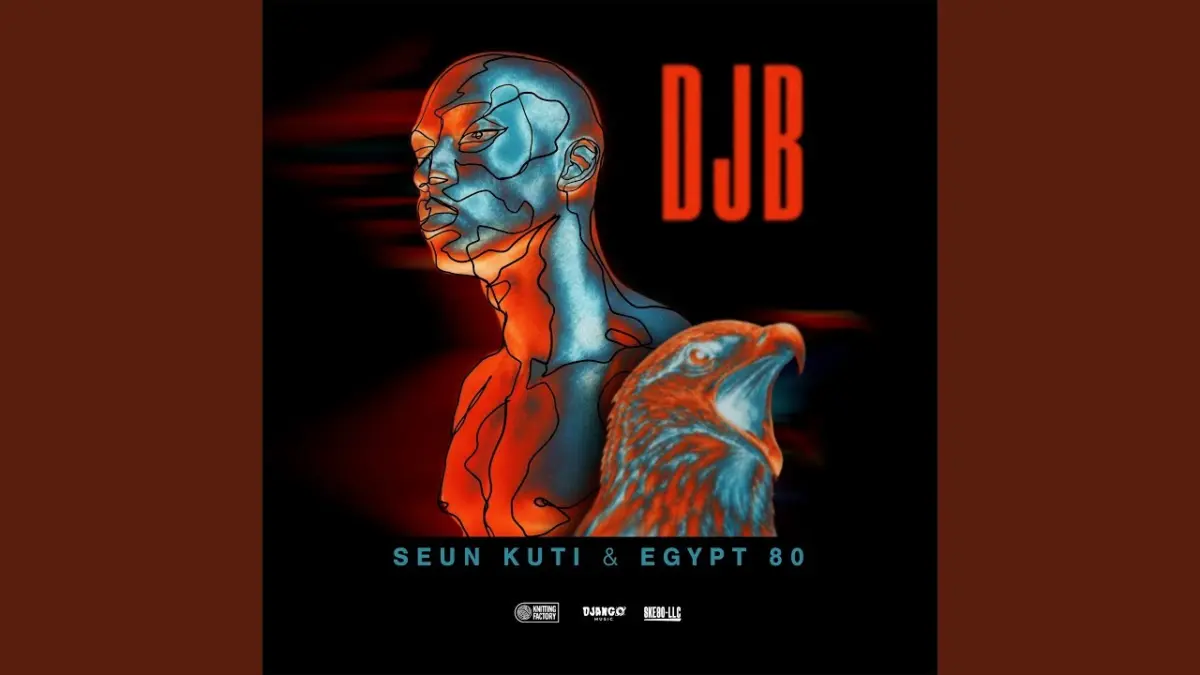
Now, Afrobeat standard-bearer Seun Kuti and his legendary collective Egypt 80 have seized this idiom, subverting it into a razor-sharp critique of contemporary socio-political decay. Their latest single, "DJB" (Devil Just Busy), serves as the heavy, brooding centerpiece of Seun’s eagerly anticipated upcoming album, Na Dem. Set for release on November 6 via Django Music, the record arrives at a pivotal historical juncture for the Kuti dynasty, landing just eight days before the late, great Fela Anikulapo-Kuti is posthumously inducted into the Rock & Roll Hall of Fame as the first-ever African solo artist.
Produced entirely by Femi Koleoso—the powerhouse drummer and leader of the Mercury Prize-winning ensemble Ezra Collective—Na Dem and its lead-off singles represent a masterclass in cross-generational musical synergy. "DJB" specifically harnesses a dense, hypnotically dark, mid-tempo Afrobeat groove. It merges the foundational polyrhythms built by a double-drummer and double-bass engine room with Seun Kuti’s ferocious, sociopolitically charged saxophone lines and searing vocal delivery.
Beyond its sonic density, "DJB" is an ideological continuation of a generational war. On the title track and primary single of Na Dem, Seun explicitly casts reverends, bishops, pastors, and imams among the "winch men"—malevolent spiritual manipulators—from whom he seeks societal salvation. This thematic crusade directly mirrors his father Fela’s monumental 1978 indictment of religious hypocrisy, "Shuffering and Shmiling." As Seun prepares to take Egypt 80 across a rigorous North American tour—stopping at iconic venues like the Regent Theater in Los Angeles and Webster Hall in New York before representing his father at the Rock & Roll Hall of Fame induction ceremony—"DJB" stands as a militant reminder that the rhythm of Afrobeat remains an uncompromising weapon against tyranny, whether secular or clerical.
Detailed Chronology: From Fela’s Pulpits to Seun’s Modern Crusade
To fully comprehend the seismic cultural weight of "DJB," one must trace the historical lineage of Afrobeat as an adversarial genre—one that has historically treated organized religion and state corruption as two sides of the same counterfeit coin.
1978: The Genesis of Anti-Clerical Afrobeat
In 1978, Fela Anikulapo-Kuti released "Shuffering and Shmiling," a sprawling, multi-movement critique of how foreign religions (specifically Christianity and Islam) were utilized by oppressive post-colonial governments to pacify the African populace. Fela’s composition painted a vivid picture of citizens enduring immense economic hardship while being conditioned by religious leaders to suffer silently on earth in exchange for pie-in-the-sky salvation in the afterlife. Fela targeted the hypocritical sanctity of the pulpits, arguing that spiritual institutions served as accomplices to the very political machines grinding the working class into dust.
1997: The Passing of the Torch
When Fela Kuti passed away in August 1997, the global music community mourned the loss of the Black President. Yet, the music refused to die. In a move that shocked the traditionalist establishment, a 14-year-old Seun Kuti—who had already been performing alongside his father and Egypt 80 as a vocalist and saxophonist—inherited the leadership of the formidable orchestra. Stepping into shoes that many deemed too large for any mortal, let alone a teenager, Seun embarked on a decades-long journey of artistic maturation. He chose not to mimic his father blindly, but rather to evolve Egypt 80’s sound while fiercely preserving its ideological DNA.
2024–2025: The Na Dem Era and the Collaboration with Femi Koleoso
As contemporary society grappled with post-pandemic disillusionment, economic instability, and rising authoritarianism across the globe, Seun Kuti entered the studio with a renewed sense of urgency. Enter Femi Koleoso. As the visionary behind Ezra Collective, Koleoso represents the vanguard of the vibrant modern UK jazz and Afro-fusion renaissance. Bringing a fresh sonic perspective while deeply revering the sacred geometries of classic Afrobeat, Koleoso assumed production duties for Seun’s upcoming project, Na Dem.
The creative marriage between Egypt 80’s seasoned veterans and Koleoso’s youthful, avant-garde production sensibilities culminated in tracks like "DJB." Scheduled for global distribution via Django Music on November 6, the album rollout represents a calculated crescendo, aligning precisely with historic milestones for the Kuti family. Just over a week after Na Dem drops, Seun will fly to Los Angeles to accept Fela’s historic induction into the Rock & Roll Hall of Fame—a long-overdue global validation of Afrobeat’s foundational impact on modern popular music.
Supporting Context & Metrics: The Anatomy of "DJB"
"DJB" is not merely a song; it is a meticulously engineered sonic architecture designed to disorient, provoke, and ultimately compel motion. A deep dive into the track’s composition reveals the sheer technical wizardry required to execute modern Afrobeat at the highest echelon.
The Rhythm Section: Doubled and Dangerous
Traditional Afrobeat relies heavily on a relentless, interlocking rhythmic grid. For "DJB," Koleoso and Kuti doubled down on this foundation by employing a rare, muscular configuration:
- Two Drummers: Mario Orsinet and Femi Koleoso himself lock into a polyrhythmic dialogue, laying down a dense, driving mid-tempo beat that avoids the frantic pace of fast-tempo Afrobeat, opting instead for a heavier, menacing groove that feels like a slow-moving tank.
- Two Bassists: Kunle Justice and Gbeke Ojutiku interlock their basslines, creating an impenetrable low-end frequency that anchors the entire mix. This dual-bass approach provides a sub-bass warmth and percussive slap that modernizes the classic 1970s Afrobeat sound without stripping away its organic grit.
The Horns and Frontline
Hovering above the rhythmic abyss are Seun Kuti’s soaring saxophone lines and commanding lead vocals, which are supported by a formidable horn section comprising two trumpets and four saxophones. This expanded horn arrangement creates towering harmonic walls that evoke the celebratory yet tragic atmosphere of a metropolis on the brink of collapse.
Tour Metrics and Global Footprint
The release of "DJB" serves as the opening salvo for an extensive North American touring schedule designed to bring the raw power of Na Dem directly to international audiences. The itinerary includes:
- October 7: Belly Up Tavern – Solana Beach, California
- October 9: Regent Theater – Los Angeles, California (A critical homecoming-style engagement preceding the Hall of Fame induction)
- Mid-October: FORM Arcosanti – Arizona
- October 14: Webster Hall – New York City, New York
- November 6: Global album release of Na Dem via Django Music
- November 14: Rock & Roll Hall of Fame Induction Ceremony – Los Angeles, California (Fela Kuti inducted as the first African solo artist)
Official Statements & Critical Perspectives
While direct press releases from management and collaborators provide the operational framework for the Na Dem rollout, cultural critics and musicologists have been quick to contextualize the cultural importance of "DJB."
Femi Koleoso, reflecting on his role as producer for the project, has frequently emphasized the spiritual and musical gravity of stepping into the Egypt 80 compound. Producing Seun Kuti was not viewed by Koleoso as an exercise in imposing modern trends onto a legacy act, but rather as an act of stewardship. By capturing the raw, unadulterated live energy of Egypt 80 and channeling it through a crisp, contemporary sonic lens, Koleoso ensured that "DJB" bridges the gap between the golden age of 1970s Lagos and the modern global dancefloor.
Cultural commentators have similarly lauded Seun Kuti’s lyrical fearlessness. By targeting religious leaders—bishops, pastors, reverends, and imams—as "winch men" (witches/saboteurs) on the title track of Na Dem and extending this critique to the socio-cultural resignation embedded in phrases like "the devil is busy" on "DJB," Seun demonstrates that he has inherited not only his father’s band, but his unyielding commitment to truth-to-power journalism through music.
As musicologist Dr. Arinze Okafor noted in a recent symposium on African protest music:
"When Seun Kuti takes the phrase ‘the devil is busy’ and names his track ‘DJB,’ he is performing an ideological inversion. He is telling the public that the real demons are not hiding in the netherworld; they are sitting comfortably in air-conditioned pulpits and executive mansions, using divine rhetoric to pick the pockets of the faithful. Musically, the mid-tempo groove of ‘DJB’ acts like a hypnotic trance, forcing the listener to confront these uncomfortable truths while moving their feet."
Future Outlook: A New Dawn for Afrobeat
The release of "DJB" and the subsequent arrival of Na Dem on November 6 mark an inflection point not just for Seun Kuti & Egypt 80, but for the global perception of African music as a whole.
For decades, African music was exoticized by Western markets as "world music"—a vague, catch-all term that sanitized its political bite and reduced it to rhythm-heavy background noise. Today, as contemporary African genres like Afrobeats dominate global streaming charts, there is a historical amnesia that threatens to erase the protest roots of the movement. Fela Kuti’s upcoming induction into the Rock & Roll Hall of Fame is a monumental corrective, cementing the reality that modern pop, hip-hop, jazz, and rock owe an undeniable debt to the creator of Afrobeat.
Yet, as Seun Kuti makes clear through "DJB," the struggle is far from over. Recognition by institutional bodies like the Rock & Roll Hall of Fame does not mean the system has been fixed; it simply means the music has grown too loud to ignore.
As Egypt 80 boards flights to Solana Beach, Los Angeles, Arizona, and New York, and as fans worldwide queue up to stream "DJB" on Bandcamp and digital platforms, the message is unmistakable. The devil—whether manifested as economic injustice, political corruption, or spiritual manipulation—may indeed be busy, but Seun Kuti and Egypt 80 are busier still, weaponizing the groove to wake the sleeping masses. Na Dem is coming, and the pulpits will never be safe again.