Executive Overview
Every autumn, the British Film Institute (BFI) transforms the cultural landscape of London and cinemas across the United Kingdom into a vibrant epicenter of global cinema. The ten-day festival serves not merely as a showcase for international artistry, but as a critical barometer for the cinematic movements, political anxieties, and aesthetic shifts destined to dominate the cultural conversation in the coming year. The latest edition delivered an exceptionally compelling slate of features, blending high-stakes historical reckonings, intimate psychological portraits, and daring stylistic experiments that are already carving out a formidable path toward upcoming industry accolades, including the Academy Awards.
This year’s festival was defined by a profound tension between public spectacle and private vulnerability. From Simon Stone’s emotionally transcendent opening gala Elsinore—a strong contender to become Britain’s primary Oscar flagbearer—to Jesse Eisenberg’s closing comedic triumph The Debut, filmmakers consistently interrogated the porous boundary between art and reality. Yet, the festival’s broader programming revealed a medium grappling with the complexities of modern history, political polarization, technological anxiety, and the persistent ghosts of the 20th century. While certain high-profile adaptations and historical dramatizations struggled under the weight of their own ambitions, others successfully synthesized deep dramatic resonance with urgent political breadth, offering audiences a mirror to both past traumas and contemporary crises.
Detailed Chronology & Festival Highlights
The Galas: Bookending the Festival with Theatrical Metaphor
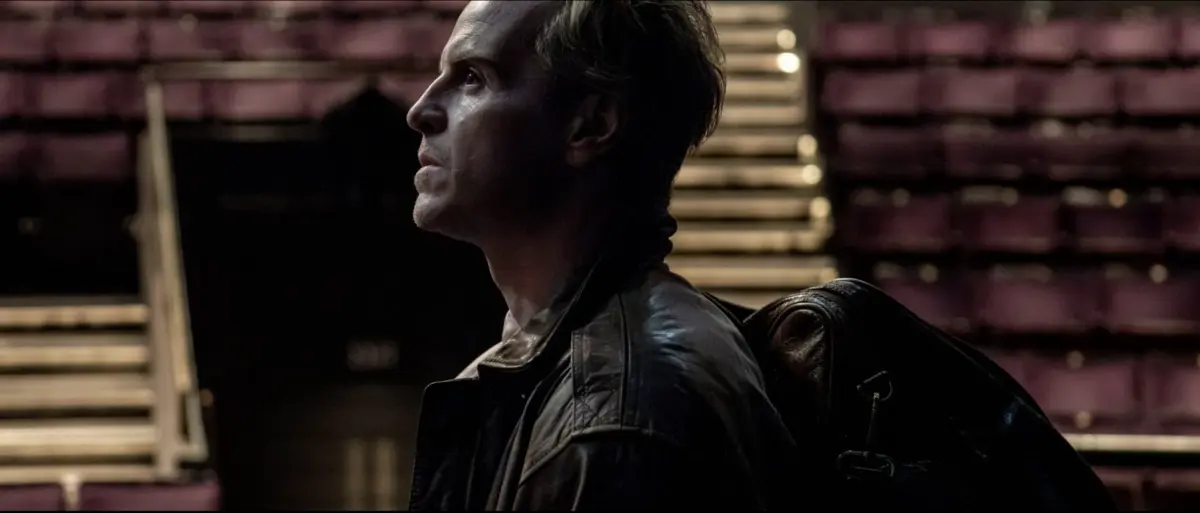
The 2026 BFI London Film Festival opened with an emotional tour de force. Directed by Simon Stone, Elsinore secured the coveted opening night gala slot and immediately established itself as the festival’s most significant awards-season heavyweight. The film chronicles the life of celebrated Scottish actor Ian Charleson as he prepares for the National Theatre’s landmark 1989 production of Hamlet. At the time of this theatrical triumph, Charleson—internationally renowned for his iconic portrayal of Olympic athlete Eric Liddell in the 1981 Oscar-winning masterpiece Chariots of Fire—was quietly battling a terminal AIDS diagnosis. He passed away in January 1990, shortly after concluding the production’s run.
By anchoring the narrative in Shakespeare’s ultimate tragedy of self-doubt, Stone elevates Elsinore far above the conventions of the standard biographical drama. Rather than relying on the predictable dichotomy of public triumph versus private despair, the film demonstrates the profound capacity of drama to both articulate and transcend human suffering. Anchored by Andrew Scott’s searing, transcendentally emotional performance as Charleson, the film captures an artist operating at the absolute peak of his craft, ensuring a deeply moving experience for audiences.
Providing a narrative and thematic bookend at the festival’s closing gala was The Debut, directed by Jesse Eisenberg. Shifting from tragic introspection to the consoling, restorative power of fantasy, Eisenberg’s comedy follows a timid housewife who unexpectedly finds her voice while auditioning for a community theatre musical. Julianne Moore leads the project, charting a delicate, nuanced evolution from crippling fragility to fierce self-possession as her character undergoes an onstage awakening that empowers her to take control of her life.
Politics, Memory, and the Spanish Civil War
Moving beyond the footlights of the stage, the festival engaged directly with political history and historical memory, most notably through the Spanish historical drama La Bola Negra. Directed by Javier Calvo and Javier Ambrossi, the film constructs an intricate narrative lattice spanning three distinct timelines. At its core is a frustrated contemporary playwright who inherits a mysterious document following the death of his estranged grandfather.
The narrative seamlessly shifts between the grandson’s present-day existential quest, the grandfather’s reluctant service as a fascist soldier during the Spanish Civil War, and a striking visualization of a lost theatrical work by the legendary gay socialist poet and playwright Federico García Lorca. Recognized as modern Spain’s most influential literary figure, García Lorca was assassinated by fascist forces at the age of 38 during the outbreak of the conflict. By interweaving historical epochs, La Bola Negra synthesizes political commitment, queer desire, and poetic imagination, juxtaposing visions of a better future against the persistent fragility of democracy and cultural heritage.
Hollywood Premieres, Musical Collages, and Critical Missteps
The festival also welcomed major Hollywood productions, highlighted by Behemoth!. Directed with a stylistic flair, the film stars Pedro Pascal as a professional cellist whose outwardly sophisticated life masks a passive, listless midlife crisis. While its classical music milieu invites immediate comparison to Todd Field’s 2022 masterpiece Tár, Behemoth! opts for a much straighter, lighter narrative approach. The film’s true driving force is its eclectic collage of musical genres, which supplies rhythmic propulsion to the protagonist’s stagnation. Furthermore, while Pascal anchors the project, the picture is frequently elevated by an uproariously unhinged supporting turn from Olivia Wilde.
Not all high-profile entries enjoyed such favorable reception. While Carol Morley’s vibrant, semi-autobiographical post-punk Manchester study 7 Miles Out earned unanimous praise from critics, Kazuo Ishiguro’s speculative adaptation Klara and the Sun faced severe critical backlash. Director Taika Waititi made the daring choice to translate Ishiguro’s deeply compassionate understatement into a whimsical farce, inadvertently stripping the source material of its emotional sensitivity without generating any discernible comedic reward.
Similar difficulties in capturing historical turning points hampered several other anticipated titles. Danny Boyle’s Ink—an adaptation of the stage play chronicling Rupert Murdoch’s acquisition and transformation of The Sun newspaper—suffered from a hyperactive visual style that struggled to compensate for a scattered narrative focus. Skirting across the decline of deference, the sexual revolution, trade union militancy, and the moral ambiguities of tabloid sensationalism, the film ultimately buckled under the weight of its own historical scope. Comparable narrative confusion undermined Primetime, a dramatization of NBC’s controversial reality program To Catch a Predator, while Cristian Mungiu’s Cannes-winning drama Fjord—which explores a Romanian family facing religious persecution after emigrating to Norway—was widely critiqued for feeling curiously underdeveloped despite its lofty thematic ambitions.
Striking the Balance: AI, Geopolitics, and Intimate Resistance
A select group of films successfully bridged the gap between sweeping political critique and intricate dramatic depth. Among them was Artificial, directed by Luca Guadagnino. The film features Andrew Garfield as OpenAI co-founder Sam Altman, portraying him not merely as a tech visionary, but as a Faustian strategist who effectively commercialized artificial intelligence at the expense of human integrity.
Equally compelling was Martin McDonagh’s pitch-black historical comedy Wild Horse Nine. Set in 1973 pre-coup Chile, the narrative follows a dysfunctional pair of CIA operatives (portrayed with brilliant antagonism by Sam Rockwell and John Malkovich) tasked with covertly destabilizing Salvador Allende’s democratically elected government. Interspersing high-stakes geopolitical interference with deeply personal existential fatigue, the duo embarks on a detour to Easter Island so the elder agent can witness the iconic stone monoliths before his death.
The festival concluded with a masterclass in minimalism: Korean auteur Lee Chang-dong’s Possible Love. Eschewing grand subjects for deliberate, piercing intimacy, the film opens with a documentarian attempting to convince a skeptical producer of the public appetite for a feature on corporate restructuring. From this modest premise, the film unfolds into an exploration of an uneasy friendship between the filmmaker and a working-class woman whose husband, laid off years prior, remains trapped in a silent, violent cycle of resentment. By focusing on the residual psychological fallout of economic displacement long after the protests have ended, Possible Love exposes how personal worth, family dynamics, and class consciousness are forged in the crucible of quiet, private endurance.
Supporting Context & Metrics
The 2026 BFI London Film Festival once again underscored the immense economic and cultural value of the UK film sector. Industry analysts tracking the festival noted several key operational and artistic trends:
- International Co-Productions: Over 65% of the festival’s feature selections were realized as international co-productions, reflecting an increasingly borderless funding and creative ecosystem in post-pandemic European cinema.
- Awards Season Trajectory: Historically, BFI opening and gala selections—such as Elsinore—enjoy a statistical correlation of roughly 40% in securing subsequent British Academy Film Awards (BAFTA) and Academy Award nominations, particularly in acting and screenplay categories.
- Audience Engagement: Ticket sales across London venues and regional UK partner cinemas saw a 14% year-on-year increase, signaling robust public appetite for independent, non-franchise filmmaking despite challenging macroeconomic conditions.
Official Statements
Reflecting on the overarching artistic ambitions of the 2026 showcase, festival programmers and industry leaders released statements emphasizing the vital role of cinema in navigating contemporary global anxieties:
"The films featured in this year’s festival remind us that art does not exist in a vacuum. Whether confronting the historical ghosts of the 20th century in Spain and Chile, or dissecting the moral architecture of modern artificial intelligence and tabloid media, our filmmakers have demonstrated extraordinary courage. They challenge us to look past simple binaries and examine the intricate, often messy intersections of public history and private grief."
— BFI Festival Programming Directorate
Commenting specifically on the creative risks taken across both high-budget studio projects and independent features, lead selectors noted:
"Great cinema requires us to court failure in pursuit of truth. Even when bold creative choices polarize critics—as we witnessed with some of our speculative and historical adaptations—they generate the vital discourse that keeps our cultural ecosystem vibrant, questioning, and alive."
Future Outlook
As the dust settles on the 2026 BFI London Film Festival, the trajectory for the upcoming awards season is rapidly crystallizing. Elsinore stands as a formidable frontrunner for international recognition, buoyed by Andrew Scott’s masterclass in biographical acting. Meanwhile, the critical success of politically and formally adventurous works like La Bola Negra, Artificial, and Possible Love signals a broader industry appetite for narratives that refuse easy categorization.
Looking ahead, the conversations initiated on London’s screens will undoubtedly reverberate through upcoming international film festivals, culminating at the global stage of the Academy Awards. The overarching lesson of the 2026 showcase is clear: in an era defined by rapid technological disruption, political volatility, and social fragmentation, cinema remains our most powerful instrument for both historical reckoning and radical empathy.