In the modern landscape of large-scale electronic music festivals, architectural and sonic scale are typically measured by sheer decibel output, colossal LED walls, and pyrotechnic infrastructure capable of blinding the cosmos. Yet, amidst the sensory overload of Head Trip 2026—a monumental Southern California festival produced by Goldenvoice—the most revolutionary development was not located on the main stage where heavyweights like Skrillex, Calvin Harris, and Swedish House Mafia drew massive throngs. Instead, it resided within a specialized, acoustically pristine sanctuary: the North American debut of the Sunflower Sound System.
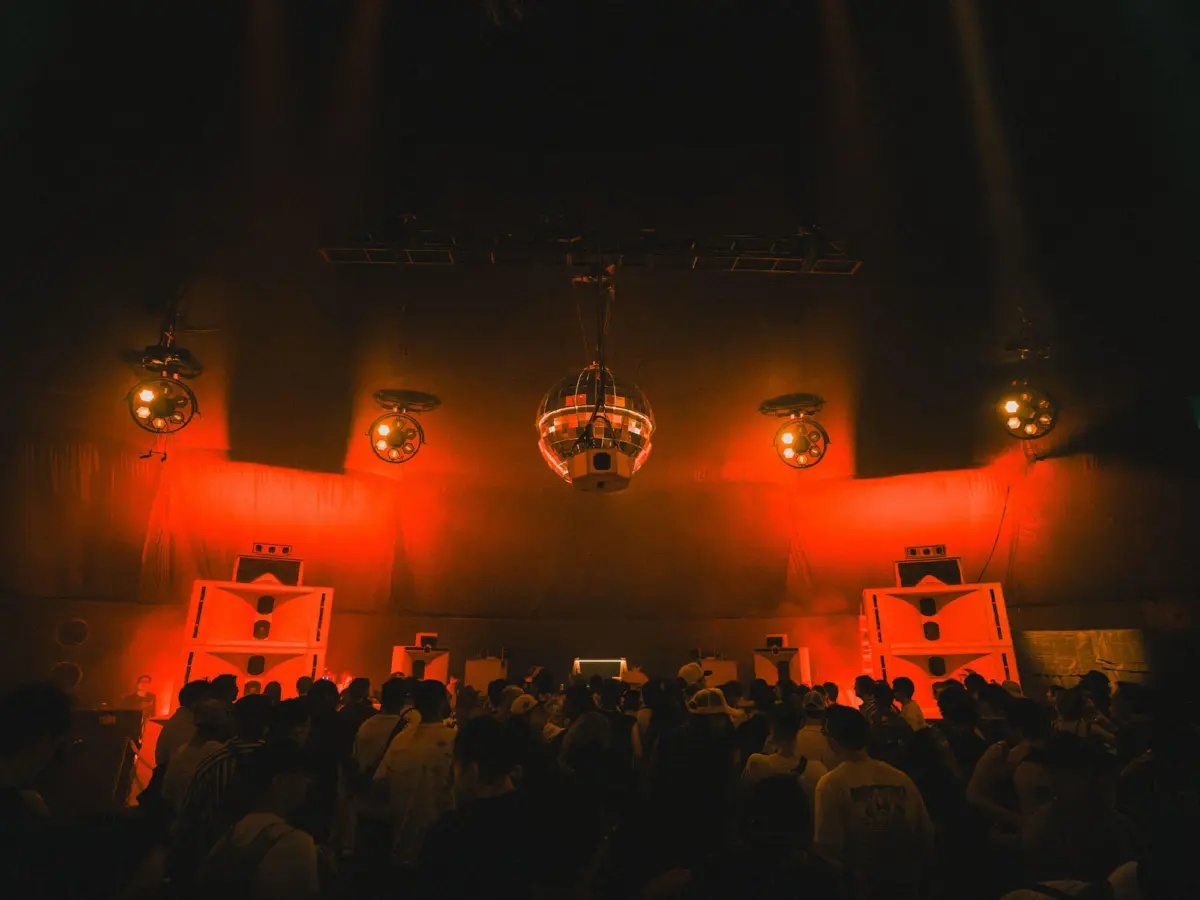
Conceived, engineered, and fine-tuned by producer, composer, and obsessive audiophile Sam Shepherd (professionally known as Floating Points), the Sunflower Sound System represents the culmination of a decade-long global odyssey. Shepherd scoured the earth for specific, rare components to construct his ideal loudspeaker architecture. Comprising eight imposing 14-foot-tall speaker stacks, the system was marketed not merely as an alternative stage, but as the primary headliner.
Paradoxically, while the main stage captured the casual majority with its star-studded EDM lineup, the Sunflower tent operated as an elite auditory haven. It offered a masterclass in high-fidelity (hi-fi) reinforcement, defying the conventional festival blueprint by prioritizing tactile, physically felt sound over raw, concussive volume. This comprehensive report investigates the technological marvel of the Sunflower Sound System, chronicles its two-day residency at Head Trip, contextualizes its place within the burgeoning movement of audiophile festival curation, and examines the profound implications of prioritizing acoustic integrity in contemporary dance music culture.
Detailed Chronology: Two Days Inside the Sunflower Sanctuary
The operational ethos of the Sunflower Sound System was steeped in intentional mystery, characterized by the deliberate absence of published set times. This design choice naturally culled the curious, leaving behind an intimate community of devoted purists, vinyl aficionados, and electronic music historians who treated the space not as a side-quest, but as a sonic pilgrimage.
Day One: Sonic Exploration, Dub Reconstruction, and Vinyl Archaeology
The inaugural day of the installation established an experimental, exploratory tone. Rather than catering to standardized four-on-the-floor festival formulas, Floating Points curated an ensemble of boundary-pushing selectors capable of stress-testing the frequency response and transient clarity of his 14-foot monoliths.
The day’s programming featured pioneering dub producer Mad Professor, Detroit techno visionary Theo Parrish, and a collaborative showcase titled "Floating Points and Friends." Mad Professor brought his bespoke live setup—a comprehensive mixing desk and vintage analogue tape machines—to the venue, systematically dismantling and reconstructing foundational pop and reggae canon. Utilizing the Sunflower system’s peerless low-end articulation and pristine mid-range separation, he performed live dub interpretations of ubiquitous touchstones such as Michael Jackson’s Billie Jean and Bob Marley’s I Shot the Sheriff.
For an audience conditioned to hearing these recordings through compressed streaming formats or standard festival PAs, the experience was paradigm-shifting. Familiar vocal lines and bass patterns were manipulated in real time, delivering a tactile, undulating bass response that felt remarkably organic.
Following this masterclass in live dub mixing, Theo Parrish assumed control of the decks for a multi-hour vinyl excavation. Eschewing digital convenience, Parrish traversed a sprawling sonic landscape that pivoted seamlessly from deep-pocket funk classics to abstract, free-form jazz noise. The Sunflower system handled the unpredictable dynamic shifts of Parrish’s analog source material with absolute transparency, rendering every surface scratch, room reflection, and transient drum hit with startling immediacy.
Day Two: The Underground Rave and the Art of Tempo Manipulation
If Day One was an exercise in left-field experimentation, Day Two leaned into the lineage of underground club culture, populated by elite selectors including Zach Cowie, Ben UFO, Avalon Emerson, and the pairing of Eris Drew & Octo Octa, culminating in a legendary back-to-back finale featuring Four Tet and Floating Points.
Augmented by atmospheric lighting and subtle laser arrays that cut through the haze, the space transformed into an immersive subterranean sanctuary. When Ben UFO closed his afternoon set with a heavy, classic dubstep track, the Sunflower cabinets reproduced the sub-bass frequencies with surgical precision—delivering physical weight without sacrificing harmonic clarity. Eris Drew and Octo Octa followed with a breakbeat selection characterized by a snare drum punch so crisp and authoritative that it left veterans of the club circuit audibly astounded.
Crucially, the operational integration of the system extended far beyond the loudspeakers themselves. Every DJ performing within the Sunflower enclosure was provided with a comprehensive multi-page technical document detailing how to optimize their output for the architecture of the room. Furthermore, Shepherd curated the DJ booth’s hardware, centering the setup around his custom-engineered Isonoe rotary mixer—an instrument prized by purists for its superior summing characteristics and smooth frequency transitions.
This bespoke signal chain fundamentally altered the performance styles of the artists on stage. Avalon Emerson, returning to the Sunflower after performing on it during its appearance at Glastonbury in 2025, deliberately utilized the system’s dynamic headroom to challenge modern festival tropes. Taking over after Eris Drew and Octo Octa, Emerson dropped the room’s tempo from an aggressive 130 BPM down to a hypnotic 90 BPM. Drawing upon deep cuts from Norwegian electronic icon Todd Terje alongside unreleased material from alternative pop artist Oklou, Emerson crafted a subversive, slow-burn journey.
"I’m kind of a long-standing hater of the BPM inflation of everything," Emerson reflected backstage. "I wanted to take the opportunity to play slower… One of the cool things about a sound system as a headliner is it can be one rare space for different kinds of music."
Supporting Context & Metrics: The Hi-Fi Festival Evolution
To fully appreciate the significance of the Sunflower Sound System’s North American arrival, one must examine the broader infrastructural ecosystem engineered by festival promoter Goldenvoice. Long before Head Trip materialized, Goldenvoice demonstrated an institutional commitment to elevated audio environments. The promoter has successfully operated the Yuma tent—an immersive, enclosed nightclub environment complete with specialized air conditioning and acoustic treatment—at the Coachella Valley Music and Arts Festival since 2013.
More notably, Goldenvoice has twice imported Despacio, the legendary, custom-built hi-fi sound system designed by James Murphy (LCD Soundsystem) alongside David and Stephen Dewaele (Soulwax / 2manydjs). Powered by bespoke McIntosh amplification and towering vertically oriented McIntosh loudspeaker columns, Despacio established the commercial viability of treating acoustic environments as headlining attractions. This philosophy resurfaced weeks prior to Head Trip at Goldenvoice’s Portola festival in San Francisco, where Despacio drew massive, winding queues of devoted audiophiles.
System Parameter
Sunflower Sound System
Despacio Sound System
Standard Festival Line Array (e.g., L-Acoustics)
Primary Designer
Sam Shepherd (Floating Points)
James Murphy & Soulwax (Dewaele brothers)
Major Audio Manufacturers (L-Acoustics, d&b audiotechnik)
Maximum SPL output, long-throw coverage, broad festival dispersion
Physical Scale
Eight 14-foot-tall custom wooden stacks
Seven towering McIntosh-powered speaker columns
Massive flown line arrays flanking main stages
Operational Ethos
Curated genre-fluid lineups, hidden set times, intimate curation
Vinyl-only, 360-degree dancefloor, central disco ball spectacle
High-capacity crowd containment, maximum commercial reach
Despite the gold standard established by Despacio, the Sunflower deployment at Head Trip introduced unique operational efficiencies. Attendees frequently noted that unlike the notorious hours-long queues required to enter Despacio at Portola, access to the Sunflower tent was remarkably fluid. Aside from two brief congestion windows during the early hours of each day, patrons could walk straight into the venue. This accessibility created a utopian paradox: while the general festival populace gravitated toward the high-output L-Acoustics main stage rig, the Sunflower sanctuary remained blissfully uncrowded, fostering an environment free of pushing, shoving, and aggressive crowd surges.
As attendee Jess Xanthe noted after comparing the installation to Europe’s celebrated left-field electronic festival Dekmantel, the combination of Goldenvoice’s spatial logistics and Shepherd’s acoustic engineering resulted in a temporary architecture that surpassed traditional European standards of comfort and fidelity.
Official Statements and Industry Perspectives
The success of the Sunflower Sound System at Head Trip underscored a growing industry demand for bespoke, artist-led engineering solutions that bypass mass-market PA deficiencies.
Avalon Emerson emphasized the profound psychological and physiological impact of acoustic prioritization, noting that sound design is the foundational layer of any live music experience:
"Sound is number one. Either you consciously or unconsciously appreciate it. It affects everybody for sure… I respect the desire to build something like this and share it. It is such a different dance music experience, and that variety of experience is sorely needed."
This sentiment was echoed by dedicated attendees who crossed international borders and traversed festival circuits specifically to bear witness to Shepherd’s creation. Canadian DJ Adam Doubleyou and fellow electronic music enthusiast Kellie Kocher—both sporting merchandise from the Despacio community—drew direct parallels between the two systems after meeting weeks earlier at Portola.
"It’s interesting to compare notes to what we consider the gold standard of partying, Despacio, with this iteration of a similar concept," Doubleyou observed from the Sunflower bar area. "I’m very glad this is happening, and I hope Goldenvoice brings it back."
Kocher praised the spatial layout, which integrated vital amenities—such as bars and restrooms—directly within the acoustic perimeter, allowing patrons to maintain immersion in the soundfield without forfeiting basic comforts. "I like hearing things that are unexpected," Kocher remarked. "That’s why I like Despacio, and I like this. Surprise me. Give me something new."
Future Outlook: The Re-Engineering of Live Electronic Music
The successful North American debut of the Sunflower Sound System signals a potential inflection point for the festival industry. As commercial electronic music events increasingly gravitate toward homogenization—relying on standardized, rider-friendly sound systems designed strictly for brute-force volume—the counter-movement led by artists like Sam Shepherd, James Murphy, and Soulwax proves that sonic intimacy is a commercially and culturally viable commodity.
The implications of Head Trip 2026 extend far beyond a single weekend in Southern California. By demonstrating that an audiophile installation can function as a viable, highly praised festival focal point—even while competing directly with tier-one mainstream headliners—Sunflower has paved the way for future sonic innovations. Promoters and engineers are increasingly recognizing that modern festival audiences, particularly mature electronic music consumers, are starved for tactile, distortion-free environments where listening is elevated from a passive spectator activity to an active, physical communion.
Whether Goldenvoice and other global promoters choose to permanently integrate bespoke hi-fi systems into their touring circuits remains to be seen. However, the blueprint has been indelibly drawn. As long as artists maintain the uncompromising vision required to build fourteen-foot custom acoustic towers from the ground up, the future of the rave will find its salvation not in how loud it can roar, but in how purely it can speak.