Executive Overview
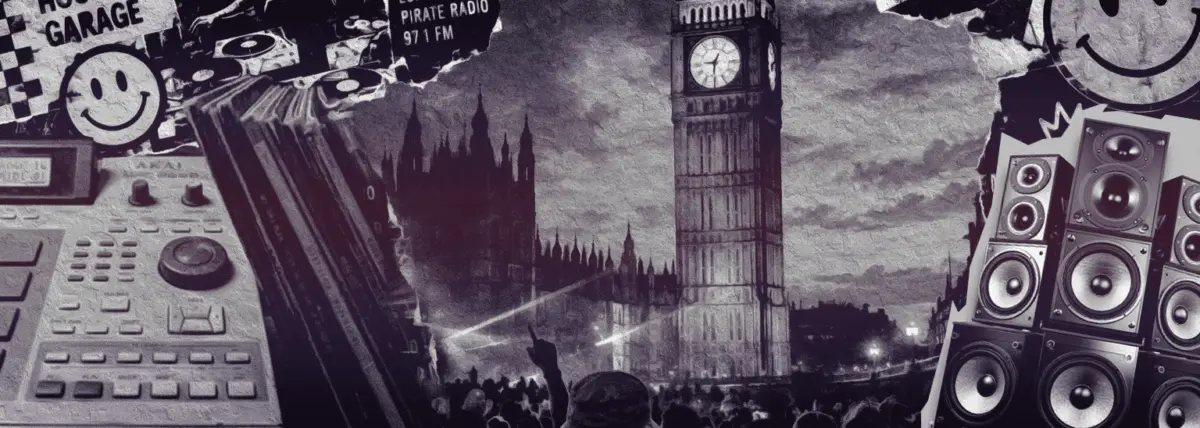
UK Garage (UKG) is experiencing a monumental cultural and commercial resurgence, crossing over from underground pirate radio broadcasts and intimate home studios to headline slots at global mega-festivals like Coachella, championed by modern standard-bearers like Sammy Virji. Yet, UKG has never been a monolithic genre. It functions more as a broad, eclectic umbrella spanning US garage imports like Todd Edwards’ intricate vocal-chopping masterpieces, homegrown 4/4 bassline anthems like "Ripgroove," soulful 2-step crossovers like "Movin’ Too Fast," and even wobbly, Teutonic club bangers like Timo Maas’ iconic remix of "Dooms Night."
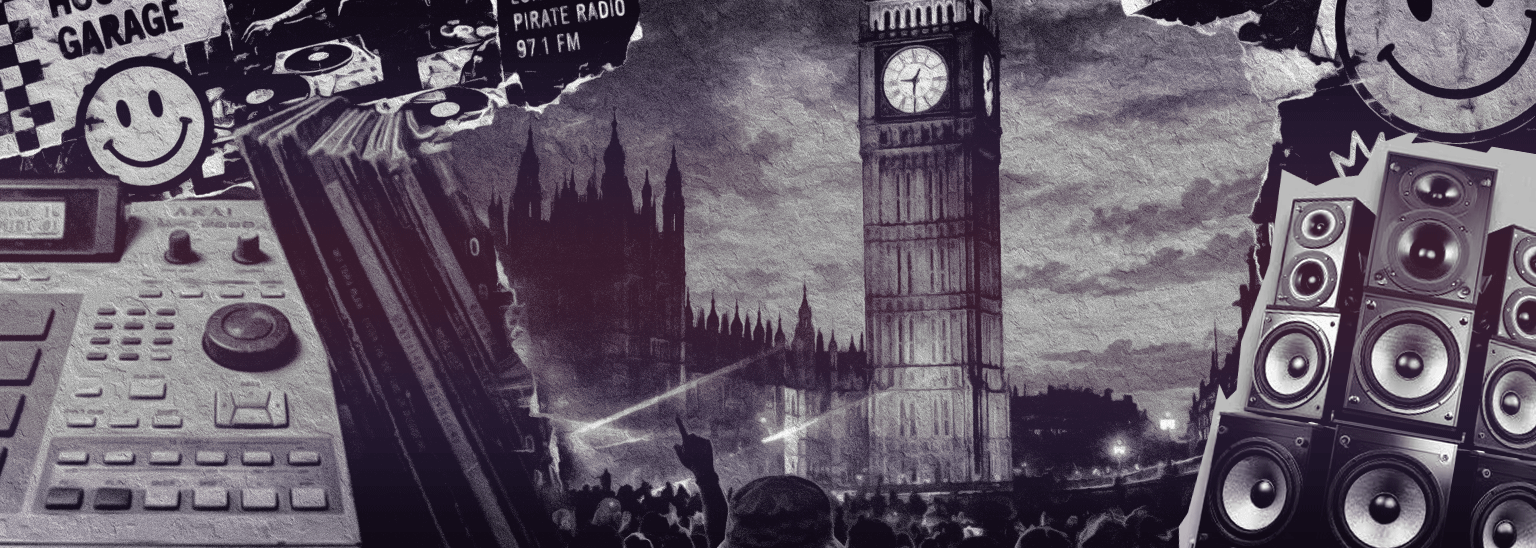
Among this diverse sonic ecosystem, 2-step remains arguably the most undeniably homegrown and structurally distinct UKG style. Emerging from the late-1990s multicultural melting pot of London’s club scene, 2-step proved—much like jungle, drum and bass, and dubstep—that British electronic music thrives when it draws on its own vibrant domestic heritage rather than mimicking American templates.

This guide provides an exhaustive, step-by-step walkthrough for producers looking to construct tight, timeless, and professionally polished 2-step drum patterns. Taking inspiration from contemporary rollers like Rose Holland’s self-produced track Solid On The Ground, we will dissect every percussive component—from the body of the kick and the syncopation of the rimshots to high-end hat arrangements and dynamic bar edits—providing actionable production techniques to elevate your beat-making workflow.

Detailed Chronology: The Evolution of UKG and the Birth of 2-Step
To truly understand how to program an authentic 2-step rhythm, producers must first appreciate the historical lineage that shaped the genre.

The Roots: From New York House to the London Underground
In the early-to-mid 1990s, British club culture was heavily infatuated with American house music, particularly the deep, soulful cuts emanating from New York and New Jersey. However, UK DJs began manipulating these imported vinyl records. By pitching house tracks up by a few percent and playing them over breakbeat-heavy sound systems, they discovered a brand-new energy. Producers soon began creating their own original tracks at higher tempos (typically around 130 to 135 BPM), blending US vocal sensibilities with rugged, street-level breakbeats.

The 1999 Breakthrough and the 2-Step Revolution
By 1999, the sound had splintered and refined. The rigid four-on-the-floor kick pattern of traditional house music began to dissolve. In its place came a stripped-back, syncopated rhythm characterized by a missing kick on the second beat of a standard four-bar phrase—hence the name "2-step."

This rhythmic shift gave tracks an elastic, rolling bounce that allowed heavy, rolling sub-basslines to breathe. Early releases—such as the author’s own 1999 vinyl EP featuring Baby and Can’t Stop—captured an era where pirate radio stations like Rinse FM, Deja Vu, and Kiss 100 served as the ultimate testing grounds for dubplates.
Today, this rich history informs modern production workflows. By combining classic vintage hardware flavor with modern digital audio workstation (DAW) precision, producers can harness the same timeless swing that dominated the turn-of-the-century UK underground.
Supporting Context & Metrics: Step-by-Step Production Walkthrough
Before diving into the sequencing, a golden rule of modern music production must be observed: preventing listening fatigue. When spending hours shaping transient frequencies and micro-timing swing, ears quickly lose objectivity. Set physical break timers. If frequencies begin to blur together, step away, sleep on it, and return with fresh ears days later to let the mix breathe.
For this walkthrough, we will use Ableton Live to construct a robust, two-bar looping 2-step drum pattern.
Step 1: The Kick – Crafting the Low-End Foundation
Unlike four-on-the-floor techno or house, UKG kicks require short release tails and strictly avoid deep, booming sub-frequencies. A massive sub-bass kick will instantly clash with the rolling sub-basslines characteristic of the genre. Instead, UKG kicks need to punch through the mid and lower-midrange frequencies, leaving ample spectral real estate for the bassline and allowing the syncopated rhythm to breathe.
- The Primary Kick: Load Ableton Live’s
Kick 70s 1sample into your drum rack. The foundational pattern features two kicks per bar—landing squarely on beat 1 and beat 1.3.3. - The Skip Accent: On every fourth bar, introduce an additional kick on beat 4.4.3. Give this hit a slightly higher MIDI velocity to emphasize the forward momentum and "skip" in the rhythm.
- EQ and Filtering: Apply a high-pass filter, cutting out frequencies below 100Hz to 140Hz to completely trim away unwanted sub-bass bloat.
- The Bounce Layer: To introduce classic synthetic 2-step flavor, layer in a secondary sample, such as Live’s
Club Kick. Rather than locking this to a strict grid, program these kick skips by ear—slightly off-grid—to capture an organic, humanized groove. Set the volume of theClub Kickroughly 10dB lower than your primary kick so that theKick 70s 1provides the physical weight while theClub Kickadds bouncy texture.
Step 2: The Rim – Driving the Syncopation
If the kick establishes the anchor, the rimshot provides the propulsive heartbeat of 2-step. The rim sound does not necessarily need to be an acoustic rimshot; any dry, knocking percussive texture will suffice, provided it remains short, dry, and free of harsh, blinding high frequencies.
- The Core Placement: Rim placement is remarkably consistent across almost all classic 2-step beats, landing firmly on every second beat (beats 2 and 4).
- Layering Tonal Rims: Because rimshots carry significant tonal qualities, layer two distinct samples together—such as
Rim 3k SharpandRim 90s MPC. To introduce subtle variation across your two-bar loop, delete every fourth instance of theRim 90s MPC. - Skippy Rhythms: 2-step is famous for rapid, skippy rim patterns that propel the track forward. Program a secondary pattern using the
Rim DMX Fatso 2sample, manually quantized and tuned down by three semitones. - Call-and-Response: Add a third pattern using the
Rim LDre 2sample, also pitched down three semitones. Alternate these two rim sounds to create an engaging question-and-answer dynamic across your two-bar loop.- Pro-Tip: Duplicate your skippy rim samples to new MIDI lanes, pitch them up or down by a single semitone, and selectively move notes to these new lanes to create a melodic percussive texture.
Step 3: The Hats and Rattles – Air, Shakers, and Top-End Texture
The high-end sheen of a 2-step beat relies on a careful blend of closed hats, open hats, tambourines, shakers, and auxiliary percussion. While 90s producers often sampled these textures directly from dusty vinyl records, contemporary producers have access to extensive internal libraries.
- Open Hat Rhythms: While some 2-step tracks utilize straight or swung 16th-note closed hats, others rely entirely on off-beat patterns. Crucially, sample lengths must remain tight and punchy—even open hats should be choked to prevent them from washing out the mix. Start with two short open hat samples (
Hihat Open IronmanandHigh Open Machine Hard) playing on the off-beats. Add one longer note and one short skip note to theHigh Open Machine Hardlane to reinforce the two-bar groove. - Tambourine Shakes: Introduce a tambourine sample (such as
Tambourine Sampled at 86 bpm, pitched up by 8.44 semitones to match your session tempo) to execute a call-and-response pattern during the second half of each bar, letting it ring out longer every alternating bar. - Auxiliary Percussion and Reversed Elements: Sprinkle in secondary shakers, woodblocks, and reversed hats to fill rhythmic gaps. However, avoid overfilling the pattern or repeating identical sounds too frequently.
- Pro-Tip: Shakers and hats must avoid sharp, intrusive attacks that clash with the transient-heavy kicks and rims. Use short, reversed shaker or open hat samples. Because the loudest peak of a reversed sample occurs near the end of the file rather than at the trigger point, shift these samples forward on your DAW grid so their impact lands precisely on the beat.
Step 4: The Edits – Creating Movement and Arrangement Transitions
No dance music genre can sustain listener engagement for minutes on end with a static, repeating loop. Dynamic edits are essential to break up monotony and accentuate structural transitions throughout an arrangement.

- Drum Fills and Kick Rolls: Standard 2-step edits involve stripping away kicks, rims, or hats during the final beats of a four- or eight-bar phrase. Create tension by programming accelerating rolls with your
Club Kicksample, increasing in frequency over the course of a single bar. Leave a moment of absolute silence right at the drop of the next eight-bar section to maximize impact. - Crash Cymbals: Utilize short, brightly tuned 909 crash cymbals at the initiation of every eight-bar block. Add minor, skippy micro-crashes at the end of the phrase to further anchor your rhythmic edits.
- Pro-Tip: Re-introducing the primary rimshot on the very last beat of bar eight acts as a powerful psychological signpost, building immense anticipation for the drop that follows.
Future Outlook: The Enduring Legacy of 2-Step
As electronic music continues to cycle through micro-genres and hyper-fast internet subcultures, the foundational mechanics of 2-step UK Garage remain remarkably resilient. Far from being a mere nostalgic throwback to the era of pirate radio and millennium-bug anxiety, 2-step’s emphasis on micro-timing, spatial economy, and syncopated swing offers a masterclass in modern rhythm production.
Whether integrated into contemporary bass music, left-field techno, or pop-infused dance crossover hits, the principles of the rolling kick, the skippy rim, and the breathless top-end continue to inspire new generations of bedroom producers and festival headliners alike. By mastering these foundational production steps, creators ensure that the heartbeat of the UK underground will continue to echo across global sound systems for decades to come.