Executive Overview
In a seismic shift for British television and LGBTQ+ representation, the BBC has officially confirmed that RuPaul’s Drag Race UK will leave the public broadcaster after eight successful series. The reality competition, which revolutionized mainstream British entertainment and propelled queer artistry into the cultural zeitgeist, will find its new home on Wow Presents Plus, the dedicated streaming platform owned by the show’s production company, World of Wonder.
The departure is not merely a scheduling shuffle; it is a casualty of severe financial restructuring within the BBC. Facing the daunting task of carving £500 million in savings out of its operating budget, the corporation has had to make what leadership describes as "very difficult choices." The cancellation and migration of flagship programs signal a sobering reality for publicly funded broadcasting in the digital age—where niche, highly acclaimed, and culturally vital programming is increasingly vulnerable to fiscal tightening.
While the ongoing series of Drag Race UK will continue to air on BBC Three and BBC iPlayer through its current broadcast run, future iterations—including the highly anticipated Drag Race UK All Stars, slated to premiere in autumn 2027, and the international crossover vs The World editions—will bypass traditional terrestrial and public-service broadcasting entirely. They will exist exclusively behind a paywalled, subscription-based streaming service.
This decision follows the recent axing of groundbreaking queer dating formats such as I Kissed a Boy and I Kissed a Girl, casting a long shadow over the BBC’s historic commitment to minority representation. As the curtain falls on the BBC chapter of RuPaul’s Drag Race UK, media analysts, queer advocates, and industry insiders are left examining the broader implications for public service broadcasting, the commercialization of niche culture, and the shifting economics of modern television.
Detailed Chronology: From Underground Phenomenon to Mainstream BBC Staple
The 2019 Genesis: Redefining British Drag
When RuPaul’s Drag Race UK burst onto BBC Three in October 2019, the landscape of British television looked remarkably different. While the American parent show had spent a decade building a cult following before exploding into global mainstream success, British drag had historically been relegated to working men’s clubs, late-night cabaret venues, and alternative fringe spaces.
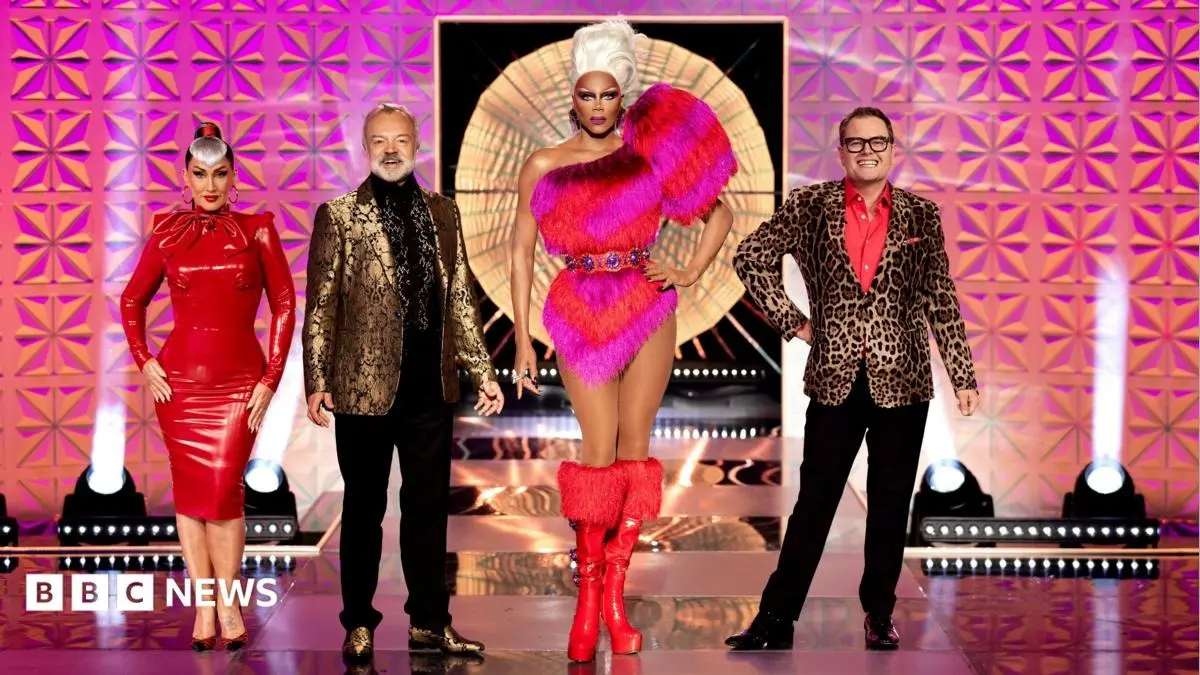
World of Wonder, helmed by co-founders Randy Barbato and Fenton Bailey, partnered with the BBC to adapt the format for a British audience. Led by the inimitable RuPaul Charles alongside longtime collaborator Michelle Visage, and bolstered by British comedy royalty Graham Norton and Alan Carr on the judging panel, the show instantly struck a chord.
From its very first episode, Drag Race UK embraced the eccentricities, sharp wit, and regional diversity of British drag culture. It traded the high-gloss, theatrical sheen of its American counterpart for a distinctly gritty, self-deprecating, and fiercely authentic aesthetic.
Cultural Penetration and Household Stardom
Over eight landmark series, the show accomplished what few reality formats manage: it fundamentally shifted cultural awareness and mainstream vocabulary. Drag queens were no longer treated as the punchline of late-night television; they were celebrated as multi-talented designers, comedians, actors, and cultural commentators.
The series transformed its contestants into bona fide household names. Performers such as The Vivienne, Lawrence Chaney, Danny Beard, Tia Kofi, and La Voix transcended the traditional boundaries of reality television. They went on to headline West End theatrical productions, host major television and radio programs, win reality crossover competitions like Dancing on Ice, and become fixtures of British popular culture.
Moreover, the show became an anchor for BBC Three during its transitional phases. Following the channel’s brief conversion to an online-only format and its subsequent triumphant return to linear television, Drag Race UK served as the crown jewel of its youth-oriented programming block. At its peak, the series commanded an impressive average of approximately 1.5 million viewers per episode—a monumental feat for a youth-targeted, digital-first BBC brand.
The Fiscal Turning Point: The Road to the Departure
Despite its critical acclaim and robust viewing figures, the economic realities of modern broadcasting caught up with the franchise. Throughout 2024, 2025, and 2026, the BBC’s leadership, including Director-General Tim Davie and senior executives, repeatedly warned staff about the compounding pressures of a frozen television licence fee, high inflation, and a rapidly fragmenting media audience.
Under the corporation’s mandate to uncover £500 million in cumulative savings, non-news and entertainment portfolios faced intense scrutiny. While major drama and big-ticket sporting events retained their funding cushions, edgier, youth-focused entertainment formats were forced onto the chopping block. Negotiations between the BBC and World of Wonder regarding the future licensing costs of Drag Race UK ultimately reached an impasse. Unable to justify the rising production and licensing expenses against tightening budgets, the BBC elected to relinquish its broadcast rights, paving the way for the show’s migration to Wow Presents Plus.
Supporting Context & Metrics: The Economics of Public Broadcasting vs. Niche Streaming
To understand why RuPaul’s Drag Race UK is leaving public television, one must examine the macro-level economic pressures currently squeezing the BBC, alongside the shifting paradigms of global television distribution.
The BBC’s £500 Million Cost-Cutting Mandate
The British Broadcasting Corporation operates under a unique funding model anchored by the television licence fee, paid by every UK household that watches or records live television or uses BBC iPlayer. In recent years, this funding model has faced unprecedented strain due to:
- Political intervention: Freezes to the licence fee implemented by successive governments, which have failed to keep pace with soaring inflationary pressures.
- Changing consumer habits: Younger demographics abandoning traditional linear television in favor of subscription video-on-demand (SVOD) platforms like Netflix, Disney+, and Amazon Prime Video.
- Mandated efficiency targets: The BBC’s internal directive to streamline operations, reduce headcount, and shed costly intellectual properties to reallocate funds toward core news, investigative journalism, and universally appealing public service content.
Director-General Matt Brittin and other senior executives have been forthright about the painful nature of these adjustments. In internal memos and public addresses, leadership has stressed that the scale of the required savings leaves no room for sentimentality. When faced with choosing between funding core public journalism or licensing expensive, high-end entertainment franchises owned by external American production companies, the fiscal calculus invariably favors the former.
The Rise of Vertical Integration in Streaming
For World of Wonder, the move away from the BBC and toward its proprietary platform, Wow Presents Plus, reflects a broader industry trend: vertical integration. Production companies are increasingly realizing that owning the distribution pipeline is far more lucrative than licensing their content to traditional broadcasters.
By moving Drag Race UK exclusively to Wow Presents Plus, World of Wonder captures 100% of subscription revenues, bypasses middleman licensing fees, and retains absolute creative and global control over the franchise. For die-hard fans, this means a centralized hub for all things Drag Race, but it also erects a financial barrier. Viewers who once accessed the show freely via their television licence on BBC iPlayer will now need to purchase a dedicated streaming subscription to follow their favorite queens.
Official Statements and Industry Reactions
The announcement has triggered widespread discussion across the British media landscape, with key stakeholders releasing statements addressing the transition.
The BBC’s Perspective
In an official statement, a BBC spokesperson emphasized the corporation’s pride in having brought the franchise to British screens while acknowledging the difficult compromises required by its current financial reality:
"As the BBC continues to navigate significant financial pressures and deliver the savings required of us, we have had to make some very difficult choices, none of which have been taken lately. We are exceptionally proud of this groundbreaking show and want to thank RuPaul, World of Wonder, and everyone involved, both on and off screen, for bringing such joy, creativity, and cultural significance to BBC Three and iPlayer."
World of Wonder and the "New Era"
World of Wonder struck an optimistic, forward-looking tone when announcing the transition on social media. Teaming the news with the announcement of Drag Race UK All Stars, the production company promised fans an elevated experience:
"A new era of Drag Race UK is on the way! Get ready for world-class entertainment, bigger twists, and the return of your ultimate fan favorites. We are thrilled to bring the next chapter of this incredible journey exclusively to Wow Presents Plus."
Broader Industry and Community Fallout
The departure of Drag Race UK is viewed by many cultural commentators not as an isolated incident, but as part of a troubling pattern regarding the reduction of LGBTQ+ representation on mainstream British television.
Earlier in the year, the BBC confirmed it was dropping I Kissed a Boy and its companion series I Kissed a Girl—dating formats that made broadcasting history as the UK’s first mainstream gay and lesbian relationship shows. At the time, participants and queer advocacy groups voiced deep concern over what the cuts signified for the visibility of marginalized communities in primetime television.
Jordan Burrow, a contestant from the second series of I Kissed a Boy, publicly criticized the decision, stating that it served as a stark indicator of "where we’re at within the queer community" when corporate belt-tightening disproportionately impacts minority-focused programming.
Media analysts point out that while streaming platforms offer creative freedom and global reach, they often operate within digital echo chambers. Mainstream terrestrial television—despite its flaws—acts as a powerful democratizing agent, exposing rural, older, and non-queer audiences to diverse lifestyles and identities in a way that subscription-only streaming apps rarely achieve.
Future Outlook: What the Move Means for Fans and the Franchise
As the dust settles on the BBC’s announcement, attention naturally turns to what lies ahead for RuPaul’s Drag Race UK and the broader ecosystem of queer entertainment in the UK.
The Immediate Horizon: Series Completion and the Transition
BBC News has confirmed that the current series of Drag Race UK, which launched in September 2026, will continue its scheduled broadcast run on BBC Three and remain accessible via BBC iPlayer. Furthermore, all legacy series will remain archived on iPlayer for the foreseeable future, ensuring that fans can still stream past seasons without interruption.
The Launch of Drag Race UK All Stars
The crown jewel of the upcoming transition is the newly announced Drag Race UK All Stars. Set to premiere in Autumn 2027, the spin-off will exclusively air on Wow Presents Plus. Bringing back the most charismatic, talented, and competitive queens from previous British seasons, the All Stars format is expected to dial up the production value and stakes, catering directly to the franchise’s most dedicated global superfans.
Questions Surrounding International Editions
The BBC has thus far declined to comment on the future of other international adaptations currently featured in its rotation, such as Drag Race Canada and Drag Race Down Under. Industry insiders speculate that as licensing contracts expire, these secondary imports may also quietly leave the public broadcaster, further consolidating the global Drag Race empire under World of Wonder’s digital umbrella.
Conclusion: A Pivotal Moment for British Broadcasting
The exit of RuPaul’s Drag Race UK from the BBC marks the end of a golden era where cutting-edge, counter-cultural queer art found a welcoming home on public television. While the franchise itself is far from dead—indeed, it prepares to enter a lucrative new chapter on streaming—the loss leaves a significant void in the BBC’s entertainment roster.
For British viewers, the transition serves as a sobering reminder of the economic realities shaping modern media. As public broadcasters contract under the weight of financial constraints, cultural milestones that once united a nation are increasingly migrating behind paywalls. Whether streaming platforms can replicate the broad cultural impact that Drag Race UK achieved on the BBC remains one of the most pressing questions facing the future of television entertainment.