Executive Overview
For centuries, the classical music experience has been bound by a rigid spatial contract: the musicians inhabit the stage, while the audience occupies the hall. A vast acoustic and psychological chasm separates the creators of sound from its receivers. While modern cultural institutions increasingly turn to immersive technologies—such as the Philharmonia Orchestra’s pioneering virtual reality experiments—to bridge this gap, a radical new live project is achieving the same objective using pure, unamplified acoustics and living human musicians.
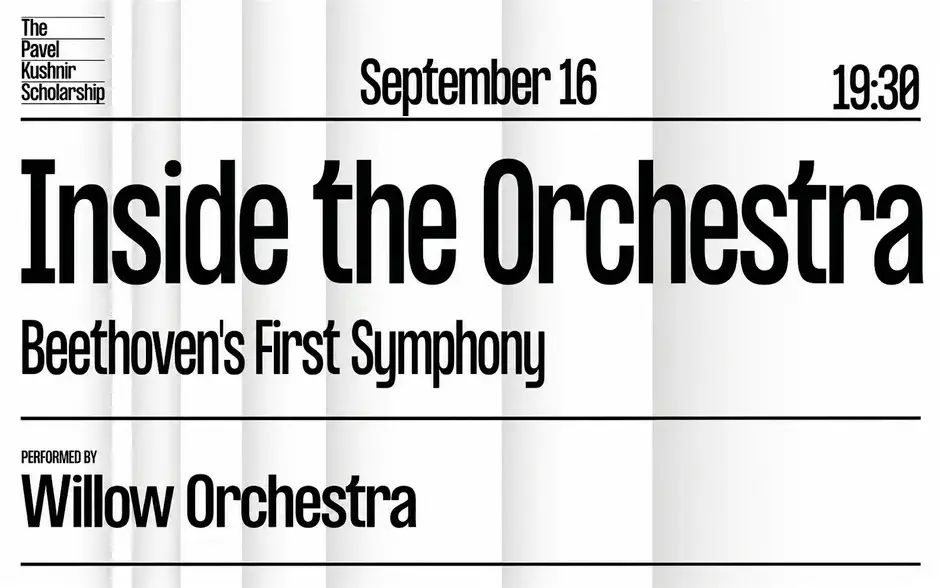
On Wednesday, September 16, 2026, London’s historic Annunciation Church near Marble Arch will play host to a groundbreaking musical event: Inside the Orchestra. Organized by the Pavel Kushnir Scholarship, the evening features conductor Bogdan Skrypka leading the Willow Orchestra through a public working rehearsal of Ludwig van Beethoven’s Symphony No. 1 in C major, Op. 21.
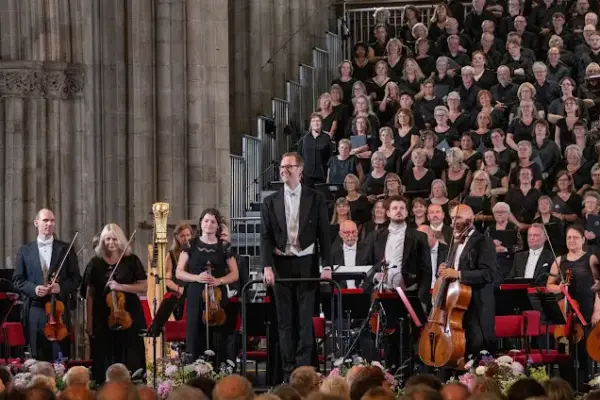
Rather than sitting passively in rows of pews facing a distant podium, attendees of Inside the Orchestra are offered an unprecedented acoustic and visual vantage point. During the first half of the evening, audience members take their seats directly within the orchestra, interspersed among the woodwinds, strings, brass, and percussion. They do not merely listen to the music; they feel the vibration of the cellos against the floorboards, observe the nuanced breathing of the principal clarinetist, and witness the split-second eye contact between conductor and concertmaster that binds an ensemble together. Following this visceral, behind-the-scenes immersion, the audience shifts to traditional seating after the interval to experience a complete, uninterrupted run-through of the symphony.
Beyond its innovative pedagogical and spatial design, Inside the Orchestra carries profound symbolic and humanitarian weight. The Pavel Kushnir Scholarship was established in London to honor the memory of Pavel Kushnir, a brilliant Russian pianist and anti-war activist who tragically died in a Russian detention facility after protesting the full-scale invasion of Ukraine. By uniting cutting-edge audience engagement with a mission to support displaced student musicians from Ukraine, Russia, and Belarus, the event transcends a traditional concert. It stands as a powerful manifesto for empathy, artistic freedom, and the radical intimacy of shared human performance.
Detailed Chronology: The Anatomy of an Immersive Rehearsal
To understand the unique mechanics of Inside the Orchestra, one must examine the meticulously structured progression of the September 16 event at the Annunciation Church (W1H 7AH). The evening is intentionally designed not as a standard concert program, but as a transparent, educational journey through the lifecycle of a symphonic interpretation.
Phase One: Arrival and Spatial Orientation
As ticket holders enter the soaring neo-Gothic interior of the Annunciation Church, they are met with an unusual layout. Standard concert seating is absent from the nave. Instead, the Willow Orchestra is arranged in an expanded, breathable circle and semi-circle configuration. Chairs for the intrepid members of the public are woven directly into the instrumental sections. A patron might find themselves seated immediately adjacent to the second violin section, peering over the shoulder of a violist, or feeling the direct acoustic resonance of the timpani directly behind them.
Phase Two: The Working Rehearsal from Within
Conductor Bogdan Skrypka steps to the podium, not to deliver a polished public performance, but to do the raw, unvarnished work of rehearsing. For the first half of the evening, the audience experiences Beethoven’s Symphony No. 1 in its formative, constructive state.
- Acoustic Disruption: From the inside, the traditional balance of the concert hall vanishes. A listener seated next to the brass section will experience a completely different dynamic balance than one sitting near the flutes. The physical effort required to project sound over a heavy orchestral texture becomes tangibly apparent.
- The Pedagogical Process: Attendees witness the mechanics of orchestral leadership in real time. They hear Skrypka stop the orchestra to address intonation issues in the woodwinds, ask for a sharper articulation in the strings’ opening Adagio molto, and debate phrasing choices with the section principals. Mistakes are made, corrected, and refined—offering the public a rare glimpse into the intellectual and physical rigor required to bring a 200-year-old score to life.
Phase Three: The Intermission and Spatial Transition
Following an intense period of musical construction, an interval allows the participants to step back. During this break, the physical architecture of the event shifts. The audience members vacate their seats among the musicians and transition to traditional seating zones within the church nave.
Phase Four: The Synthesis
In the final segment of the evening, the Willow Orchestra performs Beethoven’s Symphony No. 1 from beginning to end as a unified, polished artistic statement. Armed with the intimate, insider knowledge gained during the first half, the listeners experience the finished performance with transformed ears. They no longer hear an anonymous wall of sound from the stalls; they mentally map the individual human beings, breaths, and bow strokes that created every phrase.
Supporting Context & Metrics: Bridging the Acoustic Chasm
The classical music industry has long grappled with a paradox: while symphonic music is one of the most physically powerful and complex art forms ever created, the modern concert hall often insulates the listener, creating an ivory-tower distance that can alienate newcomers.
The Evolution of Immersive Classical Experiences
In recent years, orchestras worldwide have experimented with spatial disruption to combat declining youth engagement and stale concert formats. The Philharmonia Orchestra’s pioneering virtual reality (VR) projects—which place digital headset wearers directly inside the orchestra during a live performance—have proven that audiences crave a first-person perspective.
However, Inside the Orchestra takes a distinctly analog, high-touch approach. By utilizing a live chamber orchestra—the Willow Orchestra—and real human bodies sharing physical space, the project eliminates the mediated barrier of screens and headphones. The vibration of a double bass string carries through the floorboards directly into the listener’s feet; the kinetic energy of a conductor’s gesture can be felt in the shifting air currents of the room.

Beethoven’s First Symphony as a Case Study
Choosing Ludwig van Beethoven’s Symphony No. 1 in C major for this experiment is structurally brilliant. Premiered on April 2, 1800, at the Burgtheater in Vienna, the work sits at a fascinating historical crossroads. While deeply indebted to the classical models of his predecessors, Haydn and Mozart, the First Symphony famously opens with a deliberate harmonic "defiance"—starting on a secondary dominant chord rather than the tonic key—which shocked contemporary critics.
By deconstructing this piece in a live rehearsal setting, Skrypka and the Willow Orchestra allow the audience to experience Beethoven’s youthful subversion not as a dusty historical fact, but as a living, breathing act of artistic rebellion.
Official Statements & Visionary Leadership
The philosophical underpinnings of Inside the Orchestra are deeply rooted in the mission of the Pavel Kushnir Scholarship, an organization founded in London to champion artistic integrity, freedom of expression, and cross-border musical solidarity.
While specific organizational quotes regarding the Marble Arch event emphasize the transformative nature of shared space, the broader ethos of the scholarship speaks volumes about the project’s gravity. Representatives of the initiative have repeatedly stressed that music cannot exist in a vacuum, divorced from the human rights and socio-political realities of its creators.
"When an audience member sits shoulder-to-shoulder with a working musician, the mystique of the classical concert hall dissolves," notes a spokesperson for the project. "You stop viewing the orchestra as a machine that dispenses entertainment and begin recognizing it as a fragile, highly coordinated ecosystem of human souls working in real-time collaboration."
This sentiment aligns perfectly with the legacy of Pavel Kushnir himself—a musician who understood that art is an intrinsic form of moral witness and communication, powerful enough to threaten authoritarian regimes and inspiring enough to unite fractured communities across national borders.
Future Outlook: The Legacy of Pavel Kushnir and the Future of Concert Design
As Inside the Orchestra prepares to welcome audiences to the Annunciation Church on September 16, 2026, its implications extend far beyond a single evening of Beethoven. The project serves as a vital blueprint for the future of classical music presentation, education, and humanitarian advocacy.
Transforming Concert Programming
The success of immersive, participatory rehearsals suggests a viable roadmap for orchestras seeking to reinvent their audience engagement strategies. By lowering the barrier between performer and listener, institutions can cultivate a more musically literate, emotionally invested public. As arts funding faces increasing pressure globally, proving the immediate, transformative value of live acoustic performance is more critical than ever.
Sustaining the Memorial Legacy
Crucially, the event serves as a vital fundraising and awareness vehicle for the Pavel Kushnir Scholarship. Operating out of London, the scholarship addresses a profound humanitarian crisis by providing tangible financial and educational support to young, gifted music students displaced from Ukraine, Russia, and Belarus. In doing so, it operationalizes Kushnir’s ultimate belief: that music is a universal language capable of transcending nationalist aggression and totalitarian oppression.
Conclusion
Inside the Orchestra is more than an acoustic novelty or an educational workshop. It is a profound meditation on listening, proximity, and courage. By placing the audience inside the living pulse of the music—and by anchoring that experience in the memory of an artist who gave his life for his convictions—the project reclaims the concert hall as a space of radical empathy, human connection, and unyielding artistic freedom.
For full details, schedule information, and ticket reservations for Inside the Orchestra, visit the official EventBrite page, and learn more about the educational mission of the Pavel Kushnir Scholarship.