On October 24, the contemporary classical music landscape welcomes a profound addition as composer Ben Parry and writer-director Garth Bardsley unveil their most ambitious collaboration to date: My Father Cannot Speak. Staged at the Britten Studio within the historic Snape Maltings complex, this 70-minute, one-act chamber opera represents a significant milestone for the creative duo, whose partnership spans a quarter-century.
Headlined by acclaimed baritone Roderick Williams and accompanied by a versatile six-instrument ensemble under Parry’s baton, the work investigates the complex terrain of paternal relationships, generational gaps, and the universal search for identity. Commissioned and developed with the support of Britten Pears Arts, the opera distills grand operatic themes into an intimate, portable scale designed to challenge and captivate modern audiences.
The premiere evening also features a performance of Parry and Bardsley’s celebrated song cycle Songs For Girls Of A Certain Age, interpreted by mezzo-soprano Sarah Connolly and pianist Malcolm Martineau. Yet, it is the centerpiece opera—a searing monologue exploring silence, stroke-induced speechlessness, and the heavy burdens of familial truth—that has generated considerable pre-premiere anticipation and secured a sold-out opening night.
Detailed Chronology
Roots of a Partnership: From University Cabaret to Global Stages
The creative journey of Ben Parry and Garth Bardsley began decades ago at university, where the pair initially bonded over lighthearted theatrical sketches and cabaret performances. Although their early paths diverged into distinct artistic disciplines, a fateful family visit in 2002 rekindled their creative synergy. When Bardsley initiated work on a musical theater project, he invited Parry to compose the score, sparking a prolific collaborative engine that would ultimately produce numerous choral works performed at prestigious venues worldwide, including the BBC Proms and the Kennedy Center in Washington, D.C.
Throughout the 2000s and 2010s, their output evolved from vocal accompaniments to substantial choral architectures, notably highlighted by works like Spring Sonnets (premiered by the BBC Singers in 2013) and the expansive 2015 choral piece Seven Goodly Reasons to Sing. However, the seed for My Father Cannot Speak was planted when Bardsley began writing poetry specifically tailored for a male voice, exploring themes of inheritance, emotional distance, and the unspoken weight of family histories.
Conception and Personal Parallels
The conceptual framework of My Father Cannot Speak draws heavily from the personal histories of both creators. Bardsley grappled with a profound generational void; his father was adopted, and a catastrophic fire destroyed all archival traces of his biological lineage, leaving a permanent gap in his family narrative. Concurrently, Parry faced the stark reality of his own father suffering a stroke, which reduced his verbal communication to binary responses of "yes" or "no," forcing all other thoughts into written text.

These deeply personal encounters with silence, loss, and missing histories provided the emotional crucible for the opera. The project transitioned from a conceptual song cycle into a fully realized operatic narrative during a transformative two-week residency. Staying in the historic Aldeburgh flat once occupied by composer Imogen Holst, Parry penned the majority of the opera’s score—an environment he describes as magical and creatively charged.
The Genesis of Performance: Rehearsals at Snape
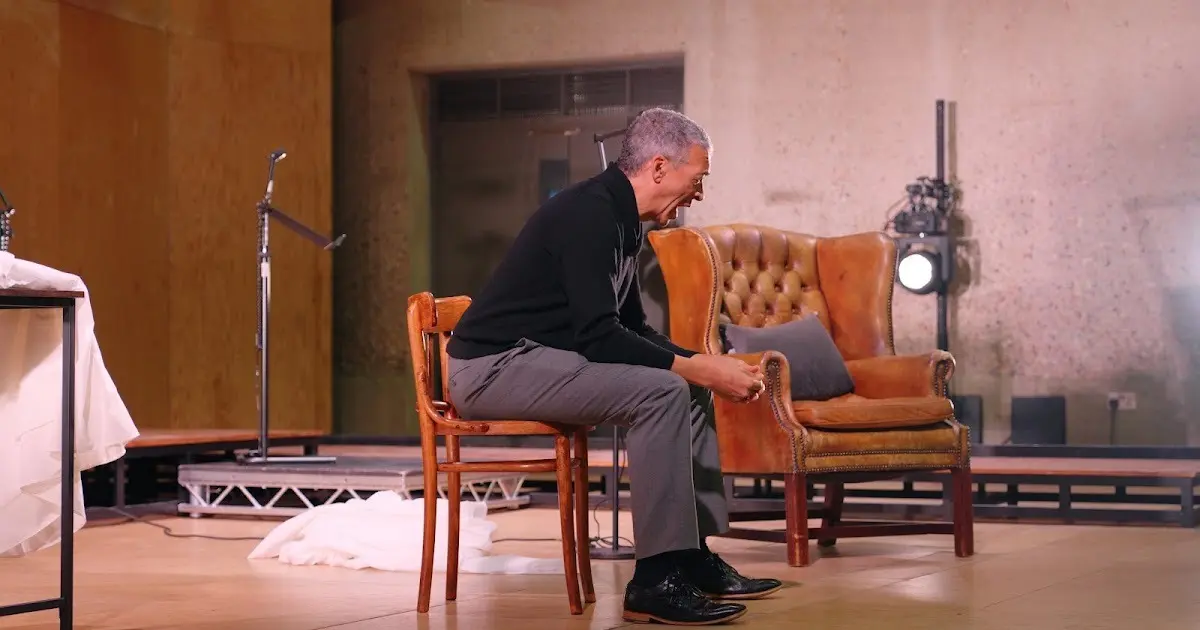
In the weeks leading up to the October 24 premiere, the production took up a week-long residency at Snape Maltings. Working closely with Roderick Williams, the creative team refined the intricate interplay between text, vocal delivery, and instrumental accompaniment. Bardsley, directing the production, navigated the delicate balance of staging a one-man opera where the dramatic tension rests entirely on a single performer’s ability to navigate deep psychological trauma, humor, and narrative exposition.
Supporting Context & Metrics
Structural and Musical Architecture
My Father Cannot Speak breaks away from conventional operatic paradigms through its lean instrumentation and unique narrative focus. The production features a single sung role entrusted to a baritone, supported by an eclectic six-piece instrumental ensemble comprising:
- Flute
- Clarinet
- Violin
- Cello
- Double Bass
- Accordion
This configuration was deliberately chosen to ensure portability, allowing the work to tour small venues and music festivals without sacrificing the dramatic depth of a full-scale opera. The ensemble does more than merely accompany the singer; it actively participates in the dramatic narrative. Notably, the silent father is sonically represented—initially through responsive instrumental lines and later by the stark, mechanical wheezing of the accordion.
Narrative Arc and Thematic Depth
The opera follows a middle-aged man undergoing a profound rite of passage upon the birth of his own son. Realizing how desperately little he knows about his reticent father, the protagonist attempts to bridge the emotional chasm between them. However, before understanding can be achieved, the father suffers a stroke, rendering him entirely voiceless.
The narrative utilizes a powerful framing device: an aria initiated by the man at the beginning of the opera remains unfinished until the closing moments. Using the poignant analogy of a closed museum, the protagonist confronts the truth that individuals cannot truly understand who they are if they remain ignorant of where they come from. In the opera’s poignant finale, the son ultimately puts words into his speechless father’s mouth, confronting the ironies of memory, love, and the fabrication of familial truth.

Production Metrics and Artistic Scope
- Duration: 70 minutes (One-Act chamber opera).
- Vocal Forces: 1 Baritone role.
- Instrumental Ensemble: 6 players (Flute, Clarinet, Violin, Cello, Double Bass, Accordion).
- Collaborative History: 25 years of artistic partnership between Parry and Bardsley.
- Primary Venue: Britten Studio, Snape Maltings.
- Archival Status: Performance recorded for archival preservation with planned future touring discussions.
Official Statements
Reflecting on the creation of their most adventurous project to date, both creators have emphasized the resilience required to mount new contemporary opera in a challenging economic climate for the arts.
"We wanted to create something listenable and watchable that fits comfortably within the ecosystem of small venues and festivals," Ben Parry noted during rehearsals at Snape. Reflecting on his writing process in Imogen Holst’s historic flat, he added, "It was a magical two weeks where the music flowed directly from the emotional weight of Garth’s text."
Garth Bardsley, who transitioned from writing poetry and plays to directing the opera, highlighted the unique vulnerability of the piece for both the creative team and the performer:
"There is nowhere to hide in a 75-minute monologue for baritone and six instruments. The role combines storytelling, direct audience interaction, and intense dramatic narration," Bardsley explained. Commenting on the financial and cultural hurdles facing contemporary art, he offered a defiant optimism: "It is a worrying time when considering money and the arts, but you cannot give up. You need to sing and play louder; truth and beauty will always endure."
Roderick Williams, taking on the monumental task of the sole vocal role, praised the accessibility and emotional resonance of the score, noting its potential to bridge traditional operatic audiences with musical theater enthusiasts through its compelling theatricality.
Future Outlook
Despite the financial pressures currently impacting the broader performing arts sector, the outlook for My Father Cannot Speak is remarkably optimistic. The October 24 premiere at Snape Maltings achieved a sold-out status, demonstrating strong public appetite for contemporary, narrative-driven chamber opera that addresses deeply human themes.

Archival Preservation and Touring Ambitions
The premiere performance has been captured for archival recording, serving as a vital calling card for future presenters. Both Parry and Bardsley, alongside baritone Roderick Williams and Britten Pears Arts, have already initiated discussions regarding subsequent stagings.
The immediate priority for the creative team is securing a high-profile London transfer, capitalising on the positive critical reception during rehearsals. Because of its portable scoring—relying on just six instrumentalists rather than a sprawling pit orchestra—the opera is uniquely positioned to tour regional theaters, arts centers, and specialized music festivals across the United Kingdom and internationally.
Continuing the Creative Partnership
Buoyed by the successful realization of My Father Cannot Speak, Bardsley and Parry show no signs of slowing their collaborative output. Bardsley has expressed a strong desire to continue working within the operatic medium, exploring how intimate narrative structures can continue to revitalize contemporary vocal music. As they look beyond the Snape Maltings premiere, the duo remains committed to proving that opera is far from an elitist or dying art form, but rather a vital, living mirror for the human condition.