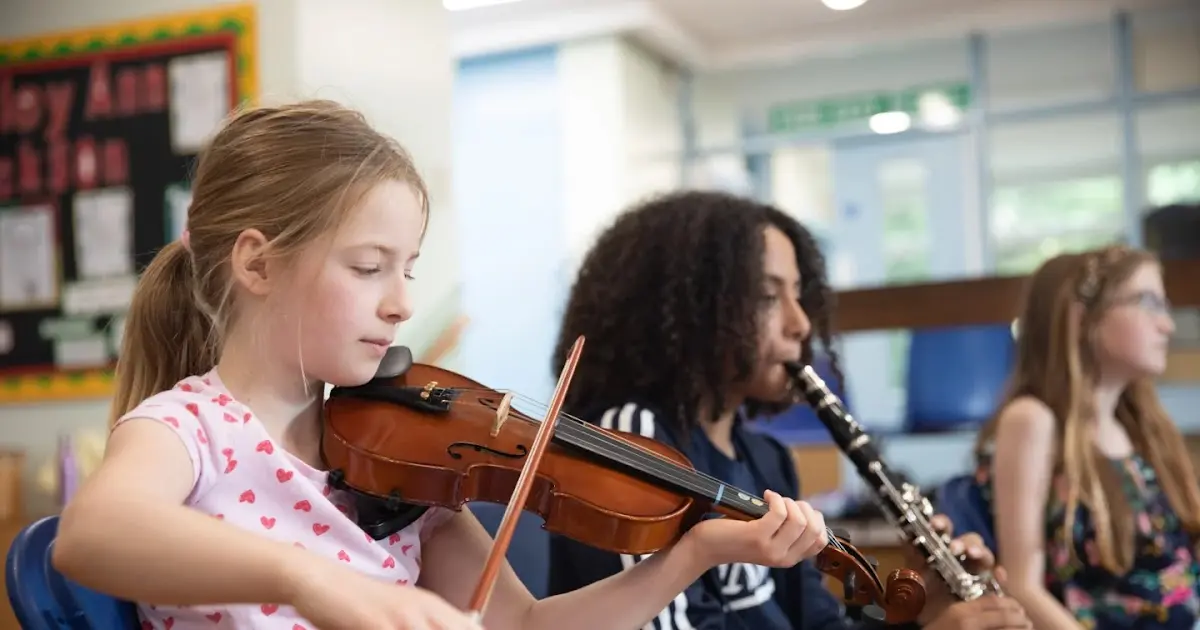
As GCSE results day approaches, new research from the Royal Philharmonic Orchestra reveals an overwhelming parental consensus that more must be done to engage young people in classical music—even as entry figures show tentative signs of post-pandemic recovery.
Executive Overview
As teenagers across the United Kingdom experience the anxious, high-stakes countdown to their GCSE results, a parallel debate is quietly unfolding across school staff rooms, cultural institutions, and living rooms nationwide. The health of music education—and, by extension, the future of classical music audiences and performers—remains a pressing national concern.
Fresh research released by the Royal Philharmonic Orchestra (RPO) reveals that an overwhelming 86% of parents believe more could and should be done to engage children and young people with classical and orchestral music. This striking statistic arrives against a complex backdrop of educational metrics. While recent years have recorded encouraging upticks in music GCSE entries, these gains are measured against a long-term decline that has systematically eroded arts provision in state schools over the past decade and a half.
The RPO’s nationally representative survey of 2,000 UK adults, conducted in June, goes beyond merely diagnosing the malaise. It taps directly into the insights of parents—the stakeholders who understand young people’s habits, aspirations, and barriers best—to propose actionable solutions. From integrating classical tracks into mainstream charts to expanding school orchestral programs and subsidized concert trips, the findings point toward a multi-pronged strategy to safeguard the future of the classical arts.
As cultural institutions step up grassroots engagement initiatives like the Brent Music Academy—co-founded by the RPO—pressure is mounting on policymakers to bridge the gap between underfunded formal education and the insatiable cultural appetite of the nation’s youth.
Detailed Chronology
To understand the current state of youth music engagement, it is vital to trace the policy shifts and statistical milestones that have shaped the educational landscape over the past fifteen years.
2010–2019: The Era of Marginalization
The roots of the modern music education crisis can be traced back to the early 2010s. The introduction of the English Baccalaureate (EBacc) performance measure in English secondary schools in 2010 inadvertently marginalized creative subjects. Because the EBacc prioritized a rigid basket of traditional academic subjects—English, mathematics, science, history or geography, and a language—schools faced intense accountability pressures to focus their timetables and budgets away from the arts.
Consequently, music, drama, and art departments experienced steep funding cuts, reduced curriculum time, and marginalized status. Between 2010 and subsequent years, music GCSE entries in England plummeted by a staggering 25.6%. For thousands of students, instrumental tuition became an inaccessible luxury available only to those whose families could afford private fees, exacerbating class divides within the arts.
2023–2024: Tentative Shoots of Recovery
By the early 2020s, the cumulative impact of sector-wide campaigning—led by organizations such as the Incorporated Society of Musicians, UK Music, and major symphony orchestras—began to force a re-evaluation. Policymakers slowly recognized the cultural and economic value of the creative industries, which contribute billions to the UK economy.
Last year, glimmers of hope emerged when music GCSE results published by the Joint Council for Qualifications (JCQ) revealed a notable 6.1% increase in music entries across the UK. This momentum accelerated dramatically in 2024, recording an impressive 8.7% year-on-year rise.
While educational experts and cultural leaders greeted these figures with cautious optimism, they issued immediate caveats. These positive percentages represent a recovery phase rather than a complete turnaround, building upon a severely depleted baseline.
June 2026: The RPO Landmark Survey
Seeking to look beyond raw examination entries and capture qualitative sentiment, the Royal Philharmonic Orchestra commissioned a comprehensive survey of 2,000 UK adults in June 2026. The research was designed to canvas parental opinions on what practical steps could be taken to foster a lifelong passion for classical and orchestral music among the younger generation.
September 2026: Marking 80 Years of the RPO
The release of this data directly precedes a major organizational milestone for the RPO. On 23 September 2026, the orchestra will launch its landmark new season at the prestigious Royal Albert Hall, celebrating its 80th anniversary. Under the baton of Principal Conductor Vasily Petrenko, the opening concert will feature works by Beethoven and Richard Strauss, alongside contemporary compositions by Errollyn Wallen. The milestone season serves as a timely reminder of the orchestra’s dual mission: preserving the classical canon while actively cultivating the musicians and concertgoers of tomorrow.
Supporting Context & Metrics
The RPO research offers a granular breakdown of how parents believe young people can be successfully introduced to classical music, alongside a fascinating inventory of instrument popularity among schoolchildren.

Bridging the Gap: What Parents Recommend
When asked what practical interventions would most effectively engage young people with classical and orchestral music, respondents prioritized accessible, immersive experiences both inside and outside the classroom:
- Dedicated Music Listening Sessions (31%): Nearly a third of parents called for more curriculum-based music lessons centered around active listening, allowing students to explore the emotional and structural depths of orchestral works in a guided educational environment.
- School Orchestras (30%): Exactly one in three respondents emphasized the transformative power of participatory music-making, advocating for increased opportunities for young people to play together in school orchestras to build peer camaraderie and musical confidence.
- Concert Trips (29%): Close to three-tenths of parents highlighted the value of live performance, urging schools to organize subsidized class trips to professional classical and orchestral concerts.
- Mainstream Cultural Integration (23%): Looking beyond traditional institutional boundaries, nearly a quarter of parents suggested that young people would naturally gravitate toward the classical genre if its luminaries and compositions had a visible presence in mainstream music charts, such as the UK Top 40, or popular media formats.
The Orchestral Landscape: Tomorrow’s Instruments
The RPO study also mapped out the changing popularity of musical instruments among school-aged children, painting a vivid picture of what future symphony orchestras might look like.
- The Keyboard King: The piano remains the undisputed favorite among young learners, cited by 35% of respondents as an instrument children either currently play or aspire to master.
- Contemporary Favourites: The guitar secures second place at 28%, followed closely by drums at 22%, reflecting the enduring appeal of rock, pop, and contemporary rhythm-based genres.
- Rising Classical Staples: Traditional orchestral instruments are experiencing varying fortunes. The violin has established a strong foothold at 18%, while the recorder sits at 14% and the trumpet captures 11% of interest.
- The "Endangered" Brass: Conversely, certain specialized brass instruments face a perilous future in youth music education. The trombone and the French horn were selected by a mere 5% and 3% of respondents respectively, highlighting an urgent need for targeted outreach to prevent these vital orchestral voices from dying out.
Official Statements
The release of the research has drawn sharp commentary from cultural leaders, emphasizing the delicate balance between grassroots enthusiasm and structural government neglect.
Sarah Bardwell, Managing Director of the Royal Philharmonic Orchestra, addressed the findings with a mixture of encouragement and pragmatic warning:
"While it is of course heartening to see a rise in music GCSE uptake—something we hope to see continue in the forthcoming results—it is clear that more needs to be done to safeguard the musicians and audiences of tomorrow.
The RPO’s engagement work with young people is a vital way of filling the gaps left by underfunding in formal music education, and our players find it hugely fulfilling. However, this latest data shows that we need more action at a government level to build more opportunities for young people to enjoy orchestral music."
Bardwell’s comments underscore the reality facing major arts organizations across the UK. While orchestras routinely deploy community outreach teams, workshops, and mentorship schemes—such as the RPO’s foundational partnership in the Brent Music Academy—these initiatives cannot single-handedly substitute for a comprehensive, adequately funded national music curriculum.
Educational advocates argue that without ring-fenced funding for peripatetic music teachers, instrument hire schemes, and inclusive arts spaces in state schools, participation risks becoming once again the preserve of the privileged.
Future Outlook
As the UK education system absorbs the latest examination cohorts and looks toward the 2026–2027 academic year, the path forward for youth music engagement requires a coordinated alliance between government, educational institutions, and the creative sector.
The Role of Cultural Partnerships
Initiatives like the Brent Music Academy demonstrate what can be achieved when professional orchestras collaborate directly with local authorities and educational trusts. By providing young people from diverse backgrounds with access to high-quality instruction, mentorship, and performance platforms, these academies demystify classical music. Expanding such models nationally will be essential if the "endangered" instruments identified in the RPO survey—such as French horns and trombones—are to find a new generation of players.
Policy Imperatives for the New Parliament
Cultural economists and education reformers continue to lobby for structural policy changes. Key recommendations include:
- Rebalancing Accountability Measures: Ensuring that creative and technical subjects are given equal weight alongside traditional academic disciplines in school performance metrics.
- Subsidized Instrumental Provision: Guaranteeing that every child, regardless of socioeconomic background, has the opportunity to learn an instrument free of charge during their primary school years.
- Teacher Training Investment: Rebuilding the pipeline of specialist music teachers in secondary education to ensure students receive expert guidance from qualified educators.
Looking Ahead to 2026 and Beyond
As the Royal Philharmonic Orchestra prepares to celebrate its 80th anniversary at the Royal Albert Hall this September, its enduring legacy will be judged not only by the majesty of its performances of Beethoven and Strauss, but by its success in nurturing the next generation of music lovers.
The parent survey serves as both a roadmap and a warning. The appetite for classical music among the nation’s youth is palpable, but it requires deliberate cultivation. If policymakers listen to the clear consensus of the nation’s parents—investing in school orchestras, live concert experiences, and accessible music lessons—the future of the UK’s rich orchestral heritage can be secured for decades to come.