Executive Overview
British filmmaker Guy Ritchie has long carved out a distinct cinematic niche by marrying the grimy, neon-lit grit of the criminal underworld with a darkly comic, hyper-stylized aesthetic. From his breakthrough feature Lock, Stock and Two Smoking Barrels to Snatch, Ritchie established a blueprint for British gangster cinema defined by fast-paced banter, eccentric antiheroes, and kinetic violence. Yet, his latest television venture—Netflix’s surprise hit The Gentlemen, adapted from his 2019 feature film of the same name—finds the director tapping into a remarkably personal wellspring. Raised amid the British aristocracy, with both of his parents having remarried peers of the realm, Ritchie has finally bridged his life experiences with his cinematic fantasies.
The resulting premise is deliciously absurd: a hereditary British peer who is effortlessly lethal, navigating the treacherous intersection of stately country manors and international drug syndicates. Against all odds, this rarefied, high-concept premise has deeply resonated with global audiences. Following a slow-burn debut season that slowly built a passionate word-of-mouth following throughout 2024, The Gentlemen returns to Netflix this week for its highly anticipated second season.
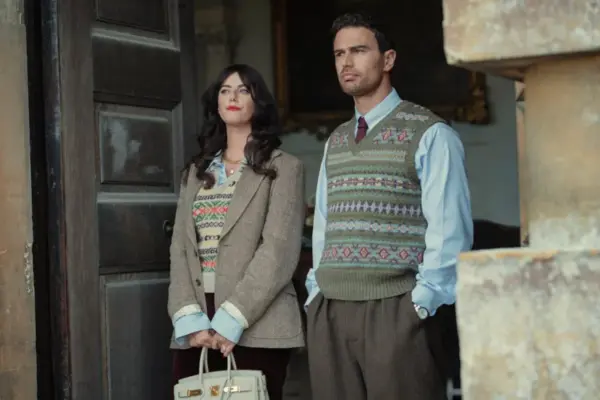
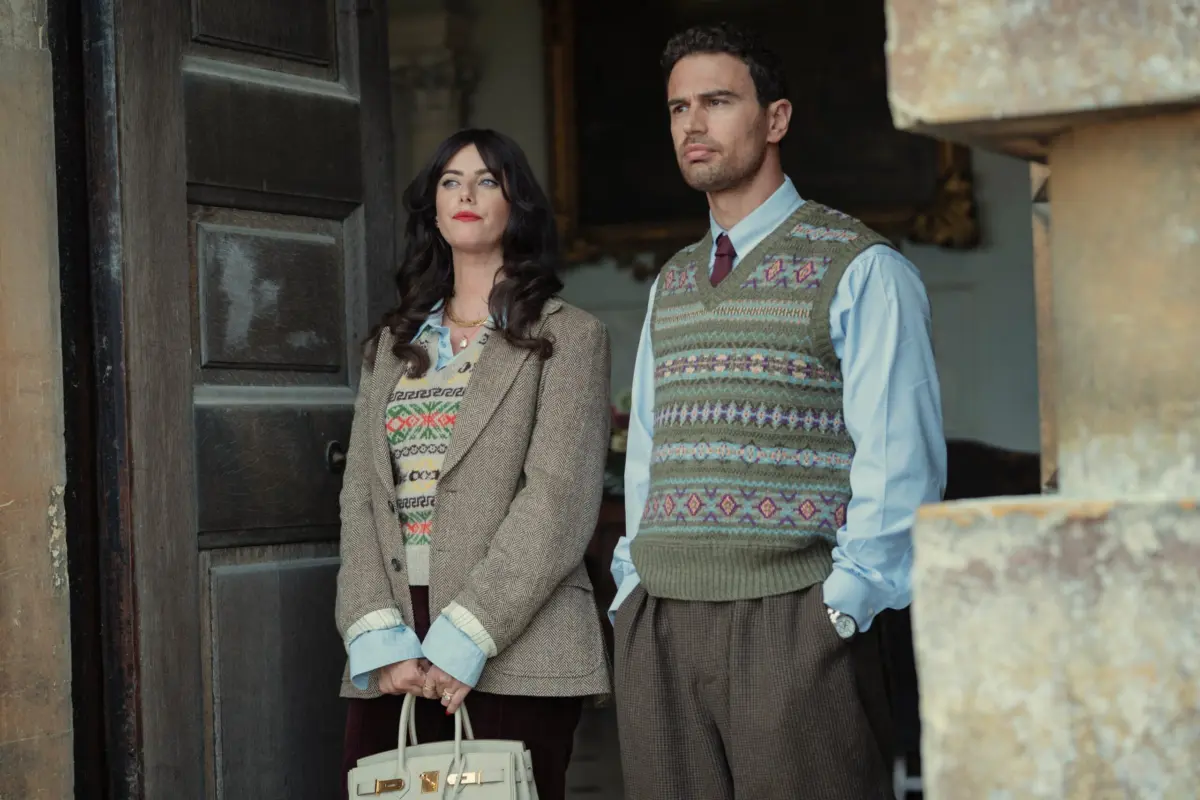
Crucially, the streaming platform’s confidence in the property is staggering. Netflix commissioned a third season before the second installment even aired, cementing the franchise as a cornerstone of its contemporary content strategy. In this sophomore outing, the Duke of Halstead, Eddie Horniman (Theo James), and crime syndicate partner Susie Glass (Kaya Scodelario) find themselves at the helm of an expansive criminal empire, navigating the vacuum left by Susie’s incarcerated father, Bobby Glass (Ray Winstone).
However, as the series expands its operational horizons to include Italian mafia bosses, Peruvian cartels, corrupt Emirati royals, and rebellious cannabis growers, it also lays bare its fundamental creative tensions. While The Gentlemen remains undeniably slick, high-energy entertainment designed for rapid binge-watching, it increasingly leans into uneven performances, convoluted plotting, and clunky dialogue. This extensive critical retrospective examines the cultural mechanics, narrative trajectories, and production hurdles defining the return of Netflix’s most opulent gangster romp.
Detailed Chronology: From Big Screen to Streaming Phenomenon
To understand the current trajectory of The Gentlemen, one must trace its evolution from a mid-budget cinematic caper to an ongoing episodic franchise.
The 2019 Origin
The journey began with the 2019 feature film The Gentlemen, starring Matthew McConaughey, Charlie Hunnam, and Hugh Grant. The film played to Ritchie’s traditional strengths, focusing on an American expat trying to sell a highly profitable marijuana empire in London, triggering a cascade of blackmail, bribery, and backstabbing among the British elite. While critics were generally split—praising the stylistic flair while noting narrative fatigue—the film was a solid box-office success, grossing over $115 million worldwide.
The Slow-Burn Netflix Transition
Capitalizing on the intellectual property, Ritchie and Netflix teamed up to translate the cinematic universe into a serialized television format. Debuting in early 2024, the television adaptation swapped McConaughey’s American kingpin for Theo James’s aristocratic Eddie Horniman, an army officer unexpectedly thrust into the role of Duke of Halstead upon his father’s death, only to discover his ancestral estate sits atop a massive underground cannabis operation.
The transition from film to television was not an overnight sensation. Rather than generating immediate record-breaking numbers akin to Stranger Things or Wednesday, The Gentlemen relied heavily on a traditional word-of-mouth trajectory. It took a full five months of steady streaming numbers following its premiere for Netflix executives to officially greenlight a second season. This sleeper-hit status proved that viewers were willing to invest in the stylistic excess of Ritchie’s television vision, prompting Netflix to fast-track production. In an extraordinary display of confidence, the platform recently ordered a third season prior to the release of the eight-episode second season, ensuring that Ritchie’s aristocratic underworld will remain a fixture of the service for years to come.
Supporting Context & Metrics: The Mechanics of a Modern Binge
The economic and structural success of The Gentlemen offers a fascinating case study in contemporary streaming metrics. In an era where prestige television often aims for the sociological depth of The Wire or the psychological density of The Sopranos, Ritchie’s creation explicitly rejects these paradigms. As industry analysts have frequently noted, The Gentlemen operates as a cinematic equivalent of sugar and fast-release carbohydrates—instantly gratifying, easily digestible, and entirely disposable.
Streaming Demographics and Consumption Patterns
Data surrounding the first season indicates that the show over-indexed among viewers aged 18 to 34, a demographic traditionally difficult to capture with conventional British period dramas or traditional procedural crime shows. By blending the aesthetic markers of high-society aristocracy (shooting estates, tweed jackets, stately homes) with the visceral energy of modern crime thrillers, the series appeals directly to a generation raised on comic book universes and high-concept action blockbusters.
The eight-episode structure of Season 2 has been explicitly tailored for the "binge-watch" economy. The plotting relies on escalating absurdity—moving from domestic weed-farming disputes to international geopolitical entanglements—designed to keep churn rates low and completion rates high. Yet, this algorithmic optimization comes at a creative cost. The narrative pacing is overwhelmingly frenetic, substituting genuine character development with sudden, manufactured plot twists and explosive set-pieces.
Official Statements and Industry Reception
As the rollout for Season 2 approaches, the surrounding discourse has been dominated by high-profile casting rumors, critical appraisals, and creative choices.
The Casting Rumor Mill and Stunt Selections
In recent months, the production made headlines due to persistent rumors linking Meghan Markle, the Duchess of Sussex, to a high-profile return to acting via a guest role on the series. While these reports were swiftly denied by production sources, they underscored the unique cultural gravity The Gentlemen holds at the intersection of British aristocracy and pop culture celebrity.
Guy Ritchie is no stranger to "stunt casting." Decades ago, casting former professional footballer Vinnie Jones in Lock, Stock and Two Smoking Barrels was viewed as an eccentric gamble that ultimately paid creative dividends due to Jones’s natural, unvarnished screen presence. However, Season 2’s deployment of guest stars has met with considerably harsher critical pushback.
Most notably, the addition of Love Island host Maya Jama as a professional fixer named Aisha has drawn pointed skepticism. Critics have characterized her performance as lacking organic screen presence, with one reviewer memorably noting her delivery possessed "all the natural ease of a pine floorboard."
Performance Analysis: Strengths and Stumblings
The central performances similarly present a mixed ledger:
- Theo James: As Eddie Horniman, James cuts a striking figure, frequently touted by bookmakers as an outside bet for the next James Bond. Yet, across Season 2, his portrayal occasionally lapses into one-note brooding menace, struggling to anchor the emotional core of a man whose moral compass is rapidly disintegrating.
- Kaya Scodelario: As Susie Glass, Scodelario commands the screen with icy poise, yet she is frequently undermined by some of the most awkward, convoluted dialogue penned for modern television. Lines such as “he’s like a dog with six dicks, but they all point in the direction of a vajayjay” and “so the Bish ish has turned into a mish” force the actress into uncomfortable linguistic contortions that even her considerable screen presence cannot salvage.
- Hugh Bonneville and Supporting Cast: Hugh Bonneville clearly relishes his role as Dickie, a greasy, self-serving aristocrat who controls crucial political levers. Conversely, fan-favorite Daniel Ings, who portrayed the volatile and chaotic Freddy in the first season, has been unfairly relegated to the periphery of the action, depriving the show of its most combustible comedic valve.
Future Outlook: Whither the Aristocratic Underworld?
With a third season already locked in by Netflix executives, The Gentlemen is locked into a multi-year roadmap. The core narrative engine of Season 2 revolves around Eddie’s grand design to reclaim his family’s diminished societal footprint. Lamenting that his generational privilege has been systematically eroded over decades, Eddie declares: "It’s been diminished, year after year, generation after generation… I want it back."
Achieving this ambition requires a delicate balancing act. Eddie must forge a transactional alliance with Italian mafia boss Marco Moretti (played with seasoned menace by Sergio Castellitto), secure political patronage from Dickie to secure an elevation to the House of Lords, and—most importantly—maintain his precarious business and personal partnership with Susie Glass as their operations expand globally.
The Franchise Crossroads
Looking ahead, the show faces a distinct crossroads. On one hand, The Gentlemen has carved out a profitable, highly entertaining niche. It delivers precisely what its core audience demands: a blood-spattered, aesthetically pristine romp through English country houses that prioritizes style over substance without apology.
On the other hand, the deteriorating quality of the writing threatens to diminish the franchise’s long-term cultural footprint. When scripts read like unpolished first drafts—rife with mangled metaphors (“You’ve been able to pull silver linings out of murky waters”) and unnatural cadences—the underlying scaffolding of the show begins to buckle under its own weight. MacGuffins such as racing saker falcons and stolen Botticelli paintings clutter an already overstaturated narrative canvas.
Ultimately, The Gentlemen mirrors the very institution it satirizes: the modern English aristocracy. It is brash, effortlessly privileged by the streaming algorithms that sustain it, and coasting comfortably on historical goodwill rather than rigorous effort. Whether Ritchie and his team can tighten the narrative bolts for Season 3 will determine whether this aristocratic underworld endures as a masterclass in popcorn television or fades away as another disposable casualty of the streaming era.