Executive Overview
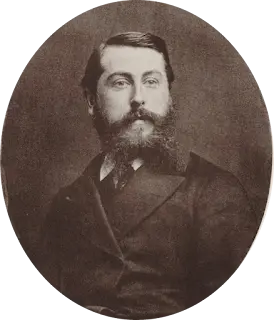
To the general public and even to many classical music aficionados, the name of French composer Léo Delibes is inextricably linked to a select few masterpieces of the 19th-century stage. Mention his name, and listeners immediately evoke the enchanting, clockwork-infused melodies of his foundational ballet Coppélia, the sweeping, mythological grandeur of Sylvia, or the exotic, bell-toned vocal acrobatics of his enduring operatic triumph, Lakmé. Yet, outside of Lakmé, Delibes is rarely recognized as a formidable operatic composer—a historical oversight that has long marginalized a vast, intricate theatrical output.
That narrative is poised for a dramatic rewriting. Palazzetto Bru Zane—the celebrated Centre de musique romantique française and its specialized recording label, Bru Zane—is set to release the world premiere recording of Delibes’ long-forgotten opéra-comique, Jean de Nivelle. Serving as the composer’s twenty-fourth operatic endeavor out of a total of twenty-six, Jean de Nivelle directly preceded the creation of Lakmé and represents a critical missing link in the evolution of French romantic theater.
Conducted by György Vashegyi and performed by the Hungarian National Philharmonic Orchestra, this landmark recording features tenor Cyrille Dubois in the demanding title role alongside soprano Mélissa Petit as Arlette. Utilizing Delibes’ own revised version featuring sung recitatives rather than spoken dialogue, this release offers contemporary audiences their first true opportunity to evaluate an ambitious work that captivated late 19th-century Europe before fading into historical obscurity. The album is slated for official release on October 23, 2026.
Detailed Chronology: From Choirboy to Master of the Stage
Early Musical Formation and the Paris Opéra
The trajectory of Léo Delibes’ life was defined by an early immersion in the theatrical life of Paris. Gifted with a remarkably fine singing voice as a boy, Delibes was thrust into the professional spotlight at a young age. In a testament to his precocious talent, he participated in the historic 1849 premiere of Giacomo Meyerbeer’s monumental grand opera Le prophète at the Paris Opéra.
This foundational experience backstage and on the boards provided the young musician with an intuitive understanding of vocal mechanics and theatrical staging. He soon entered the Paris Conservatoire, where his formal education included rigorous instruction in composition under Adolphe Adam—himself a master of ballet music, best known for Giselle. This mentorship laid the technical groundwork for Delibes’ future synthesis of symphonic texture and choreographic rhythm.
The Apprenticeship of Light Opera
Delibes’ initial steps into composition were marked by modesty and pragmatism. In 1856, he unveiled his first stage work, a one-act comic piece titled Deux sous de charbon. For the subsequent fourteen years, Delibes maintained an astonishingly prolific output, producing roughly one stage work per year. Many of these early commissions were tailored for the vibrant, satirical audiences of Jacques Offenbach’s famous theater, the Bouffes-Parisiens.
While composing light theatrical fare, Delibes pursued parallel professional paths to secure his livelihood. A pivotal turning point arrived in 1862 and 1863 when he secured the post of chorus master at the Paris Opéra. This prestigious appointment placed him at the beating heart of France’s premier lyric institution, granting him invaluable insights into orchestration, vocal ensemble writing, and the institutional mechanisms of grand-scale production. More importantly, his insider status at the Opéra directly catalyzed the commissions for his initial ballet scores, initiating his ascent as a major symphonic voice.
Breakthroughs, Ballets, and Mature Style
The year 1869 marked the end of Delibes’ phase as a writer of exclusively minor comic pieces. The following year, his score for the ballet Coppélia (1870) exploded into public consciousness, earning him unprecedented acclaim and securing his financial and artistic independence. Recognizing his true calling, Delibes resigned from his staff positions at the Opéra to dedicate himself entirely to composition.

Over the ensuing decade, Delibes balanced instrumental works with vocal and theatrical projects. He composed celebrated mélodies, including the enduring vocal showcase Les filles de Cadiz. He also ventured back to the Opéra-Comique with Le Roi l’a dit (1873), a work that achieved only limited success despite its considerable charm. Undeterred, he returned to the ballet stage to craft the grand mythological fresco Sylvia (1876), a score so advanced in its harmonic sophistication and thematic unity that Pyotr Ilyich Tchaikovsky famously hailed it as vastly superior to traditional ballet scores of the era, declaring it a work where "music alone is so charming and melodious, so rich in rhythm, harmony, and contour."
Supporting Context & Metrics: Jean de Nivelle and the Late 19th-Century Landscape
The Genesis and 1880 Premiere of Jean de Nivelle
By the time Jean de Nivelle premiered at the Opéra-Comique on March 8, 1880, Delibes was operating at the absolute peak of his creative powers. The opera was an immediate commercial success, running for more than a hundred performances during its initial run—a significant feat for the era—and earning a major revival in 1908.
Contemporary critics offered nuanced evaluations of the work. Many reviewers observed that the libretto felt overly episodic, preventing a totally seamless dramatic narrative. However, critics universally lauded Delibes for what they termed "the rare and precise quality" of his melodic invention and the "delicate style in his writing" tailored for public accessibility.
Bridging Opéra-Comique and Grand Opera
Though officially designated as an opéra-comique due to its spoken dialogue in its original incarnation, Jean de Nivelle frequently breaches the boundaries of the genre, treading heavily into the solemn, emotionally charged territory of Meyerbeerian grand opera. Recognizing the work’s international potential and mindful of the linguistic and stylistic barriers posed by spoken French dialogue outside of France, Delibes subsequently composed recitatives to replace the spoken sections.
This strategic adaptation successfully fueled the work’s international trajectory. Between 1881 and 1882, Jean de Nivelle transcended Parisian borders, finding a warm reception across Europe with notable productions at La Monnaie in Brussels, as well as in Saint Petersburg, Copenhagen, Budapest, Vienna, and Stockholm.
Historical Roots of the Libretto
The narrative framework of Jean de Nivelle draws deeply upon French history and folklore. The titular character is based on a real 15th-century French nobleman, Jean de Nivelle, whose life became a historical byword for filial disobedience and treachery.
In the historical chronicles, the younger de Nivelle refused to join his father in assisting King Louis XI of France during his intense geopolitical conflict with Charles the Bold, the powerful Duke of Burgundy. Instead, de Nivelle chose to ally himself with Burgundy. For this act of political betrayal, his father publicly disinherited him, cementing his reputation in French cultural memory as le chien de Jean de Nivelle (a proverbial expression for someone who flees when duty calls). This rich, dramatic backdrop provided Delibes with a canvas for high-stakes emotional confrontation, patriotic tension, and romantic tragedy.
Final Years and Unfinished Legacies
Riding the momentum of Jean de Nivelle, Delibes immediately commenced work on Lakmé, which premiered triumphantly at the Opéra-Comique in 1883 before mirroring its predecessor’s international ascent.

However, Delibes’ final decade was marred by declining health. He suffered from intermittent illnesses that progressively sapped his energy. On January 16, 1891, Léo Delibes passed away in Paris at the age of 54, leaving behind an unfinished opera, Kassya, sitting on his desk. Recognizing the value of his late friend’s final testament, fellow composer Jules Massenet stepped in to complete and orchestrate the score, which premiered posthumously in 1893.
Official Statements and Artistic Vision
The upcoming release of Jean de Nivelle by Palazzetto Bru Zane represents the culmination of exhaustive musicological research and artistic dedication. The project aims to correct historical biases that reduce Delibes to a miniaturist or a purely choreographic composer.
In liner notes and promotional materials surrounding the release, the label emphasizes the structural and dramatic weight of the score. Conductor György Vashegyi, renowned for his championing of French romantic and baroque repertoires, approaches the score with symphonic rigor, drawing out the lush orchestrations performed by the Hungarian National Philharmonic Orchestra.
By choosing to record the version featuring sung recitatives, Bru Zane honors Delibes’ own mature artistic vision—one that sought to elevate the work from a localized Parisian entertainment into a seamless, through-composed lyric drama capable of holding its own on any international stage. The pairing of Cyrille Dubois, celebrated for his agile high tenor and impeccable French diction, with Mélissa Petit ensures that the demanding vocal lines are executed with stylistic authenticity and emotional urgency.
Future Outlook: Reassessing Delibes in the 21st Century
The world premiere recording of Jean de Nivelle arrives at a pivotal moment in the rediscovery of 19th-century French lyric art. For decades, institutions and record labels focused heavily on a narrow canon of Italian and German masterpieces, leaving vast treasures of the French belle époque languishing in library archives.
Through the tireless advocacy of organizations like Palazzetto Bru Zane, works such as Jean de Nivelle are finally escaping the shadows of music history. This release challenges listeners to expand their understanding of Léo Delibes beyond the shimmering chords of the Lakmé "Flower Duet" or the rhythmic pulse of Coppélia.
As contemporary opera companies continually seek fresh repertoire to engage modern audiences, the arrival of this recording on October 23, 2026, could well spark a broader theatrical revival of Delibes’ neglected stage works. By proving that Delibes was a master of grand dramatic architecture as well as light-hearted charm, Jean de Nivelle invites a profound critical reassessment of a composer who helped define the sonic landscape of late 19th-century France.