Executive Overview
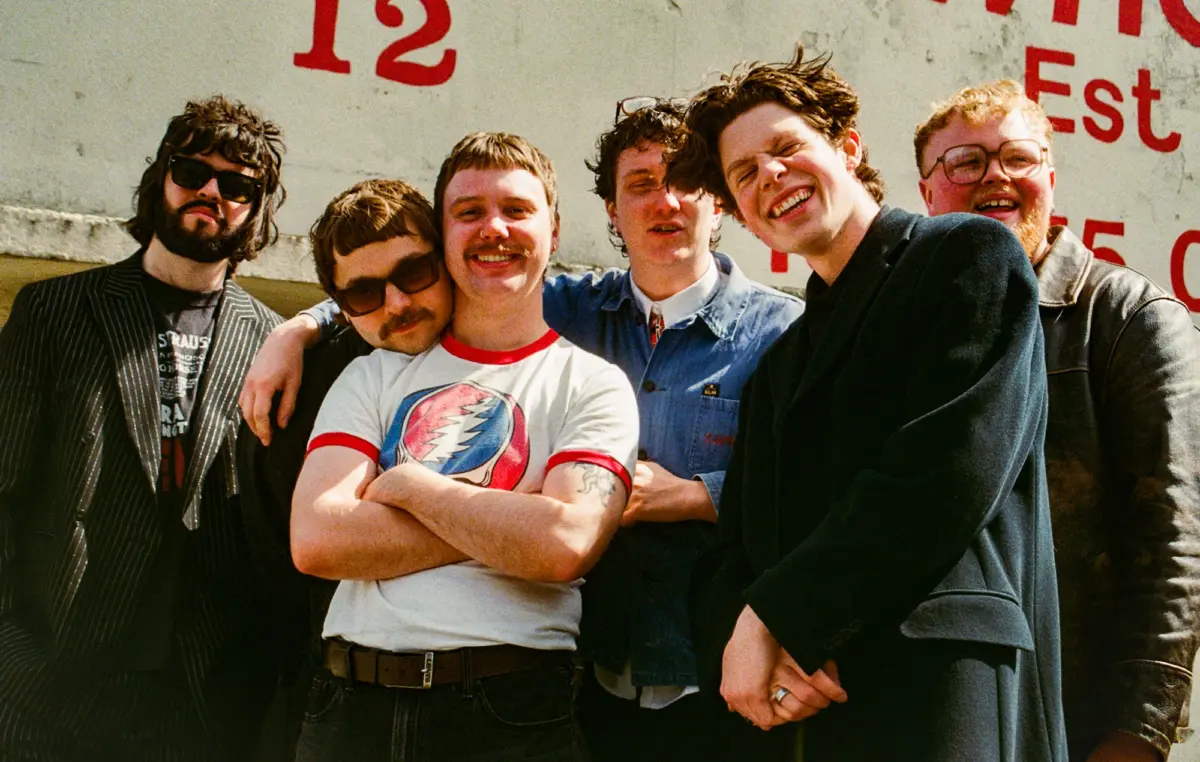
At this year’s edition of the tastemaker new music festival The Great Escape, the most potent and politically charged performance of the weekend did not come from a hyped indie-pop outfit or a polished electronic act. Instead, it belonged to a band whose sonic and thematic roots stretch back more than a century. In the packed, sweat-slicked basement of Brighton’s Chalk, Dublin sextet Madra Salach unleashed a visceral, punk-entwined take on Irish traditional classics. Seamlessly weaving songs dating back to the 1950s (such as "Murphy Can Never Go Home") and the 1870s ("Spancil Hill") with original compositions, the group articulated a raw narrative of displaced immigrants mourning for a sense of belonging.
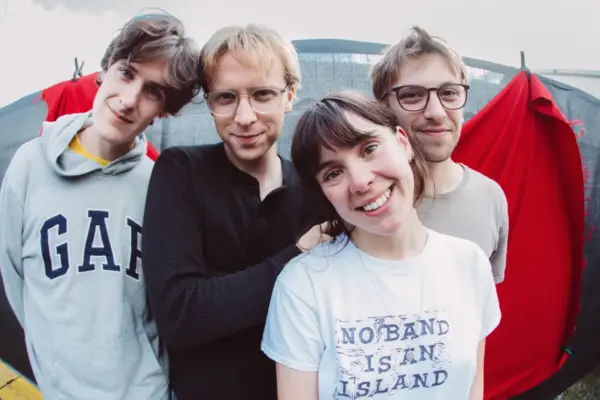
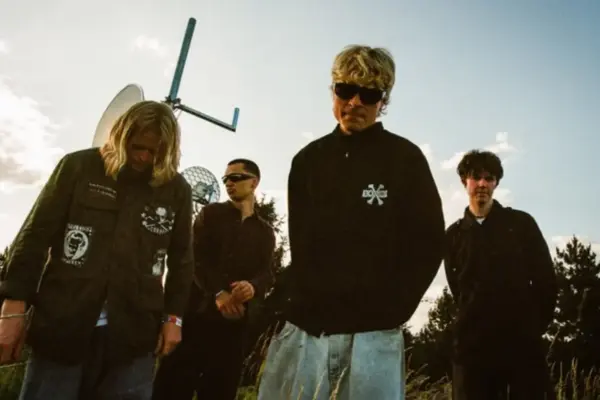
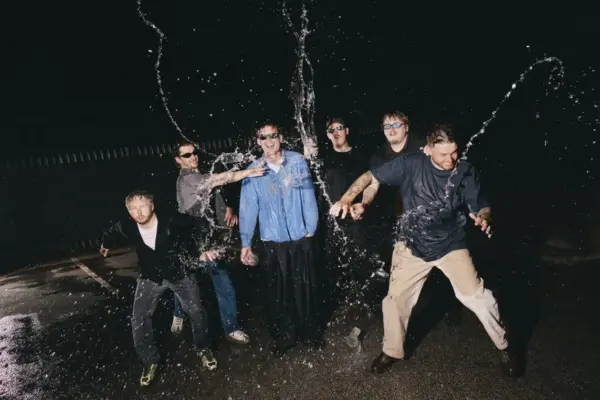
Madra Salach—comprising vocalist Paul Banks, mandolinist Jack Martin, guitarist Adam Cullen, bassist Jack Lawlor, drummer Dara Duffy, and harmonium player Maxime Arnold—has rapidly ascended from the smoky snugs of Dublin’s local pubs to become one of 2026’s most unmissable new acts. By synthesizing the atavistic power of traditional Irish folk with the abrasive textures of post-punk and ambient drone, they have tapped into a contemporary cultural anxiety. This investigative report explores the band’s rapid rise, the socio-political foundations of their music, the historical lineages they draw upon, and their pivotal role in the modern global revival of radical folk music.
Detailed Chronology
[2023: Dual Genesis]
  - Banks & Duffy perform traditional "drinking music" at The 1884 pub.
  - Martin proposes a radical workers' song project utilizing tape loops and drones.
       │
       ▼
[Late 2023 - 2025: Synthesis & Integration]
  - The two concepts merge; Cullen, Lawlor, and Arnold join.
  - The band refines their live set in small Dublin venues, focusing on raw emotional delivery.
       │
       ▼
[January 2026: Debut EP Release]
  - Release of 'It’s A Hell Of An Age', earning critical acclaim.
       │
       ▼
[Spring - Summer 2026: Live Breakthrough]
  - Show-stopping set at The Great Escape in Brighton.
  - Support slot at Kneecap's London all-dayer.
  - Booking of over 30 major festivals (Green Man, TRNSMT, Electric Picnic).
2023: The Dual Genesis in Dublin’s Working-Class Quarters
The origins of Madra Salach (Irish for Dirty Dog) are described by its founders as "blurry," characterized by two distinct musical paths that eventually collided in Dublin’s fertile creative underground.
On one side were vocalist Paul Banks and drummer Dara Duffy. The duo frequented The 1884, a local Dublin pub, where they participated in open sessions. Their repertoire consisted largely of high-energy covers of The Pogues and The Dubliners. "You were there to play drinking music," Banks recalls, noting that the focus was on communal catharsis and immediate physical feedback from a working-class crowd.
On the other side was mandolin player Jack Martin. Deeply influenced by his family’s history of labor activism, Martin envisioned a project that would recontextualize historical Irish workers’ and protest songs. His idea was to strip these songs of their conventional acoustic arrangements, updating them with avant-garde tape loops, industrial noise, and heavy ambient drones.
When Martin approached Banks with this concept, the two streams began to fuse. The raw, shouting delivery Banks had honed in crowded pubs proved to be the perfect foil for Martin’s dark, drone-heavy arrangements.
2024–2025: Refining the Lineup and the Sonic Blueprint
To realize this complex sonic vision live, the duo expanded into a six-piece. They recruited guitarist Adam Cullen, bassist Jack Lawlor, and harmonium player Maxime Arnold. The addition of the harmonium was particularly crucial; it provided a continuous, breathing acoustic drone that bridged the gap between traditional folk instrumentation and modern experimental music.
Throughout 2024 and 2025, the band quietly built a reputation in Dublin’s smaller rooms. Rather than relying on standard folk arrangements, they approached their instruments like a post-punk guitar band, focusing on tension, release, and volume.
January 2026: ‘It’s A Hell Of An Age’ and the Festival Explosion
In January 2026, Madra Salach released their debut EP, It’s A Hell Of An Age. The title, lifted from a poignant line in the mid-century emigration ballad "Murphy Can Never Go Home," served as a statement of intent. The EP was a critical success, establishing the band as serious contenders in the European alternative scene.
By summer 2026, the band’s trajectory had accelerated exponentially. Having never played a festival outside of Ireland prior to 2026, they secured bookings at roughly 30 major festivals across the UK and Europe, including TRNSMT, Electric Picnic, and a high-profile slot at the Green Man Festival on August 20. Their performance at Kneecap’s London all-dayer solidified their cross-genre appeal, with a significant portion of the crowd sporting Madra Salach merchandise.
Supporting Context & Metrics
To understand the rapid ascent of Madra Salach, one must look at both the shifting landscape of contemporary Irish music and the specific socio-political realities of modern Ireland.
The Contemporary Irish Folk Renaissance
Madra Salach’s success is part of a broader cultural movement. Over the last decade, bands like Lankum, Radie Peat, John Francis Flynn, and Ye Vagabonds have dismantled the sanitized, tourist-friendly version of Irish folk music that dominated the late 20th century. In its place, they have restored the genre’s original grit, darkness, and radical political edge.
| Band / Artist | Key Musical Elements | Primary Themes |
|---|---|---|
| Lankum | Dark ambient, industrial drone, traditional balladry | Gothic horror, urban decay, working-class struggle |
| Kneecap | Gaeilge hip-hop, rave beats, satirical punk | Republicanism, youth culture, anti-colonialism |
| Madra Salach | Post-punk rhythm, harmonium drones, traditional folk | Emigration, labor history, personal grief, self-destruction |
This revival has occurred alongside a growing housing crisis, soaring inflation, and a feeling of disenfranchisement among young people in Dublin. For a generation facing the prospect of forced emigration—much like their ancestors in the 1870s and 1950s—folk music has once again become a vital medium for protest and survival.
The Legacy of Labor: Jim Larkin and SIPTU
The political backbone of Madra Salach is directly tied to Irish labor history. Jack Martin’s grandfather served as the president of SIPTU (Services, Industrial, Professional and Technical Union), the largest trade union in Ireland.
"I grew up hearing those songs and, as I got older, I understood the context a lot more," Martin explains. "Usually people’s grandparents have photos of Jesus on the walls, but mine had Jim Larkin. Jim Larkin is my granddad’s Pope."
Jim Larkin, the legendary founder of the Irish Transport and General Workers’ Union (ITGWU) and leader of the historic 1913 Dublin Lockout, championed the idea that the working class deserved not just bread, but roses too—meaning art, culture, and dignity. By reviving old workers’ songs, Madra Salach continues this legacy, treating folk music not as a museum piece, but as an oral history of the working class.
Official Statements & Critical Commentary
The Catharsis of "The Man Who Seeks Pleasure"
The emotional peak of Madra Salach’s live performance is their closing song, "The Man Who Seeks Pleasure." Written in Jack Martin’s bedroom, the song explores the self-destructive boundary between pleasure and pain.
Vocalist Paul Banks spoke candidly to NME about the psychological and physical toll of performing the song:
"The thing that I like about that line—‘For the man who seeks pleasure, is the man who seeks pain’—is that it’s not saying anything new. It’s a behavioral pattern that a lot of people are stuck in that’s been summed up into a sentence that I can then scream over a drone, which then feels cathartic for me and seems to be cathartic for people watching."
Banks further revealed the intense emotional vulnerability required to deliver the track:
"For a long time when we were gigging it, I’d almost always get too close to the line emotionally, and I’d be really dysregulated for an hour after the show. And I think that speaks to… I like to think there’s something special about that song."
Vocal Performance (Paul Banks) ──┐
                                  ├─► "The Man Who Seeks Pleasure" ──► Emotional Catharsis / Audience Connection
Harmonium/Tape Drones (Arnold) ───┘
Rejecting "Paddywhackery"
While the band is proud of their heritage, they are careful to avoid the commercialized tropes of Irishness often marketed to international audiences. Banks commented on how the success of their peers has allowed them to bypass these cliches:
"I think we’re very lucky that we’re not having to plot this course on our own. People have the context. We don’t have to pander too much to like, swilling pints of Guinness and wearing big jumpers because other bands have showcased that, culturally, we have a lot more to offer than that—even though I love big jumpers and Guinness. We jumped on the bandwagon, and it’s going great!"
Authenticity as a Defense Mechanism
In an era of highly manufactured musical acts, Banks believes that audiences have a low tolerance for superficiality. The power of Madra Salach lies in their absolute sincerity:
"It’s funny, because I could do all the same noises and movements that I do, but people have really highly-tuned bullshit detectors, and if I didn’t mean it, they’d be like, ‘Ah, this guy’s fucking putting it on.’ So I really try to go to the emotional centre of the songs and stay with it… The shit I hate is loading in and doing soundchecks, but getting emotional? I’d be doing that anyway, so I’m more than happy to do it on the stage."
Future Outlook
As Madra Salach transitions from underground darlings to international touring artists, they face the challenge of preserving their raw, intimate energy on much larger stages.
Writing with "More Teeth"
The band’s rapid rise has delayed the recording of a debut full-length album, but it has also sharpened their songwriting. Performing in front of thousands of festival-goers has forced them to write music with greater physical impact.
"We haven’t had a chance to really cement a new body of work yet, but the new songs we’re writing are such live songs that are so structured around a performance with energy," Banks notes. The upcoming material reportedly features "more teeth," incorporating heavier rhythmic elements and more aggressive, post-punk-influenced dynamics.
The Global Appeal of Local Stories
The trajectory of Madra Salach demonstrates that highly localized, historically specific songs can find a global audience when delivered with genuine conviction. Whether performing a 150-year-old ballad about emigration from Galway or an original song about modern urban isolation, the band’s focus remains on the human element.
"I think the centre of the folk ethos is that it’s just human stories—stories of individuals as opposed to the history book stories of battles and conquerors and kings," Banks reflects. "It’s a people’s oral history, so as long as you’re writing from a place of truth, everything else can follow."
With a busy tour schedule ahead and a growing international fan base, Madra Salach is well-positioned to remain at the forefront of the contemporary folk revival, proving that the old songs still hold the power to disrupt, heal, and unite.