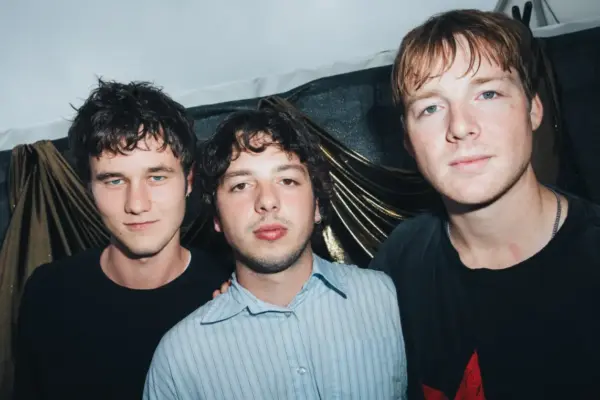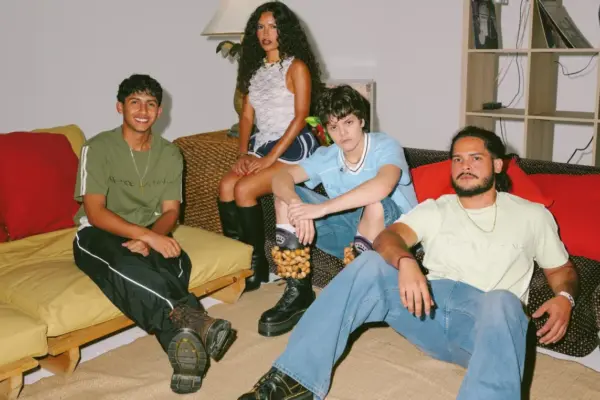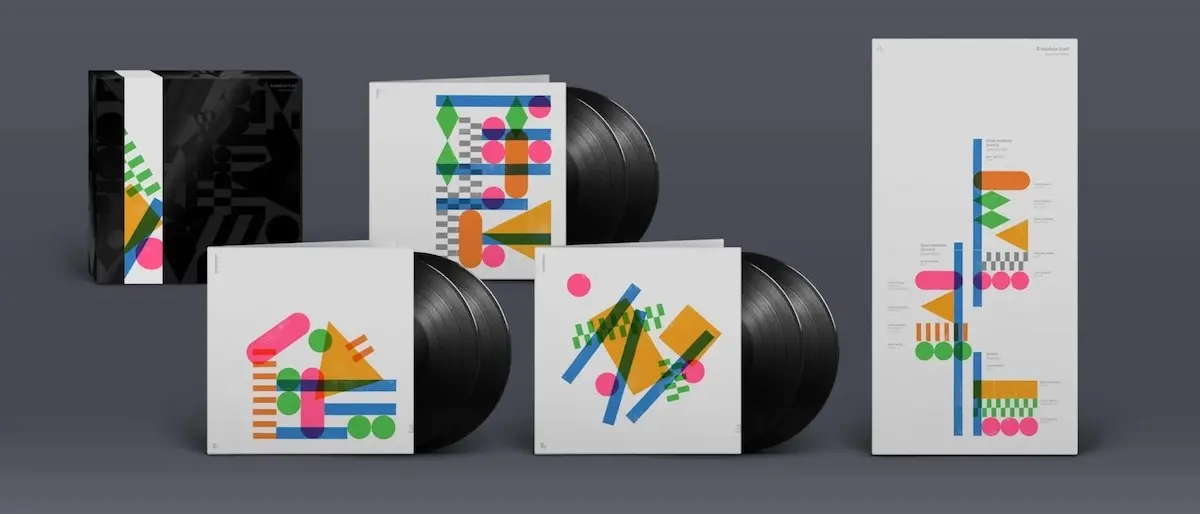
In the contemporary landscape of independent music, the trajectory of an artist rarely follows a straight line. For Rollo Doherty, best known as the charismatic frontman of the mid-2010s London guitar outfit ISLAND, the journey has evolved from the booming, wide-screen indie-rock anthems of packed rooms like KOKO to the intimate, contemplative confines of a Hackney bedroom during lockdown. That quiet evolution has now culminated in a major artistic milestone: The Jelly Man, Doherty’s debut full-length solo album.
Where his previous solo output—epitomized by the critically lauded Out My Window EP—was constructed from localized urban soundscapes and stripped-back live setups utilizing a single guitar, a loop pedal, and a violin bow, The Jelly Man heads decisively south. Recorded across multiple creative excursions to a shaded suburban studio in North Florida, the record represents a cross-pollination of British folk-leaning songwriting and the rich, analogue sensibilities of Brooklyn-honed soul, funk, and hip-hop producers.
Issued through Lewis Recordings—an imprint with a storied history bridging underground hip-hop and psych-soul—The Jelly Man is a masterclass in geographical alchemy. Produced in collaboration with The Still Brothers (Evan Heinze and Andrew LeCoche), the ten-track record trades the grey skies of London for sun-drenched rhythms, subtle Brazilian MPB (Música Popular Brasileira) influences, and an expansive sonic warmth. It is a record where place sets the pace, joining the esteemed lineage of location-inspired masterworks such as Eric Clapton’s 461 Ocean Boulevard. As Doherty steps further into the spotlight as a solo practitioner, The Jelly Man not only expands his sonic palette but establishes him as a vital, genre-fluid voice in modern singer-songwriter culture.
Detailed Chronology
From Stadium Indie to Bedroom Intimacy: The Genesis of a Solo Voice
To understand the textured, sun-soaked expanse of The Jelly Man, one must trace the winding path of Rollo Doherty’s career. For years, Doherty anchored ISLAND, an Oxford-formed, London-based guitar band that secured two record deals with Frenchkiss Records. Known for shimmering indie-rock built explicitly for big rooms, the band commanded loyal audiences and sold out iconic venues like KOKO. Yet, beneath the high-octane energy of major indie-rock tours, Doherty harbored a quieter impulse.
That impulse found its outlet during the global lockdowns of the early 2020s. Holed up in his Hackney bedroom, Doherty began assembling what would become the Out My Window EP. Rather than relying on traditional band dynamics, he threaded the compositions together with ambient field recordings captured from his window at varying hours of the day. This localized, DIY approach birthed a deeply personal aesthetic.
When live music returned, Doherty translated these bedroom confessions to the stage, embarking on high-profile support tours alongside Skinshape and Palace. Stripped of a traditional backing band, he rebuilt his intricate compositions live using only a single acoustic guitar, a loop pedal, and a violin bow. This rigorous touring regimen proved to be a crucible, sharpening his delivery and preparing him for a more ambitious, collaborative leap: his first full-length album.
The North Florida Sessions: Capturing the Slow Rhythm of the South
For The Jelly Man, Doherty sought a sonic environment entirely removed from the frantic energy of London. He found it in North Florida, collaborating with Brooklyn-born production duo The Still Brothers—comprising Evan Heinze (formerly of Big Crown Records’ The Shacks) and Andrew LeCoche (of Ula Ruth).
Over the course of several trips across the Atlantic, the trio set up camp in a shaded, suburban Florida studio. Eschewing modern, over-cluttered digital workstations, they tracked the record onto an authentic eight-channel Tascam tape machine. This deliberate hardware restriction forced a reliance on organic interplay, warm saturation, and meticulous arrangement.
The resulting tracks—bearing evocative, postcard-style titles like “On the Island Train,” “Waterfall,” and “Flowers”—were profoundly shaped by the slow, humid rhythm of the Florida town. The environment imbued the entire ten-song tracklist with a cohesive, sun-drenched feel that persists from the opening notes of Side A to the final fade-out of Side B.
Supporting Context & Metrics
The Lewis Recordings Ecosystem
A critical catalyst in the realization of The Jelly Man is its home label, Lewis Recordings. Founded in London in 2001, the imprint initially carved out an underground reputation as a bastion for hip-hop luminaries such as Edan and Stig of the Dump. However, the label subsequently found a second wind through the home-taped psych-soul explorations of Skinshape.
Lewis Recordings operates less like a traditional corporate label and more like a tight-knit creative collective, where roster members routinely cross-pollinate on one another’s projects. This collaborative DNA directly influenced Doherty’s work:

- Skinshape mixed The Still Brothers’ single “Wake Up.”
- The Still Brothers previously remixed tracks for legendary turntablist DJ Yoda.
- DJ Yoda contributed expert scratching to Doherty’s foundational Out My Window EP.
- This collaborative ethos extends to Evan Heinze’s other musical venture, Êmã, which crafts slow, MPB-leaning compositions in St. Augustine, Florida, under the same label umbrella.
Production Engineering and Analogue Architecture
The sonic architecture of The Jelly Man relies heavily on the pedigree of The Still Brothers. Heinze and LeCoche’s self-titled debut EP had already established their mastery of 1970s, 1980s, and 1990s sonic palettes. Their analogue arrangements—meticulously mixed by audio engineer Mike Hill—had previously served as the backbone for Out My Window.
For the album, this production team expanded their scope. Despite the technical limitations of an eight-channel Tascam tape machine, the arrangements feel remarkably expansive. The duo achieved this by layering instrumentation carefully and incorporating a rotating cast of guest musicians who drifted in and out of the Florida studio.
Stylistically, the record defies easy categorization. While frequently tagged as indie-pop, that label captures only a fraction of its identity. Doherty’s vocal delivery aligns more closely with modern folk and the timeless singer-songwriter tradition. Intriguingly, the compositions bear a structural and emotional kinship to contemporary Brazilian music (MPB)—a parallel underscored by the deliberate, rhythmic inclusion of the cuíca across multiple tracks. By merging a folk-leaning British songwriter with a production bed built on soul, funk, and hip-hop grooves, Doherty and The Still Brothers have crafted a sound that bridges continents and genres.
Official Statements
While traditional corporate press releases often rely on hyperbole, the artistic intent behind The Jelly Man speaks volumes through the creative choices made by its makers. Reflecting on the transition from arena-leaning indie rock to the intimate, tape-recorded warmth of his solo work, Rollo Doherty has consistently emphasized the necessity of artistic evolution.
In discussions surrounding the development of his solo material, associates and critics alike have noted the deliberate shift toward organic, place-driven creation. Steve Williams, writing in critical assessments of the project, captured the transformative impact of the record:
"It’s creative. It’s the sound of now, carried by a voice that will attract a mainstream audience. I hope that those listeners then follow these vibes further into the jazzier, soulful world we cover here, where plenty would sit beside it on a late-summer mixtape. The Jelly Man’s arrival suits a record made from summer memories. It will make you happy, force smiles on the miserable, and give hope to the disillusioned. My spirits have truly been lifted."
Furthermore, the collaborative synergy between Doherty and The Still Brothers highlights an international DIY ethos. Evan Heinze’s transition from Brooklyn indie-soul outfits like The Shacks to the tranquil pace of North Florida underscores a shared desire among modern indie artists to escape hyper-urban burnout in favor of environments that foster deeper, more deliberate musical craftsmanship.
Future Outlook
Commercial Trajectory and Cross-Genre Appeal
As The Jelly Man prepares for widespread release and critical consumption, its market positioning is uniquely advantageous. In an era where streaming algorithms frequently flatten genre boundaries, Doherty’s work offers a sophisticated bridge between disparate listener demographics.
Fans of his earlier work with ISLAND will undoubtedly find a thread of melodic accessibility, yet the mature, sun-bleached production values open doors to entirely new audiences. The record’s cross-pollination of British singer-songwriter vulnerability with American soul-funk instrumentation and subtle Brazilian rhythmic textures positions it as a prime candidate for tastemaker playlists, specialty radio programming, and critical year-end lists.
Live Performance Evolution
Having already proven his mettle as a compelling solo performer armed with just a guitar, loop pedal, and violin bow during his support tours for Skinshape and Palace, Doherty faces an exciting challenge in translating The Jelly Man to the live stage. The expansive, multi-instrumental arrangements of tracks like the festival-ready epic “Waterfall” and the funk-infused “Flowers” suggest that future live iterations may see Doherty expanding his touring ensemble. Whether performing in intimate listening rooms or on sun-drenched festival stages, his ability to pivot from bedroom isolation to lush, collaborative grooves ensures a vibrant touring future.
Ultimately, The Jelly Man proves that Doherty’s creative journey is far from static. By surrendering to the slow rhythm of a North Florida studio and trusting in the analogue expertise of Lewis Recordings’ inner circle, Rollo Doherty has crafted a timeless, life-affirming record that bridges his indie-rock past with a luminous, genre-defying future.