Executive Overview
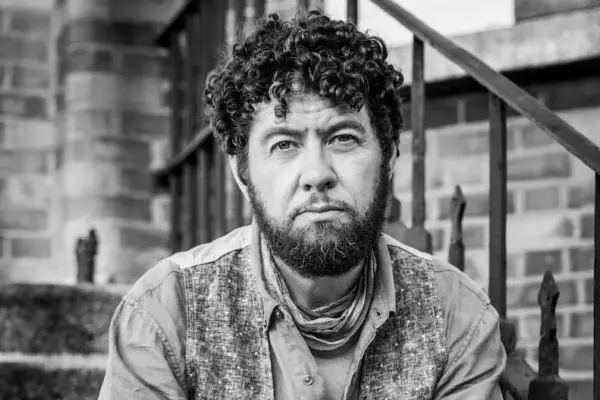
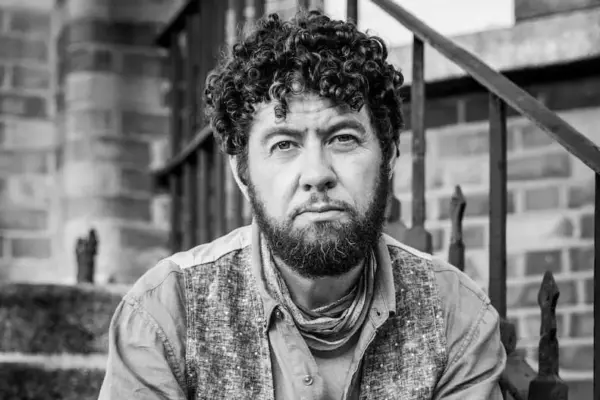
In the shadowy corridors of the neonatal intensive care unit (NICU), where human vulnerability is met with the unyielding, synthetic pulse of life support, composer and saxophonist Jon Armstrong found himself engaged in a desperate, profound act of sonic translation. Out of the harrowing experience of his son Breen’s extreme premature birth—arriving at just 23 weeks and six days gestation, weighing a mere pound, and spending nearly nine months in intensive care—comes Voluntary Breath.
This half-hour concerto for tenor saxophone and orchestra is far more than a classical composition; it is an act of sonic survival, a spiritual reclamation of sterile hospital environments, and a monument to paternal devotion. Expanding from a single-movement suite premiered by the Great Falls Symphony in February 2025 into a sprawling, three-part masterpiece performed by the historic Idaho State-Civic Symphony, Voluntary Breath bridges the gap between avant-garde jazz, contemporary classical orchestration, and deeply personal autobiography.
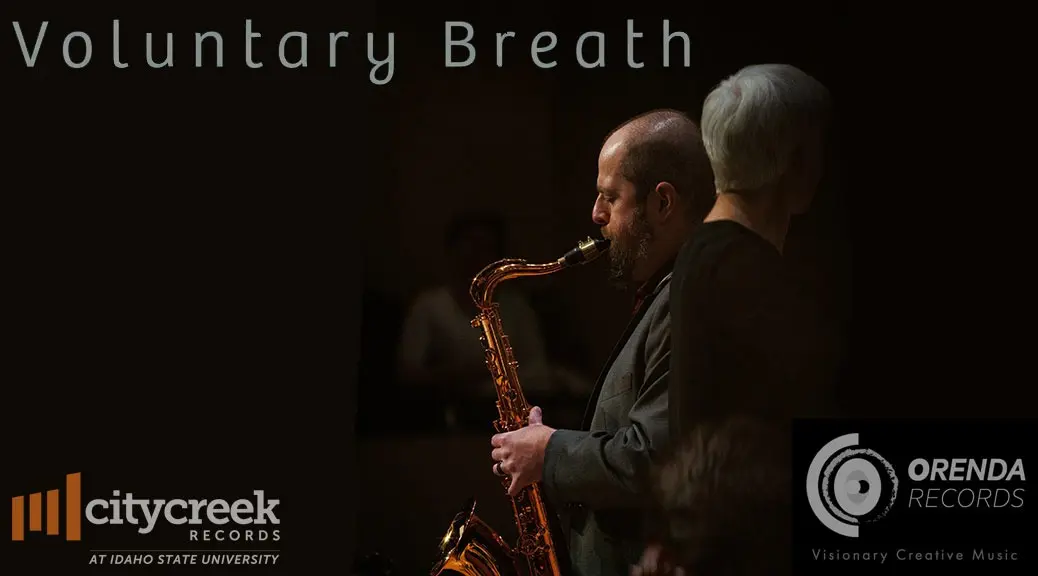
Released collaboratively through Dan Rosenboom’s Los Angeles-based Orenda Records and City Creek Records—the student-run label operating out of Idaho State University’s commercial music program, which Armstrong directs—the project is a masterclass in community collaboration. Engineered entirely by ISU faculty and students, mixed and mastered by Rosenboom, and driven by artistic director Nell Flanders, the recording captures a rare convergence of academic rigor and agonizing emotional truth. Featuring guest turns by Boise-area drummer Jens Kuross and electric guitar contributions from Armstrong himself, Voluntary Breath stands as a singular, uncompromised artistic statement: an LP containing a single, continuous, life-altering work of art.
Detailed Chronology: From Meditations on Mortality to the NICU
The Omens of Reabsorb
The psychological groundwork for Voluntary Breath was laid in October 2020, when Jon Armstrong released Reabsorb. Structured as two continuous suites for a Los Angeles sextet—each occupying a side of an LP—the project was explicitly built around short poems written by his wife, Erin Armstrong. At the time, the composer viewed the work as a sprawling, abstract meditation on human mortality.
Little did the couple know how soon those meditations would manifest in stark, agonizing reality. Within four months of the album’s release, Breen Armstrong was born at a fragile 23 weeks and six days. Weighing just over sixteen ounces, the infant was immediately ushered into the high-stakes, terrifying world of neonatal intensive care, where he would remain for nearly three-quarters of a year.
The Shaman and the Ventilator
Long before Breen’s arrival, Armstrong experienced a recurring, vivid dream. In it, a shaman-like figure sat in deep meditation above a serene mountain lake, strumming a stringed, guitar-like instrument. With every calculated pluck, the shaman retuned the instrument, sending precise, intentional patterns of ripples radiating across the water’s surface.
In the high-stress, alarm-saturated reality of the NICU, this dream transformed from a subconscious vision into a pragmatic survival strategy. Surrounded by the deafening symphony of hospital monitors and the fixed, unrelenting cadence of the mechanical ventilator, Armstrong attempted to "tune" his son’s hospital room. He began singing quiet, grounding melodies and continuous vocal drones, meticulously matching the key and tempo of the machines keeping his infant son alive.
Over months of agonizing bedside vigils, these spontaneous, reactive improvisations coalesced into a structured lullaby. In Voluntary Breath, the tenor saxophone soloist assumes the mantle of the mountain shaman, with Armstrong sending acoustic ripples out into the vast, symphonic ocean of the orchestra.
The Evolution of the Score: From Montana to Pocatello
The piece’s journey to the stage was as arduous as the hospital stay that inspired it. Commissioned by conductor Grant Harville for the Great Falls Symphony in Montana, the piece originally stretched across five distinct movements, receiving its world premiere in February 2025.
By September 2025, when the work came "home" to Pocatello for its Idaho premiere, Armstrong had restructured and recast the composition into a tighter, more cohesive three-part suite. In this final architectural form, the first movement represents the profound wave of love and desperate prayer that surrounded Breen; the second movement directly confronts the mechanical reality and clinical language of the ward; and the third movement weaves these disparate worlds together into a transcendent resolution.
Supporting Context & Metrics: Architecture of the Work
The Anatomy of the Title
The title Voluntary Breath operates on multiple symbolic and physiological levels. During his early months, Breen was entirely dependent on a mechanical ventilator. His neonatal care team frequently worried that the infant was "breathing over the vent"—straining instinctively to pull in breaths of his own accord, entirely out of phase with the machine’s rigid, programmed delivery rate.

Watching his son fight for independent oxygenation forced Armstrong to deeply re-examine his own breathing—the involuntary biological reflex that meditative practices deliberately bring into conscious control. The boy’s desperate physical struggle and the father’s disciplined musical practice are inextricably bound together in the work’s title.
Musical Analysis: A Three-Part Journey
- Part I: The Grandeur and the Abyss
The concerto opens with symphonic grandeur, utilizing the full force of the orchestra while placing the tenor saxophone front and center. The atmosphere shifts abruptly, however, as the saxophone glides through complex microtones, evoking a chilling sense of hospital-grade dread and clinical concern. This tension gives way to the tranquil, idyllic waters of Armstrong’s dream sequence—a peaceful afternoon overlooking mountain peaks that invites the listener into a meditative state. In the movement’s final quarter, the orchestral percussion crashes back in, glorifying the opening themes before terminating in an eerie, unexpected sonic turmoil. -
Part II: The Chants, the Claps, and Nora’s Theme
This turmoil bleeds directly into the second part, which draws heavily on Armstrong’s childhood experiences within a Buddhist sect where congregations chanted in rapid, unified Japanese. The daily rhythm of morning ward rounds—where medical staff chanted out Breen’s fragile stats—unlocked these childhood memories. The resulting ostinato mimics the relentless repetition of a medical refrain: "23 weeks, 6 days gestation."Layered over this clinical ostinato is an eclectic rhythmic swagger, featuring handclaps that dance deftly between traditional flamenco styles and Hindustani classical rhythms—a direct nod to Armstrong’s earlier, India-inspired composition, Burnt Hibiscus.
Sheltered within this medical and rhythmic storm is "Nora’s Theme." Because Breen was born at the height of COVID-19 hospital restrictions, his older sister Nora was barred from visiting the NICU. Yet, she spoke of him with the familiarity of someone she had known for a lifetime. Armstrong penned this theme to capture the song he imagined Nora singing to guide her brother home. Placed dead-center between the ward’s chaotic chants, it offers emotional shelter before the tenor saxophone fades out into a solitary, echoing passage.
-
Part III: Tributes, Resonances, and Resolution
The third part opens with a second statement of Nora’s Theme, which also serves as a poignant memorial. The melody came to Armstrong in its entirety while hiking through Glacier National Park, where he journeyed to mourn the passing of George Adams in the summer of 2020. Adams was a former bassoon teacher at Idaho State University, a two-time interim conductor of the Idaho State-Civic Symphony, and its principal bassoonist during the dark days of 2020. Honoring his memory, Armstrong assigns the theme to the bassoon section.Played by bassoonists Dillin Diggie and Jin Vanasouk, the theme weaves into the rising momentum of the percussion section. Soon, the tenor saxophone reasserts itself, adopting a haunting, folk-like quality reminiscent of Scottish bagpipes. The music eventually dissolves into a serene, sweeping calm, introducing the final of three "Resonance" cadenzas. Across the entire concerto, the soloist gradually uncovers the work’s primary melody piece by piece from within the orchestra; only here, at the very end of the piece, is it finally played in its complete, uninterrupted form.
Official Statements & Production Credits
The realization of Voluntary Breath required an extraordinary alignment of institutional and independent creative forces.
Production and Engineering
- Labels: Jointly released by Orenda Records (founded by Los Angeles trumpeter Dan Rosenboom, who also handled the album’s pristine mix and master) and City Creek Records (the student-run label of Idaho State University’s commercial music program).
- Engineering: Captured entirely by the faculty and students of Idaho State University, bridging professional-grade orchestral recording with real-world educational mentorship.
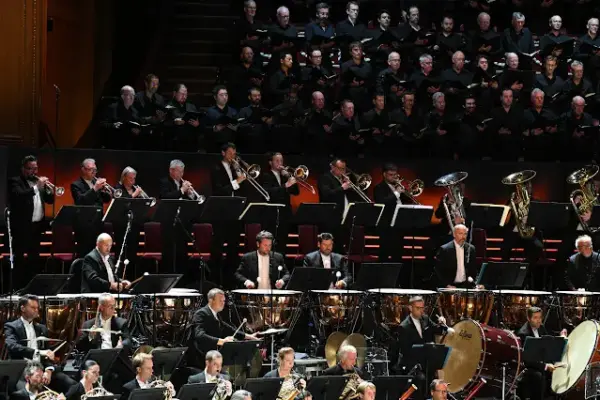
- Ensemble: The venerable Idaho State-Civic Symphony—Idaho’s oldest continuously operating orchestra, established in the early 1900s. The roughly 50-member ensemble blends university students, faculty, and local Pocatello townspeople, under the baton of artistic director Nell Flanders.
- Key Collaborators: Boise-based percussionist Jens Kuross (who performed at the Montana premiere and helped refine the score via continuous feedback) and Jon Armstrong himself, who added soaring electric guitar overdubs post-session.
Future Outlook
Voluntary Breath is not resting on the laurels of its critically acclaimed dual-label release. The work’s itinerary points toward further geographical and emotional milestones.
In April 2027, the Missoula Symphony has programmed the concerto for a high-profile performance, bringing the piece full circle back to the state of Montana, where it was originally commissioned and premiered, and where the emotional blueprint of "Nora’s Theme" was first discovered.
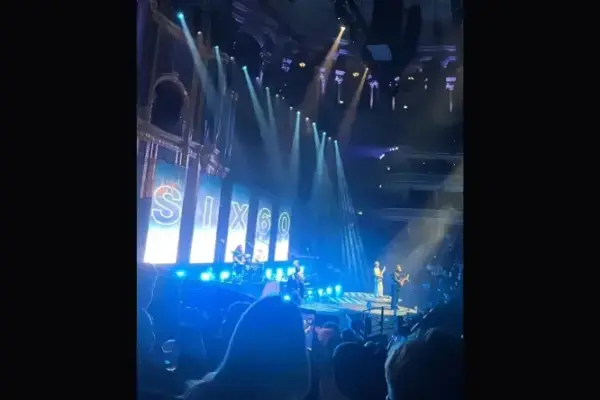
Ultimately, Voluntary Breath transcends the boundaries of contemporary orchestral music. It is a testament to the resilience of the human spirit, an auditory roadmap of trauma and healing, and a father’s enduring gift to his family and the medical workers who saved his son. As evidenced during the Idaho premiere in Pocatello—when young Breen Armstrong walked hand-in-hand with his father onto the stage for the final curtain call—art can, and often does, triumph over the most impossible odds.