Executive Overview
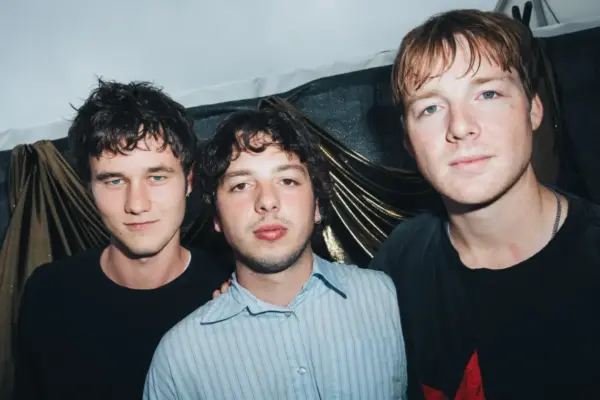
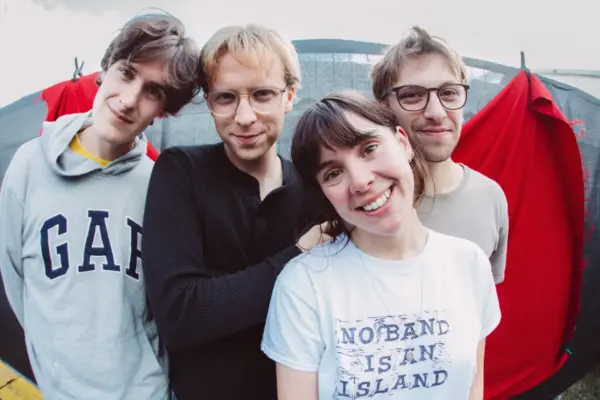
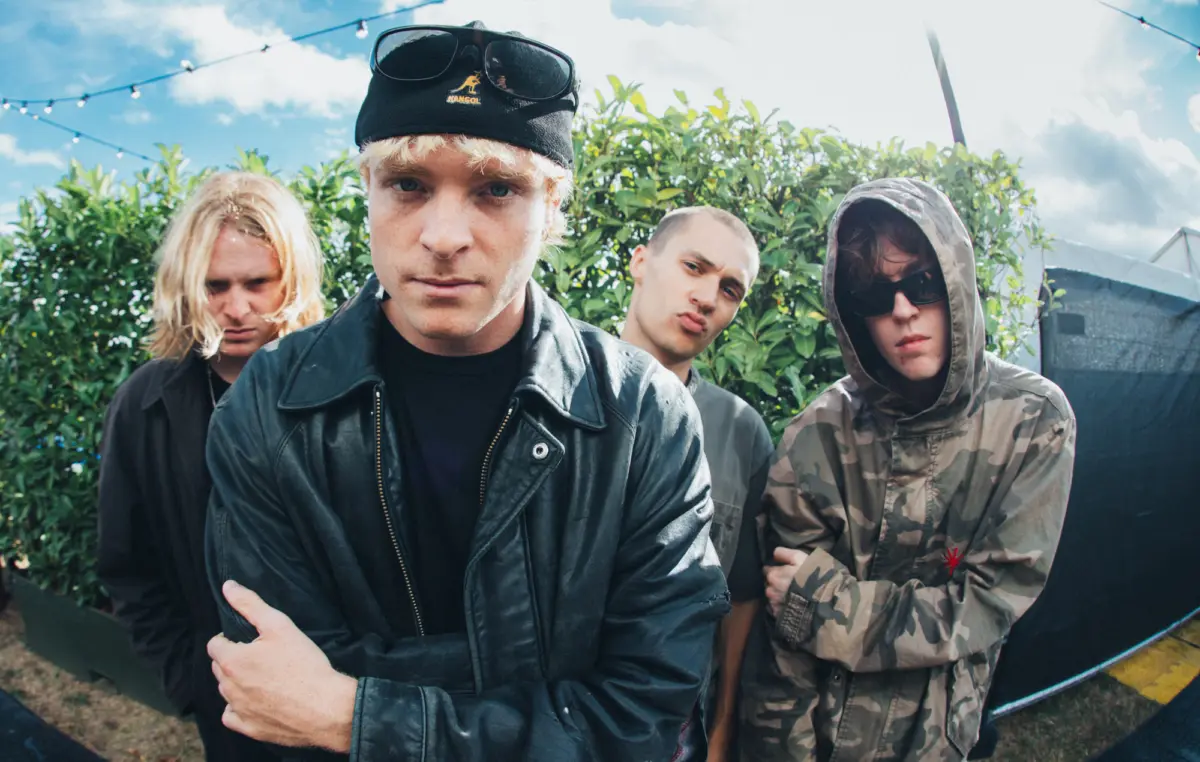
In an era of popular music dominated by clinical precision, grid-aligned rhythms, and flawless digital pitch correction, the London-based alternative rock four-piece Keo is staging a quiet revolution. Led by brothers Finn and Conor Keogh, the band has emerged as one of the most compelling prospects in the modern British guitar scene. Speaking backstage at the Reading Festival 2026 shortly after a triumphant, sweat-drenched performance, the brothers laid bare the creative philosophy driving their highly anticipated debut album, Put A Smile On For Me, scheduled for release on September 25, 2026, via the historic Island Records.
Keo’s artistic manifesto is simple yet increasingly radical: they reject the glossy, sterile perfection of modern studio production in favor of raw, spontaneous, and structurally imperfect live-to-tape recordings. Their upcoming record, tracked alongside producer and close collaborator Harry Jordan, deliberately embraces acoustic anomalies—such as amplifier bleed, room resonance, and first-take vocal strain—to capture the visceral energy that first defined the alternative rock genre. By examining the band’s transition from their self-funded 2025 EP Siren to their major-label debut, this investigative feature explores how Keo is challenging the industry’s obsession with digital standardization and why their philosophy of "productive imperfection" may be exactly what the modern music landscape requires.
Detailed Chronology: From DIY Roots to Island Records
  [Early 2025]        [Mid 2025]          [Late 2025]         [August 2026]       [Sept 25, 2026]
   Recorded            Released            Signed to           Triumphant          Scheduled Debut
   'Siren' EP          'Siren' EP          Island Records      Reading Set         Album Release
 (5-Day Session)     (DIY Success)       (Major Backing)     (NME Interview)      ('Put A Smile...')
The Genesis of ‘Siren’ (2025)
To understand the sonic blueprint of Put A Smile On For Me, one must first examine Keo’s foundational release, the 2025 EP Siren. Recorded before the band secured major-label representation, the EP was born out of financial and temporal necessity. Working with a self-funded budget, the four-piece booked a studio for a mere five days, forcing them to record almost the entirety of the project live in a single room.
"We just had to do what we could do in five days," Finn Keogh recalled. "It was before we had any label backing or anything. I really like it, actually."
This pressure cooker environment fostered an organic, immediate sound that quickly caught the attention of industry tastemakers. However, the constraints of the session meant certain compromises had to be made. The track "Thorn," a live favorite, was not recorded in the live format Finn had envisioned. This unresolved creative ambition became a primary motivator for the band’s debut album, where "Thorn" has been entirely re-recorded to align with their uncompromising live ethos.
The Road to Reading 2026
The momentum generated by Siren propelled Keo from local London clubs to major festival stages. Their performance at Reading Festival 2026 served as a proof-of-concept for their performance-first mentality. Cultivating a dedicated, grassroots fanbase through relentless touring, the band proved that the physical connection of a live show could not be replicated by algorithmic promotion.
Directly after stepping off the Reading stage, the adrenaline-fueled brothers sat down with NME to reflect on their rapid ascent. The festival set was not just a showcase of their catalog, but a declaration of intent for the upcoming album, proving to thousands of spectators that their studio recordings are a direct extension of their stage presence.
The Creation of ‘Put A Smile On For Me’
With the backing of Island Records, Keo was granted the financial freedom and studio time that they lacked during the Siren sessions. Yet, rather than using these resources to build a highly polished, multi-tracked pop-rock record, the band doubled down on their raw origins.
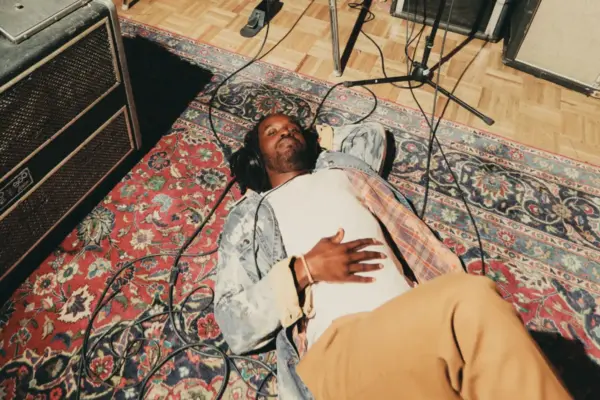
They retreated to a large studio space with producer Harry Jordan. Instead of isolating instruments in separate booths—a standard practice designed to give mixing engineers total control—the band set up in the same room. Amps were turned up, drums were un-baffled, and the music was captured as a singular, cohesive acoustic event. The result is an album that feels alive, breathing with the physical space in which it was created.
Supporting Context & Metrics: The Philosophy of Imperfection
+---------------------------------------------------------------------------------+
|                         THE SPECTRUM OF RECORDING PHILOSOPHIES                  |
|                                                                                 |
|   [STERILE PERFECTION] <----------------------------------> [SPONTANEOUS RAWNESS] |
|   - Quantized drums (Grid-locked)                           - Human micro-fluctuations  |
|   - Isolated tracking (Zero bleed)                          - Room/Amp bleed (Cohesive) |
|   - Autotune/Vocal comping                                  - Single-take live vocals   |
|   - Infinite overdubbing                                    - Minimalist arrangements   |
+---------------------------------------------------------------------------------+
The Anti-Quantization Movement
In contemporary music production, the prevailing methodology relies heavily on "quantization"—the digital correction of rhythmic timing to ensure every drum hit and bass note lands precisely on a predetermined grid. While this creates a clean, easily digestible sound optimized for streaming playlists, it strips away the natural "push and pull" of human musicianship.
Keo’s recording philosophy is a direct reaction against this digital sanitization. Finn Keogh, a self-proclaimed perfectionist, redefined his relationship with the concept of "perfection" during the writing and recording of the new album.
"My idea of perfection, when it comes to music, is the sweet spot between sounding like a record and sounding spontaneous," Finn explained. "So, I don’t obsess over a glossy, perfect-sounding record. I kind of obsess over the perfect middle ground between that and a live performance—which is a really hard way to work, to be honest with you."
Historical Precedents of Productive Flaws
To contextualize their approach, the Keogh brothers point to historical masterpieces that achieved legendary status not despite their technical flaws, but because of them.
1. John Martyn – Solid Air (1973)
For Finn, the benchmark for spontaneous studio magic is John Martyn’s landmark album Solid Air. The record blended folk, jazz, and blues in a hazy, fluid atmosphere that defied conventional studio rigidity.
"I think he was super-high and he didn’t care," Finn noted. "But he’s that talented and the musicians he was performing with were that talented, so it just kind of worked out really nicely." The loose, unhurried nature of Solid Air demonstrates how letting go of rigid control can unlock a deeper level of musical communication.
2. Nirvana – MTV Unplugged in New York (1994)
Conor Keogh pointed to Nirvana’s legendary acoustic performance as the ultimate testament to the power of human error.

"From start to finish, it’s full of mistakes—but it’s those mistakes that make it," Conor remarked. "In ‘The Man Who Sold the World’, Kurt Cobain makes a pretty bad howler, but you look forward to that bit in the song. It’s those bits that aren’t perfect that almost make it perfect."
Nirvana's "The Man Who Sold the World" (MTV Unplugged):
[Clean Guitar Intro] ---> [Slightly Off-Key Solo/Fret Buzz] ---> [Visceral Emotional Peak]
                                    ^                                      ^
                        "The beautiful mistake"                 "The human connection"
The Acoustic Physics of the Studio
The technical execution of Put A Smile On For Me relied heavily on the physical realities of sound wave propagation. When a band records in a single room, a phenomenon known as "amp bleed" occurs. Sound waves from the guitar amplifiers travel across the room and are captured by the drum microphones, and vice versa.
In mainstream commercial music, bleed is avoided at all costs because it prevents engineers from editing individual instruments later. However, Keo and producer Harry Jordan recognized that bleed is the glue that binds a live band’s sound together. It creates a natural acoustic depth and a psychoacoustic sense of space that digital reverbs cannot replicate.
Official Statements: In the Words of Finn and Conor Keogh
During their extensive interview backstage at Reading 2026, the Keogh brothers articulated the emotional and philosophical pillars of their debut album. Below are key excerpts from their discussion, highlighting their uncompromising approach to their craft.
On the "Goosebumps Test" Over Technical Accuracy
"Sometimes the most well-played take isn’t the best take you’ll go for, either. It’s a lot about the energy of the take and the emotion in that take. We’ve had examples where clearly something is out of time, but for whatever reason, that take just gives you goosebumps or something. You all look at each other and go, ‘Isn’t that the reason we’re doing this? To make people feel something?’"
— Conor Keogh
On the Studio Methodology for the Debut Album
"That’s kind of what we did with this new record: we just spent a good amount of time in the studio, essentially just playing these songs over and over and over again until we felt like all of the dots aligned in those takes. And those were the tracks that made the record."
— Finn Keogh
On Resisting the Temptation of Over-Production
"I can tell you loads of things about [the album]. I love talking about it. It’s not perfect—at all—but I like the edge it has. We definitely obsessed over not giving it much production. That was kind of the idea of the production around the record. We would really debate whether one harmony should be on it.
"Our friend Harry Jordan just basically captured us in a big room, and we had the amps bleeding into the drum mics. It was mostly a live vocal, as well. We have cut our teeth through live music and have built a fanbase through live music, so why not make a live record? I think people need that right now."
— Finn Keogh
Future Outlook: The September Release and Beyond
The Stakes for ‘Put A Smile On For Me’
When Put A Smile On For Me arrives on September 25, 2026, it will serve as a critical litmus test for the viability of raw, unpolished alternative rock in the major-label ecosystem. Island Records’ decision to back a record recorded with minimal production, live vocals, and intentional amp bleed indicates a potential shift in industry confidence. There is a growing sense that audiences, fatigued by the hyper-optimized and predictable nature of algorithmically engineered tracks, are craving authentic human vulnerability.
                  =========================================
                  ALBUM PROFILE: 'PUT A SMILE ON FOR ME'
                  =========================================
                  Artist:         Keo
                  Release Date:   September 25, 2026
                  Label:          Island Records
                  Producer:       Harry Jordan
                  Key Singles:    "Pistol", "Thorn" (Re-recorded)
                  Sonic Profile:  Live vocals, room bleed, analog warmth
                  =========================================
The Landscape of Reading & Leeds 2026
Keo’s performance and subsequent manifesto occurred against the backdrop of a vibrant, forward-looking Reading & Leeds Festival 2026. The festival lineup highlighted a diverse array of artists pushing the boundaries of their respective genres, including:
- Holly Humberstone: Delivering intimate, lyrically dense indie-pop.
- Westside Cowboy: Bringing raw, genre-blending energy to the stage.
- Loyle Carner: Presenting deeply poetic, socially conscious hip-hop.
- Violet Grohl: Showcasing powerful, legacy-carrying rock performances.
- Florence + the Machine: Offering theatrical, transcendent orchestral rock.
- Kneecap: Injecting fierce, political, bilingual Irish rap into the weekend.
- Lola Young: Surprising fans with an unannounced, critically acclaimed secret set.
This eclectic mix of talent underscores a broader cultural movement toward distinct artistic voices. Within this landscape, Keo represents the traditionalist, yet paradoxically radical, guitar-driven wing of this new creative class.
Concluding Thoughts
By rejecting the safety net of modern studio editing, Keo is taking a significant creative risk. If Put A Smile On For Me resonates with the public, it could pave the way for a broader resurgence of analog recording techniques and raw performance styles in mainstream rock.
For Finn and Conor Keogh, however, the success of the record is not measured by chart positions, but by the preservation of their artistic integrity. By capturing the elusive "sweet spot" between a polished studio record and the unpredictable magic of a live show, Keo is poised to deliver an album that does not just seek to entertain, but to make listeners truly feel something real again.