Executive Overview
In the sweltering, packed basement of Chalk during Brighton’s prestigious tastemaker festival, The Great Escape, a defining musical moment of 2026 unfolded. It did not belong to a glossy synth-pop outfit or a heavily algorithmic indie-rock band, but to a Dublin sextet whose sonic architecture is built upon foundations over a century old.
Madra Salach (literally translating from Irish to "Dirty Dog") delivered a performance of sheer, unadulterated intensity. By fusing the raw, confrontational energy of punk with Irish traditional arrangements dating as far back as the 1870s, the group has captured a distinct zeitgeist. Their setlist—which weaves seamlessly between historical narratives of displacement and raw, original compositions exploring grief, loss, and existential exhaustion—has positioned them at the forefront of the contemporary Irish folk renaissance.
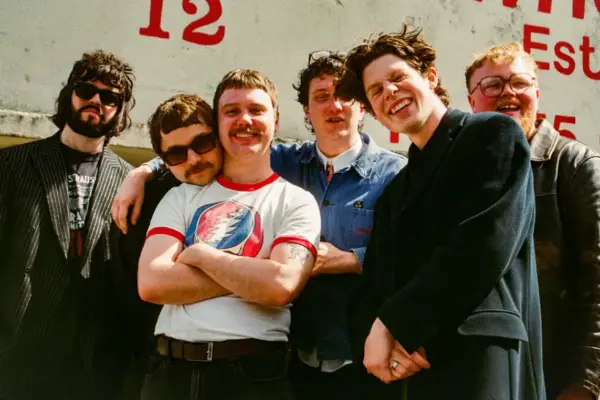
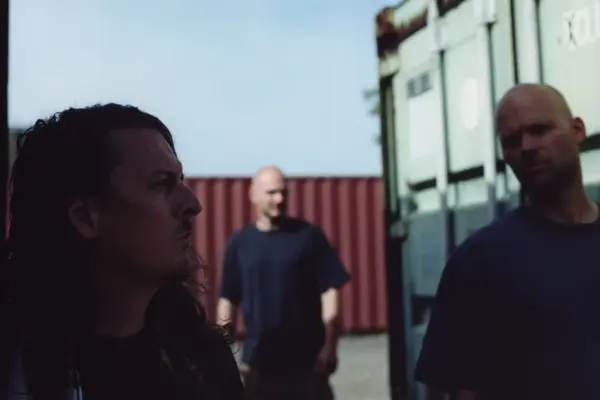
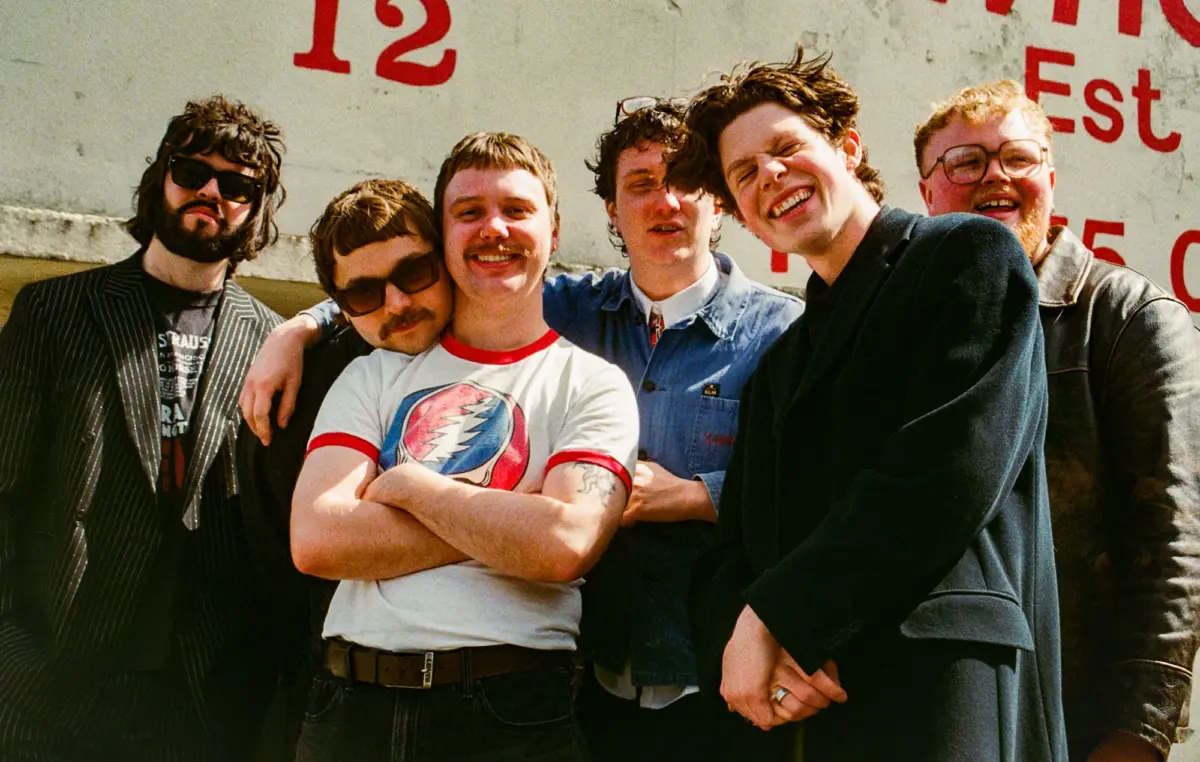
The band’s sudden ascent represents a broader cultural shift. In an era often criticized for over-sanitized, playlisted music, Madra Salach’s appeal lies in their uncompromising authenticity. Fronted by the deeply expressive Paul Banks, the six-piece—completed by Jack Martin (mandolin), Adam Cullen (guitar), Jack Lawlor (bass), Dara Duffy (drummer), and Maxime Arnold (harmonium)—has transitioned from playing intimate pub sessions in Dublin to securing major slots at over 30 international festivals in 2026. This investigative feature explores the band’s rapid trajectory, the historical and political lineages that inform their music, and the psychological weight of their live performances.
Detailed Chronology
[Early 2023] ----------------> [Late 2023] --------------> [January 2026] -----------> [Summer 2026]
Pub sessions at "The 1884"     SIPTU political history    Debut EP "It's A Hell       30+ festival dates,
by Banks & Duffy               fuses with drone-folk      Of An Age" released         including Green Man
2023: The Blurry Beginnings at "The 1884"
The origins of Madra Salach are rooted in the informal, community-driven world of the Dublin pub session. In early 2023, vocalist Paul Banks and drummer Dara Duffy began performing regular live sets at their local establishment, The 1884.
These early performances were characterized by high-energy, rowdy renditions of classics by The Pogues and The Dubliners. At this stage, the project was focused primarily on providing "drinking music" for local patrons—an exercise in community, heritage, and raw performance.
Late 2023: The Unionist Fusion
The trajectory of the project shifted when mandolin player Jack Martin approached Banks with a more conceptual proposition. Martin, whose grandfather served as the president of SIPTU (Services Industrial Professional Technical Union), the largest trade union in Ireland, wanted to explore the reinterpretation of historic workers’ and labor songs.
Instead of traditional acoustic arrangements, Martin envisioned these historical struggles updated through a modern, avant-garde lens: utilizing tape loops, ambient drones, and heavy, atmospheric textures.
Over the latter half of 2023, these two distinct creative impulses began to merge. The rowdy, pub-honed energy of Banks and Duffy collided with Martin’s politically charged, drone-heavy folk sensibilities. To realize this expanded sound, the lineup was completed with Adam Cullen on guitar, Jack Lawlor on bass, and French-born harmonium player Maxime Arnold, whose instrument would provide the monolithic, sustained drones that define the band’s signature atmosphere.
January 2026: ‘It’s A Hell Of An Age’
Following two years of intense writing, arrangement, and local gigging, Madra Salach released their debut EP, It’s A Hell Of An Age, in January 2026. The title of the EP was pulled directly from a line in ‘Murphy Can Never Go Home’—a 1950s ballad detailing the alienation of the Irish diaspora in postwar Britain.
The EP was met with immediate critical acclaim, praised for its ability to treat archival traditional songs not as static museum pieces, but as living, breathing vessels of contemporary socio-political commentary.
Summer 2026: International Breakthrough
By mid-2026, Madra Salach’s localized Dublin success erupted into an international phenomenon. Having never played a festival outside of Ireland prior to 2026, the band embarked on a grueling summer schedule of approximately 30 festival bookings.
Key milestones included a prominent support slot at Belfast hip-hop trio Kneecap’s massive London all-day event, followed by highly anticipated performances at TRNSMT, Electric Picnic, and Wales’ prestigious Green Man Festival.
Supporting Context & Metrics
The Broader Irish Folk Renaissance
Madra Salach’s rise does not occur in a vacuum. They are part of a powerful, critically lauded wave of modern Irish artists who have reimagined traditional music for the 21st century.
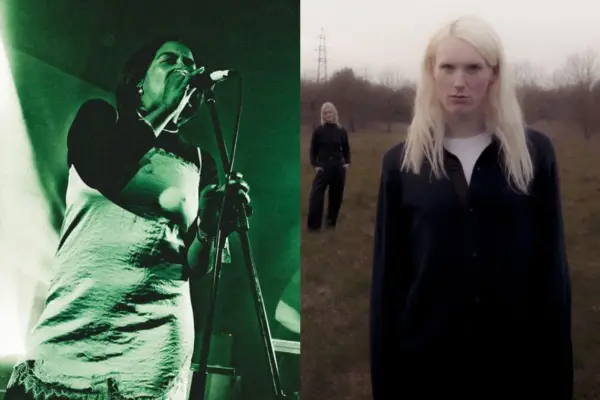
This movement—spearheaded by the dark, drone-heavy arrangements of Dublin group Lankum, the raw archival work of Ye Vagabonds, and the rowdy punk-folk of The Mary Wallopers—has dismantled the tourist-friendly, "shillelagh-and-shamrock" stereotypes of Irish music.
Traditional Irish Music Landscape (2020s)
│
├── Dark Ambient/Drone Folk (Lankum, ØXN, Madra Salach)
├── Traditional/Archival Revival (Ye Vagabonds, Radie Peat)
└── Satirical/Socio-Political Punk & Hip-Hop (Kneecap, The Mary Wallopers)
By incorporating elements of post-rock, doom metal, and industrial music, these acts have unlocked a deeper, more visceral element of the folk tradition. Traditional songs are inherently dark, dealing with execution, poverty, famine, forced emigration, and systemic oppression. Madra Salach leans heavily into this darkness, utilizing the harmonium and tape loops to construct a heavy wall of sound that mirrors the historical weight of the lyrics.
Performance and Market Metrics
The rapid commercial scaling of Madra Salach is evidenced by several key indicators:
- Touring Volume: From 0 international festival appearances in 2025 to 30+ major festival bookings across the UK and Europe in 2026.
- Merchandise Saturation: Industry observers noted that at Kneecap’s London showcase, approximately one in five attendees in the multi-thousand-capacity crowd were sporting Madra Salach apparel, indicating an exceptionally high level of fan engagement for an emerging act.
- Venues: Transitioning from 100-capacity Dublin pubs to packed showcases at 800+ capacity venues like Chalk in Brighton within a 12-month window.
Official Statements and Analytical Insight
The Labor Legacy and Oral History
The political and historical consciousness of the band is central to their identity. Jack Martin’s familial connection to the Irish labor movement heavily influences their thematic direction. Speaking on his grandfather’s devotion to the union leader James "Jim" Larkin, who led the historic 1913 Dublin Lockout, Martin states:
"I grew up hearing those songs and, as I got older, I understood the context a lot more. Usually people’s grandparents have photos of Jesus on the walls, but mine had Jim Larkin. Jim Larkin is my granddad’s Pope."
This deep-seated respect for working-class history aligns perfectly with Paul Banks’ understanding of the folk genre. For Banks, folk music is not an academic exercise, but a living record of the marginalized:
"I think the centre of the folk ethos is that it’s just human stories—stories of individuals as opposed to the history book stories of battles and conquerors and kings. It’s a people’s oral history, so as long as you’re writing from a place of truth, everything else can follow."
The Catharsis of "The Man Who Seeks Pleasure"
Nowhere is this pursuit of truth more evident than in the band’s live closer, ‘The Man Who Seeks Pleasure’. Written in Jack Martin’s bedroom, the track acts as a slow-burning, emotionally devastating climax to their set.
The central refrain—"For the man who seeks pleasure, is the man who seeks pain"—serves as an exploration of self-destruction and coping mechanisms.
"For the man who seeks pleasure, is the man who seeks pain"
  │
  ├── Vocal Delivery: Screamed over sustained harmonium drone
  ├── Psychological Impact: High emotional dysregulation post-show
  └── Audience Reception: Shared catharsis and emotional purging
Reflecting on the song’s intense emotional toll, Paul Banks explains:
"The thing that I like about that line is that it’s not saying anything new. It’s a behavioural pattern that a lot of people are stuck in that’s been summed up into a sentence that I can then scream over a drone, which then feels cathartic for me and seems to be cathartic for people watching."
Banks acknowledges that this level of performance requires a genuine psychological sacrifice:
"For a long time when we were gigging it, I’d almost always get too close to the line emotionally, and I’d be really dysregulated for an hour after the show. And I think that speaks to… I like to think there’s something special about that song."
Navigating Cultural Authenticity
As traditional Irish culture enjoys an unprecedented level of global cool, Madra Salach are careful to navigate the line between genuine expression and performative heritage. Banks points out that the success of their predecessors has freed them from having to play to lazy cultural expectations:
"I think we’re very lucky that we’re not having to plot this course on our own. People have the context. We don’t have to pander too much to like, swilling pints of Guinness and wearing big jumpers because other bands have showcased that, culturally, we have a lot more to offer than that—even though I love big jumpers and Guinness. We jumped on the bandwagon, and it’s going great!"
Ultimately, Banks attributes their rapid connection with audiences to a collective rejection of artificiality:
"It’s funny, because I could do all the same noises and movements that I do, but people have really highly-tuned bullshit detectors, and if I didn’t mean it, they’d be like, ‘Ah, this guy’s fucking putting it on.’ So I really try to go to the emotional centre of the songs and stay with it, and I find that to be one of my favourite things about singing—just inhabiting that place."
Future Outlook
The Road to a Debut Album
As Madra Salach continues to conquer the European festival circuit, the primary challenge facing the sextet is translating their highly physical, volatile live energy into a cohesive full-length studio album.
Thus far, their writing process has been shaped by the stage. The newer material currently being road-tested is described by the band as having "more teeth"—faster tempos, harsher noise elements, and structures designed specifically to provoke physical, energetic reactions from large festival crowds.
While their grueling touring schedule has left little time for extended studio sessions, the band intends to anchor their next body of work in the same live intensity that defined their breakout year.
Long-Term Cultural Impact
Madra Salach’s trajectory suggests that the global appetite for heavy, experimental folk music is far from reaching its peak. By rejecting the polished, bloodless production of mainstream commercial music in favor of drone-assisted emotional exorcisms, the band has tapped into a profound sense of modern anxiety.
Whether they are singing about a displaced laborer from 1950 or the self-destructive patterns of a modern youth, Madra Salach proves that the human struggle remains remarkably unchanged. As they prepare for major upcoming appearances—including a landmark set at the Green Man Festival on August 20—the Dublin band is no longer just participating in the modern folk revival; they are actively defining its future.