Executive Overview
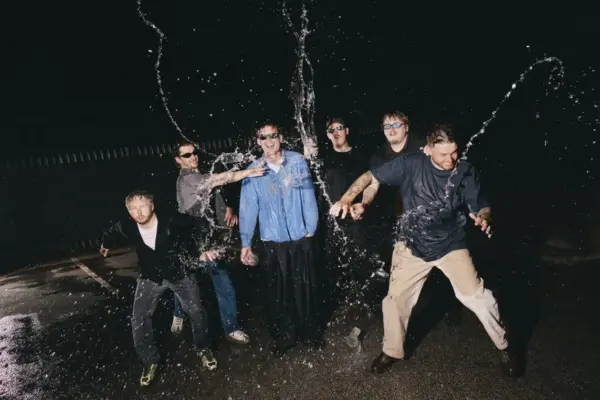
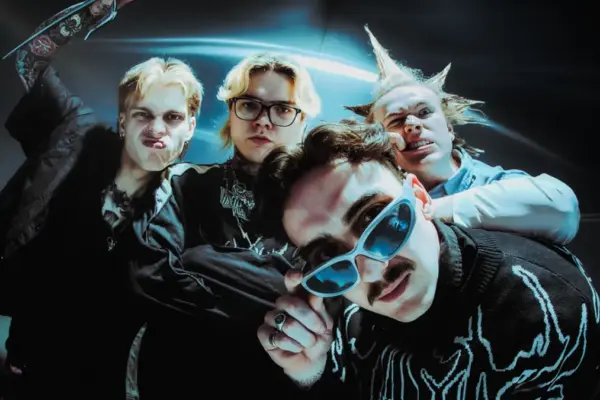
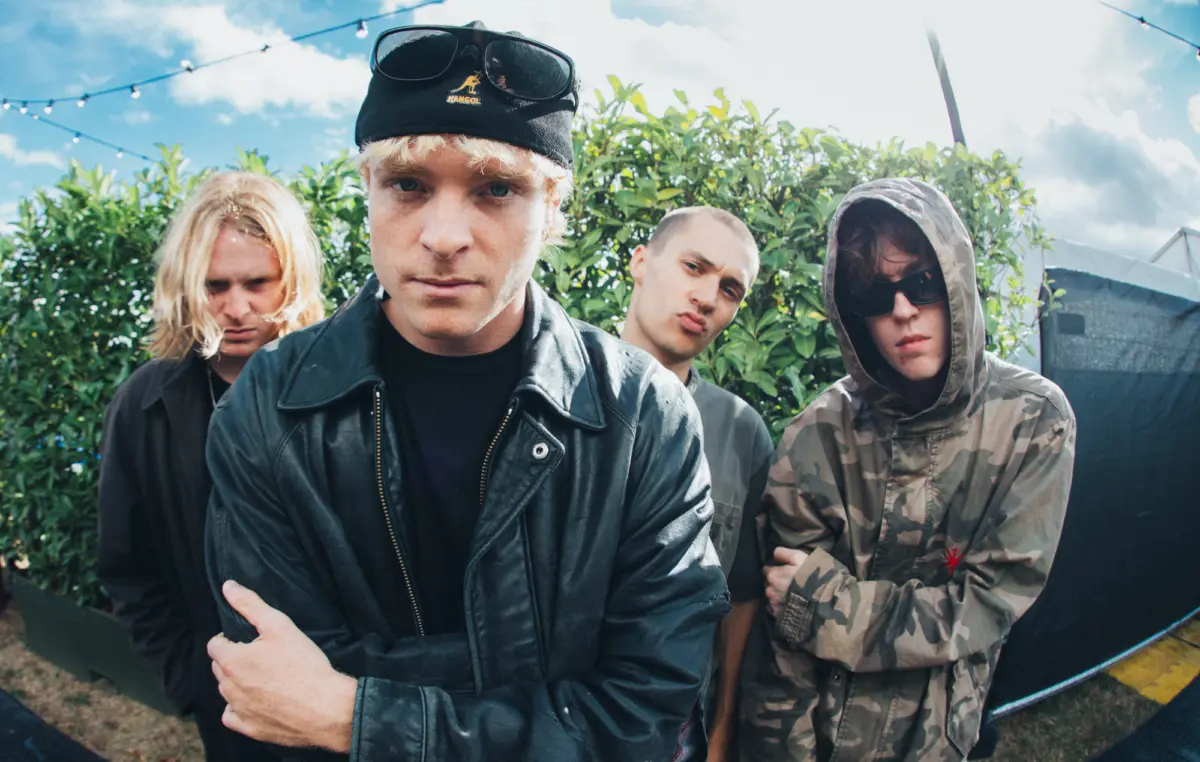
In an era dominated by micro-edited digital audio workstations, pitch-perfect vocal correction, and hyper-polished production, the London-based alternative rock quartet Keo is staging a quiet revolution. Fresh off a career-defining performance at the Reading Festival 2026, the band—spearheaded by brothers Finn and Conor Keogh—has officially detailed their highly anticipated debut studio album, Put A Smile On For Me. Scheduled for release on September 25 via Island Records, the record promises to be a stark, visceral counter-narrative to the clinical precision of contemporary commercial rock.
Speaking backstage to NME shortly after leaving the stage at Reading, the Keogh brothers laid bare their creative philosophy. Rather than utilizing the vast resources of their new major-label backing to craft a glossy, radio-friendly product, Keo has doubled down on the raw, live-in-the-room energy that first garnered them a dedicated underground following. By embracing bleeding microphones, unedited vocal takes, and the inevitable human errors of live instrumentation, the band seeks to capture a rare commodity in modern music: genuine emotional resonance.
Detailed Chronology
The Genesis: From DIY Roots to ‘Siren’ (2025)
Keo’s rapid ascent within the British alternative music scene is rooted in a steadfast commitment to live performance. Before securing a major record deal with Island Records, the band operated on the fringes of the London indie circuit, honing a sound that blends the heavy textures of 1990s grunge with the melodic introspection of classic British shoegaze and folk.
In 2025, the band released their breakthrough EP, Siren. Recorded under severe financial and temporal constraints, the project was completed in just five days without any external label backing.
[2025: "Siren" EP] ───► [Early 2026: Island Records Signing] ───► [August 2026: Reading Festival] ───► [Sept 25, 2026: Debut Album]
(Recorded in 5 Days)     (Transition to Major Label)             (Mainstage Debut & Backstage)     ("Put A Smile On For Me")
"For the most part, it was all done live," lead vocalist and guitarist Finn Keogh recalled. "It was before we had any label backing or anything. So we just had to do what we could do in five days."
Despite the rushed schedule, the EP’s raw urgency resonated with critics and fans alike. However, one key track from that era, "Thorn," eluded their live-recording ethos due to time constraints—a compromise that lingered in the band’s collective memory. This unfinished business ultimately became the catalyst for the sonic direction of their debut album, prompting them to re-record "Thorn" in a live setting to restore its intended emotional weight.
The Transition to Island Records (2026)
Signing with a major label like Island Records often presents independent bands with a crossroads: scale up production to meet commercial radio standards, or fight to preserve the sonic identity that attracted the label in the first place. For Keo, the choice was immediate. Rather than expanding their production budget to hire top-tier pop producers, they sought to replicate the high-stakes, spontaneous environment of their early DIY sessions, but with the luxury of time.
This transition culminated in their landmark booking at Reading Festival 2026. Performing to an energized crowd, the band proved that their guitar-driven, analog-heavy sound translates effortlessly to massive festival stages, setting the stage for the autumn release of Put A Smile On For Me.
Supporting Context & Metrics
The Mechanics of "Live-in-the-Room" Production
To understand the distinct sonic footprint of Put A Smile On For Me, it is necessary to examine the technical parameters of its recording process. Working alongside producer and close friend Harry Jordan, Keo bypassed standard modern tracking methods—where instruments are recorded in isolation to allow for seamless digital editing.
Instead, the band recorded together in a single large room, employing techniques that intentionally invited acoustic imperfection:
- Amplifier Bleed: Guitar and bass amplifiers were placed in the same physical space as the drum kit, allowing the sound of the instruments to bleed into the drum microphones. This creates a cohesive, natural acoustic space that is impossible to replicate artificially.
- Live Vocal Tracking: Rather than overdubbing vocals in a pristine, isolated booth, Finn Keogh recorded the majority of his vocal takes live while performing alongside the band, capturing the physical strain and authentic dynamics of the performance.
- Minimalist Overdubs: The band heavily restricted the use of double-tracking and secondary harmonies, debating the inclusion of every single additional vocal layer to ensure the record remained sparse and direct.
| Recording Element | Standard Modern Production | Keo’s Production Method (Put A Smile On For Me) |
|---|---|---|
| Vocal Tracking | Highly processed, multi-tracked, pitch-corrected | Raw, single-take, mostly live in-the-room |
| Instrument Isolation | Complete separation of elements to prevent bleed | Open-room recording with deliberate microphone bleed |
| Editing & Alignment | Snapped to a digital grid (quantized) | Natural tempo fluctuations and human timing |
| Production Ethos | Glossy, polished, optimized for streaming playlists | Spontaneous, atmospheric, prioritizing emotional impact |
Historical Precedents of Beautiful Imperfection
In defending their rejection of pristine studio production, the Keogh brothers point to historical masterpieces that achieved legendary status precisely because of their flaws.
John Martyn – Solid Air (1973)
Finn Keogh cites singer-songwriter John Martyn’s landmark album Solid Air as a primary inspiration for capturing a vibe over technical perfection. Recorded with a loose, jazz-inflected backing band that included Pentangle bassist Danny Thompson, the record is famous for its hazy, late-night atmosphere. "I think he was super-high and he didn’t care," Finn noted. "But he’s that talented and the musicians he was performing with were that talented, so it just kind of worked out really nicely."
Nirvana – MTV Unplugged in New York (1994)
For Conor Keogh, the ultimate testament to the power of imperfection is Nirvana’s iconic acoustic live album. Recorded in a single take in front of a live studio audience, the performance is littered with minor errors, voice cracks, and feedback.
"From start to finish, [it’s] full of mistakes—but it’s those mistakes that [make it]," Conor explained. "In ‘The Man Who Sold the World’, Kurt Cobain makes a pretty bad howler, but you look forward to that bit in the song. It’s those bits that aren’t perfect that almost make it perfect."
Official Statements
The Philosophy of the "Sweet Spot"
For Finn Keogh, the pursuit of musical perfection is not about achieving flawless execution, but about capturing a fleeting moment of human connection. This philosophy requires a difficult balancing act in the studio.

"There is the temptation [to tinker with recordings], but my idea of perfection, when it comes to music, is the sweet spot between sounding like a record and sounding spontaneous. So, I don’t obsess over a glossy, perfect-sounding record. I kind of obsess over the perfect middle ground between that and a live performance—which is a really hard way to work, to be honest with you."
— Finn Keogh
Prioritizing Emotion Over Technique
Conor Keogh expanded on this sentiment, emphasizing that technical proficiency can sometimes dilute the emotional urgency of a song.
"Sometimes the most well-played take isn’t the best take you’ll go for, either. It’s a lot about the energy of the take and the emotion in that take."
— Conor Keogh
Finn recalled instances during the album sessions where technical errors were intentionally preserved because they possessed an undeniable emotional weight:
"We’ve had examples where clearly something is out of time, but for whatever reason, that take just gives you goosebumps or something. You all look at each other and go, ‘Isn’t that the reason we’re doing this? To make people feel something?’"
— Finn Keogh
The Rejection of Overproduction
Discussing the upcoming debut album, Finn expressed a deep pride in the uncompromising nature of the recordings:
"It’s not perfect—at all—but I like the edge it has. We definitely obsessed over not giving it much production. That was kind of the idea of the production around the record. We would really debate whether one harmony should be on it.
Our friend Harry Jordan just basically captured us in a big room, and we had the amps bleeding into the drum mics. It was mostly a live vocal, as well. We have cut our teeth through live music and have built a fanbase through live music, so why not make a live record? I think people need that right now."
— Finn Keogh
Future Outlook
High Anticipation for ‘Put A Smile On For Me’
As the September 25 release date approaches, music industry insiders are closely watching Keo’s trajectory. Island Records’ willingness to back a raw, minimally produced rock album suggests a potential shift in major-label risk tolerance, perhaps signaling a growing appetite among younger audiences for authentic, analog performances in a hyper-digitalized cultural landscape.
Reading & Leeds 2026: A Catalyst for Growth
The band’s performance at Reading 2026 serves as a major springboard. Shared with an eclectic and formidable lineup, the festival continues to be the ultimate proving ground for British guitar music. As the weekend progresses, the festival will host high-profile sets from:
- Florence + the Machine (bringing their sweeping, theatrical art-rock to the main stage)
- Loyle Carner (delivering introspective, jazz-infused hip-hop)
- Holly Humberstone (showcasing her celebrated indie-pop songwriting)
- Kneecap (the Irish rap trio known for their explosive, politically charged live shows)
- Violet Grohl and Westside Cowboy
- A highly anticipated secret set from rising star Lola Young
For Keo, being positioned alongside such diverse talent underscores their status as one of the UK’s most compelling new live acts. With Put A Smile On For Me, the band is not just releasing a collection of songs; they are issuing a manifesto on the enduring power of raw, unfiltered human expression.