Executive Overview
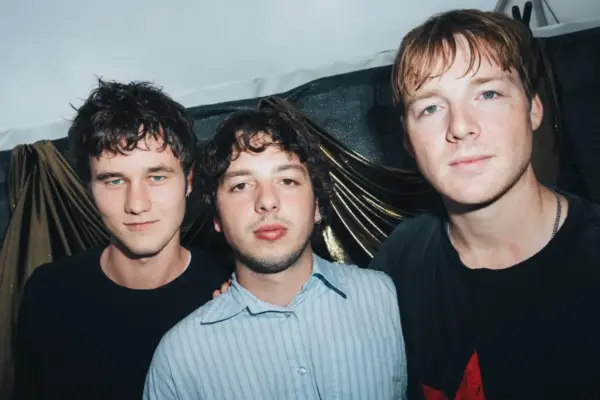
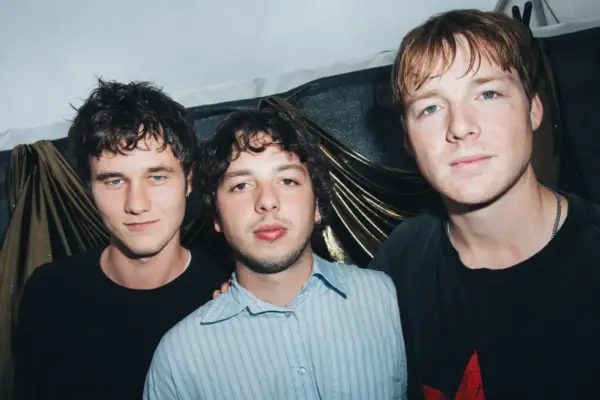
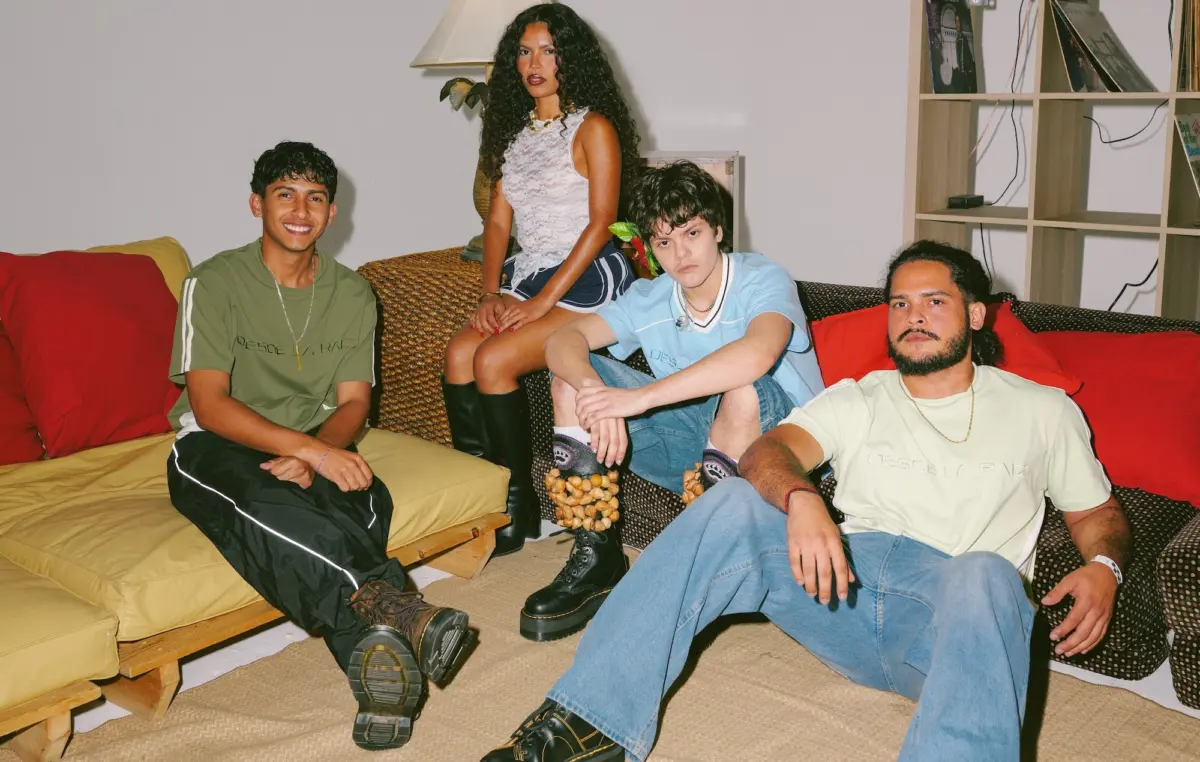
In the contemporary music industry, the trajectory from a localized bedroom project to stadium-level global performance typically requires years of major-label backing, systematic radio campaigns, and incremental touring. However, the Puerto Rican indie-fusion quartet Chuwi has shattered this conventional playbook. Before releasing their debut studio album, the band—composed of siblings Willy, Lorén, and Wester Aldarondo Torres, alongside percussionist Adrián López Soto—found themselves performing before audiences of tens of thousands across Latin America, Australia, and Europe.
The catalyst for this unprecedented acceleration was a co-sign from global megastar Bad Bunny. In 2024, Chuwi was invited to feature on the track "Weltita" from Bad Bunny’s monumental album, Debí Tirar Más Fotos. This collaboration transformed the group from a well-kept secret of Puerto Rico’s northwest coast into the sole opening act for Bad Bunny’s subsequent world tour.
This analytical profile examines Chuwi’s rapid ascension, tracing their origins from a pandemic-era bedroom project in Isabela to their status as one of the most culturally vital, socio-politically conscious voices in modern Latin music. Through an exploration of their sonic genealogy, the socio-economic realities of contemporary Puerto Rico that shape their lyrics, and the strategic decisions behind their upcoming debut album, this report provides an authoritative look at a band redefining the boundaries of Caribbean music.
Detailed Chronology
[2020: Pandemic Genesis]
   │  Willy, Lorén, and Wester form Chuwi in Isabela, PR; record early tracks in parents' bedroom.
   ▼
[Late 2021: Live Transition]
   │  First live performance offer; percussionist Adrián López Soto joins, shifting the band's dynamic.
   ▼
[2022–2024: The EP Trilogy Begins]
   │  Release of 'Pan' (2022) and 'Tierra' (2024) EPs; band builds a dedicated local following.
   ▼
[2024: The Bad Bunny Catalyst]
   │  Feature on Bad Bunny's "Weltita" ('Debí Tirar Más Fotos'); selected as sole world tour opener.
   ▼
[2024–2026: Global Arenas & Homecoming]
   │  Year-long international tour concludes with a two-day finale at Hiram Bithorn Stadium.
   ▼
[Late 2026: The Debut Album]
   │  Scheduled release of their highly anticipated, politically charged debut LP.
2020–2021: Pandemic Genesis and Bedroom Production
Chuwi was formed during the height of the COVID-19 pandemic in the northwest municipality of Isabela, Puerto Rico. Isolated from the island’s active live music scenes in San Juan and Mayagüez, the siblings Willy, Lorén, and Wester Aldarondo Torres began experimenting with digital audio workstations in their parents’ home.
Their early work was characterized by hazy, low-tempo R&B and electronic indie pop. Their first single, "Somnia," featured an image of their family dog, Chewie, on the cover—a pet brought home by their sister, Álani. When uploading the track, the siblings realized they lacked a band name. Spotting the dog asleep on their parents’ bed, they settled on the name, adapting the spelling to "Chuwi" to give it a distinctly Hispanic phonetic quality.
Late 2021: Transitioning to a Live Unit
In late 2021, the trio received their first invitation to perform live. Recognizing that their bedroom-produced, electronic-heavy tracks required organic energy to translate to a stage, they recruited Wester’s high school friend, Mayagüez native Adrián López Soto, as a percussionist. López Soto’s formal percussion training brought a grounding, rhythmic precision that allowed the band to bridge their electronic foundations with traditional Afro-Caribbean rhythms.
2022–2024: The EP Era and Local Circuit Consolidation
With a complete lineup, Chuwi began to systematically explore the rich musical heritage of Puerto Rico. This period of artistic maturation yielded two critical extended plays:
- Pan (2022): An EP that marked their initial foray into blending local indie-pop sensibilities with traditional Puerto Rican song structures.
- Tierra (2024): A project that leaned heavily into ancestral Afro-Caribbean rhythms, specifically plena and salsa, layered beneath modern synthesizers and introspective lyricism.
Through these releases, the band became a staple of Puerto Rico’s independent music circuit, performing in small venues, university towns, and local festivals.
2024–2026: The Bad Bunny Endorsement and Global Tour
In 2024, Chuwi’s trajectory shifted permanently. Bad Bunny, a close observer of independent Puerto Rican talent, tapped the group to collaborate on "Weltita," a track on his highly anticipated album Debí Tirar Más Fotos.
The critical and commercial success of the album led to Chuwi being selected as the sole opening act for Bad Bunny’s extensive world tour, which spanned Latin America, Australia, and Europe. This grueling yet transformative year-long tour culminated in a massive, sold-out two-day homecoming finale at the historic Hiram Bithorn Stadium in San Juan—an arena known for hosting legendary sporting events and monumental concerts.
Supporting Context & Metrics
To understand Chuwi’s appeal, one must analyze the dual forces that drive their art: their complex sonic genealogy and the socio-political environment of modern Puerto Rico.
Sonic Genealogy: The Synthesis of Local and Global Influences
Chuwi’s sound is a sophisticated hybridization of disparate musical styles. This eclectic DNA stems from the members’ upbringings and diverse musical exposures:
| Influence Category | Key Artists / Elements | Impact on Chuwi’s Sound |
|---|---|---|
| Traditional Caribbean | Juan Luis Guerra, Marc Anthony, Silvio Rodríguez | Foundational percussion patterns, call-and-response vocals, and organic brass arrangements. |
| Puerto Rican Folk/Protest | Haciendo Punto en Otro Son | Poetic lyricism and a commitment to documenting the struggles of the Puerto Rican working class. |
| 80s Spanish Pop | Mecano | Narrative songwriting structures and dramatic synthesizer lines (prominently heard on their track "Mundi"). |
| Modern Global Indie/Electronic | Foster the People, Empire of the Sun, Skrillex, Black Eyed Peas | High-energy production, side-chained synthesizers, and genre-blending arrangement techniques. |
Willy’s early introduction to music production came from his father, who painstakingly recreated songs by Christian artist Jesús Adrián Romero from scratch for their local church. Simultaneously, their mother exposed the siblings to a steady diet of American pop, Caribbean folk, and Latin ballads during daily school commutes, cementing a boundary-free approach to genre.
The Socio-Political Landscape of Contemporary Puerto Rico
While Chuwi’s music is rhythmically infectious, their lyrical themes have increasingly focused on the harsh realities of living in Puerto Rico and its diaspora. The band’s evolution from dreamy R&B to politically conscious indie-fusion reflects the systemic challenges currently facing the island:
- The Housing Crisis: Rapid gentrification, fueled by tax incentives for foreign investors (such as Act 22/60), has priced local Puerto Ricans out of the housing and rental markets.
- Infrastructure Collapse: Chronic failure of the electrical grid (LUMA Energy) and a near-total absence of reliable public transportation necessitate car ownership, placing an additional financial burden on the working class.
- The Diaspora Experience: A mass exodus of young professionals and creatives fleeing economic stagnation, creating a sense of displacement and longing for home.
                  [Systemic Issues in Puerto Rico]
             ┌───────────────────┼───────────────────┐
             ▼                   ▼                   ▼
     Housing Inflation      Grid Failures       Lack of Public
     & Gentrification     & Outages (LUMA)      Transportation
             │                   │                   │
             └───────────────────┬───────────────────┘
                                 ▼
                    [Lyrical Muse of 'Tierra']
                                 │
                                 ▼
                     [Socio-Political Songs]
During their live performances of the song "Tierra" on global stages, percussionist Adrián López Soto regularly unfurls the Puerto Rican resistance flag—a black-and-white monochromatic version of the traditional flag that emerged in 2016 as a symbol of protest against colonial oversight, fiscal austerity, and systemic neglect.
Official Statements
The members of Chuwi reflect on their sudden rise with a mixture of humility, artistic clarity, and an acute sense of responsibility.

Speaking on the initial shock of being thrust onto a global stage alongside Bad Bunny, lead vocalist and producer Willy Aldarondo Torres recalled the emotional weight of the transition:
"We were just starting in the local scene in Puerto Rico, and suddenly something like this got dropped onto you. We obviously had to put the initial shock to the side and focus on the song, but after, it’s like, ‘What on earth is going to happen now?’ Nobody could have predicted what happened after, where we would be, and where we are now."
For percussionist Adrián López Soto, the international tour was not merely about exposure, but about cultural representation and political expression:
"There’s a point in all our shows when we perform ‘Tierra’ where I bring out the Puerto Rican resistance flag and that of the country we’d be performing in. Having the Puerto Rican flag and the resistance flag together, and everyone deeply understanding both of them, was unforgettable."
Synthesizer player and bassist Wester Aldarondo Torres emphasized how the live experience reshaped their collective identity:
"It was euphoric… After releasing Pan and Tierra, we started making the rounds in Puerto Rico’s local circuit. People started speaking of us as a band, and we just took it in stride. But I still feel like we are transitioning from [experimenting at home to being a live band]."
In a detailed voice note, vocalist Lorén Aldarondo Torres articulated the band’s organic shift toward socio-political commentary, explaining that their songs are born from the struggle to survive on the island:
"All we could sing about was what we were living and experiencing. We didn’t have anything else to talk about. Our music is now viewed through a social-political lens, and that’s very cool. We love it, but really, it came from the general intent of living normal lives and realising that, in our normal lives, things are missing.
The promises we were told as children are not real. The world has changed. It’s not easy owning a house. It’s not easy paying rent and having to buy a car because there’s no public transport system. They are real situations for us, so it’s easier to write about them than love. It’s important for us, and that’s where our musical muse is born."
Future Outlook
As Chuwi prepares to release their debut studio album, the music industry is watching closely. Having already secured a spot on the prestigious NME 100 list of essential emerging artists, the band is uniquely positioned to bridge the gap between alternative indie-fusion and mainstream Latin pop.
The Upcoming Debut Album: Completing the Trilogy
The highly anticipated album is designed to serve as the final installment of a conceptual trilogy that began with the EPs Pan and Tierra. Willy Aldarondo Torres notes that the decision to deliver a full-length album rather than another EP was a deliberate strategic choice:
"An album is like an introduction to a wider and newer audience, and we felt like it was time. This album closes a sort of trilogy that we started with the two previous EPs, and this being the third chapter, it deserved to be a longer project."
Sonic and Thematic Directions
The upcoming album will reflect the sonic and cultural lessons the band absorbed during their year on the road. Listeners can expect:
- Globalized Caribbean Rhythms: While remaining rooted in traditional Puerto Rican plena and salsa, the record will incorporate "foreign" sounds gathered from their travels across Europe, Australia, and Latin America.
- Explicit Political Commentary: The album is described by the band as their most politically ambitious work to date, directly addressing themes of displacement, economic colonialism, and resilience.
- Enhanced Production Values: Moving beyond their bedroom studio setup, the album benefits from high-end production tweaks made in professional studios and mobile setups while touring.
Ultimately, Chuwi’s mission extends beyond their own commercial success. The band views their platform as a vehicle to revitalize the alternative music scene in the Caribbean, ensuring that the region’s rich musical traditions remain dynamic, evolutionary, and politically potent.
"My hope is for more Caribbean music to be made," Willy asserts. "For it not to become stagnant as it has, and is still sadly happening. I hope to, in some way or another, empower the next generation to keep making music from our home and maybe speak about things that make them feel as strongly as we do."