Executive Overview
Human beliefs are rarely fixed monuments; instead, they are living, porous structures shaped, stretched, and occasionally demolished by the ideas we encounter throughout our lives. For many, this intellectual and personal metamorphosis occurs within the pages of a memoir. Whether through a disruptive argument that unsettles long-held assumptions or an illuminating personal chronicle that re-frames how we interpret society, memoirs possess a unique power to alter our cognitive landscapes in lasting ways.
To explore this phenomenon, we invited 11 academic experts from diverse disciplines—ranging from art history and political theory to postcolonial literature and legal studies—to share a single memoir that fundamentally challenged their preconceptions. The resulting collection illustrates that powerful life-writing does more than merely recount an individual’s history; it acts as a mirror reflecting societal blind spots, a lever shifting foundational worldviews, and a catalyst for profound personal and professional transformation.
Detailed Chronology: A Literary Journey Across a Century of Thought
Spanning nearly a century of publication dates—from Simone de Beauvoir’s mid-century existential reflections to contemporary graphic memoirs on neurodivergence—these 11 texts map out a historical and intellectual evolution in how we conceptualize identity, justice, and the self.

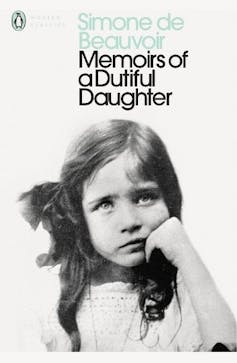
1. Memoirs of a Dutiful Daughter by Simone de Beauvoir (1958)
- Reviewed by: Katayoun Shahandeh, Lecturer in History of Art and Museology
When Katayoun Shahandeh first encountered Simone de Beauvoir’s foundational 1958 memoir at a young age, she held a conventional view of the self as a private, immutable core waiting to be uncovered beneath the layers of family, society, and cultural conditioning. Beauvoir’s work systematically dismantled that belief. Within these pages, identity is not portrayed as something found intact, but rather as something painstakingly constructed over time—often through the difficult unlearning of what was once accepted as gospel.
Shahandeh notes that the memoir illuminated a profound truth: becoming oneself often requires a deliberate departure from the life others have imagined for us, and from preliminary versions of ourselves we mistakenly claimed as our own. Recognizing the invisible imprints of our upbringing allows us to shed what is no longer ours to keep.
2. An Autobiography by Robin George Collingwood (1939)
- Reviewed by: Colin Tyler, Professor of Applied Ethics and Political Theory
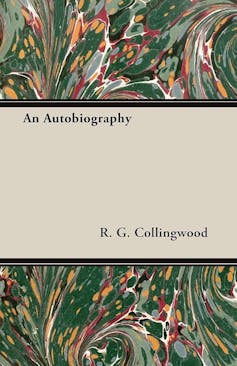
Written under the shadow of declining health and numerous serious strokes, archaeologist and metaphysical philosopher Robin George Collingwood’s 1939 An Autobiography is a compact yet monumental reflection on intellectual inquiry, the nature of history, and the terrifying rise of fascism.
According to Professor Colin Tyler, Collingwood’s accessible prose demonstrated that profound philosophical insights do not require academic obfuscation. More importantly, the book instilled a core realization that would shape Tyler’s academic trajectory: all thought, even the most abstract philosophy, is inextricably tethered to its cultural and historical context. There is no such thing as a "view from nowhere."
3. Moving Zen: Karate as a Way to Gentleness by C.W. Nicol (1975)
- Reviewed by: Lyn Jehu, Lecturer in Community Football Development
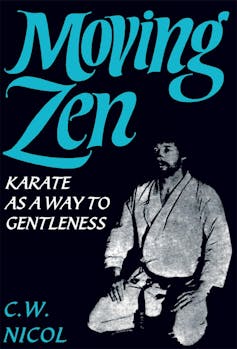
Growing up on a working-class council estate in Wales during the 1960s, Lyn Jehu faced deeply constrained life choices. While karate provided an initial sense of identity and belonging, it was reading C.W. Nicol’s Moving Zen that catalyzed a total paradigm shift.
Nicol’s vivid accounts of martial arts training in post-war Tokyo offered a potent antidote to fatalism: hope. The book dismantled Jehu’s internal boundaries, transforming perceived limitations into expansive possibilities and proving that a life beyond familiar borders was genuinely attainable.
4. On Agoraphobia by Graham Caveney (2022)
- Reviewed by: Sarah Richmond, Honorary Associate Professor of Philosophy
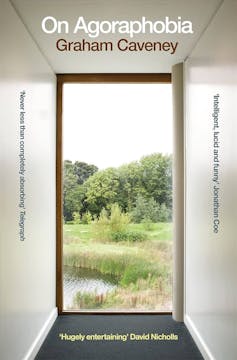
Graham Caveney’s 2022 memoir confronts agoraphobia—what he hauntingly terms his "intimate stranger"—with unflinching honesty and dark humor. Honorary Associate Professor Sarah Richmond notes that Caveney’s account upends conventional medical assumptions about the condition, highlighting decades of false diagnoses and clinical inadequacy.
When psychiatry and medicine faltered, Caveney turned to an eclectic mix of literature, cinema, history, and radical self-reflection. His memoir challenges readers to reconsider psychiatric categorization, reframing profound psychological distress away from moral failings and toward complex, mysterious human realities.
5. Sugar and Slate by Charlotte Williams (2002)
- Reviewed by: Sarah Olive, Senior Lecturer in English Literature
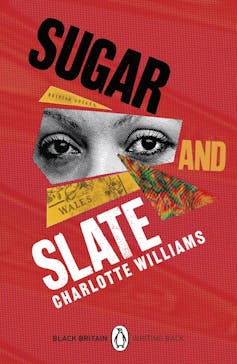
Originally published in 2002 and later resurgent in Penguin’s Black Britain: Writing Back series curated by Bernardine Evaristo, Charlotte Williams’s Sugar and Slate explores the author’s dual heritage as a Welsh-Guyanese woman.
Senior Lecturer Sarah Olive highlights how the memoir juxtaposes humorous tales of growing up in a north Welsh seaside town with the stark pressures of international, interracial relationships. For readers navigating hybrid identities that stretch far beyond tidy national boxes, Williams’s work offers an invaluable framework for articulating a multifaceted sense of home.
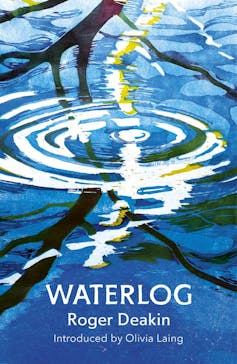
6. Waterlog by Roger Deakin (1999)
- Reviewed by: Emily Zobel Marshall, Professor of Postcolonial Literature
Roger Deakin’s iconic 1999 memoir chronicled his journeys swimming across the rivers, lakes, and moats of the British Isles, sparking a national wild swimming renaissance. Professor Emily Zobel Marshall describes Deakin’s child-like awe as infectious.
Chasing Deakin’s secret swimming spots across the countryside provided Marshall with more than just physical adventure; it embedded a permanent appreciation for the elemental, transformative power of nature, proving that sensory immersion in the landscape can radically realign one’s relationship with the natural world.
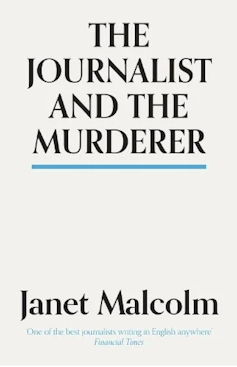
7. The Journalist and the Murderer by Janet Malcolm (1989)
- Reviewed by: Simon Hinde, Programme Director for Journalism and Publishing
During the adrenaline-fueled newsroom culture of the 1990s, Simon Hinde was swept up in the daily machinery of print journalism. Janet Malcolm’s forensic 1989 investigation into the ethical fault lines of reporting—famously opening with the assertion that every non-stupid journalist knows their trade is morally indefensible—arrived as a sobering shock.
Reading Malcolm’s account helped Hinde recognize the deep ethical unmooring present in parts of the industry, eventually validating his decision to leave newspapers years before the explosive phone-hacking scandals and the Leveson Inquiry cast a harsh light on journalistic ethics.
8. Equal Justice Under Law by Constance Baker Motley (1998)
- Reviewed by: Fareda Banda, Professor of Law
Constance Baker Motley’s autobiography did not merely challenge Professor Fareda Banda’s thinking; it opened it entirely. As a pioneering Black lawyer at the NAACP Legal Defense and Educational Fund, Baker Motley was the architectural mind behind the legal strategies that dismantled segregated public education in landmark cases like Brown v. Board of Education.
From representing Martin Luther King Jr. during the Birmingham protests to successfully defending jailed child activists, Baker Motley maintained steadfast dignity in the face of systemic racism and misogyny. Her life story remains an enduring monument to resilience for women whose professional contributions have been systematically undervalued.
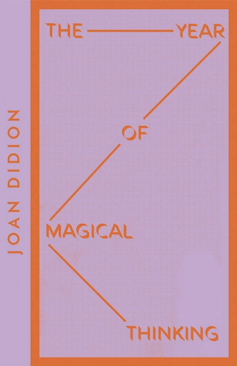
9. The Year of Magical Thinking by Joan Didion (2005)
- Reviewed by: Jade King, Teaching Fellow in Creative Writing
Following the sudden death of her husband, John Gregory Dunne, while their daughter lay comatose, Joan Didion’s 2005 memoir is a masterclass in confronting profound grief. Teaching Fellow Jade King notes that Didion’s unrelenting honesty transformed how she understood memoir as an act of survival.
Through unmatched brevity and lucidity, The Year of Magical Thinking serves as a vital literary companion through darkness, fundamentally altering our understanding of love’s persistence, the nature of mourning, and the warping effects of grief on time.
10. Vietnamerica by GB Tran (2010)
- Reviewed by: Yi Wang, PhD Candidate in Education
GB Tran’s 2010 graphic memoir traces a second-generation Vietnamese American’s reconciliation with his family’s fractured history against the backdrop of the Vietnam War. PhD candidate Yi Wang initially found the interwoven generational narratives dizzying.
However, repeated readings during academic research on Asian American identity revealed how the graphic medium can capture the multifaceted nature of historical trauma. The memoir taught Wang that intimate, private memories possess a resilient power to resist the homogenizing, dominant narratives enforced by official state histories.
11. Invisible Differences by Julie Dachez and Mademoiselle Caroline (2016)
- Reviewed by: Cassia Hayward-Fitch, Visiting Researcher in Comics Cultures
For visiting researcher Cassia Hayward-Fitch, the graphic memoir Invisible Differences (La Différence Invisible) by Julie Dachez and illustrator Mademoiselle Caroline shattered narrow, stereotypical assumptions about neurodivergence.
Depicting an adult woman who loves literature and cats while struggling silently with social interaction—a woman strikingly similar to Hayward-Fitch herself—the book illuminated the reality of late-diagnosed autism in women. Engaging with Dachez’s first-person narrative directly inspired further academic research and paved the way for Hayward-Fitch’s own formal diagnosis.
Supporting Context & Metrics: The Cognitive Impact of Memoirs
While fiction relies on invented scenarios to simulate empathy, memoirs operate on a different psychological frequency. Psychological and educational research indicates that reading first-person non-fiction engages the reader’s default mode network—the brain regions associated with self-referential thought and theory of mind.
- The Empathy Shift: Studies in narrative psychology demonstrate that encountering marginalized or unfamiliar lived experiences through memoir reduces implicit bias more effectively than didactic academic texts.
- Disciplinary Cross-Pollination: As evidenced by this collection, academics across hard sciences, humanities, and social sciences frequently rely on narrative non-fiction to break out of hyper-specialized echo chambers.
- The Rise of Graphic Memoirs: Works like Vietnamerica and Invisible Differences underscore a major publishing shift over the last two decades, proving that visual-textual hybrids can communicate complex sociological and psychological truths with unprecedented immediacy.
Official Statements and Academic Reflections
The scholars contributing to this survey emphasize that the value of a transformative memoir lies in its capacity to provoke discomfort. As Professor Colin Tyler observed regarding Collingwood’s work, acknowledging that "there is no view from nowhere" forces intellectual humility upon researchers across every discipline.
Similarly, reflections from journalism educators like Simon Hinde and legal scholars like Fareda Banda highlight that powerful memoirs do not simply entertain—they hold up a mirror to professional institutions, exposing systemic flaws and demanding ethical accountability. Whether dismantling patriarchal expectations in post-war France, mapping the silent rivers of rural Britain, or redefining neurodivergence in contemporary France, these texts demonstrate that personal storytelling remains our most potent tool for expanding collective human empathy.
Future Outlook: The Ongoing Evolution of Life-Writing
As we look toward the future of literature and academia, the memoir continues to evolve as a vital democratic medium. In an era dominated by polarized digital discourse and algorithmic echo chambers, long-form life-writing offers a necessary antidote: deep, sustained immersion in another human consciousness.
The inclusion of graphic memoirs, multi-ethnic life histories, and narratives concerning invisible disabilities signals a broader cultural democratization. Publishing houses and academic curricula are increasingly recognizing that authoritative knowledge is not solely derived from objective distance, but frequently emerges from the courageous articulation of subjective experience. As future generations of scholars and readers turn to memoirs to make sense of an increasingly complex world, these 11 texts stand as enduring testaments to the capacity of literature to remake our minds, one page at a time.