Executive Overview
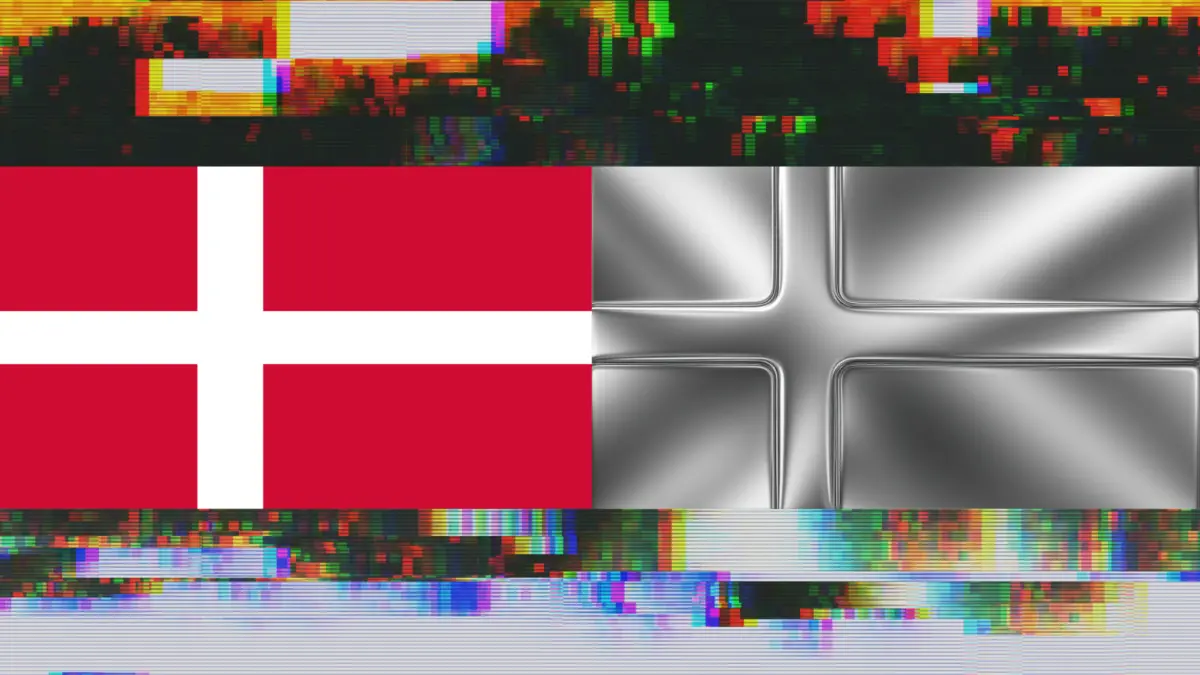
As artificial intelligence continues to blur the boundaries between reality and fabrication, governments worldwide are scrambling to establish legal frameworks that protect individuals from unauthorized digital cloning. Leading this global charge is Denmark, where Culture Minister Zenia Stampe has introduced groundbreaking legislative proposals to the Danish parliament. This bold initiative aims to grant performers—and citizens more broadly—robust legal mechanisms to block unauthorized digital replicas that imitate their voices, faces, and likenesses.
The proposed legislation arrives at a critical juncture in the digital age. With generative AI tools democratizing the creation of hyper-realistic deepfakes, the potential for widespread misinformation, reputational damage, and economic exploitation has skyrocketed. Denmark’s proactive stance is not merely a localized regulatory adjustment; it serves as a crucial testing ground for international lawmakers. Similar federal proposals are currently winding their way through the United States Congress, and policymakers in the United Kingdom and across the European Union are closely monitoring the Danish model to shape their own emerging intellectual property and personality rights frameworks.
By amending existing copyright laws to establish a distinct "protection of personal characteristics," the Danish bill seeks to criminalize the public dissemination of realistic digital imitations without explicit consent. Crucially, the legislation targets both cutting-edge AI-generated deepfakes and traditional digital editing techniques, ensuring a comprehensive safety net for artists, public figures, and everyday citizens alike. As tech giants face mounting pressure to police their platforms, Denmark’s blueprint could redefine the balance between technological innovation, freedom of expression, and individual bodily autonomy in the twenty-first century.
Detailed Chronology of the Danish Legislative Push
To understand the significance of Denmark’s current legislative momentum, it is essential to trace the trajectory of how these proposals have evolved through shifting political landscapes and technological pressures.
The Genesis of the Debate (2022–2023)
The conversation surrounding digital replicas in Denmark did not emerge in a vacuum. As early as 2022, creative unions, legal experts, and industry stakeholders began lobbying the Danish government to address the legal vacuum left by generative AI. Traditional copyright law, designed primarily to protect fixed works of authorship, proved ill-equipped to handle the unauthorized appropriation of a person’s voice or physical persona. Preliminary discussions within the Ministry of Culture began late last year, focusing on how personality rights and image rights could be modernized to confront algorithmic threats.
Political Transition and Ministerial Renewal (Mid-2024)
The momentum built during the initial consultative phases experienced a brief hiatus due to a general election and the subsequent formation of a new coalition government in Denmark. In June 2024, Zenia Stampe assumed office as the new Minister of Culture. Recognizing the urgency of the issue against a backdrop of rapidly advancing generative AI models, Stampe prioritized the legislative file. Revitalizing the framework developed under her predecessor, Stampe fast-tracked the proposals, transforming preliminary whitepapers into a concrete legislative bill presented to the Danish parliament.
Parliamentary Introduction and Core Mechanics (Yesterday)
Formally introducing the revised bill to the Danish parliament, Stampe positioned the initiative as a cornerstone of her ministerial tenure. The proposed law establishes a new statutory right—distinct from traditional copyright—that explicitly outlaws making realistic digital imitations of a person’s voice or likeness available to the public without prior consent.
According to legal experts tracking the bill, the legislation is engineered to achieve two primary objectives:
- Preventing Identity Theft and Misinformation: Halting the proliferation of malicious deepfakes that distort public discourse and damage personal reputations.
- Economic Empowerment: Securing the livelihoods of performers, actors, and musicians whose unique talents are routinely harvested to train AI models without compensation.
Supporting Context & Metrics: The Global Deepfake Crisis and Legal Landscape
To fully grasp the weight of Denmark’s legislative intervention, one must examine the broader socio-technical ecosystem and the parallel international efforts attempting to solve the deepfake conundrum.
The Scale of the Threat
The democratization of AI has turned what was once Hollywood-grade visual effects into consumer-grade software accessible via smartphone apps and web browsers. Generating a convincing voice clone now requires mere seconds of audio, while deepfake video tools can map a celebrity’s—or an ordinary citizen’s—face onto another body with terrifying accuracy.
According to cybersecurity and media integrity reports, deepfake scams and non-consensual synthetic media have surged exponentially over the past twenty-four months. Within the entertainment sector, voice actors find their vocal styles replicated to narrate audiobooks or commercials without their knowledge or remuneration. Meanwhile, musicians face the prospect of "ghost tracks" generated entirely by AI models trained on their vocal discographies, threatening to erode the value of human performance and creative labor.
International Parallels: The US and UK Perspectives
Denmark is not operating in isolation. Across the Atlantic, the United States Congress has seen bipartisan efforts to introduce federal legislation—such as the proposed No AI FRAUD Act and related digital replica rights proposals—aimed at establishing a federal right of publicity. Currently, US protection for voice and likeness is fragmented across a patchwork of state laws (notably in California, New York, and Tennessee, the latter of which recently passed the pioneering ELVIS Act to protect musicians’ voices).
Meanwhile, in the United Kingdom, policymakers and creative industry groups are closely scrutinizing both the US and Danish models. The UK’s Department for Science, Innovation and Technology (DSIT) has faced mounting pressure from musicians’ unions and actor guilds to strengthen statutory protections against unauthorized digital cloning. Because international tech platforms operate across borders, the Danish bill provides a vital empirical case study for how European legal traditions can integrate personality rights into copyright-adjacent frameworks without violating international trade and expression treaties.
Official Statements and Expert Analysis
The introduction of the Danish bill has sparked widespread commentary from government officials, legal scholars, and industry leaders.
Ministerial Resolve: Zenia Stampe
Minister of Culture Zenia Stampe has been unvarnished in her assessment of the threats posed by unregulated generative AI. During her parliamentary presentation, she emphasized that protecting human creativity is among her most critical responsibilities:
"Protecting human creativity is one of my most important tasks as Minister of Culture. That’s why I’m very pleased that one of my first bills is about securing the right to one’s own body and voice."
Highlighting the ease with which bad actors can manipulate digital media, Stampe underscored the societal and economic stakes:
"With AI, you can create manipulated videos and images with just a few clicks and share them on social media. This can lead to misinformation and create doubt about what is real. Now we’re stopping digital identity theft and helping artists whose livelihoods are being threatened."
Legal Framework Breakdown: Jakob Plesner Mathiasen
To unpack the nuances of the legislation, legal practitioners have offered critical insights into how the bill operates structurally. Jakob Plesner Mathiasen, a partner at the prominent Danish law firm Gorrissen Federspiel and a director of the record industry trade group IFPI Denmark, analyzed the scope of the legislation in a public briefing on LinkedIn:
- Scope of Technology: Mathiasen noted that “the provision covers both AI-generated deepfakes and imitations created using more traditional digital editing tools.” This ensures that the law remains technologically neutral, capturing legacy forms of digital manipulation alongside state-of-the-art neural networks.
- Threshold of Liability: The law is not triggered by every caricature or casual impression. Mathiasen clarified that the statute “only applies to realistic imitations that create an obvious likelihood of confusion with the actual person.”
- Nature of the Right: Addressing technical legal categorizations, Mathiasen explained that although the protections are housed within an amendment to Danish copyright law, “it does not constitute a copyright or a related right. Instead, it is a separate protection of personal characteristics.”
Balancing Free Expression and Public Safety
A central challenge in drafting digital replica legislation is ensuring that protections do not inadvertently choke off satire, political commentary, and artistic freedom. The Danish bill incorporates explicit exceptions to safeguard freedom of expression, carving out safe harbors for:
- Caricature
- Parody
- Legitimate criticism
However, these exceptions are not absolute. The draft legislation stipulates that satire and parody protections will not apply in scenarios where an “imitation constitutes misinformation that could specifically cause serious danger to the rights or essential interests of others or could create a specific danger to life or property.” This nuanced threshold aims to protect comedians and political satirists while stripping away legal cover from bad actors weaponizing deepfakes to manipulate elections, ruin reputations, or incite public panic.
Future Outlook: Commercial Opportunities and Enforcement Hurdles
As the Danish bill moves through parliamentary committees toward a projected enactment date, stakeholders are looking ahead to how the law will reshape commercial practices and enforcement dynamics in the digital ecosystem.
Commercializing the Persona: A New Licensing Economy
Far from merely acting as a defensive shield, the establishment of clear digital replica rights opens up lucrative commercial avenues for performers and public figures. Within the music industry, artists have long navigated a grey market where AI developers train models on copyrighted vocal tracks without permission.
With statutory clarity established, artists will be empowered to voluntarily license their voice and likeness under controlled, compensated agreements. Whether partnering directly with AI audio platforms, virtual reality developers, or traditional music labels, artists can retain ownership over their digital avatars. This transforms a potential existential threat into a viable revenue stream, allowing creators to monetize their digital likeness on their own terms.
The Enforcement Dilemma: Tech Giant Accountability
Passing a law is only half the battle; enforcement in the digital realm requires the active cooperation of platform operators. Minister Stampe acknowledged that a primary structural goal of the legislation is to compel major technology companies to act swiftly when illicit content is flagged:
"One of the main goals of the bill is to get the tech giants to take down manipulated content quickly, so that it causes the least possible harm."
Given the borderless nature of social media and video-sharing platforms, critics have questioned how swiftly foreign-headquartered tech conglomerates will comply with Danish takedown mandates. However, proponents argue that combining domestic statutory liability with robust financial penalties will incentivize platforms to implement proactive moderation filters and streamlined reporting mechanisms.
Timeline to Enactment
With technology evolving at what Minister Stampe describes as "lightning speed," the legislative timeline has been compressed to match the urgency of the crisis. The Danish Ministry of Culture is pushing for the parliamentary process to conclude swiftly, with the explicit goal of bringing the new protections into legal effect by the start of next year.
If Denmark successfully enacts and enforces these sweeping digital replica rights, it will establish a formidable precedent for the European Union and the wider international community. For creators, performers, and policymakers watching from London, Washington, and beyond, the Danish experiment may well become the gold standard for defending human identity in the age of artificial intelligence.