By Hayden Merrick
Published: September 24, 2026
Executive Overview
Most narratives concerning personal freedom and artistic awakening follow a familiar trajectory: they begin with a fragile flicker and ultimately erupt into theatrical fireworks. Yet, the story unspooled across Poor Advice, the fiercely anticipated debut album from Dublin alternative-rock outfit Basht., trades cinematic clichés for a grim, unyielding realism.
Concluding with an epic title track that leaves the listener marooned in "the darkest hour [with] a flicker of a light," the record refuses to offer cheap redemptions. It is a shadowy, raw, and visceral project, pulsing with both intimate personal reckonings and broader, systemic critiques of undemocratic power structures.
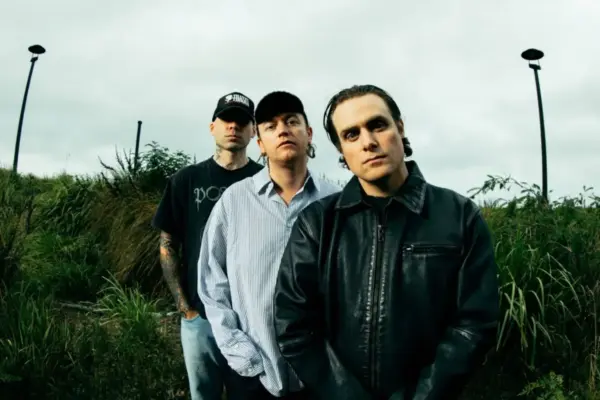
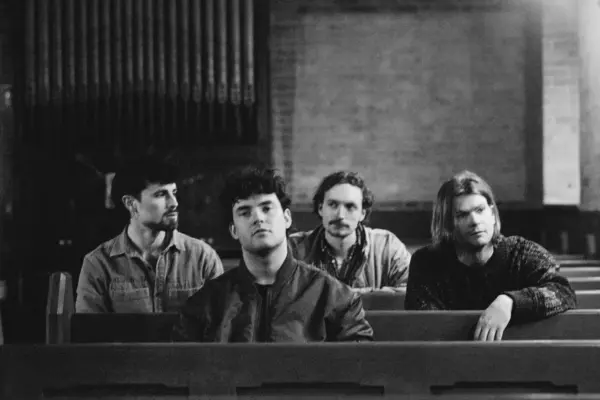
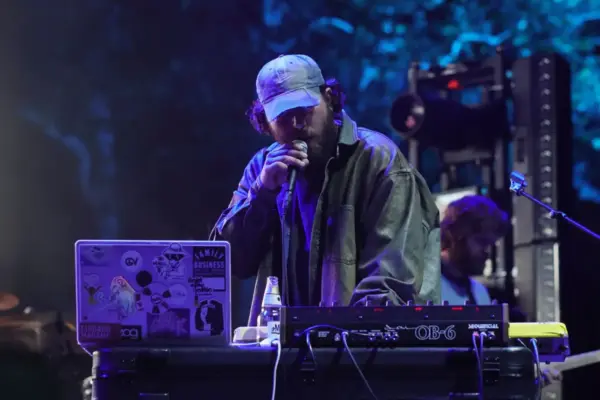
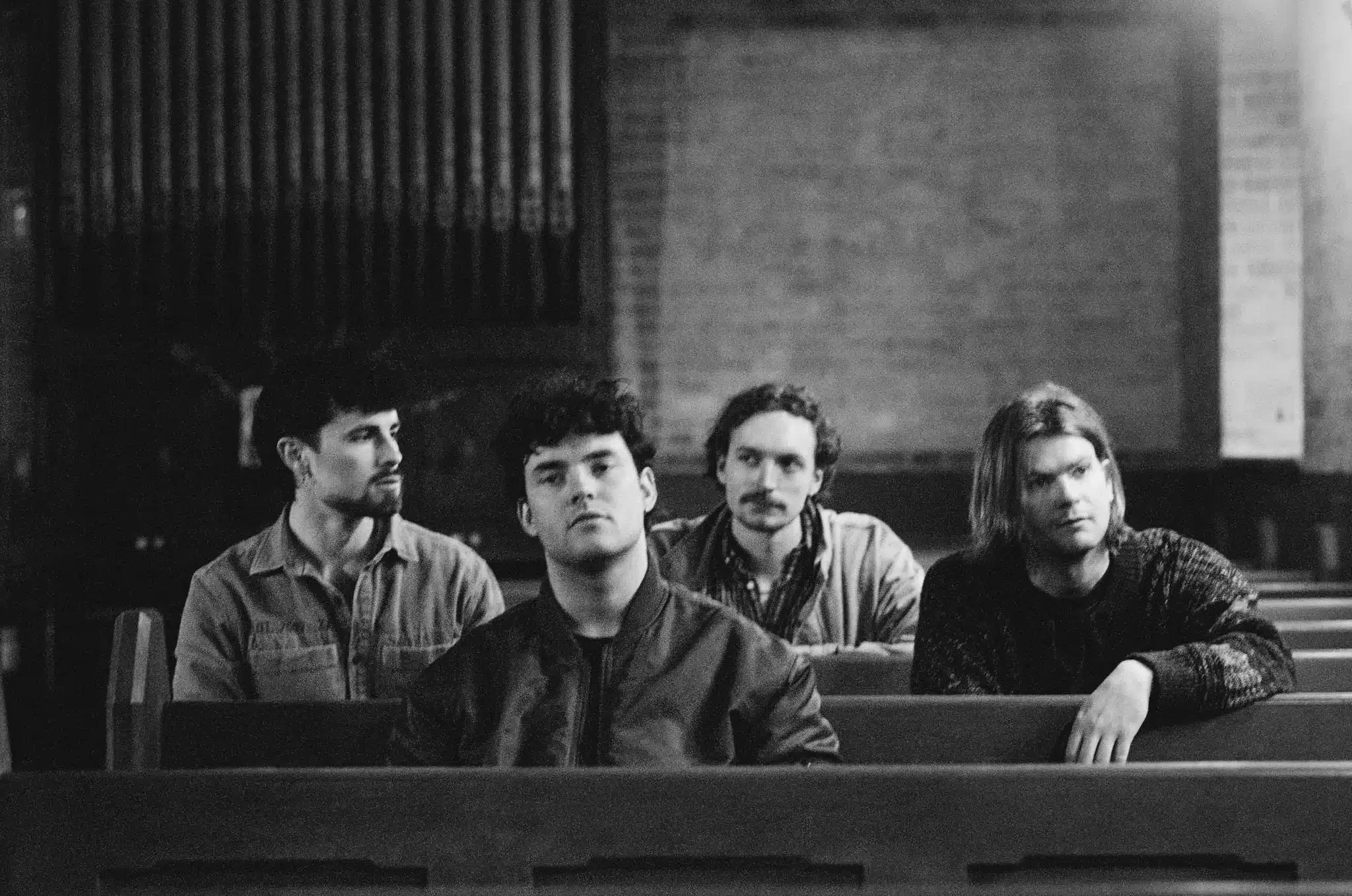
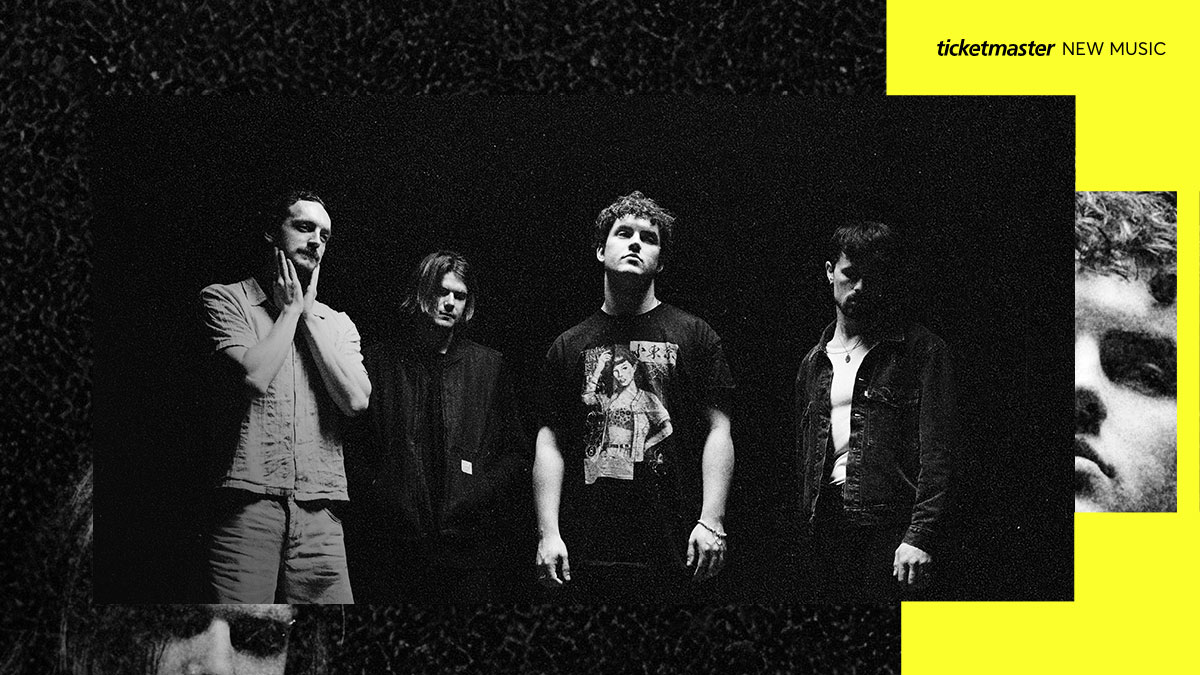
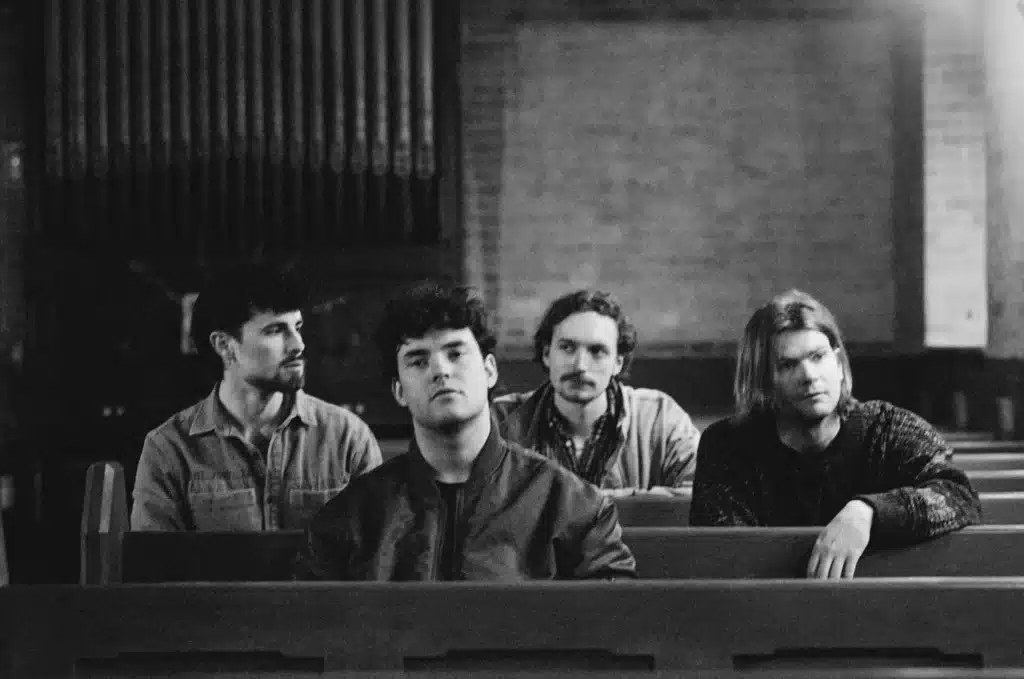
Formed five years ago in the heart of Ireland’s capital, Basht.—comprising frontman Jack Leavey, lead guitarist Lughaidh Armstrong-Mayock, and their bandmates—have steadily carved out a distinct space within a thriving, fiercely collaborative Irish alt-rock renaissance. As they prepare to embark on an extensive October headline tour, including a poignant homecoming at Dublin’s historic Button Factory and major festival slots at Manchester’s Neighbourhood Festival and Brighton’s Mutations Festival, Leavey and Armstrong-Mayock sat down to discuss the philosophies, creative friction, and cultural touchstones that birthed Poor Advice.
Detailed Chronology: The Making of Poor Advice
The conceptual spine of Poor Advice is embodied by a striking visual motif: the album cover features a young boy crouching in a church pew, brandishing a sly smile while pointing a gun outward at the viewer. Far from a random provocation, this figure serves as the de facto protagonist across all ten tracks.
"As he gets older, he’s questioning the authority and the advice that has been handed down to him, and he’s the core thread through it all," explains vocalist Jack Leavey. Over the course of the album, this metaphorical protagonist systematically extricates himself from the oppressive architectures of church, school, and state-sanctioned orthodoxy.
Rather than entering a high-end commercial facility for a quick two-week block, Basht. opted for a more protracted, deliberate recording schedule. Production kicked off in January, stretching across a six-month window before wrapping in May. This methodical timeline allowed the band to record in between active touring blocks, offering them the rare luxury of living with their arrangements.
"We started recording the first two songs in January and didn’t wrap until May," Leavey notes. "It meant we had a lot of time to sit with the ones we had recorded. If you wanted to add something later on, you could circle back quite easily."
At the helm of this process was producer Ali Chant—a creative force whose production credits boast critically revered records by Dry Cleaning, The Murder Capital, Sorry, and PJ Harvey. Chant’s collaborative ethos proved instrumental in shaping the eclectic sonic palette of Poor Advice.
"He was just brilliant at letting us experiment and push the envelope," says Leavey. "He would never say no to an idea. He’d just let you try something out, and then if it worked, it worked."
Guitarist Lughaidh Armstrong-Mayock echoes this sentiment, highlighting Chant’s stabilizing presence during the inevitable fatigue of studio work: "He would really get into it with us… There was no expense spared in terms of creative ideas and throwing stuff at the wall. He was just really clued in the whole time."
Supporting Context & Metrics: The Irish Alt-Rock Renaissance
To understand Basht., one must examine the fertile soil of the contemporary Dublin music scene. Following in the wake of trailblazing acts like Fontaines D.C., a dynamic new wave of Irish alternative music has captured international imaginations, fundamentally shifting global industry spotlights toward the Emerald Isle.
"The scene seems to be booming at the moment, and we’re delighted to be part of it," Armstrong-Mayock observes. Reflecting on historical pressures forcing Irish acts to relocate abroad to find success, he notes a profound shift in perspective: "There’s always been amazing stuff happening in Ireland, but maybe we were led to believe you would have to go further afield—move to the UK, go to Europe—to really get anywhere with it. So it’s a very inspiring environment."
This sense of community is mutual. Operating alongside peers like Brooki, Bleech 9:3, Just Mustard, and Gilla Band, Basht. benefits from an interconnected ecosystem of support, gig-sharing, and collaborative momentum.
Musically, Basht. sits comfortably in a liminal space: friendlier than Been Stellar, yet considerably broodier than Sam Fender. Their compositions balance extremes, effortlessly pivoting between cavernous quiet and deafening intensity. Tracks like "Terror TV" offer whirlwind singalongs, while "Vermilion Reptilian" begins with a deceptive, sunlit ray before being swallowed up by rubbery basslines and blues riffs pushed violently through a wood chipper.
The band’s commitment to sequencing ensures that the album breathes. As Armstrong-Mayock points out, "A bit of a break in the mosh pit is always needed." The resulting ten-song tracklist is an eclectic showcase of influences designed to lay the groundwork for future artistic endeavors.
Official Statements & Insights
During their interview, Leavey and Armstrong-Mayock offered deep insight into their songwriting mechanics, dissecting specific tracks and the interplay between standalone singles and overarching narrative cohesion.
On Narrative Versus Single Culture
In an era dominated by rapid-fire single releases and algorithmic playlisting, crafting a cohesive, full-length album requires a deliberate balancing act.
"Obviously it’s very important for songs to stand alone, that they’re strong compositionally and have their own bookend in terms of narrative," Armstrong-Mayock explains. "We worked quite closely with an artist named Polocho, who served as our creative director. He directed the music videos, and the video for ‘Perfume’ helped inform the overarching theme—leaning into power structures and the church."
Leavey adds: "You can’t just write a song for it to be a single because then it can get a bit weird and a bit dishonest. The core ideas and the core songwriting have to be sound and part of the overall record first. Our next single, ‘Kids Vs Guns,’ probably wouldn’t be a single in a lot of people’s opinions, but we think it represents the album really well."
On Pop Culture and Metaphor: "Keira Knightley"
One of the album’s standout cuts, "Keira Knightley," initially raises questions regarding its thematic fit alongside critiques of religious oppression. However, Leavey clarifies that the track’s title serves as a broader cultural shorthand.
"Maybe a little bit creeped out. Between flattered and creeped out, hopefully," Leavey laughs when asked how the actress might respond to the track. "The name Keira Knightley worked more than the actual character. There was that scene from Love Actually where someone was ringing her bell and had that desperate last attempt at love with her… it’s about that desperate point you get to in a relationship sometimes."
According to Leavey, the song came together with remarkable speed: "I wrote those lyrics in an afternoon. It was pretty fast." Similarly, "Perfume" materialized rapidly, evolving from a dark horse into one of the band’s proudest recorded achievements.
On Hometown Legacies and Live Performances
As Basht. hits the road in support of Poor Advice, their itinerary features a stop at Dublin’s Button Factory—a venue holding deep personal significance for the band, particularly its frontman.
"That’ll be cool. I’m sure we’ve all played the Button Factory at some point, but as support acts or as part of different projects," Leavey reflects. "It’s kind of a full-circle moment for me because my dad used to run it when he was in his 20s as the general manager of the club. So it’s a bit of a full-circle moment for him, I suppose, that his son is playing it now."
When asked what keeps their live sets anchored during moments of onstage friction, both members point to specific catalog mainstays.
"I think we really lock in when we play ‘Vermilion Reptilian,’" Leavey notes.
"‘Wild Horses’ always feels good live," Armstrong-Mayock adds. "It’s kind of an oldie—from the first EP—but it still hits. It has that anthemic feel to it."
Future Outlook
With Poor Advice officially arriving on October 9 via LAB Records, Basht. stands at a pivotal juncture in their career. Having navigated the rigorous writing and recording process through a balance of intense touring and reflective studio experimentation, the band views this debut not as a final destination, but as foundational architecture.
"It feels like the building blocks for the next project—album two," Armstrong-Mayock reflects. "For me, it was just getting out lots of different facets of our sound."
With very few tickets remaining for their upcoming UK and Irish dates—including high-profile appearances at Manchester’s Neighbourhood Festival and Brighton’s Mutations Festival—Basht. is poised to translate the dark, gritty realism of their recorded work into a series of blistering live experiences.
For Leavey and Armstrong-Mayock, the ultimate solace remains unchanged. Whether standing center-stage under blinding lights or sitting at home with a guitar in hand, the goal is simple: silencing the noise.
"I really like being on stage," Leavey concludes. "That’s when everything else goes quiet in my head, and I can just relax a bit."
Basht.’s debut album, Poor Advice, is released October 9 on LAB Records. Limited tickets remain for their October tour dates across the UK and Ireland.