Executive Overview
In an era marked by geopolitical division and the homogenization of global media, art frequently serves as the most resilient bridge between disparate cultures. Entering this space with profound historical resonance is Songs We Carry, a groundbreaking cross-cultural musical collaboration spearheaded by the acclaimed chamber orchestra Sinfonia Cymru.
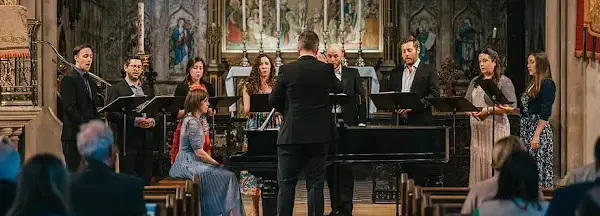
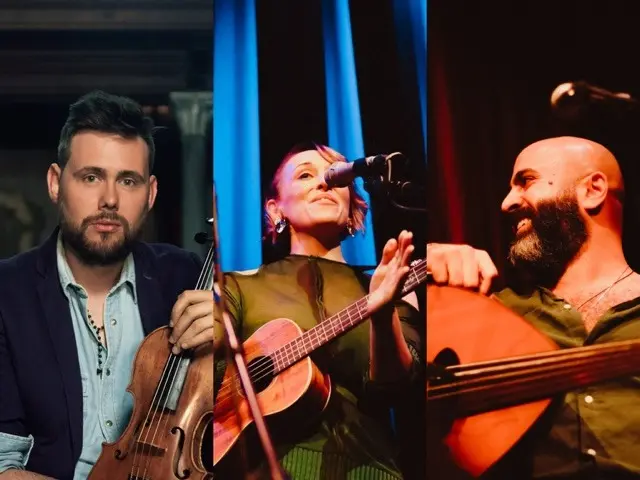
This ambitious project weaves together the haunting melodies of traditional Ladino song, the intricate microtonal phrasing of Arabic music, and the lyrical melancholy of Welsh folk music. At its artistic core are three distinct yet harmonically aligned creators: London-born singer-songwriter and multi-instrumentalist Ana Silvera; Palestinian composer, singer, and master oud player Saied Silbak; and Welsh composer and fiddler Patrick Rimes. Working in tandem with four virtuoso musicians from Sinfonia Cymru, the trio has constructed a sonic tapestry that challenges borders, honors ancestral resilience, and revitalizes endangered linguistic traditions.
The genesis of Songs We Carry lies in a deeply personal exploration of diaspora, displacement, and inherited memory. Silvera and Silbak first united to investigate their respective familial lineages—Silvera tracing her roots to 18th-century Sephardic Jewish refugees of the Spanish Inquisition who found sanctuary in Aleppo, and Silbak mapping his journey from the Galilean town of Shafaram to the cultural melting pot of London. By incorporating Patrick Rimes into the creative fold, the project expands its geographic and thematic scope, placing the ancient language of the Welsh valleys into direct conversation with the Levantine oud and Sephardic romance.
As the ensemble prepares for an extensive UK tour kicking off in October at Newport’s Riverfront, Songs We Carry stands as both an artistic triumph and a sociological statement. It posits that music is not merely an aesthetic pursuit, but a living archive capable of preserving endangered voices—such as Ladino, officially recognized by UNESCO as an endangered language—while demonstrating how distinct minority cultures can find solidarity, beauty, and shared humanity through song.
Detailed Chronology: From Ancestral Roots to the Modern Stage
To understand the profound weight of Songs We Carry, one must retrace the historical arcs and developmental phases that brought these artists together. The timeline of this project spans centuries of human migration and a focused, multi-year contemporary collaboration.
The Historical Foundations (Pre-2023)
- The Sephardic Diaspora: Following the 1492 Alhambra Decree, which expelled Jews from Spain, thousands of families fled across the Mediterranean and the Ottoman Empire. Among them were the ancestors of Ana Silvera, who eventually settled in Aleppo, Syria, carrying with them the Judeo-Spanish language known as Ladino. Over centuries, these ballads and laments were passed down orally within domestic spaces, growing increasingly rare as populations dispersed.
- The Levantine Heritage: Saied Silbak grew up immersed in the rich musical traditions of Palestine, training in the classical Arabic modal system (maqam) and mastering the oud. His artistic path bridged traditional Middle Eastern music with Western contemporary idioms, leading him to London to further develop his compositional voice.
- The Celtic Continuum: Concurrently, Patrick Rimes embedded himself in the vernacular musical traditions of Wales. As a fiddler and composer deeply attuned to the nuances of the Welsh language and its folk heritage, Rimes developed an acute understanding of how music serves as the guardian of minority cultural identity in the British Isles.
The Genesis of the Duo (2023–2024)
- Initial Collaboration: Ana Silvera and Saied Silbak first crossed paths through mutual artistic circles in London, quickly realizing that their respective family histories—both marked by displacement, minority status, and the preservation of fading traditions—offered fertile ground for musical dialogue.
- The Kings Place Premiere: In 2024, Silvera and Silbak debuted an early iteration of Songs We Carry at London’s prestigious Kings Place. The performance received critical acclaim from outlets like The ArtsDesk, which lauded the natural harmony established between Arab and Jewish musical sensibilities. The concert proved that audiences were hungry for nuanced, cross-cultural artistry that bypassed superficial world-music tropes in favor of deep historical inquiry.
The Sinfonia Cymru Partnership and National Tour (2024–2025)
- Expanding the Ensemble: Recognizing the universal resonance of the project, Sinfonia Cymru stepped in to elevate the concept from a duo performance to a full chamber ensemble collaboration. Patrick Rimes was brought on board to craft entirely new arrangements, seamlessly integrating Welsh folk motifs with Silvera’s Ladino compositions and Silbak’s Arabic opuses.
- The Tour Itinerary: The newly minted iteration of Songs We Carry is scheduled to open its doors on October 7 at The Riverfront in Newport. The subsequent tour will navigate through key cultural hubs, stopping at The Globe in Cardiff, Mwldan in Cardigan, Theatr Clwyd in Mold, and the Wiltshire Music Centre in Bradford-on-Avon, with high-profile dates in London and Southampton slated for the following year.
Supporting Context & Metrics: Cultural Preservation and Linguistic Survival
The significance of Songs We Carry extends far beyond the concert hall. It operates within a critical global framework of linguistic and cultural preservation, addressing the fragility of minority identities in the modern world.
The Plight of the Ladino Language
Ladino, also known as Judeo-Spanish, is a Romance language derived from Old Spanish, heavily influenced by Hebrew, Arabic, Turkish, and Greek. Following the expulsion of Sephardic Jews from the Iberian Peninsula, the language evolved organically across the Ottoman Empire and North Africa. However, the Holocaust, rapid assimilation, and global migration nearly decimated the speaking population in the 20th century.
Today, UNESCO classifies Ladino as a definitely endangered language, with the vast majority of fluent speakers being elderly. By incorporating traditional Ladino ballads into a contemporary chamber music framework, Ana Silvera is not merely performing historical artifacts; she is actively utilizing public performance to introduce an endangered tongue to younger, diverse demographics, fulfilling a vital role in oral history preservation.
+-----------------------------------------------------------------+
|                   LADINO LINGUISTIC TIMELINE                    |
+-----------------------------------------------------------------+
|  1492: Alhambra Decree (Expulsion of Sephardic Jews from Spain) |
|         │                                                       |
|         ▼                                                       |
|  16th–19th Century: Flourishing of Ladino in Ottoman Empire     |
|         │                                                       |
|         ▼                                                       |
|  Mid-20th Century: Devastation via Holocaust & Assimilation     |
|         │                                                       |
|         ▼                                                       |
|  Present Day: UNESCO Classification as "Endangered Language"    |
|         │                                                       |
|         ▼                                                       |
|  The Present: Revitalization via Projects like *Songs We Carry* |
+-----------------------------------------------------------------+
The Welsh Language Context
Wales offers a uniquely sympathetic backdrop for this cultural exploration. With over half a million Welsh speakers and robust legislative frameworks protecting the language, Wales is widely regarded as a global success story in minority language revitalization.
By bringing Songs We Carry to venues across Wales—from Newport to Cardigan and Mold—the project enters a community that intimately understands the socio-political dimensions of preserving a native tongue against the pressures of dominant global languages. Patrick Rimes’ arrangements deliberately highlight this shared ethos, drawing structural and emotional parallels between the laments of the Welsh valleys and the diaspora songs of the Mediterranean and Middle East.

Chamber Orchestration and Cross-Cultural Dialogues
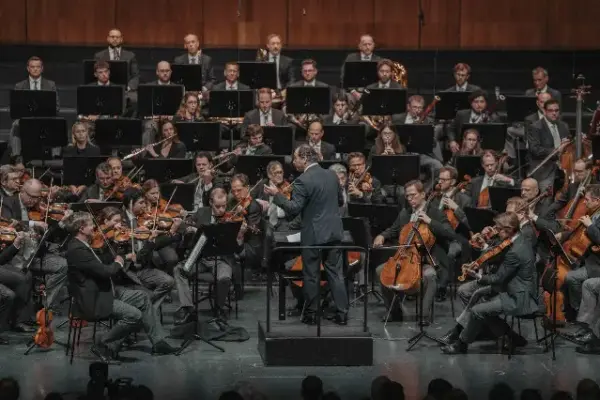
Musically, the project relies on the sophisticated interplay between Western classical chamber instrumentation (provided by four Sinfonia Cymru musicians), the modal flexibility of the Arabic oud, and the rhythmic drive of folk fiddling. Rather than defaulting to a standard backing-band arrangement, the collaborators have created a unified sonic architecture where:
- The oud introduces microtonal intervals and rhythmic complexities native to Levantine music.
- The fiddle anchors both Celtic folk cadences and the emotive phrasing required for Sephardic melodies.
- The vocal performances switch fluidly between Ladino, Arabic, and English, demonstrating that emotional legibility transcends linguistic barriers.
Official Statements and Artistic Perspectives
The collaborative ethos of Songs We Carry is best understood through the voices of its principal creators, who view the project as both a personal reckoning and a public invitation to empathy.
Ana Silvera reflected on the deep historical roots of her participation and the symbolic resonance of bringing the project to Wales:
"My ancestors were Jewish refugees, and our Ladino songs had almost disappeared. The Ladino language is now recognised by UNESCO as an endangered language. ‘Songs We Carry’ was my opportunity to share Ladino music and language with new audiences, revealing its beauty and its power to connect us. I’m excited to bring it to Wales, a country that’s home to a thriving minority language, and a nation that is so passionate about sharing its Welsh language and story through song."
Saied Silbak, whose compositional contributions anchor the Levantine elements of the program, has consistently emphasized the oud’s capacity to serve as a conversational instrument across cultures. In previous interviews regarding the project’s development, Silbak noted that inherited music carries the psychological weight of ancestral journeys, yet possesses an inherent elasticity that allows it to merge seamlessly with other traditions when approached with mutual respect and active listening.
Patrick Rimes, speaking on his role as arranger and cultural liaison within the ensemble, highlighted the natural affinities between Welsh folk tunes and the modal structures of the Middle East and Sephardic Spain. By treating diverse folk idioms with equal compositional weight, Rimes ensures that no single culture dominates the acoustic landscape; instead, each tradition yields space to the others, creating a genuine artistic synthesis.
Future Outlook: Touring Trajectory and Legacy
As Songs We Carry embarks on its autumn 2024 Welsh tour, its long-term trajectory points toward an expanding international footprint.
The 2024–2025 Itinerary
- October 7, 2024: The Riverfront, Newport
- Subsequent Autumn Dates:
- The Globe, Cardiff
- Mwldan, Cardigan
- Theatr Clwyd, Mold
- Wiltshire Music Centre, Bradford-on-Avon
- 2025 Extensions: Confirmed high-profile engagements in London and Southampton, designed to bring the expanded chamber orchestra arrangement to metropolitan audiences who witnessed the early 2024 duo performances.
Long-Term Cultural Impact
Beyond the immediate ticket sales and critical reviews, the legacy of Songs We Carry will likely be measured by its contribution to the growing genre of intercultural chamber music. By demonstrating that complex, minority-language traditions can be successfully adapted for contemporary classical and folk venues without losing their historical integrity, Sinfonia Cymru, Silvera, Silbak, and Rimes have established a blueprint for future artistic collaborations.
In a cultural landscape increasingly fractured by identity politics and nationalist posturing, Songs We Carry offers a refreshing counter-narrative. It reminds listeners that cultures have always been porous, that human histories are defined by migration and cross-pollination, and that the songs we carry within us are not static monuments to the past, but living, breathing bridges to our shared future.
Full programmatic details, ticketing information, and updates regarding the upcoming tour can be accessed directly via the Sinfonia Cymru Official Website.