Executive Overview
The legal battle surrounding British comedian, actor, and media personality Russell Brand entered a critical and intensely scrutinized phase on Wednesday as prosecutors laid out a comprehensive and damning case before the jury. The trial, which is projected to span six weeks, brings forward a series of grave allegations from six distinct complainants, spanning a decade of Brand’s rise through the entertainment industry—from his pre-fame days in the late 1990s through his tenure as a ubiquitous television and radio presenter, up to his Hollywood apex and subsequent pivot to independent digital commentary.
During Wednesday’s proceedings, the prosecution painted a portrait of a defendant driven by what they termed a "voracious" and "indiscriminate" desire for sexual contact, completely undeterred by the identities, objections, or boundaries of the women involved. The barrister representing the Crown detailed an operational pattern wherein Brand allegedly leveraged charm, wit, and social positioning to lower the defenses of his targets, only to transition swiftly into entitlement, aggression, and non-consensual behavior.
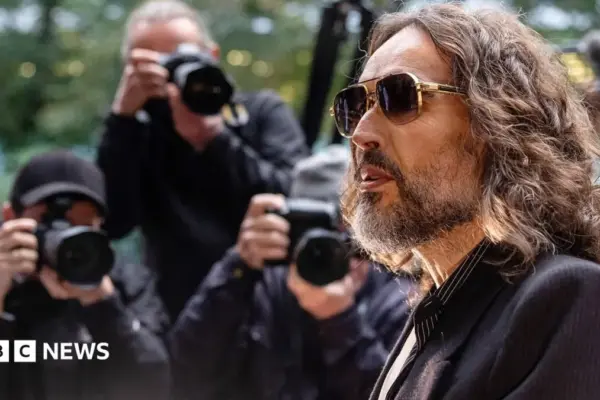
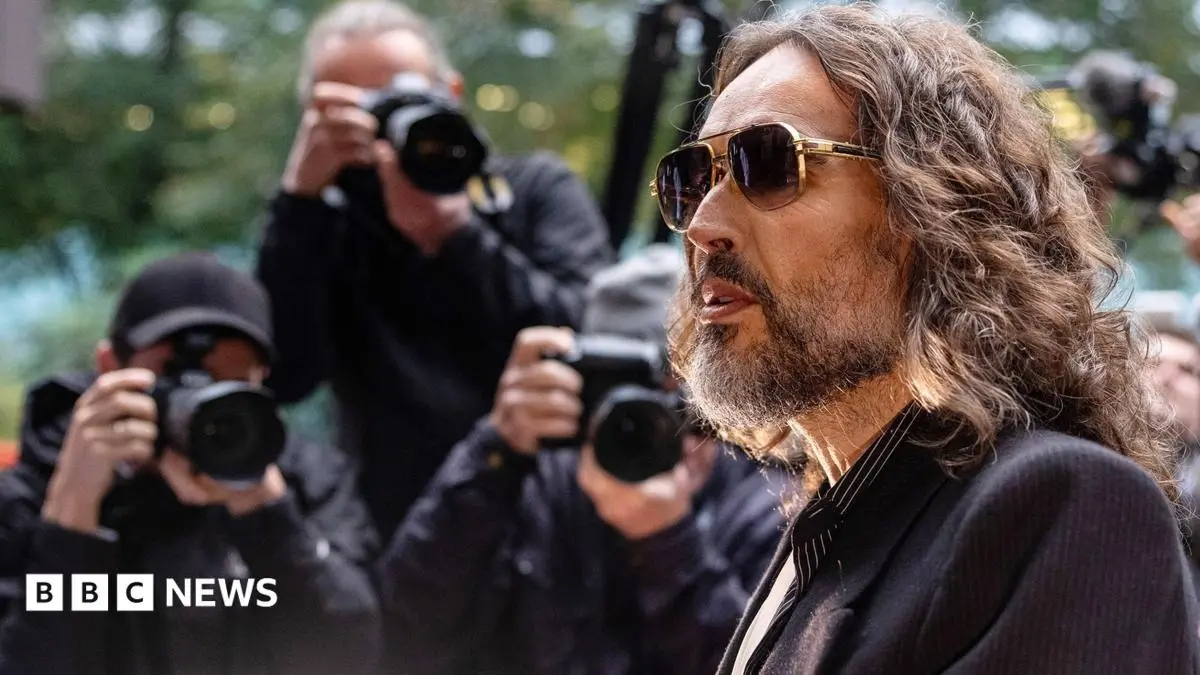
As the courtroom listened to the harrowing accounts of the six complainants, the scale and structural nature of the alleged offenses came into sharp focus. The charges include allegations of rape, oral and anal sexual assault, indecent assault, and public exposure. Throughout the presentation of the state’s opening arguments, Brand—who was accompanied to court by his wife, Laura—sat as the subject of intense global media scrutiny.
This trial represents a watershed moment for accountability within the British media and entertainment landscape. Brand, who rose from the UK stand-up circuit to mainstream prominence via Channel 4, BBC radio, and major Hollywood motion pictures before reinventing himself as a controversial wellness and political commentator based in Florida, has consistently denied all wrongdoing. His defense maintains that the allegations are fabricated or reimagined in the wake of intensive media reporting and a foundational documentary that first brought these systemic concerns to public light.
Detailed Chronology: The Allegations and Prosecution Evidence
The prosecution’s case is structured chronologically, mapping out alleged incidents across a timeline that tracks parallel to Brand’s professional ascent. The jury was presented with specific testimonies from six women, detailing events alleged to have occurred between 1999 and 2009.
The First Complainant: Pre-Fame Allegations (1999)
The proceedings began with testimony concerning the earliest alleged offense, dating back to 1999, prior to Brand achieving mainstream celebrity status. The first complainant informed the court that she encountered Brand at a fringe event during the Labour Party conference. According to the prosecution, the interaction escalated, resulting in an alleged rape.
When police initially questioned Brand regarding this specific allegation, the defendant reportedly stated that if the incident had occurred, he had no memory of it. He further asserted that he did not recall the complainant’s name and maintained his blanket assertion that he had "never engaged in non-consensual activity."
The Second Complainant: MTV Encounter
The narrative shifted to a later period when Brand was gaining traction in television. The second complainant, who was employed by MTV at the time, alleged that she was indecently assaulted by the comedian.
The encounter began innocuously when Brand inquired about the location of the restrooms, and the employee offered to guide him. Upon reaching the facilities, prosecutors stated that Brand asked the woman to "come in" before forcibly grabbing her forearm. The complainant described resisting by pulling back and struggling, noting a desperate, "wild-eyed look" on his face as he pleaded, "Please please come in — oh go on."
The Third Complainant: Party Encounter and Subsequent Exposure (2004)
The third complainant detailed an encounter stemming from a party in 2004. According to the evidence presented to the jury, within a minute of meeting and mid-conversation, Brand lurched forward, grabbed both of her breasts, and squeezed them with both hands.
The prosecution noted that the woman vividly remembered a "big, weird grin" on Brand’s face during the act. He then allegedly grabbed her arm and pulled her toward a nearby toilet.
In a continuation of the same evening, as the woman and Brand were driving to a secondary venue, Brand allegedly exposed himself. The prosecution stated that Brand demanded, "Come on, come on, suck it," to which the woman refused, stating, "No no." Brand reportedly laughed off the refusal and appeared to accept her boundary, though the psychological impact of the preceding actions remained severe.
The Fourth Complainant: Capital Radio Incident (2004–2005)
The fourth set of allegations brought the focus to Brand’s tenure in commercial radio. Around 2004 or 2005, while at Capital Radio, a fourth complainant alleged that Brand pushed her up against a wall.
She stated that he kissed her "sloppily and aggressively" and groped her body, specifically targeting her breasts, sides, and buttocks with aggressive force. When she managed to push him away, Brand reportedly "just sniggered, like it was a joke," trivializing the physical violation.
The Fifth Complainant: Hammersmith Apollo and Subsequent Exploitation (2009)
The timeline moved to 2009, when the fifth complainant met Brand while he was performing a live stand-up engagement at the Hammersmith Apollo in London.
The prosecution outlined that while their initial interactions involved consensual activity, the dynamic shifted profoundly on a subsequent occasion, when Brand allegedly raped the complainant anally. The psychological fallout for this woman was severe; the jury heard testimony that she spent "months and years blaming herself," leading to chronic anxiety and failing health.
Crucially, the prosecution introduced digital correspondence as corroborating evidence. The following summer, after seeing the woman at an event, Brand allegedly texted her: "I wanna push you further."
The complainant reportedly replied: "I think you pushed me far enough — you treated me like an animal."
Brand’s alleged text response was concise: "I’m sorry."
The Sixth Complainant: Work Assignment Demand (2009)
The final set of allegations heard by the jury involved a sixth complainant who accused Brand of sexual assault during a work assignment in 2009.
According to the state’s case, Brand demanded a massage from the professional on assignment. Before she could comply or refuse effectively, he reportedly "fell to his knees and placed his head directly into her groin area."
Supporting Context & Metrics
To fully understand the gravity of the ongoing legal proceedings, it is necessary to examine the socio-cultural architecture that enabled the defendant’s career trajectory, as well as the broader statistical context of sexual offense litigation in the United Kingdom.
Career Trajectory and Institutional Platform
Russell Brand’s ascent through the British media ecosystem was meteoric, characterized by rapid institutional backing across television, radio, and print media:
- The Stand-Up Circuit: Brand initially gained notoriety as an edgy, unconventional stand-up comedian in the early 2000s, winning critical acclaim and cultivating a persona that blurred the lines between confessional vulnerability and transgressive boundary-pushing.
- Mainstream Broadcasting: His mainstream breakthrough arrived through Channel 4’s Big Brother’s Big Mouth, a companion show that capitalized on his manic, stream-of-consciousness delivery. This led to high-profile radio residencies on BBC Radio 2 and BBC 6 Music, platforms that reached millions of weekly listeners.
- Hollywood Expansion: By the late 2000s and early 2010s, Brand successfully transitioned into American cinema, securing prominent roles in major Hollywood studio releases such as Forgetting Sarah Marshall (2008), its spin-off Get Him to the Greek (2010), and the remake of Arthur (2011).
- Digital Pivot: In the years preceding these legal challenges, Brand systematically migrated away from traditional corporate media, establishing a massive digital footprint through independent video channels, subscription-based podcasts, and wellness-oriented commentary platforms, operating primarily from his residence in Florida, United States.
Legal Statistics and Institutional Accountability
The trial unfolds against a backdrop of intensified scrutiny regarding how allegations against powerful media figures are handled within the British justice system. Legal analysts point out that trials involving historic sexual offenses carry unique evidentiary challenges:
- Passage of Time: With allegations spanning 1999 to 2009, prosecutors must bridge gaps in physical evidence, relying heavily on contemporaneous communications, psychological impact statements, and pattern-of-behavior testimony.
- Corroborating Digital Trails: The inclusion of text messages—such as the exchange where Brand allegedly apologized for treating a complainant "like an animal"—represents a vital category of modern forensic evidence, providing an institutional bridge between survivor testimony and defendant admissions.
Official Statements and Defense Position
The prosecution’s opening remarks established a definitive psychological profile of the defendant. The Crown’s barrister characterized Brand’s behavior as "indiscriminate and voracious," noting that "regardless of who the women were and what they said or did, Brand was not deterred."
The state described a stark duality in Brand’s public and private conduct:
"Brand would be nice when he wanted to be, funny — undoubtedly — charming, likeable even, when he wanted something in return. But he would also be demanding, entitled, a flirt with a huge sexual appetite — childlike in his expectation that his every desire should be met."
Furthermore, the prosecution detailed Brand’s reported post-encounter demeanor, noting that he would frequently "appear indifferent, normal and untroubled by what had just occurred," departing promptly or acting as though nothing extraordinary had transpired.
The Defense Response
In response to the cumulative weight of these allegations, the defense relies on the counter-position established during police interviews conducted in 2023. At that time, Brand formally asserted to investigators that:
- He has never engaged in non-consensual sexual activity under any circumstances.
- The accounts brought forward by the complainants have been "reinvented or imagined" in direct response to a defamatory investigative documentary and subsequent sensationalized press reporting.
The defense strategy is expected to vigorously challenge the credibility, motivations, and recollection of the complainants, while attributing the timing of the legal actions to external media pressure rather than authentic institutional grievance.
Future Outlook
As the trial moves forward, its projected six-week duration ensures that the British and international media will remain focused on the courtroom developments.
Key Factors to Monitor:
- Cross-Examination of Complainants: The defense’s handling of the six women during cross-examination will be a central battleground, testing the consistency and emotional resilience of the prosecution’s witnesses.
- Exhibition of Further Evidence: Legal experts anticipate the potential introduction of additional digital records, expert psychological testimony, and corroborating witness statements regarding workplace culture during the 2000s.
- The Defendant’s Testimony: Observers will watch closely to determine whether Russell Brand elects to take the stand in his own defense to counter the prosecution’s behavioral profile directly.
- Wider Cultural Implications: Regardless of the eventual verdict, the trial serves as a permanent fixture in the ongoing discourse regarding power dynamics, consent, and accountability within the global entertainment industry.
The court adjourned following Wednesday’s opening statements, with proceedings set to resume as the Crown continues calling its witnesses to the stand.