Executive Overview
The legal proceedings involving British comedian, actor, and broadcaster Russell Brand have entered a critical phase as prosecutors lay out a comprehensive and severe array of allegations before a jury. The trial, anticipated to span six weeks, brings into sharp focus a series of accusations spanning a decade of Brand’s rise through the British entertainment industry, moving from his early days as a fringe television and radio personality to his tenure as a mainstream multimedia fixture and Hollywood actor.
During the opening arguments and initial witness testimonies, the prosecution detailed what it described as a "voracious" and "indiscriminate" pattern of predatory behavior. Presenting accounts from six different complainants, the Crown outlined alleged offenses that reportedly occurred between 1999 and 2009. The charges range from indecent assault and sexual battery to multiple allegations of rape and sexual assault.
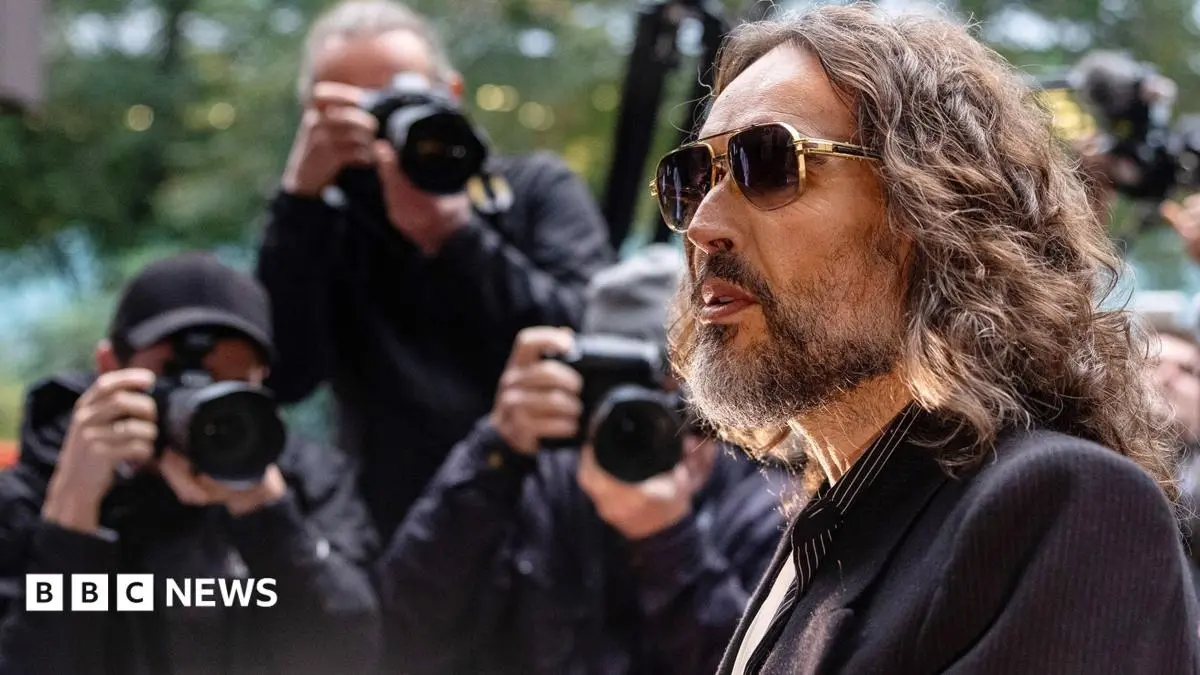
Throughout these proceedings, Brand has maintained his innocence, robustly denying all allegations of non-consensual sexual activity. His defense maintains that the accounts have been reinvented or imagined in the wake of previous media investigations, defamatory documentaries, and subsequent press reporting. Brand, who arrived at court accompanied by his wife, Laura, faces a jury tasked with evaluating complex testimony regarding events that occurred up to a quarter of a century ago. The trial represents a watershed moment for accountability within the British media landscape, drawing intense public and international scrutiny to questions of power, fame, and consent within the entertainment sector.
Detailed Chronology of Allegations
The prosecution’s opening statement structured the historical trajectory of the alleged offenses, grouping the accounts chronologically to demonstrate what it characterizes as a consistent behavioral pattern throughout Brand’s professional life.
The 1999 Labour Party Conference Incident
The earliest allegation presented to the jury dates back to 1999, prior to Brand achieving widespread household fame. The first complainant stated that she met Brand while attending a fringe event at the Labour Party conference. According to the prosecution, Brand subsequently raped her.
When later questioned by police regarding this specific allegation, Brand stated that if the incident had occurred, he had no memory of it. He reportedly told investigators that he could not remember the complainant’s name and reiterated his overarching stance that he had never engaged in non-consensual sexual activity.
Significantly, the trial’s first witness, Mark Pinheiro, who served as Brand’s flatmate during that period, provided testimony that directly intersected with this timeline. Pinheiro told jurors that Brand had returned from the Labour Party conference and confided that things had gotten "a little bit heated and a little bit out of hand." According to Pinheiro, Brand explicitly remarked, "I think I may have gone a bit too far." Under cross-examination, Pinheiro maintained his certainty regarding Brand’s phrasing, telling the court he was sure of the admission.
Incidents at MTV and 2004 Encounters
The second complainant alleged that she was indecently assaulted by Brand while she was working for MTV. According to her testimony, Brand asked her for directions to the restrooms, and she offered to guide him. Upon reaching the facilities, the prosecution stated that Brand asked her to "come in" before forcibly grabbing her forearm. The complainant resisted by pulling back, describing Brand as having a desperate, wild-eyed expression as he pleaded with her to enter.
The third complainant alleged that she was orally raped by Brand in a toilet after meeting him at a party in 2004. Within moments of their introduction, during an ongoing conversation, Brand allegedly lurched forward, grabbed her breasts, and squeezed them with both hands. The prosecution noted that the woman remembered a "big, weird grin" on his face during the act before he pulled her toward the toilets. Later that same day, while being driven to another venue by Brand, the complainant alleged that he exposed himself and demanded she perform a sexual act. When she refused, he reportedly laughed and appeared to accept her refusal.
Incidents at Capital Radio (2004–2005)
The fourth complainant testified that in 2004 or 2005, while at Capital Radio, Brand pushed her against a wall, subjected her to a "sloppily and aggressively" delivered kiss, and aggressively grabbed her body, targeting her breasts, sides, and buttocks. After she successfully pushed him away, Brand reportedly sniggered, treating the encounter as though it were a joke.
The 2009 Hammersmith Apollo and Workplace Encounters
The fifth complainant met Brand in 2009 while he was performing a stand-up comedy engagement at the Hammersmith Apollo in London. According to the prosecution, while their initial interaction began with consensual activity, Brand later subjected her to anal rape during a subsequent encounter. The jury heard testimony detailing the profound psychological toll this experience took on the woman, who spent years blaming herself, struggling with severe anxiety, and experiencing declining health.
The prosecution introduced text message logs from the following summer, showing that Brand encountered the woman at an event and texted her, saying, "I wanna push you further." The complainant reportedly replied, "I think you pushed me far enough — you treated me like an animal," to which Brand allegedly responded, "I’m sorry."
The sixth complainant accused Brand of sexual assault during a work assignment in 2009, stating that he demanded a massage, suddenly fell to his knees, and placed his head directly into her groin area.
Supporting Context & Metrics
The trial unfolds against the backdrop of Brand’s extensive career in entertainment, which provided him with significant cultural capital, media platforms, and public visibility during the periods when the alleged offenses took place.
- Career Trajectory: Brand rose to prominence as an alternative stand-up comedian before achieving mainstream ubiquity as the host of Channel 4’s Big Brother’s Big Mouth. His profile expanded into prominent radio broadcasting roles with BBC Radio 2 and 6 Music, alongside a successful transition into Hollywood cinema with supporting and starring roles in films such as Forgetting Sarah Marshall and Get Him To The Greek.
- Digital Pivot: In recent years, Brand shifted away from traditional broadcasting and film studios, building a massive digital presence centered on independent podcasting, commentary, and video streaming platforms, ultimately relocating his primary residence to Florida in the United States.
- Trial Timeline: The current legal proceedings are scheduled to run for approximately six weeks, involving extensive witness examinations, forensic digital evidence reviews, and meticulous legal arguments from both the Crown Prosecution Service and the defense.
Official Statements and Defense Position
The Crown Prosecution Service has framed the pattern of behavior as systematic, relentless, and driven by an insatiable entitlement. Outlining the psychological dynamic of the defendant, the prosecutor told the jurors that Brand could pivot fluidly between personas:
"Brand would be nice when he wanted to be, funny — undoubtedly — charming, likeable even, when he wanted something in return. But he would also be demanding, entitled, a flirt with a huge sexual appetite — childlike in his expectation that his every desire should be met."
Furthermore, the prosecution emphasized Brand’s post-encounter demeanor, noting that he would frequently "appear indifferent, normal and untroubled by what had just occurred," either leaving the scene promptly with an excuse or proceeding as though no violation had taken place.
In response to these allegations, Brand’s legal representation reiterated the statements he made to police during formal questioning in 2023. Brand has consistently maintained that he has never engaged in non-consensual sexual activity. His defense team contends that the complainants’ accounts have been "reinvented or imagined" as a direct consequence of a defamatory documentary and subsequent widespread press reporting that scrutinized his past conduct and personal life.
Future Outlook
As the trial moves past its opening statements and into the presentation of witness testimony and cross-examinations, the legal teams face weeks of intensive evidentiary review. The outcome of the case hinges significantly on the credibility of the testimonies provided by the complainants, the corroborating statements of historical witnesses such as Mark Pinheiro, and the defense’s ability to challenge the timelines, motivations, and recollections of those involved.
Beyond the immediate legal ramifications for Brand—who faces severe penalties if convicted—the trial serves as a major benchmark for the British judicial system in handling historical sexual offense allegations involving public figures. The proceedings will continue to command intense media attention as the jury weighs the complex interplay of fame, power, consent, and accountability across the span of the defendant’s career.