Executive Overview
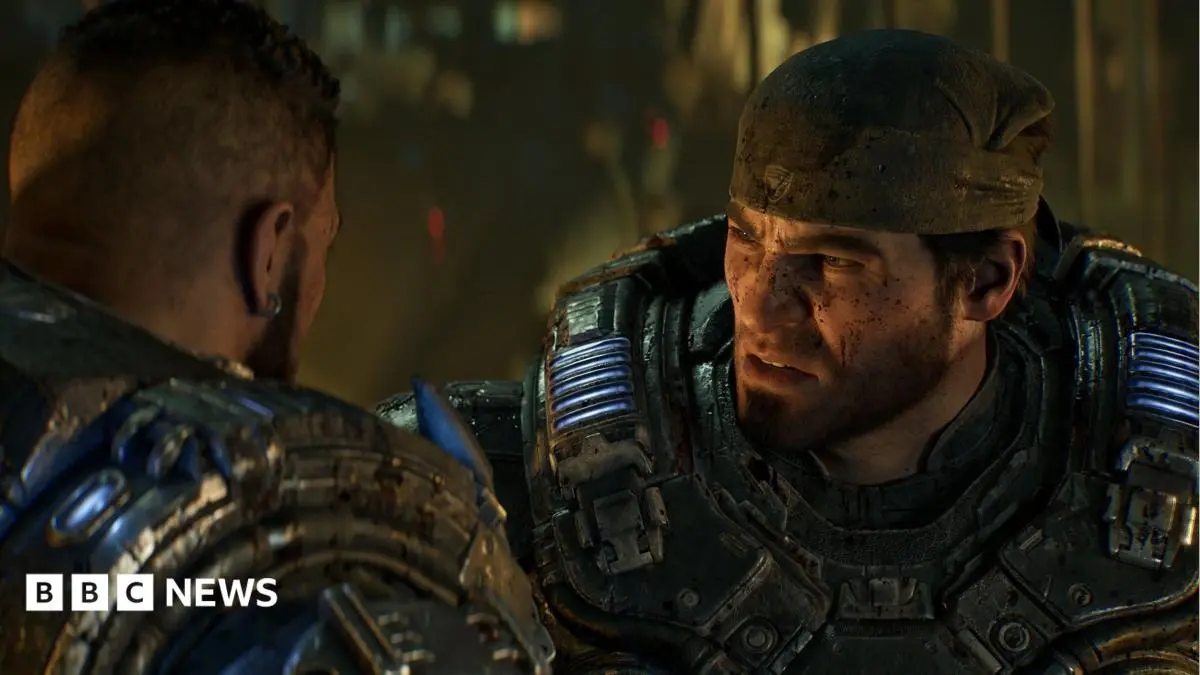
Two decades after it redefined third-person action on the original Xbox 360, Gears of War remains the foundational bedrock of Microsoft’s gaming identity. As the franchise prepares to write its next chapter with the much-anticipated Gears of War: E-Day, the stakes have never been higher—not just for the series, but for the entire Xbox ecosystem.
This release arrives at a turbulent crossroads for Microsoft’s gaming division. Competing in a fiercely contested console landscape where it trails significantly behind Sony’s PlayStation and Nintendo’s Switch, Xbox is undergoing a profound philosophical and structural metamorphosis. Under the stewardship of new Xbox boss Asha Sharma—who assumed leadership in June—the company is recalibrating its business model amidst a backdrop of sweeping corporate restructuring and thousands of job losses.
While predecessor Phil Spencer began exploring a multiplatform future, bringing legendary Xbox franchises to rival hardware, Sharma has drawn a hard line in the sand with E-Day. Bucking industry trends and defying intense criticism from analysts who question the financial viability of platform exclusivity in an era of skyrocketing development budgets, E-Day has been locked down as an Xbox console exclusive (alongside a PC release).
Behind the corporate maneuvers and boardroom strategy lies The Coalition, the development studio tasked with carrying the banner. Facing a six-year development cycle, hundreds of millions in expenditures, and an anxious workforce navigating industry-wide instability, the studio has delivered a technical showcase designed to push the Xbox hardware to its absolute breaking point. This report investigates the high-stakes gamble behind Gears of War: E-Day, examining the strategy of exclusivity, the human cost of corporate restructuring, and whether this grit-and-guts franchise can single-handedly revitalize the Xbox brand.
Detailed Chronology: Two Decades of Grit, Glory, and Transformation
To understand the weight resting on Gears of War: E-Day, one must trace the historical arc of a series that helped birth modern tactical shooters.
The Genesis: 2006
Launched in November 2006, the original Gears of War developed by Epic Games was nothing short of a seismic event for the Xbox 360. By marrying a bleak, apocalyptic war narrative with over-the-top, comic-book-inspired subterranean monsters—the Locust Horde—the game introduced players to a visceral world of heart, blood, and guts. More importantly, it popularized the "cover-shooter" mechanic. By encouraging players to seamlessly duck behind barricades and blind-fire, it injected a profound strategic dimension into third-person action games. Bolstered by genre-defining co-operative multiplayer modes, Gears quickly became a pillar of the Xbox brand.
The Middle Years and The Coalition Era
Over the subsequent decade, the franchise expanded across multiple sequels, shifting control to Microsoft’s internal studio, The Coalition. Through titles like Gears of War 4 and Gears 5, the studio maintained the series’ technical pedigree, continually striving to showcase the absolute limits of Xbox hardware. However, the gaming landscape shifted dramatically beneath Microsoft’s feet. As Sony’s PlayStation dominance solidified globally and Nintendo captured the family and portable markets with the Switch, Xbox found itself firmly entrenched as a third-place competitor in hardware sales.
The Pivot and the Counter-Pivot: 2023–2026
Recognizing shifting consumer habits, former gaming CEO Phil Spencer initiated a radical strategic shift. Xbox began experimenting with releasing some of its historically exclusive blockbusters—such as Hi-Fi Rush and Sea of Thieves—onto rival platforms like PlayStation and Nintendo Switch.
Naturally, industry insiders and financial analysts fully expected E-Day to follow this multiplatform playbook. Developing a AAA blockbuster now routinely costs hundreds of millions of dollars and takes half a decade; common wisdom suggested that locking E-Day to the Xbox ecosystem would severely hamstring its revenue potential and make recouping its massive development costs an uphill battle.
Yet, when Asha Sharma stepped into the role of Xbox chief in June, she decisively reversed course on this specific title. E-Day was officially designated as an Xbox console exclusive, signaling a defensive entrenchment around the core ecosystem. This decision instantly reignited intense industry debate regarding the modern definition of platform exclusivity, profitability, and the future viability of traditional console wars.
Supporting Context & Metrics: The Anatomy of an Exclusive Gamble
The decision to keep Gears of War: E-Day away from competing consoles is not merely a creative choice; it is a high-stakes financial calculation executed during a period of unprecedented corporate turbulence.
The Exclusivity Dilemma
Critics argue that in a post-console era where hardware sales margins are razor-thin, restricting a game with a hundred-million-dollar budget to a single ecosystem is economically perilous. Without PlayStation and Nintendo players contributing to software sales, E-Day carries a disproportionate burden of driving hardware adoption.
However, leadership at The Coalition remains steadfast. Studio head Mike Crump argues that abandoning exclusivity would mean abandoning the very soul of the brand. "Gears has been an exclusive franchise to Xbox for 20 years now. It’s sort of entwined deeply with the brand," Crump asserts, emphasizing that the franchise proudly "carries the banner" for the platform.
Metrics Beyond the Ledger Sheet
When questioned about what constitutes success for a game carrying such monumental expectations, Crump acknowledges that financial targets and player counts matter. Yet, he insists that The Coalition takes a much broader view of success:
- Platform Showcasing: Is the game pushing Xbox hardware to its absolute limits?
- Technical Benchmark: Does it stand as the best-looking game on the platform, demonstrating what is genuinely possible with Xbox silicon?
- Ecosystem Growth: Does it actively drive users toward Xbox Game Pass, the company’s Netflix-style subscription service?
The Human Toll: Restructuring and Layoffs
It is impossible to discuss the launch of Gears of War: E-Day without addressing the broader organizational climate at Microsoft. Since Sharma’s appointment, the gaming division has undergone a sweeping, aggressive restructuring aimed at streamlining operations.
In July, Sharma informed employees that Microsoft would enact 3,200 job losses across Xbox-owned studios over the course of the financial year. By late autumn, the company confirmed it was approximately three-quarters of the way through executing this painful reset plan.
While The Coalition has largely managed to avoid the worst of the mass layoffs, the atmosphere has been far from celebratory. One of E-Day’s narrative directors was let go just weeks before launch, and investigative reports have highlighted palpable anxiety among remaining developers regarding their job security now that the game has shipped.
When asked about these fears, Crump offers a measured response focused on operational focus: "What I say to myself, what I say to the team, is we just need to focus on the things that we can control. For us, that’s about shipping a great game that people are going to love and I feel like, as a team, we’ve done that."
Official Statements: Inside the Vision of The Coalition
To truly grasp the creative spirit driving Gears of War: E-Day, one must look to the architects shaping its narrative and technical foundation.
Creative Director Matt Searcy describes the universe with a clear understanding of its enduring appeal. In an interview with Newsbeat, he encapsulates the franchise’s DNA:
"It’s a mix of war story with comic book-y monsters that come out of the ground. It’s a video game with a lot of heart, a lot of blood and guts."
That heart and grit have been poured into a six-year development cycle. While the wait has been arduous for fans, Crump reassures the community that E-Day establishes a rock-solid technical and pipeline foundation for the future. Crucially, he promises that fans will not have to wait another six years for the next installment: "The next game will not take nearly as long to make."
Furthermore, addressing concerns raised across the industry regarding the loss of institutional knowledge—as veteran developers across various Microsoft studios have been displaced by layoffs—Crump highlights the rare stability within his own leadership ranks:
"We’ve got a great team here. And the leadership team in particular has worked together for upwards of 20 years. So there’s definitely a continuity of knowledge and experience."
This continuity may well be the secret weapon that allowed The Coalition to deliver a polished, high-fidelity experience despite the external corporate storms swirling around them.
Future Outlook: What E-Day Means for the Next Decade of Xbox
As the dust settles on the launch of Gears of War: E-Day, the industry is watching closely to see if Asha Sharma’s strategy will yield dividends or require further course correction.
The success of E-Day will serve as an essential bellwether for the viability of console exclusivity in the mid-2020s. If the game successfully drives a significant surge in Xbox console adoption and fuels robust Game Pass subscriptions, it will vindicate the decision to keep Microsoft’s crown jewels locked to its own ecosystem. Conversely, if software sales fail to offset the missed revenue from rival platforms, pressure will inevitably mount on leadership to reconsider multiplatform deployment for future flagships.
For The Coalition, the immediate priority is supporting the launch, nurturing the community through robust co-operative multiplayer modes, and leveraging the streamlined pipelines built during E-Day‘s development to accelerate future projects.
Ultimately, Gears of War: E-Day is much more than a sci-fi shooter about soldiers battling subterranean monsters. It is a symbol of resilience. It represents a 20-year legacy of camaraderie, technical excellence, and stubborn survival. As Xbox navigates its turbulent identity crisis, Gears remains the beating heart of the platform—a bloody, gritty reminder of why millions of players first fell in love with the green-and-black ecosystem two decades ago. Whether that heart can pump enough life back into Xbox to turn the tide of the modern console wars remains the ultimate question of our generation.